

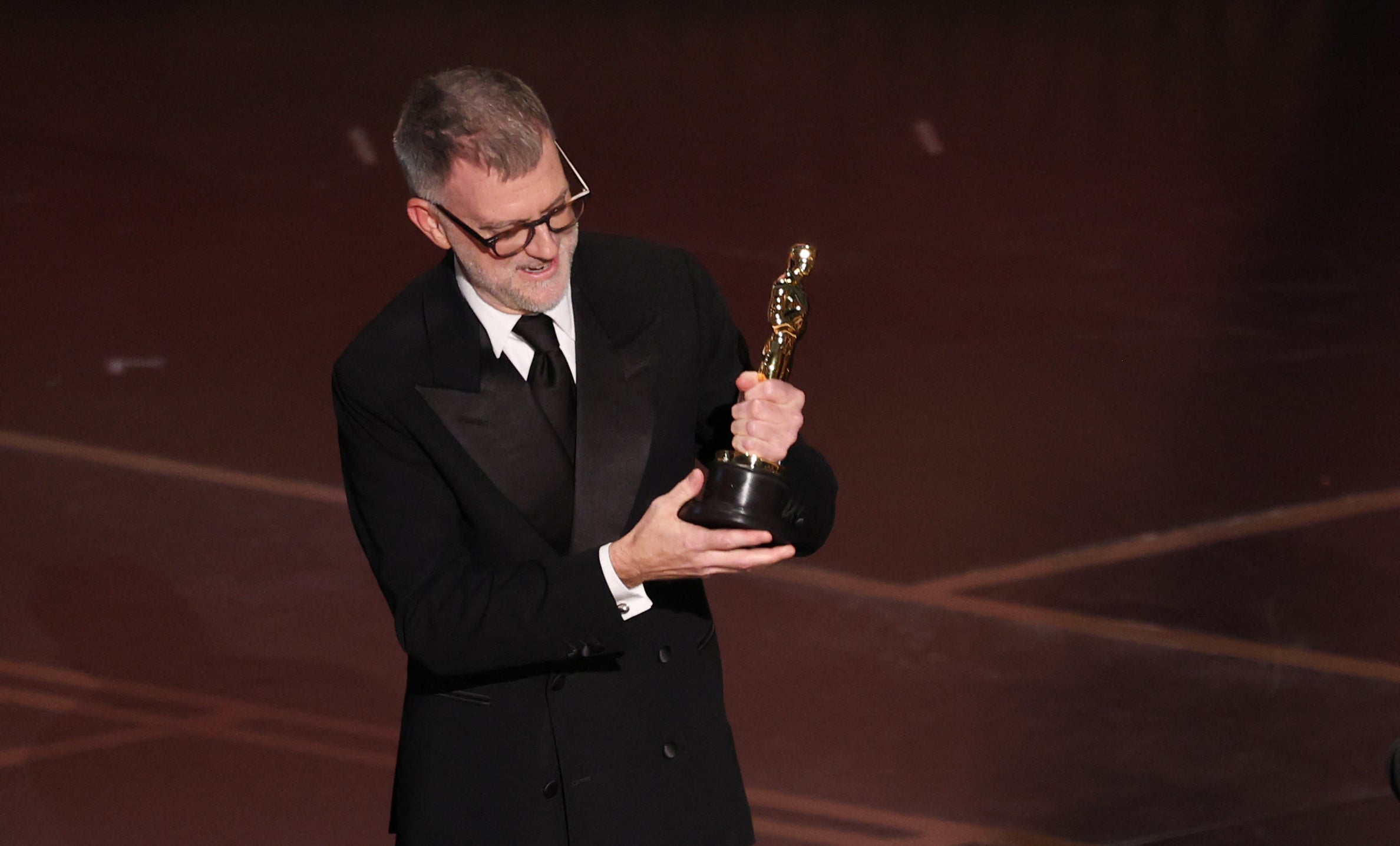
As he accepted the Best Picture Oscar last night for his rollicking chase movie One Battle After Another, the filmmaker Paul Thomas Anderson cast his mind back to 1975, and the murderer’s row of films selected by Oscar as the best of that year: Dog Day Afternoon, Jaws, Barry Lyndon, Nashville, and the category’s eventual winner, One Flew Over the Cuckoo’s Nest. “There is no best among them,” Anderson said. “There is just what the mood might be that day.”
What’s funny, though, is that Anderson’s earnest, generous logic (Why are we competing and besting? What are we doing?) didn’t much apply to his own category mates: there was no day where the mood may have shifted support to an F1 win, or a Sentimental Value one. This was, as proven by a night of endless back and forth between them, a two-horse race between One Battle and Ryan Coogler’s vampire actioner Sinners. It meant an otherwise well-reviewed and successful movie like Marty Supreme went home entirely empty-handed, while – for all its early buzz and ubiquitous Jessie Buckley Best Actress wins this awards season – even Hamnet felt curiously irrelevant come the ceremony itself. And it made the Academy’s recent insistence on turning the Best Picture category into a 10-horse race, whether it’s warranted or not, seem completely redundant.
The Academy increased the number of Best Picture nominees from five to 10 in 2009, officially to “recognise and include” movies that get “squeezed out of the race”, per a statement at the time. But unofficially the move was an immediate mea culpa for the absence of Christopher Nolan’s The Dark Knight from that year’s Best Picture nominees. The lack of Batman was a big setback for Oscar, providing immediate ammunition to critics who claim the Oscars rarely highlight real commercial hits, or the films that people actually see. And considering how revered The Dark Knight was, and how it earned Heath Ledger a posthumous Supporting Actor trophy anyway, it did feel strange it didn’t get into the Best Picture top five. Expanding the field to 10, then, was a well-intentioned course-correct.

But in execution, 10 annual Best Picture nominees dilute the waters. This year, the staid Netflix film Train Dreams earned a Best Picture nod, as did the aforementioned Brad Pitt vehicle F1, and Yorgos Lanthimos’s divisive extra-terrestrial comedy Bugonia. It felt palpable on Sunday night that these movies were the also-rans – each got introduced via celebratory montages sprinkled throughout the show, but they were otherwise rarely mentioned. Their stars didn’t present awards, and host Conan O’Brien didn’t joke about them in his monologue (ironically, it was the Best Picture-snubbed horror movie Weapons that provided the most comic material). Buckley won for Hamnet, Sentimental Value won Best International Film, F1 won Best Sound, and Guillermo del Toro’s Frankenstein took home a few technical prizes, but the rest of the Best Picture nominees – which also included the Brazilian thriller The Secret Agent – went home with nothing. There was a sense that few of them really mattered to the film culture of the last year.
The real thrill of this awards season had been the developing face-off between the ones that did. Sinners and One Battle share unexpected parallels: thematically, they are about race and power and rebellion; they’re also incredibly expensive blockbusters made by the same production regime at Warner Bros, and their respective releases were shadowed by questions about what their success or failure would mean for the future of original storytelling in Hollywood, as well as the modern ability of superstar actors to get bums in seats.
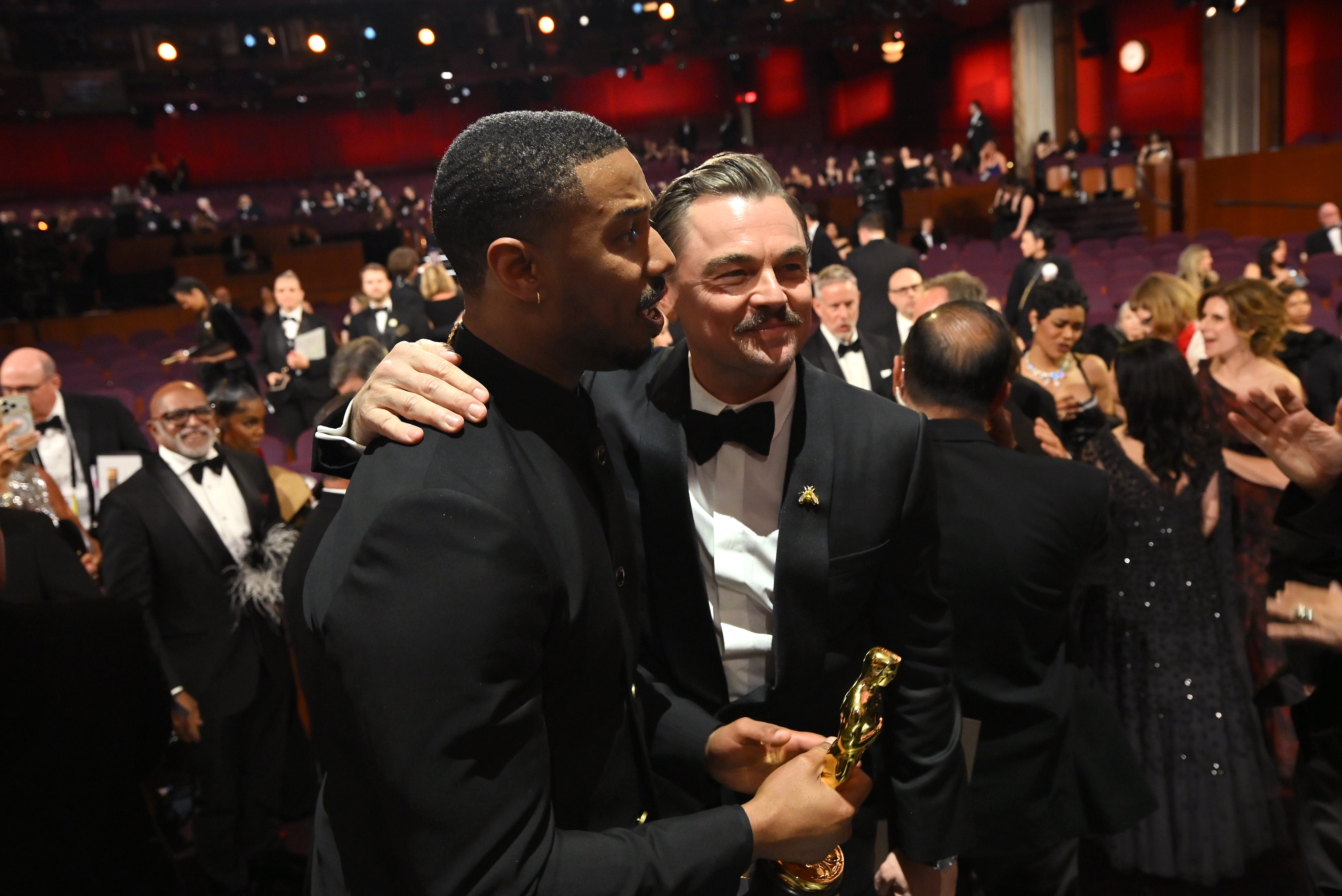
No one knew in advance which one would clean up at last night’s ceremony, both having won important accolades at the Golden Globes, the Baftas and the Actor Awards in recent weeks. And as the ceremony zig-zagged between them – the shock of One Battle’s Teyana Taylor and Sinners’ Wunmi Mosuku both missing out on Best Supporting Actress to Weapons’ Amy Madigan, but One Battle taking the inaugural Best Casting award, then Sinners taking Cinematography, Michael B Jordan swiping Best Actor over Leonardo DiCpario and then Anderson beating Coogler to Best Director – their rivalry provided the only bursts of suspense in an otherwise languid evening.

In the hours since the close of the ceremony, social media has been abuzz with disgruntled Sinners fans expressing annoyance with its lack of a Best Picture win, and critics of One Battle lambasting its perceived failings. Setting aside where you stand in these arguments, it’s exactly the sort of passion that movies ought to inspire, and speaks to the fact that this was a pair of films that sparked enormous amounts of conversation and doubled as proper, maximalist big-screen events. And they’re also the worst advertisement going for a 10-strong Best Picture line-up comprised of mostly dead wood.
But a return to a tight five, just as it was in the halcyon days of 1975, would give the Oscars a sense of focus, and more accurately reflect what we were watching and what we truly cared about in the past 12 months of film. And don’t worry about the Dark Knights of the world – the Oscar voting body is younger, more diverse, and less stuffy now. That would have gotten it a Best Picture nod, not merely an opened-up field so a nomination was a given. It’s something the Academy ought to think about for next year.