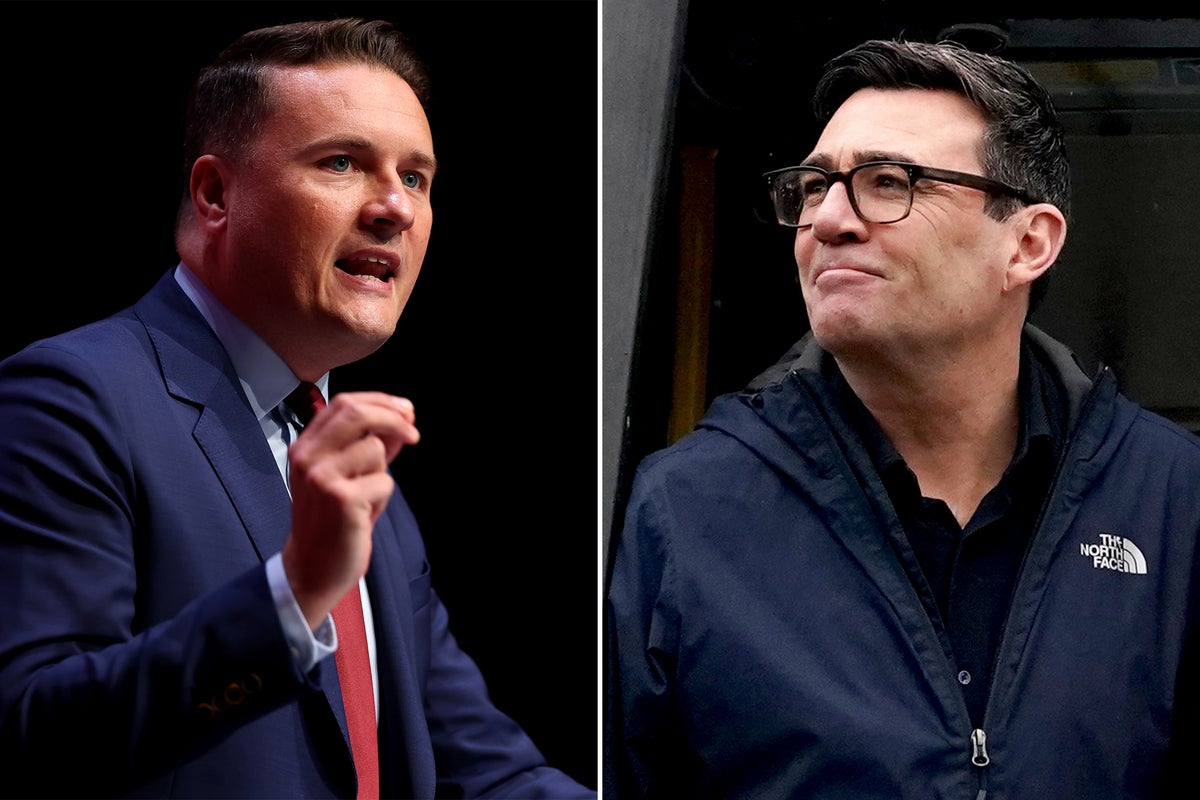
What is so remarkable about the crisis of leadership convulsing the Labour government is that it is all about process and personality rather than policy. It was triggered by Catherine West, a backbench MP who wanted the cabinet to change the prime minister without a leadership election but who now says that, if there is a leadership election, she might vote to keep Sir Keir Starmer.
In her original interview, she barely gave a reason for ousting Sir Keir. She said: “We need to bring on the person who can really sell Labour values and sell our programme.” This implied that the party might not have done so badly in the English local elections last week if it simply had a better communicator at the helm.
Most of the other plotters who have pushed the prime minister to the brink have been no more specific. Wes Streeting talked of “vacuum” and “drift” in his resignation letter. Those who quit more junior posts mostly spoke in vague terms of a “lack of values-driven leadership from the centre”, “the time now is for bold, radical action” and the failure to act with “the vision, pace and ambition that our mandate for change demands of us”.
Andy Burnham, the mayor of Greater Manchester, promised that if he returned to the House of Commons he “will change Labour for the better and make it a party you can believe in again.” He said nothing about how this miracle would be wrought.
The exception was Jess Phillips, who resigned as safeguarding minister accusing Sir Keir of having stalled and delayed her attempt to bring in technology to “stop children being able to take naked photos of themselves” on smartphones. There may be good arguments against this proposal, but this is an important allegation and it is disappointing that the prime minister has not responded to it.
Other than that, the agitation to remove Sir Keir has been woefully short of suggestions of what the government should be doing differently – while at the same time it seems that all the prime minister’s critics agree that a mere change of the person at the top is not enough.
The issue that ought to be first on the list is the delayed effect of the closure of the Strait of Hormuz. Higher oil prices are like a lowering storm on the horizon, which will inevitably break on these shores in the next few weeks. When Rachel Reeves, the chancellor, used the unexpectedly buoyant figure for growth in the first quarter as an argument that her parliamentary colleagues should desist from regicide, she was right, but she was talking about the past. Those encouraging numbers are going to be swept away by the global shock of higher energy prices.
In the face of such a challenge, the insistence by Ed Miliband, the energy secretary, on closing down British production and importing more oil and gas seems utterly wrongheaded, and yet Mr Miliband is still being touted by some as if he might be a candidate for No 10.
Then there is the question of our trading relationship with the rest of Europe. The negotiation of a “softer” Brexit deal ought to be one of the easier wins in the government’s effort to protect people’s living standards, and yet the candidates jostling for Sir Keir’s job have failed to set out how they would deliver it. Mr Streeting, in his big speech to the Progress conference today, said that “leaving the European Union was a catastrophic mistake”. This may be music to the ears of the Labour Party members who have a vote in a leadership election, but it is needlessly insulting to the millions of people who voted for national sovereignty, and it is irrelevant to the practical question of how to lower the barriers to cross-Channel trade.
As for the cross-Channel traffic of uninvited migrants, Sir Keir can be criticised for failing to reduce it, just as Boris Johnson and Rishi Sunak did. But that does not seem to be the Labour Party’s problem with the prime minister’s leadership. The British people are entitled to demand that the small boats be stopped, and yet none of the pretenders to Sir Keir’s office have come forward with their solutions.
Mr Streeting, in his speech today, called for “a battle of ideas, not personalities”. He is absolutely right. But let us hear those ideas – or let Sir Keir get on with tackling the big challenges that face this country.