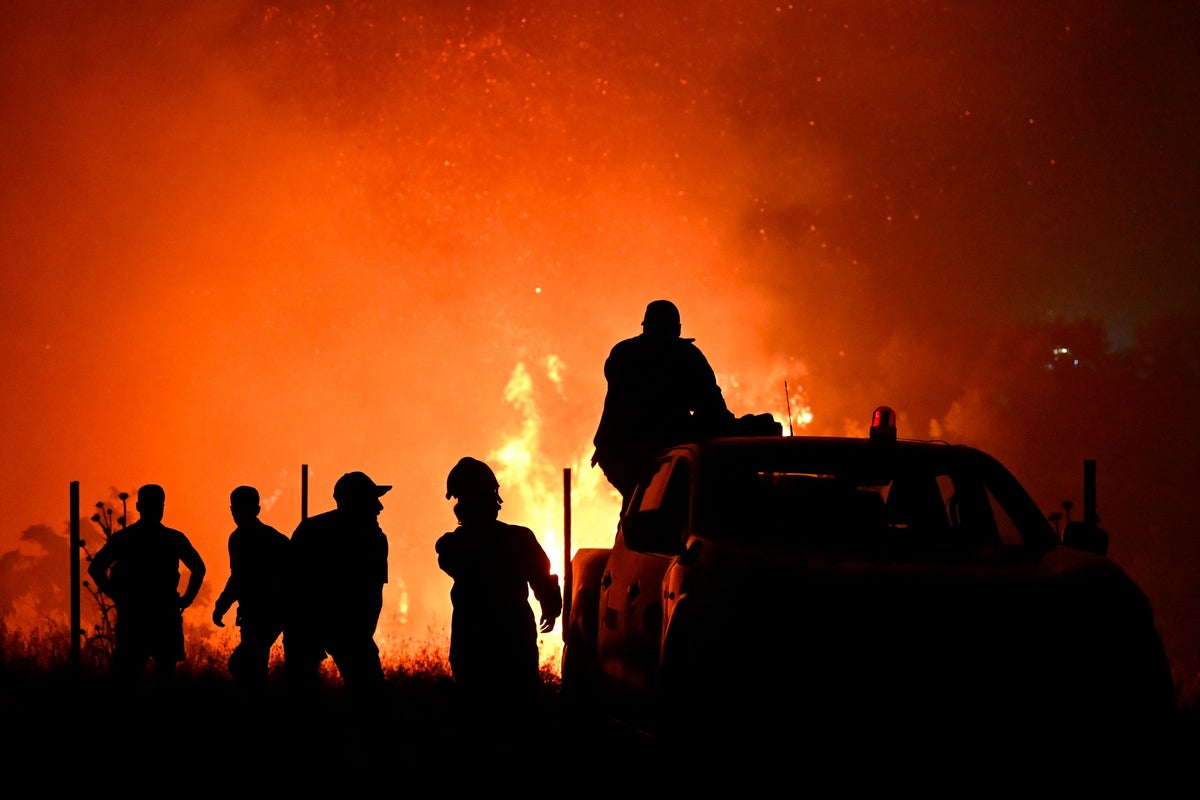
With the UK now facing its third major heatwave of the year just weeks into summer, the sweltering temperatures of people’s homes and buckling publc transport, have laid bare just how badly adapted the country is to the climate crisis. “Believe me, when I was a child, it wasn’t 35 degrees in London in June,” Energy Secretary Ed Miliband told attendees at an appropriately scorching recent edition of London Climate Action Week (LCAW).
But even in the UK, there are shops, cafés and offices with air conditioning, while many people can afford a fan or at least find somewhere to cool down. However, billions of people around the world have no such options, and extreme heat is no longer arriving in occasional “waves”, but increasingly becoming a daily lived reality. This year’s ”super” El Niño weather event is only expected to push millions more into crisis, bringing more droughts, floods and storms to climate-vulnerable parts of the world.
Developing countries require some $310 billion to $365bn (£232 billion to £273bn) a year to adapt to climate change, according to the UN, but currently receive only a fraction of that amount. Foreign aid cuts by wealthy governments including the US, UK and France now threaten what little funding is available. The $20bn (£15bn) UN-backed Green Climate Fund – the world’s largest source of climate finance for developing countries – has seen pledges from the US and UK cut by $4bn and £800m respectively since last year.
How to do more with less has therefore become one of the defining questions at climate gatherings, from London Climate Action Week and the Bonn Climate Talks to the upcoming COP31 summit in Antalya, Turkey. For Taye Gbadegesin, the Nigerian-American chief executive of the $14bn Climate Investment Funds (CIF), the answer lies in persuading private investors to direct some of the trillions of dollars they manage towards climate adaptation.
“I think this is the first time we have had so many climate resilience and private capital conversations at a major climate event,” she tells The Independent. “We can see countries prioritising things like smart agriculture, water stewardship and resilient infrastructure as climate impacts escalate.”

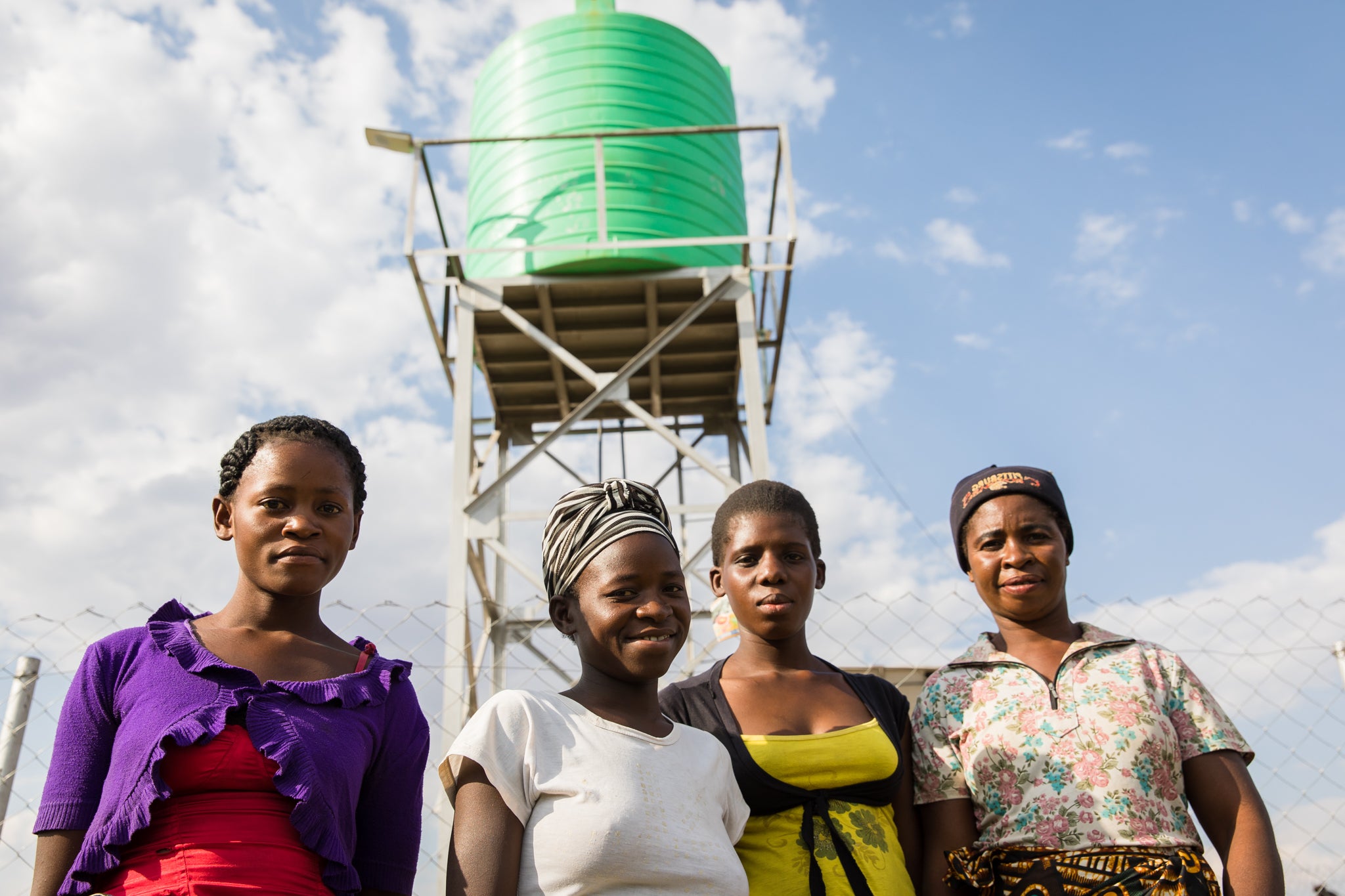
Established by the G20 in 2008, CIF works with governments to transform entire sectors, rather than funding individual projects. It uses public money to attract much larger sums from private investors, claiming it mobilises around $10 for every $1 it invests in clean energy, and $3-4 for every $1 invested in nature and climate adaptation.
Attracting private investment into adaptation to the climate crisis has always been harder because many of the areas that need funding – from flood defences to supporting smallholder farmers in low-income countries – are viewed as public good initiatives that do not generate obvious financial returns. Organisations like CIF therefore have to find ways of demonstrating the economic value of resilience.
“One of the biggest issues in the climate crisis is around crop loss and food system breakdowns, so this can be a great place to invest if there is, say, an insurance scheme that finds value in the fact that a harvest is not lost in a given year,” Gbadegesin says. CIF is in discussions with everyone from commercial banks in developing countries to multinational food companies that depend on Global South supply chains, in an effort to create financial models that reward resilience and show investors that avoiding financial losses via the impact of climate shocks like flooding can generate long-term value.
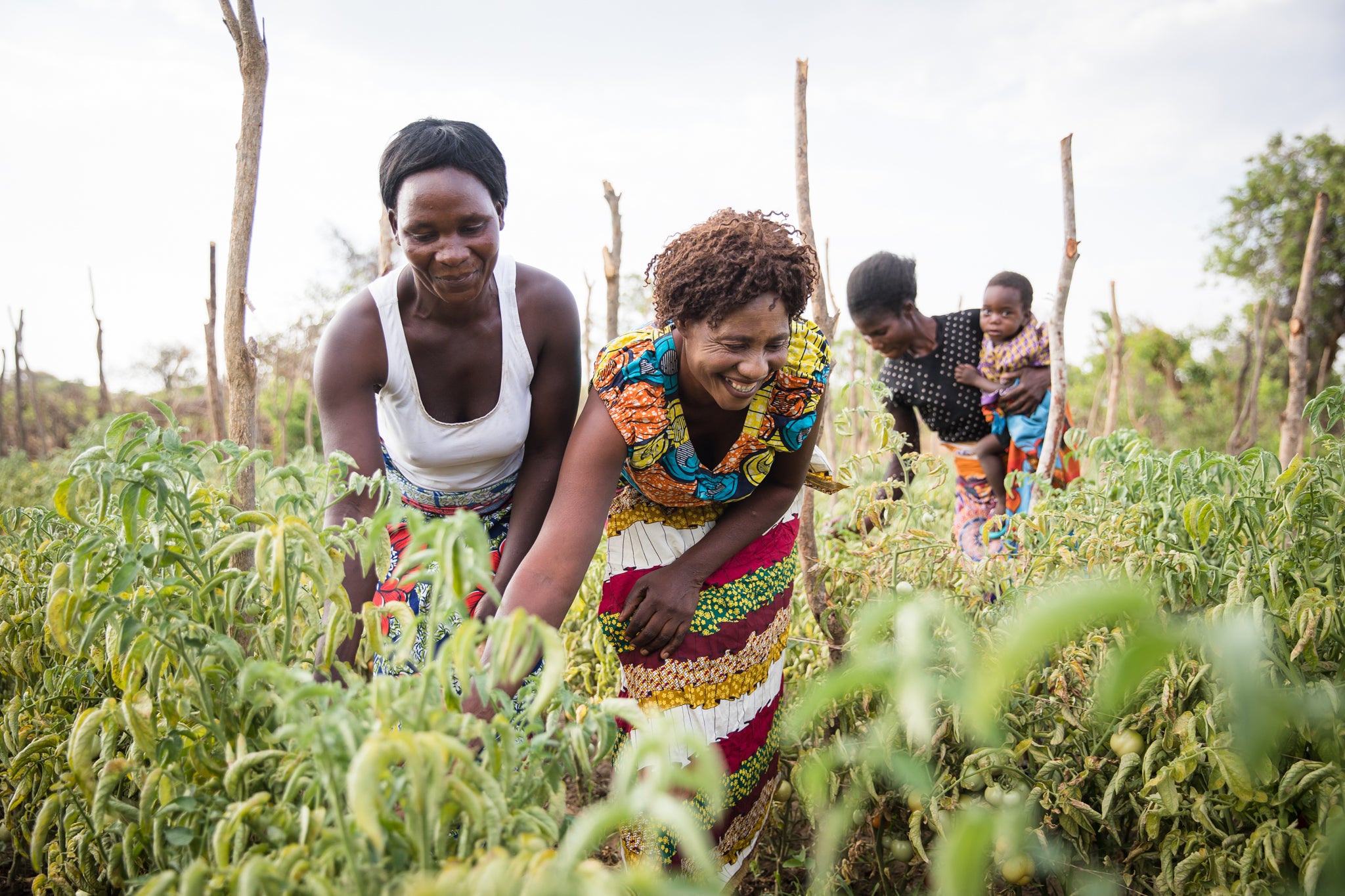
Projects backed by CIF and private investors include training more than 96,000 smallholder farmers in flood-prone Bangladesh, helping increase farm yields by 38 per cent and revenues by 18 per cent. In Tajikistan, it has partnered with local banks to help households and businesses invest in irrigation, energy-efficient heating and flood-proofing.
Such is the interest in climate adaptation at the moment that 75 countries have expressed interest in a new public-private climate resilience investment programme that CIF launched last week. That’s equivalent to half the countries in the developing world, and includes 33 per cent of the world’s least developed countries. “The scale of this response sends a clear signal: developing countries want to invest in lasting prosperity,” says Gbadegesin.
Her view that private investment is crucial to filling the climate adaptation gap is shared by UK development minister Jenny Chapman. Last month, Baroness Chapman revealed to The Independent that the UK is still aiming to increase the climate finance it provides year-on-year, despite overall aid spending falling.
CIF is also not the only climate finance organisation looking to bring more private investors into climate adaptation. The World Bank is massively scaling up “blended” finance models that mix public finance or aid money with private investments, in order to maximise what can be done with its investments. That can be on the scale of a major infrastructure project partnering with institutional investors, to a programme like its Micro-Scale Irrigation Project in Uganda, which provides grants to support farmers that invest some of their savings in new irrigation systems that boost their climate resilience. “If you just give free systems to farmers they would not take it as seriously and they would not maintain the system so well,” says Nicholas Munu, a senior engineer on the project.
Critics, however, warn that attracting big private investors to adaptation projects remains extremely difficult. Research by the NGO Mercy Corps has found that only three per cent of adaptation finance needs in developing countries have so far been met by the private sector, while fragile and conflict-affected states continue to struggle to attract almost any investment beyond foreign aid.
Climate funds such as CIF have also long faced criticism for being overly bureaucratic and difficult for poorer countries with limited civil service capacity to access. In some cases, approval processes have taken so long that by the time funding arrives, the nature of the problem has already changed.
Gbadegesin acknowledges that access remains “a challenge” for some low-income countries, which “might not have the full capacity to be able to navigate and manage all the different pieces that come together to work with CIF”. She says the fund is trying to address this through training, knowledge-sharing between governments and grants to strengthen public sector capacity.
Beyond Gbadegesin’s optimism, there was a real sense during London Climate Action Week that attitudes towards adaptation finance are beginning to shift.
“There are 1,400 climate events this week, and more than 500 are dedicated to climate resilience and adaptation. That’s up from almost none a few years ago. It’s been a revolution,” says Tom Mitchell, executive director of the International Institute for Environment and Development (IIED). He was speaking to The Independent at the organisation’s high-profile summit on “financing climate resilience”, where the guest list had more than doubled since the previous year, with a surge of new participants from the finance and insurance industries. “There’s growing recognition that if you don’t invest in resilience, it will hit returns,” Mitchell says.
Speaking at the summit, Baroness Chapman said that the UK would be “using the full range of UK levers” to “tackle climate change… and build resilience”. The finance minister of upcoming UN climate conference host Turkey, Mehmet Şimşek, added that success of the November conference “will not be measured by the number of declarations we adopt… [but about] translating projects into bankable projects, and hopefully mobilise finance to deliver at a scale and speed.”
Linda Freiner, chief sustainability officer for Zurich Insurance Group, struck a note of caution, however. She said that with $220 billion worth of damage from global natural catastrophes in 2025, the “case for investments in resilience is clear” – but added that for now there is mostly “market failure” to that end, due to the fact that resilience is fundamentally not revenue-generating. “Today, we are not able to value resilience, but with better data, better incentives, stronger collaboration with the private and public sector, we can move away from this being just seen as a cost to actually see something that is creating value,” she said.
Mitchell also warned that the world’s poorest countries risk being left behind. “The simple fact is that most of these countries remain unattractive to private capital,” he says. “For these countries, we do still need grant money and overseas aid, and we do still need the international climate process run through the UN.”
But it is clear at the same time that foreign aid is not going to provide anywhere near the amount of money that will be required for climate adaptation. What’s more, it is likely to be to a country’s benefit if they can attract long-term sustainable investment rather than depend on foreign aid.
“As the planet warms, we are reaching a point where investing in resilience and making any kind of sound long-term investment are becoming one and the same thing,” says Gbadegesin. “If a country can do this through their banks and their own service providers, we find that it has the biggest chance of creating long-term transformational effects.”
This article has been produced as part of The Independent’s Rethinking Global Aid project