



In the autumn of 2016, a two-year-old girl was taken from her home in Amsterdam and moved across several borders as part of a well-planned operation orchestrated by her own father. Her journey involved a violent abduction, multiple changes of vehicle, and ultimately an illegal entry into India on false travel documents.
Nearly a decade later, Insiya Hemani remains in India – a girl who no longer knows her own mother, a woman who has launched a years-long legal and lobbying campaign to have her ex-husband convicted and be reunited with her child.
Nadia Rashid, Insiya’s mother, tells The Independent that her ex-husband, Shehzad Hemani, hired a highly specialised international team to execute the abduction. She said the cell included two former police officers, an ex-marine, an ex-FBI agent, a former CIA operative, and the daughter of a Dutch police officer.

What began as a domestic dispute has evolved into one of Europe’s most politically sensitive international child abduction cases, as well as a major diplomatic headache for India. The issue returned to front-page news in the Netherlands during Indian prime minister Narendra Modi’s tour of four European countries earlier this summer.
Rashid and Hemani married in Mumbai in 2011 after a whirlwind romance – but the fairytale was shattered almost immediately as the relationship began to break down. “Things began going downhill the day we married,” Rashid says. Nonetheless, Insiya was born in Amsterdam in 2014, acquiring Dutch citizenship by birth.
The court battle for her custody had begun years before the kidnapping. Hemani filed a Hague Convention child-abduction case in the Netherlands, alleging that Rashid had wrongfully removed Insiya from Mumbai to the Netherlands in 2014.
The Hague District Court rejected the claim in July 2015. Dutch courts subsequently ruled in Rashid’s favour, ordering Hemani to hand over Insiya’s passport in October 2015 and granting interim custody to the mother in March 2016.

Hemani, according to the Dutch courts, decided to take matters into his own hands. On the morning of 29 September 2016 he gave the go-ahead for “Operation Barney”, a sophisticated mission to abduct Insiya from her grandmother’s care. The plot to kidnap the girl involved burner phones, a taser and tie-wraps, according to the Dutch authorities.
In its ruling upholding Hemani’s conviction, the Court of Appeal Amsterdam noted how the operation was characterised by its “planned, professional, and controlled execution”. The kidnappers had mapped out Rashid’s movements, and planned to sweep in when she was out at work.
They stationed a man outside Rashid’s mother’s home in Amsterdam, waiting. As soon as Rashid dropped Insiya off and drove away, the man gave a signal through a burner phone to other members of the crew, court documents show.
“I call him a kidnapper because he hired mercenaries,” Rashid says. “Which parent would sign off on random men kidnapping a two-year-old innocent child?”

Within moments of getting the go-ahead, three men rang the doorbell of the house, pretending to be municipal officials, and forced their way inside. Insiya was eating breakfast when she was kidnapped.
“By the time my sister arrived after hearing the commotion, they had already snatched Insiya… they had put her in the car, and they drove off,” Rashid says.
Rashid’s sister and grandmother tried to stop the three men who had entered the home from leaving with Insiya, at which point they were involved in a violent scuffle with one of the men, who according to court documents was specifically hired to act as a “doorstopper” and buy the others time to escape. The man struck Insiya’s grandmother with a taser, before being prevented from leaving. He was later arrested at the scene.
Police launched a major manhunt and issued an immediate Amber Alert – the highest issued when police suspect that a child is in a life-threatening situation.
The kidnappers drove to a meeting point 32km from Amsterdam and transferred Insiya into another car, in which her father Hemani was waiting. They changed the composition of the group and then split up, leaving the rendezvous point in separate vehicles before making their way to Germany.
Rashid alleges that Hemani had paid for a private plane to get Insiya out of Munich, and that they travelled via a Greek island, Turkey and Nepal to get into India. Court documents in both India and the Netherlands describe the journey as dangerous for a two-year-old without legal travel documents, without detailing the precise route taken.
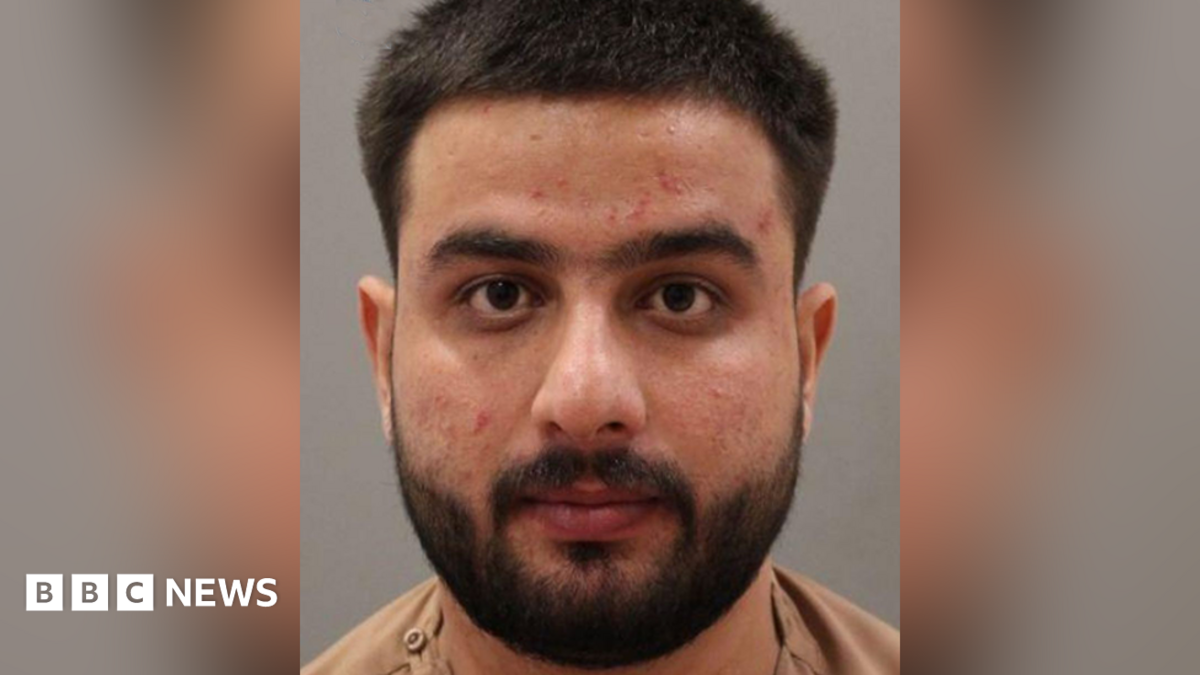
Hemani was first convicted in October 2020 by the Amsterdam District Court for instigating the kidnapping of his daughter. The court found that he planned, financed, organised and directed the operation that resulted in Insiya being forcibly taken from her grandmother’s home in Amsterdam.
“The court finds that this project-based nature contributes significantly to the seriousness and criminality of the facts: the kidnapping of a defenceless toddler as a project with a clear mission; the sterile planning and execution by people with a police and military background,” the District Court for Amsterdam wrote in its the verdict in the case.
Hemani has consistently disputed Rashid’s account and does not consider his actions a kidnapping. He has argued in Indian courts that custody should be determined on the basis of Insiya’s welfare and present circumstances, not the means by which she was brought to India.
Just weeks after the kidnapping, while Dutch police were seeking those who carried out the operation, Hemani launched a parallel legal campaign on Indian soil.
On 10 November 2016, weeks after Insiya was brought to India, Hemani filed an application in the ongoing Mumbai Family Court case, declaring that the child was now in his physical custody.
He alleged that Rashid wrongfully took Insiya to the Netherlands after travelling there with the child in late 2014 and refusing to return to India. He argued before Dutch courts that India was Insiya’s habitual residence and later contended that custody should be decided on the basis of the child’s welfare and current circumstances rather than the manner in which she was brought to India.
He claimed he visited the Netherlands on 15 occasions to get in touch with her and his daughter, but he was “granted limited access”, which was strictly monitored, according to the filing.
A ruling by the Bombay High Court in January 2023 overturned a previous judgement, which had agreed with Hemani’s suggestion that the circumstances of the child’s removal, including her abduction in the Netherlands, were irrelevant to the Indian custody proceedings. Justice Amit Borkar disagreed, holding that the alleged abduction could have a direct bearing on both Hemani’s character and Insiya’s welfare.
The High Court said the details of the operation, including whether Insiya had been exposed to potentially dangerous situations during the journey, were relevant considerations in determining custody.
The case has dragged on for nearly a decade in part because India is not a signatory to the Hague Convention on International Child Abduction, leaving Dutch court orders difficult to enforce and forcing the parents into parallel legal battles in two countries.
In a rare interview with the Mumbai Mirror from his apartment in Bandra, an upmarket neighbourhood in India’s financial capital, Hemani defended bringing Insiya to India as the “rescue” of his daughter to “save her from Nadia”.
The Independent has reached out to Hemani’s legal team for comment, but no substantive response was received at the time of publishing this story.
“We cannot say anything or release any details about the matter as the case continues in the court,” a lawyer for Hemani from the legal practice Vashi and Vashi said.
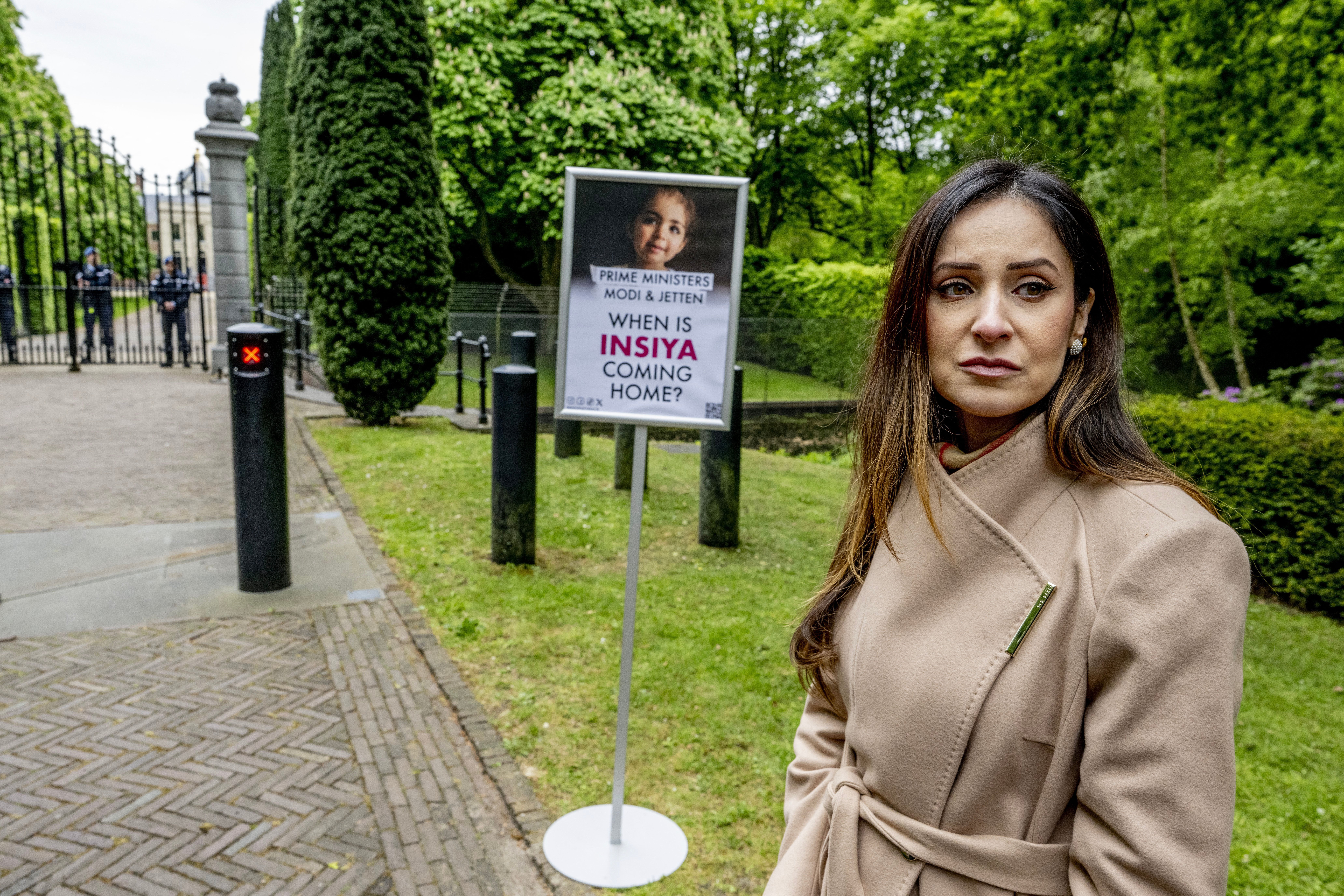
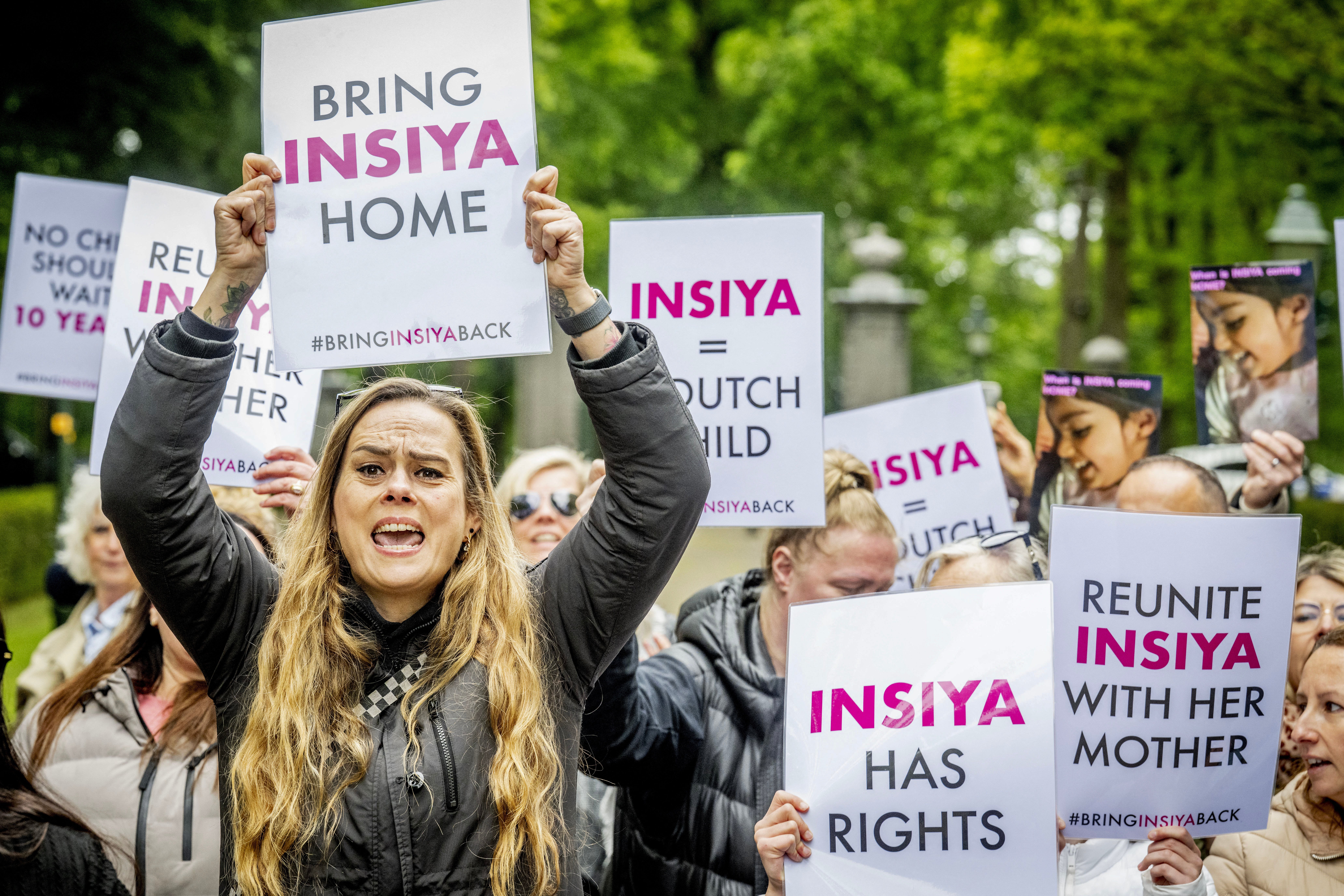
When India’s Modi met the Dutch King Willem-Alexander and Queen Maxima in May, a group of around 50 protesters were assembled outside the Huis ten Bosch Palace in The Hague. They displayed banners reading: “Bring Insiya home”, “No child should wait 10 years”, and “Return Insiya to her mother”. Rashid herself held a sign saying: “Prime Ministers Modi & Jetten, when is Insiya coming home?”
Following his own meeting with Modi, Rob Jetten, the Dutch prime minister, said on X that he “spoke about the case regarding the abduction of Insiya to India by her father” among other topics.
Foreign minister Tom Berendsen admitted there is growing “frustration” within the Dutch government over the lack of progress in the case. After treating the case primarily as a routine consular matter for nearly a decade, the Dutch government is shifting strategy, with a specialist diplomatic delegation being dispatched to India.

.jpeg)
According to the deputy prime minister, this delegation will address the case “in a truly substantive way”, while attempts are also being made to finally arrange a face-to-face meeting between Rashid and her daughter.
“That is a very different, much more aggressive approach than what we have done in the past,” Rashid notes.
Amid an exhausting, decade-long jurisdictional game of tug-of-war, the two-year-old Insiya has grown into a 12-year-old girl. Under pressure from the Indian courts, Hemani initially allowed Rashid to conduct a few Skype calls with her mother in the years after the kidnapping, but court filings show these have long ceased. “It has been many years since Insiya and her mother last had contact via video call,” notes a Court of Appeal Amsterdam ruling in May 2024.
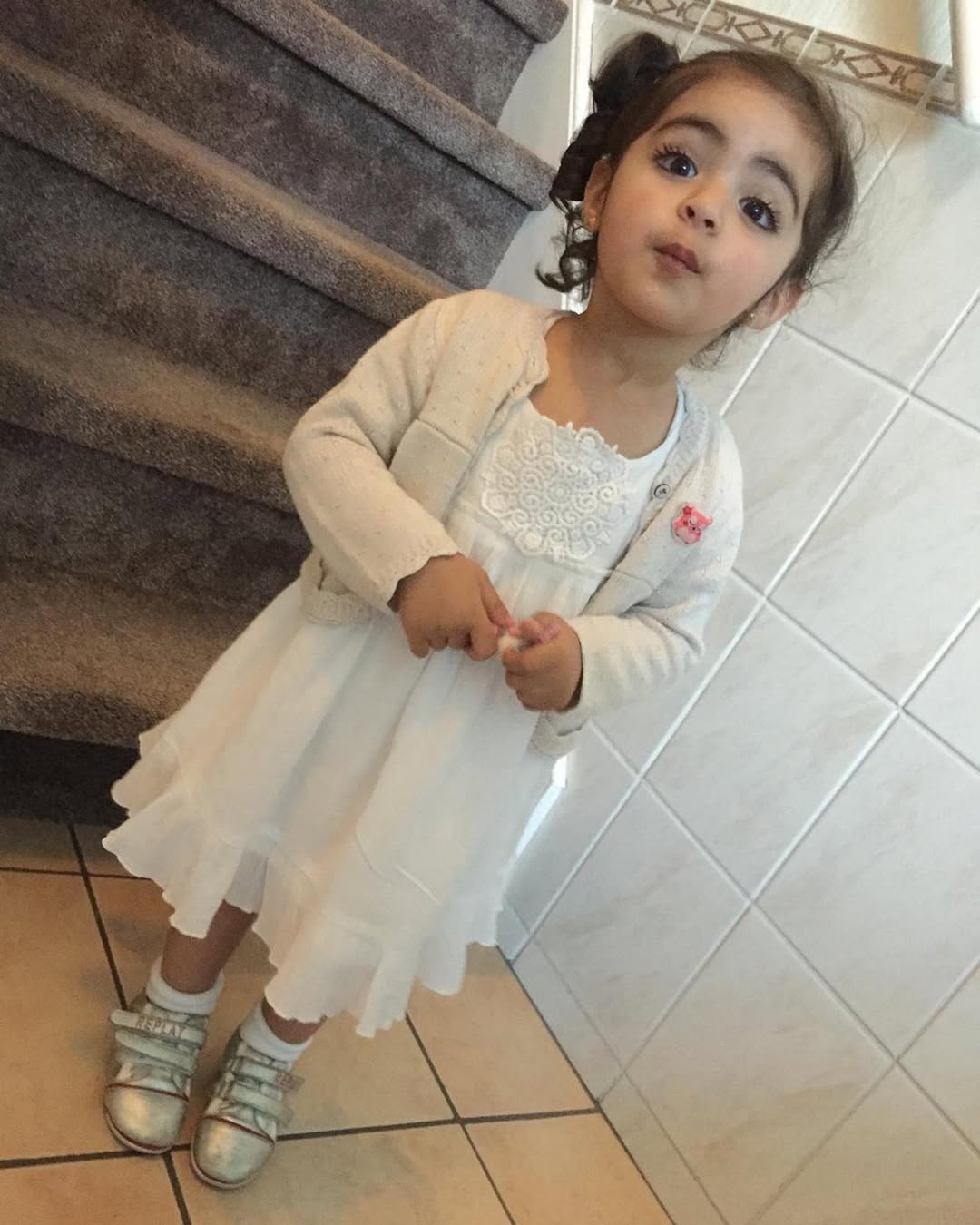
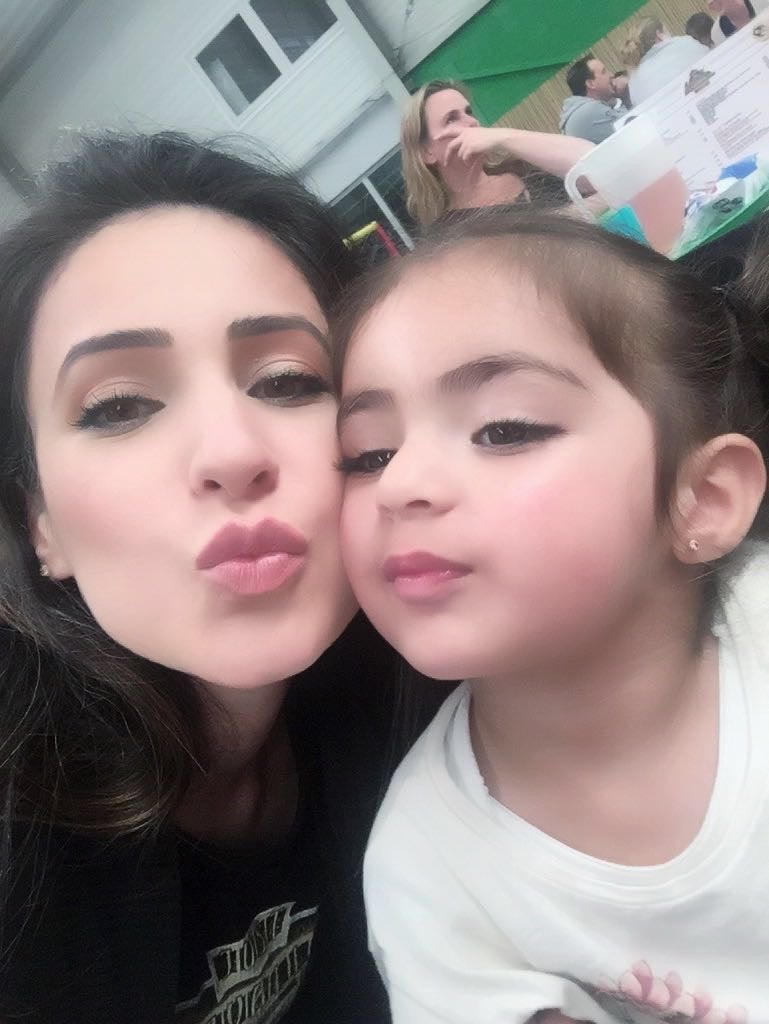
Rashid does not know what kind of person her two-and-a-half-year-old girl has grown into, or what she now looks like. When she pictures Insiya she still has big eyes with beautiful lashes, curly black hair and a big smile, she says, with tears welling in her eyes.
“She was always chubby. She was always chubby. Insiya has such a bubbly personality, and she is so naughty, so naughty,” she says.
Rashid does not know whether Insiya is allowed to read media coverage of her case. She does not know whether her daughter will read this story. But asked if she has a message for her, she says: “Insiya, come back home. Mommy loves you and, you know, Mommy just wants you to be safe. You’re Dutch. You can go to the Dutch consulate at any time. I love you, and I miss you, and I’m so proud of you, and I’m so thankful to be your mother.”