


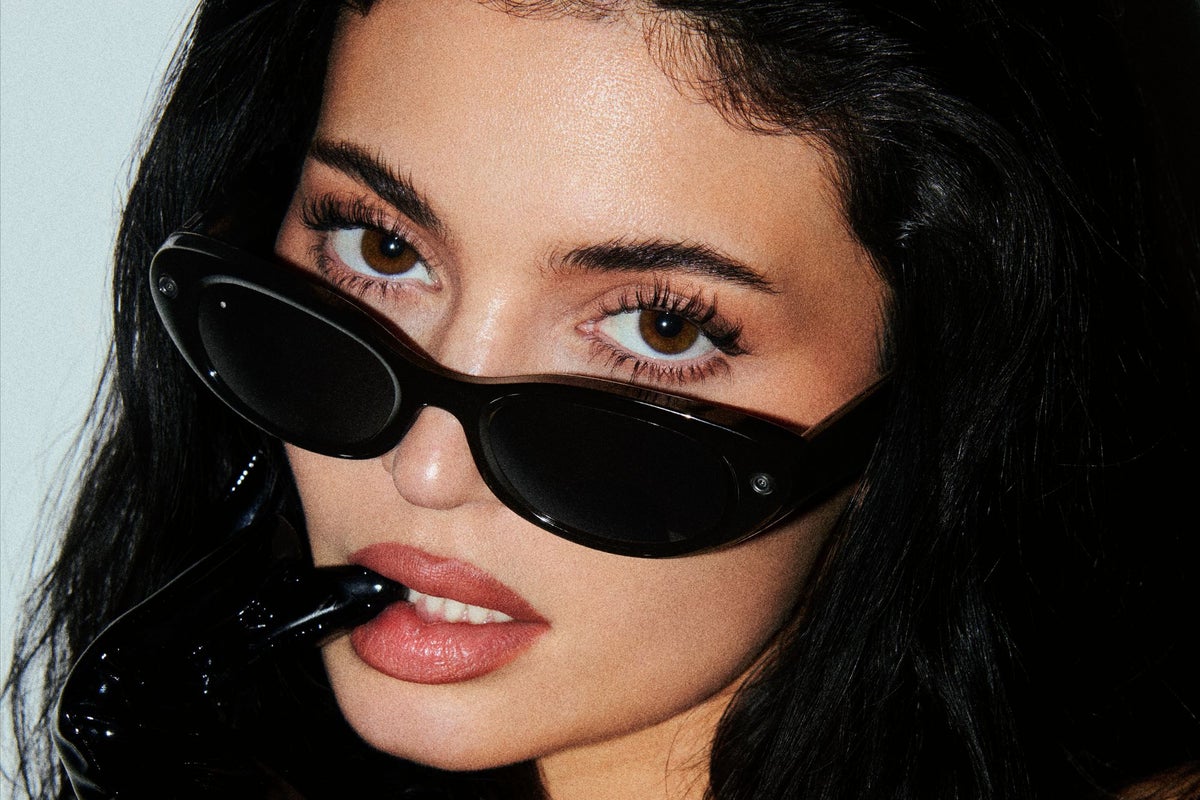
I’m looking out at the Calabasas hills from my multi-million-dollar mansion. Two delivery men are wheeling my new sculpture through the hallway, while my product developer swatches a sample from my makeup line on the back of my hand for approval. No, I’m not having a hyper-realistic dream nor have I been reincarnated as a nepo baby: I’m Kylie Jenner, or at least I’m living inside her head, thanks to the first-person content filmed on her new Meta glasses.
The end is, somewhat, nigh. Although smart glasses have been around for a while, nobody but tech bros wanted to wear them. When Google released Glass in the UK in 2015, it pulled the model just seven months later due to backlash over the price (£1,125) and privacy. Over a decade on, Meta is using the 28-year-old member of the Kardashian clan to make their iteration cool – she films her day through her eyes, translates fan mail with the in-built language tool and waves at her elderly pool man (interesting choice) while taking us along for the ride. “They got Marie Antoinette for less,” one commenter remarked of the unignorable excess. But for good or for bad, we can’t look away.
“They want her because of her enormous reach,” says author of Fashion and Celebrity Culture, Pamela Church-Gibson, of the rationale behind Meta’s collaboration with Jenner. “If you look at the top 10 Instagram pages, she’s right there just behind Messi, Renaldo and Dwayne ‘The Rock’ Johnson… If you choose this glamorous female celebrity with that kind of Jessica Rabbit body, all of these different [consumers] are therefore brought to the table for you.” Notably, when Jenner declared she was “sooo over” the social app Snapchat in 2018, the stock price tumbled by $1.3bn (£1bn).
“This is one of the first big enterprises that Kylie has connected herself to in years,” notes MJ Corey, psychotherapist and author of Dekonstructing the Kardashians, who adds that smart glasses are “one of these silly appendages that technocrats have tried to push on us for a while but didn’t know how” – until now. “I feel like I’ve been like the canary in the coal mine saying that when the tech billionaires figure out how to ‘Kardashify’ themselves, they’re going to have an easier time selling and normalising their tools,” she says. “Everyone hated Kim Kardashian for taking selfies, and now they’re the defining feature of Instagram. Kylie is doing that with these Meta glasses.”

If Corey has been banging her drum on the creep of the Kardashians into tech for a while, ethicists have been pounding theirs about smart specs for even longer. A decade ago, Norwegian University of Science and Technology professor Bjørn Hofmann co-wrote a paper exposing the ethical issues smart glasses create: privacy and surveillance, safety while operating machinery, human dependence on tech for decision making, accountability in the event of a negative outcome, or changes in social interactions as we become more wary of one another due to covert filming, to name a few. Many of these have already begun to materialise, with numerous reports of women being filmed by men who try to hit on them on the street without their consent.
“This does something to the way we communicate, the way we socialise, but also to what kind of information people or companies have about us and how we become products ourselves,” Hofmann says. “There’s been a rather thoughtless implementation of this technology; we should have learned more about this. So, I’m afraid the same lack of reflection exists where, in the future to come, we’ll see similar reactions to what we’ve now had with social media,” he adds of the recent under-16s ban.
I feel like I’ve been like the canary in the coal mine saying that when the tech billionaires figure out how to ‘Kardashify’ themselves, they’re going to have an easier time selling and normalising their tools
MJ Corey, author of ‘Dekonstructing the Kardashians’
“In my profession, being frustrated is part of the task,” Hofmann admits. “The best we can do as researchers is to provide knowledge because it puts a stronger responsibility on those decision makers. But the challenge here is, who are the decision makers with regard to smart glasses? There is always a mutual influence between policy and tech, and of course, money is power. Technology is quick, ethics is quite slow and regulation is even slower,” he adds.
UK law allows the filming of other people in public spaces without their consent – and uploading that footage online is also legal. That being said, smart glasses have already been used illegally. At the start of this year, one man pleaded guilty to voyeurism after he’d recorded sex with a woman without her explicit consent. He was spared jail and fined £800 and ordered to pay a £320 surcharge.

Professor of Digital Marketing and Media, Philipp Rauschnabel, who also contributed to a paper on the risks and consequences of smart glasses almost 10 years ago, says the thing that’s shocked him the most about smart glasses is that Meta were the ones who made them mainstream: “Meta’s spending is often framed as a ‘metaverse’ bet, but reports suggested that a large share of Reality Labs’ budget was actually going into augmented-reality hardware – including smart glasses and future AR glasses – rather than only into virtual worlds such as Horizon,” he says. “But everyone focused on that. The next step is what’s called Project Orion, where you’ll be able to place realistic-looking 3D content in the physical world.”
Rauschnabel, who’s a self-declared Metaverse enthusiast, adds: “You can’t over-regulate it. That wouldn’t be good for innovation. It’s more important to educate people how to use it. It’s also, I think, OK to accept a certain level of risk. I mean, every new technology has tonnes of advantages and some disadvantages; it’s just the negative aspects are more tangible than the positive ones,” he claims.
Even if the use of smart glasses isn’t criminal, it could certainly be cataclysmic from a social perspective. “My concern is that it’s going to create an incredibly paranoid and performative society,” says Corey. “I think with the constant sense of surveillance…There’s an argument where it could be a really primitive predator and prey dynamic and that creates such a low-trust society.”
“People who don’t want to be made into content are going to be hypervigilant – and they’d be valid,” she continues. “But that can weaken the psyche, wear down a person and be the conditions that lead to psychosis to those who’re predisposed to it – and plenty of people actually are. It’s really going to erode our wellbeing, disconnecting from our authentic selves and leaning into what will play best on camera.”
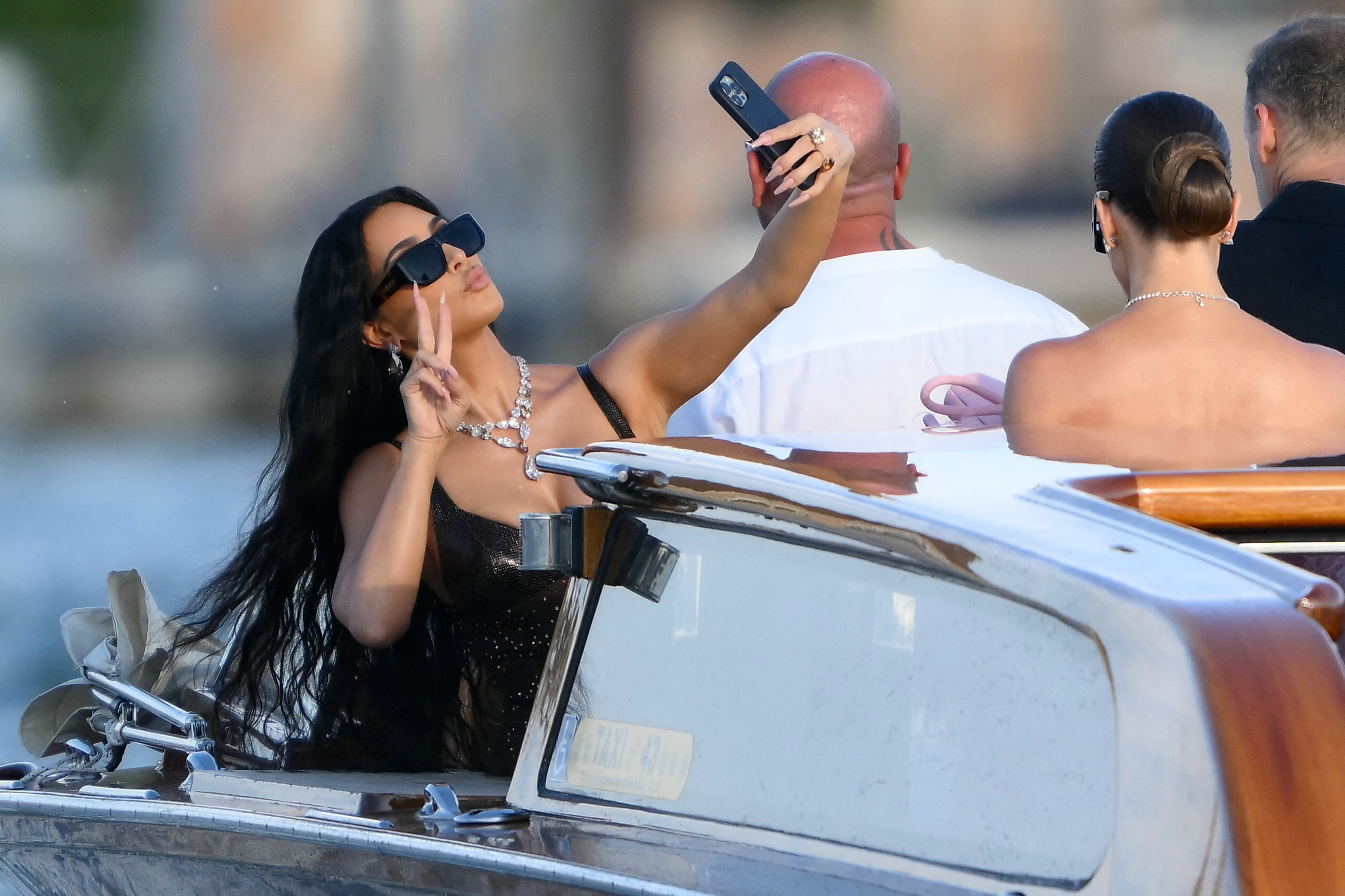
Corey posits that the way the Kardashians have used media technologies to scale their billionaire status parallels the history of media itself. “Smart glasses are the natural next step,” she says, noting the first person content is symptomatic of our ever-evolving desire to be closer to our stars: cinema to TV screens to tabloids to reality TV to social media to smart glasses.
“We’ve complained that the Kardashians are everywhere; that’s because they’ve maximised every [media] form that’s available to us as it’s accelerated,” she observes. “If the Kardashians are the original influencers, what have they influenced? People will focus on the aesthetics, but I’m interested in the way that they’ve influenced our eventual acceptance of this technology.
“They sold us the idea that the use of these tools can mean participation in a new kind of economy that can lead to wealth and success – to the American dream,” Corey concludes. “Kylie is now attached to the next big iteration in the new media. These glasses are an incredibly life-changing step that we’re never going to be able to come back from.”