

.jpeg?trim=0,107,0,106&width=1200&height=800&crop=1200:800 "The health risks experts warn about if daylight saving time stays year-round – UK Times")
In the 108-year history of daylight saving time in the United States, the country has three times moved to institute it year-round: during each of the two world wars and in 1973-74.
Now, after a 2022 attempt to reintroduce this policy floundered, the U.S. House of Representatives on July 14, 2026, passed the Sunshine Protection Act, which would put the country permanently on daylight saving time. The bipartisan bill passed by a wide margin, 308-117, with President Donald Trump publicly backing the measure. It will now be considered by the Senate.
With the exception of Arizona and Hawaii, which observe standard time year round, the U.S. observes seasonal daylight saving time, moving clocks ahead by one hour each March and turning them back each November.
Nearly two-thirds of Americans would like to eliminate changing the clocks twice a year, compared to 21% who aren’t sure and 16% who would like to keep moving their clocks back and forth, according to a 2026 poll.

But the effects go beyond simple inconvenience. Researchers are discovering that “springing ahead” each March is connected with serious negative health effects, including an uptick in heart attacks and teen sleep deprivation. In contrast, the fall transition back to standard time is not associated with these health effects, as my co-authors and I noted in a 2020 commentary.
I’ve studied the pros and cons of these twice-annual rituals for more than five years as a professor of neurology and pediatrics and the director of Vanderbilt University Medical Center’s sleep division. It’s become clear to me and many of my colleagues that the transition to daylight saving time each spring affects health immediately after the clock change and also for the nearly eight months that Americans remain on daylight saving time.
The strong case for permanent standard time
Americans are split on whether they prefer permanent daylight saving time or permanent standard time.
However, the two time shifts – jolting as they may be – are not equal. Standard time most closely approximates natural light, with the Sun directly overhead at or near noon. In contrast, during daylight saving time from March until November, the clock change resulting from daylight saving time causes natural light to be present one hour later in the morning and one hour later in the evening according to clock time.
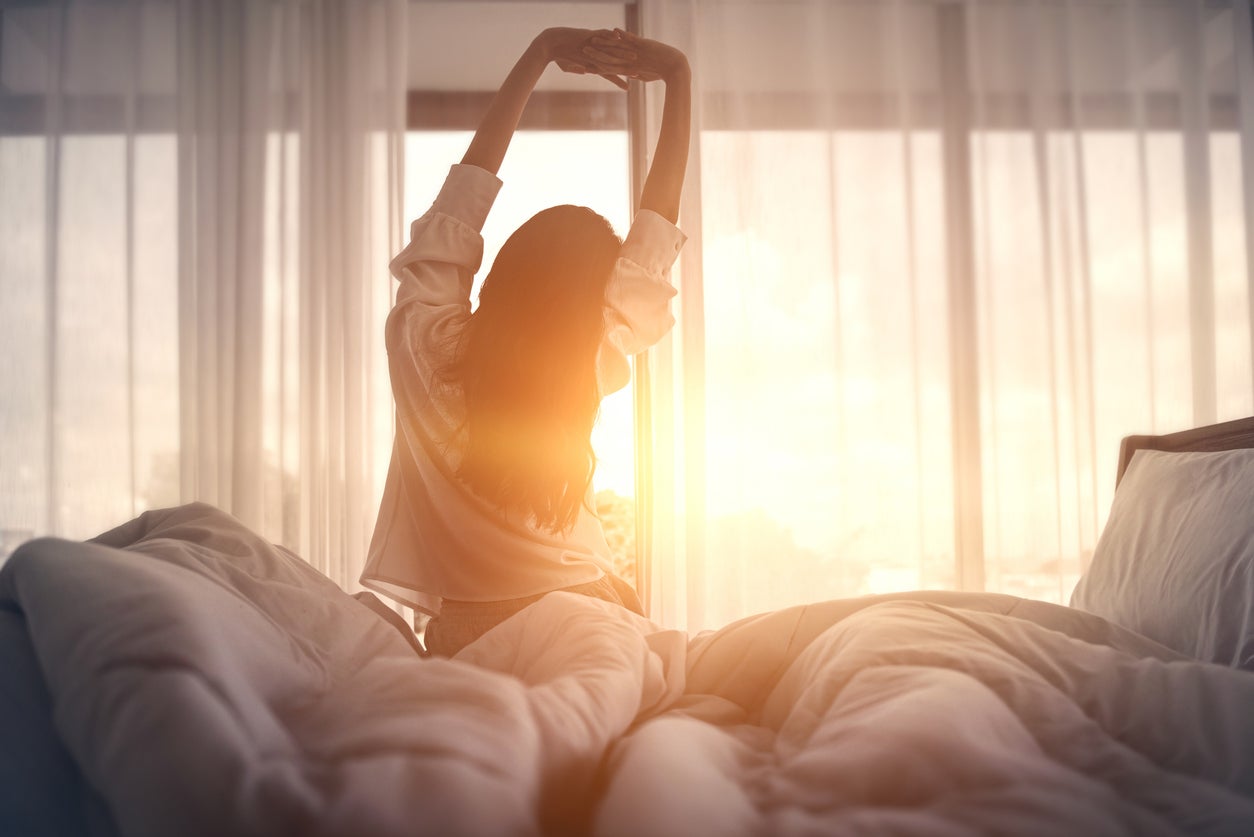
Morning light is essential for helping to set the body’s natural rhythms: It wakes us up and improves alertness. Morning light also boosts mood – light boxes simulating natural light are prescribed for morning use to treat seasonal affective disorder.
Although the exact reasons why light activates us and benefits our mood are not yet known, this may be due to light’s effects on increasing levels of cortisol, a hormone that modulates the stress response or the effect of light on the amygdala, a part of the brain involved in emotions.
Adolescents also may be chronically sleep deprived due to school, sports and social activities. For instance, many children start school around 8 a.m. or earlier. This means that during daylight saving time, many young people get up and travel to school in pitch darkness.
The body of evidence makes a good case for adopting permanent standard time nationwide, as I testified at a March 2022 congressional hearing and argued in a position statement for the Sleep Research Society. The American Medical Association has also called for permanent standard time.
The biggest advantage of daylight saving time is that it provides an extra hour of light in the late afternoon or evening, depending on time of year, for sports, shopping or eating outside. However, exposure to light later into the evening for almost eight months during daylight saving time comes at a price. This extended evening light delays the brain’s release of melatonin, the hormone that promotes drowsiness, which in turn interferes with sleep and causes us to sleep less overall.
Because puberty also causes melatonin to be released later at night, meaning that teenagers have a delay in the natural signal that helps them fall asleep, adolescents are particularly susceptible to sleep problems from the extended evening light. This shift in melatonin during puberty lasts into our 20s.
The ‘western edge’ effect
Geography can also make a difference in how daylight saving time affects people. One study showed that people living on the western edge of a time zone, who get light later in the morning and later in the evening, got less sleep than their counterparts on the eastern edge of a time zone.
This study found that western-edge residents had higher rates of obesity, diabetes, heart disease and breast cancer, as well as lower per capita income and higher health care costs. Other research has found that rates of certain other cancers are higher on the western edge of a time zone.
Scientists believe that these health problems may result from a combination of chronic sleep deprivation and “circadian misalignment.” Circadian misalignment refers to a mismatch in timing between our biological rhythms and the outside world. In other words, the timing of daily work, school or sleep routines is based on the clock, rather than on the Sun’s rise and set.
A brief history of daylight saving time
Congress instituted year-round daylight saving time during World War I and World War II, and once again during the energy crisis of the early 1970s.
The idea was that having extra light later into the afternoon would save energy by decreasing the need for electric lighting. This idea has since been proved largely inaccurate, as heating needs may increase in the morning in the winter, while air conditioning needs can also increase in the late afternoon in the summer.
Another pro-daylight saving argument has been that crime rates drop with more light at the end of the day. While this has been proved true, the change is very small, and the health effects appear to outweigh the benefits to society from lower rates of crime.
After World War II, designating the start and end dates for daylight saving time fell to state governments. Because this created many railroad scheduling and safety problems, however, Congress passed the Uniform Time Act in 1966. This law set the nationwide dates of daylight saving time from the last Sunday in April until the last Sunday in October. In 2007, Congress amended the act to expand the period in which daylight saving time is in effect from the second Sunday in March to the first Sunday in November – dates that remain in effect today.
The Uniform Time Act allows states and territories to opt out of daylight saving time, however. Arizona and Hawaii are on permanent standard time, along with Puerto Rico, the U.S. Virgin Islands, Northern Mariana Islands, Guam and American Samoa.
Several U.S. states have legislation and resolutions under consideration to support permanent standard time, while many others have been or are considering permanent daylight saving time. Among all these efforts combined, state-level measures in support of permanent standard time have increased from 15% in 2021 to 52% in 2026.
In March 2022, the U.S. Senate passed the Sunshine Protection Act in a bid to make daylight saving time permanent. But the House did not move forward with this legislation. Even as the current version of the Sunshine Protection Act awaits consideration in the Senate, a bipartisan countermeasure, the Sunshine for Our Kids Act, introduced in the House on July 9, would restore permanent standard time as the nation’s default clock.
Now, it’s up to legislators to decide whether to end the time shift altogether, and whether to choose permanent standard or daylight saving time.