




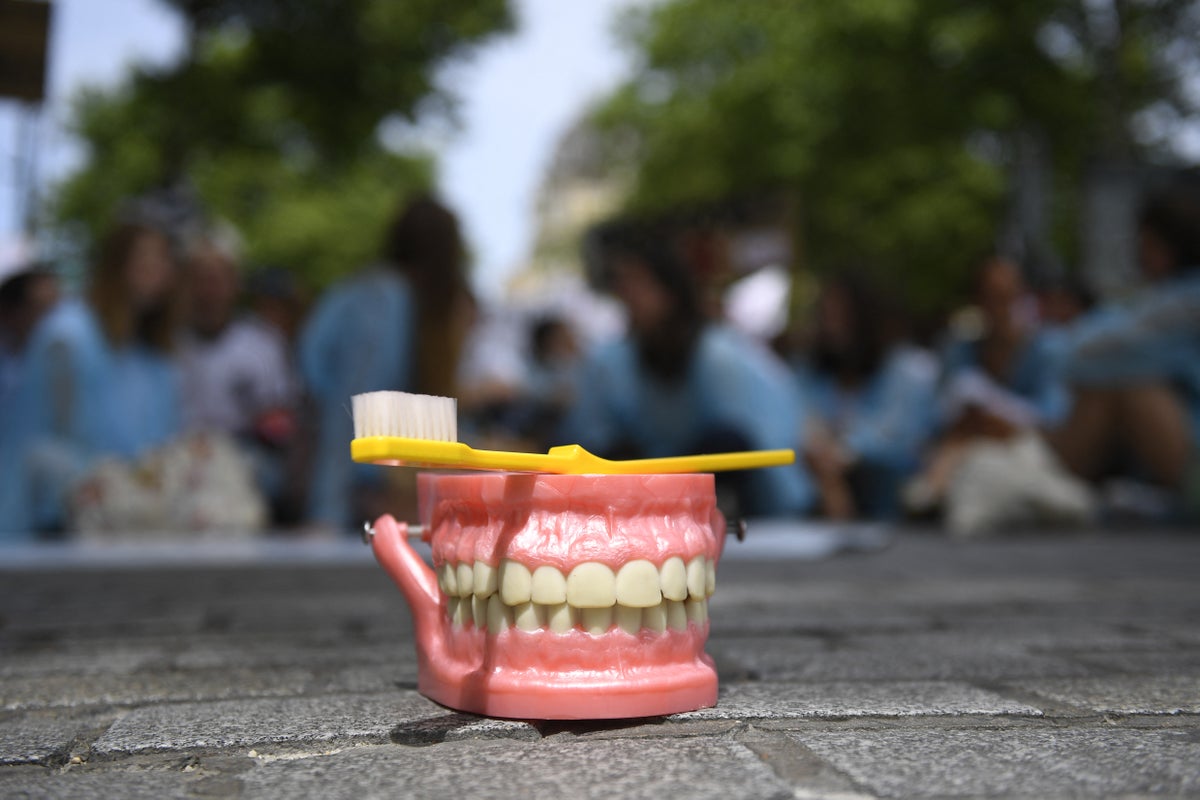
Brushing teeth daily can significantly cut the risk of hospitalised patients catching pneumonia, a new study suggests.
Hospital-acquired pneumonia is a common infection that develops at least 48 hours after admission and is linked to longer hospital stays, higher healthcare costs, and increased mortality, particularly in older adults.
It can be as dangerous as acquiring pneumonia from using ventilators and occurs more frequently but gets far less research attention, scientists say.
A new clinical trial covering nine wards across three Australian hospitals over a 12-month period found that improving oral hygiene could reduce the risk of hospital-acquired pneumonia by about 60 per cent.
The study, involving a total of 8,870 patients, was recently presented at the European Society of Clinical Microbiology and Infectious Diseases Global Congress 2026.
It is the only multi-centre clinical trial of this size carried out in a hospital setting to evaluate this approach.
Clinicians gave each patient a toothbrush, toothpaste, educational material, and access to additional online resources on admission. Healthcare workers assisted patients to improve their daily oral care while letting control groups follow their own routine.

Researchers found the patients who were part of the intervention saw substantial improvement in oral hygiene, with audits showing oral care was undertaken an average of 1.5 times per day.
Exposure to the intervention, according to the study, was linked to a statistically significant reduction in hospital-acquired pneumonia, with incidence rates decreasing from the usual 1 case per 100 patients to 0.41 cases.
“One of the most encouraging findings from this study was the scale of improvement we were able to achieve,” Brett Mitchell, an author of the research from Avondale University in Australia, said.
Typically, hospital-acquired pneumonia cases arise due to fluids from the mouth or throat entering the lungs. It’s more frequently detected in patients who are unable to clear oral secretions.
Researchers call for better education, practical resources and conversations with patients about oral care to reduce cases of hospital-acquired pneumonia. “These infections are thought to arise largely from a patient’s own microbiota rather than person-to-person transmission,” Dr Mitchell explained, adding that improving oral hygiene helps reduce these pathogens in the mouth.
“Our study now provides robust evidence from a hospital setting. The next step is to better understand how structured programmes can be effectively implemented and sustained across hospital wards.”


