.jpeg?trim=0,0,0,0&width=1200&height=800&crop=1200:800 "Gen Z enjoys pay rebound as earnings outstrip millennials – UK Times")

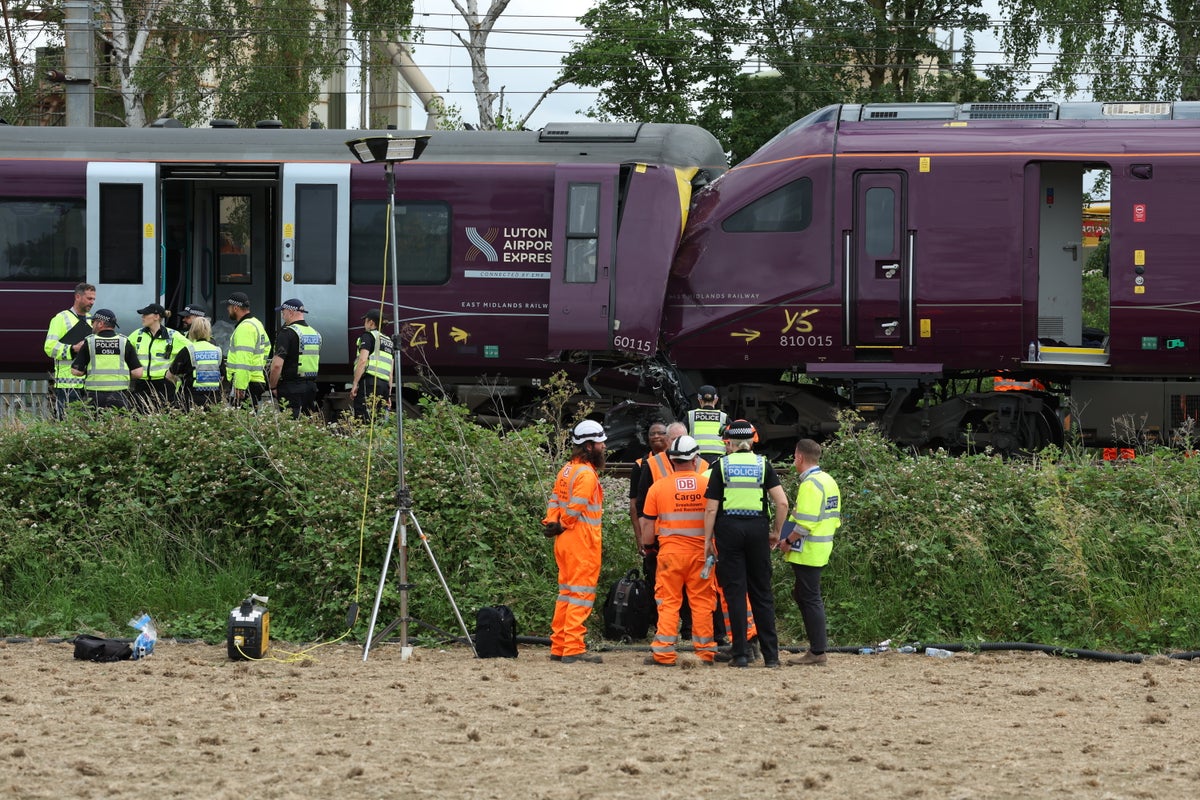
It may be too early to know the cause of the Bedford train accident, the worst for more than two decades. The outcome is horrific enough as it is. Nine people are in a critical condition following the collision between two trains on Friday evening, in which a driver died and 89 people were injured.
As details emerged, a spokesperson for Buckingham Palace said that King Charles’s “thoughts and sympathies are with the family of the deceased and with all those injured or affected”. The scale of the tragedy warrants the soberest of words.
The question for the investigation team is likely to be why the Train Protection and Warning System – introduced across the network after the Ladbroke Grove disaster, which killed 31 people in 1999 – did not prevent this crash. That system, designed to stop trains automatically if they pass a red signal, has worked well since its inception.
Even before we know more, however, we can rule out one kneejerk response, which is to blame privatisation. The two trains involved in this collision were operated by East Midlands Railway, a private company whose service will be taken back into public ownership when its contract expires in October this year.
That is how the Labour government is delivering its manifesto promise to take the train companies into the public sector gradually as franchises expire. But ownership of the rail company is irrelevant in this case if the problem is one of signalling and safety systems, which are operated by Network Rail, the publicly owned company that took over from Railtrack.
Indeed, for most of the time since the privatisation of the railways in 1995, the most important parts, namely the track and the stations, have been in the public sector. They were taken over when Railtrack went bust in 2002 because it could not meet the cost of works to prevent the split rail fault that had caused the Hatfield derailment, which killed four people in 2000.
It must be said that rail travel remains exceptionally safe, and particularly so in the past 24 years. Since the Potters Bar derailment that killed seven passengers in 2002, no more than a single passenger has been killed in any incident. In most years, there have been no fatalities at all. Compare that with the four people killed every day, on average, on our roads.
Even so, we owe it to the family of the driver who was killed, and to the passengers who were in a critical condition as we went to press, to find out what went wrong in this case and to improve safety even further.
This is an issue of culture, organisation and accountability rather than ownership. Whether the railways are publicly or privately owned, the pressure on Heidi Alexander, the transport secretary, to ensure that the lessons are learnt would be the same.
Privatisation did not insulate the Tony Blair government from responsibility for fixing the problem after Hatfield. Alistair Darling, the cabinet minister responsible for the railways at the time, had no ideological desire to nationalise the network, but had to do so because the government had insisted that the money be spent on the safety upgrade.
The debate about ownership is a distraction, then, from the difficult decisions that will have to be made in any case: how much it will cost to provide an acceptable level of safety, and who will pay.
Given that the railways are already subsidised to the tune of several billion pounds a year, the question of the right balance in burden-sharing between the fare payer and the general taxpayer is always a hard one. It cannot be sidestepped by easy answers beginning with “nationalisation”.