



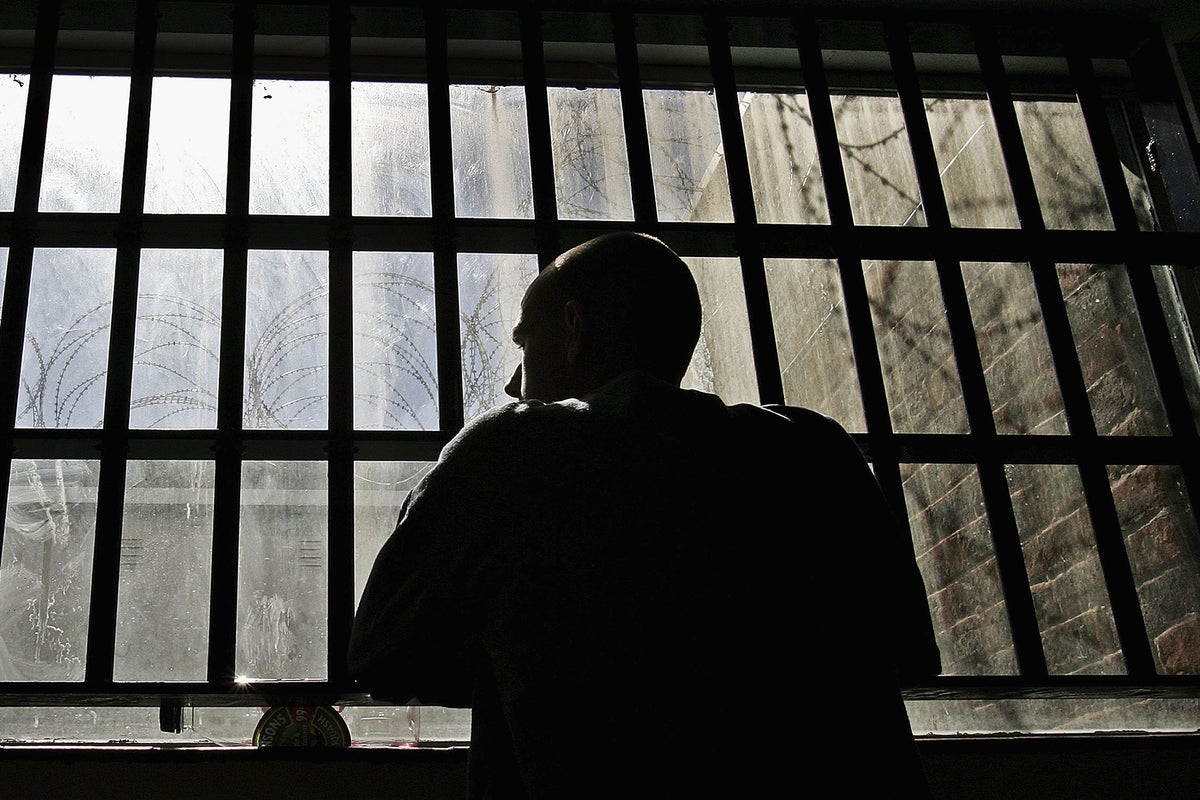
A teenager who spent almost two decades trapped in prison on an indefinite jail term should have only received an 18 month sentence, judges have ruled.
Jay Davis is among six prisoners jailed as teenagers and young men whose indefinite sentences have been quashed by the Court of Appeal in a major win for those battling the injustice of Imprisonment for Public Protection (IPP) jail terms.
He was 19 when he was handed an IPP sentence for possession of a firearm with intent to cause fear or violence in October 2006. He was given a minimum tariff of just nine months, but served nearly 20 years without release under the controversial sentence.
However, appeal judges last week replaced his indefinite sentence with an 18-month fixed sentence, which would have seen him freed some 18 years ago.
IPP jail terms were abolished in 2012, but not retrospectively, leaving thousands of prisoners like Davis languishing indefinitely until the Parole Board approved their release. Others have found themselves trapped in a vicious cycle of recall to prison, often for breaches of strict licence conditions.
Almost 2,400 are still trapped on the jail terms, which have been described as “psychological torture” by the United Nations. This includes many who were children at the time of their offence and handed a type of IPP sentence for under-18s called a Detention for Public Protection (DPP) jail term.
Almost 100 have taken their own lives in prison after losing hope of getting out, however, successive governments have resisted calls to resentence all remaining IPP prisoners.


In recent months, appeal courts have started to overturn sentences for cases in which the sentencing judge failed to take the offender’s age or immaturity into account.
Other sentences overturned last week include Benjamin Hibbert, who was handed a DPP with a two-year minimum tariff in 2009 for three counts of sexual assault committed when he was 15 or 16. His sentence was quashed, although his case was adjourned further pending reports to decide his substitute sentence.
Stuart O’Neill, who was handed an IPP sentence aged 20 in 2009 with a minimum term of three and a half years for rape, had his sentence overturned. It was replaced with an extended sentence of eight years in prison and eight years on licence.
The three cases were flagged by the miscarriages of justice watchdog, the Criminal Cases Review Commission, as part of a major review of IPP and DPP sentences handed to young people.


The commission’s chair, Dame Vera Baird, said investigators are looking at more than 150 other cases.
“All the men were very young at the time they were sentenced and have spent many years beyond their original tariffs in custody,” she said.
“The court’s judgments reflect the importance of properly considering age and maturity when imposing sentences of this nature.
“We will continue to examine other IPP and DPP cases, and I encourage anyone who believes their sentence may have been affected—and who has exhausted their appeal rights—to apply to the Commission.
“I hope today’s decision gives hope to the many families with loved ones who remain in prison way beyond their original tariff.”
The Court of Appeal also quashed the sentences of Jerry Tolbert, Jordan Webster and Dawayne McLaren.

The CCRC has also announced it is referring the case of Liam Bennett, who has spent more than half his life in prison after he was handed an IPP for starting a fire in the attic of an empty building aged 17, to appeal judges for review.
Pleading for his freedom in 2024, he told The Independent: “I have changed so much in 18 years, I have learned so much, I’m confident I will take my chance with release and run with it.”
The CCRC launched their review in January after a string of indefinite sentences were overturned by the appeal courts, with eight of 12 cases’ previous appeals resulting in the sentences being quashed, reduced or substituted.
This includes the father of three, Leighton Williams, who was wrongly handed an IPP sentence with a 30-month tariff for a drunken fight at the age of 19.
He served almost 16 years under the sentence – mostly in custody – before it was quashed and replaced with a five-year determinate sentence two years ago. If he had served half of that time in custody, he would have been out of prison by the time he was 22.
Three appeal judges finally set him free on 9 May 2024, aged 36, after finding the original sentencing judge had wrongly counted a previous offence, committed when he was 17, against him.
After he was released, he told The Independent the jail term had robbed him of 16 years, adding: “I have missed out on growing up with my friends. Going out. Getting a trade, being able to work. Just living a normal life.
“I deserved to go to jail – I understand that. There is no doubt about that. But for the length of time – I don’t think you can justify that.”

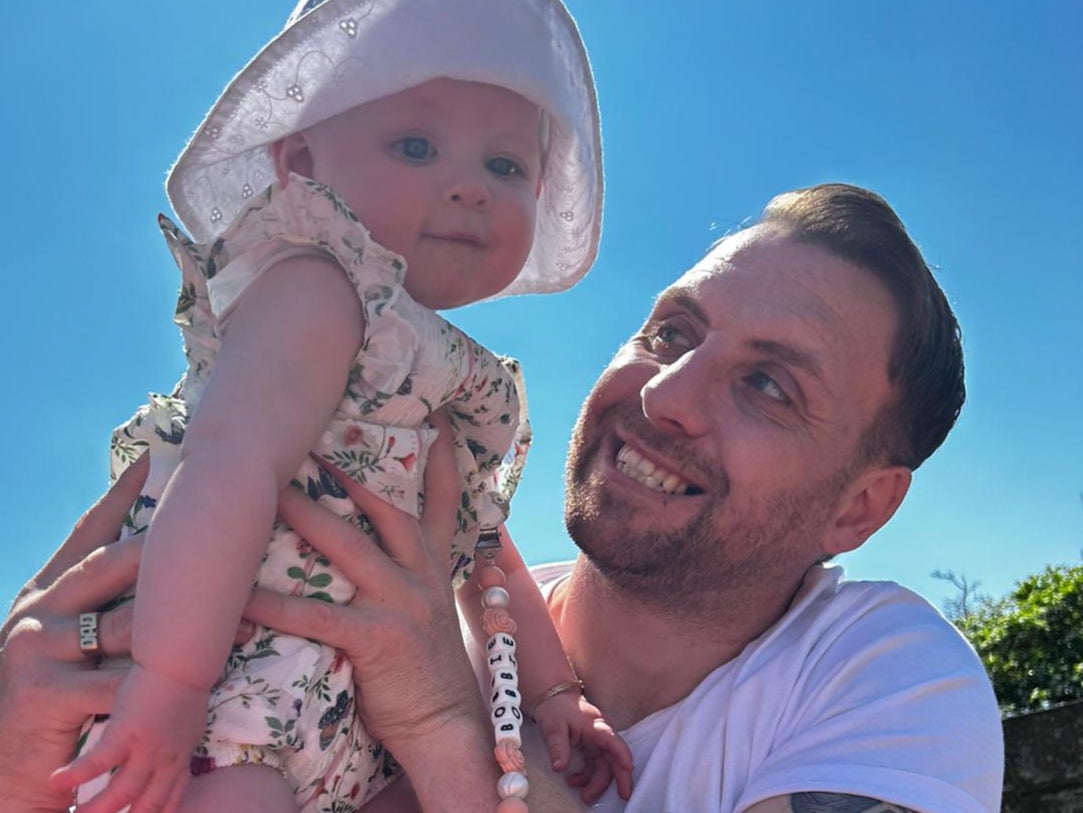
In a similar ruling in October, Darren Hilling’s IPP sentence was quashed and substituted because the sentencing judge had failed to attach the necessary importance to his age and maturity when he committed his crime aged 21.
The rulings have set a precedent which could impact other IPP and DPP prisoners who were handed jail terms as teenagers or young men.
A spokesperson for United Group for Reform of IPP (UNGRIPP) welcomed the latest rulings, adding: “While we celebrate the freedom of these individuals—some of whom were sentenced as young adults and have spent decades in limbo—this ruling highlights the systemic failure of a sentence that remains a stain on the British justice system.
“These cases prove that many original IPP sentences were not only disproportionate but legally flawed.
“Despite being abolished in 2012, over 2,700 people remain subject to IPP sentences. This recent success in the Court of Appeal must act as a catalyst for the Government to take decisive action. We call for an immediate review of all IPP cases involving those sentenced as young adults and a commitment to ending the trauma of indeterminate detention for good.”
The Ministry of Justice was contacted for comment.