
Taiwan’s foreign minister, Lin Chia-lung, arrived in Eswatini days after a planned presidential visit to the African nation was abruptly cancelled, with Taipei accusing China of exerting pressure behind the scenes.
In a message shared after landing, Mr Lin said Taipei would not be held back by “authoritarian forces”.
Taiwan was forced to cancel president Lai Ching-te’s trip after Seychelles, Mauritius and Madagascar revoked overflight permits for his aircraft on a planned visit to Eswatini.
It marked the first time a Taiwanese president had had to cancel an entire foreign trip following airspace denials, in what analysts see as a new strategy to block visits to one of Taiwan’s 12 remaining diplomatic allies.
China praised the three countries for their decision but denied allegations that Beijing had applied economic pressure to block Mr Lai’s travel.
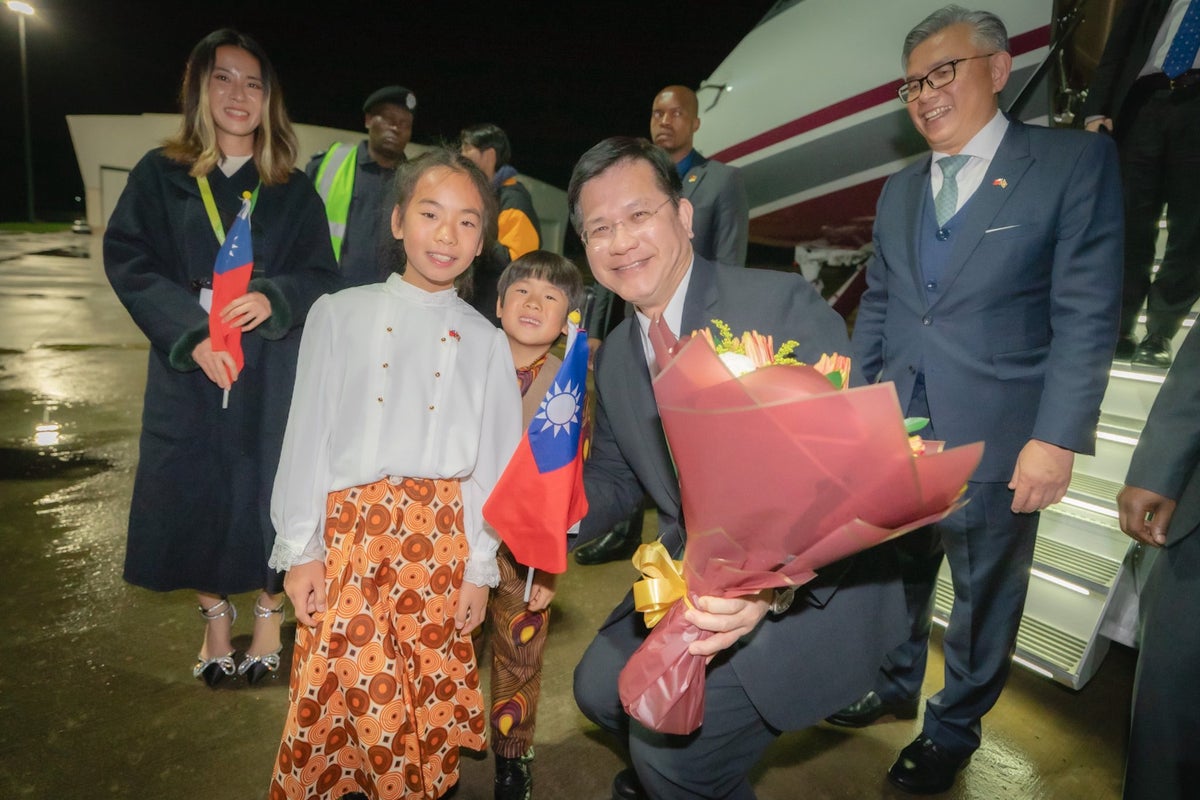
Sharing a photo from the airport in Eswatini, Mr Lin highlighted the close ties between Taipei and Mbabane, while raising concerns over what he described as China’s growing politicisation and “weaponisation” of airspace control.
“At that moment, I felt the deep friendship between Taiwan and Eswatini that transcends distance, and I became even more convinced that Taiwan will not be held back by authoritarian forces,” he wrote.
“We have demonstrated through our actions that Taiwan has the ability to overcome challenges and the determination to engage with the world,” he added.
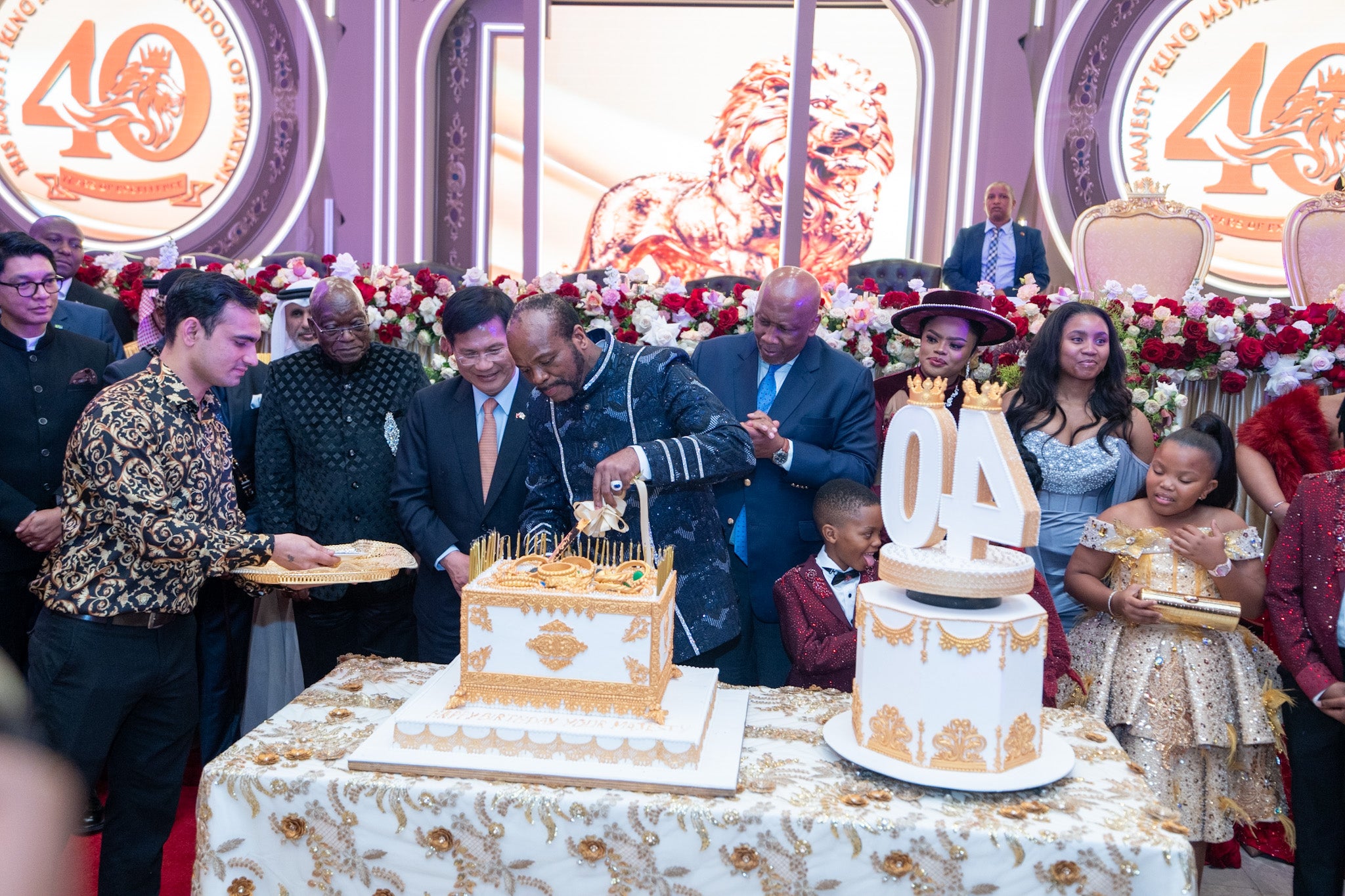
In a video message on Sunday marking the 40th anniversary of King Mswati III’s accession, Mr Lai said Taiwan is a “sovereign country” that belongs to the world.
“Our 23 million people have the right to engage with the international community. The greater the external pressure we face, the more courage and resolve we have,” he said in English.
He added that China’s tactics would not force Taipei to back down or prevent it from engaging with its partners.
Mr Lin did not provide details of his travel route, saying only that his delegation had “overcome all obstacles” to reach Eswatini in his capacity as Mr Lai’s special envoy.
China considers democratically-governed Taiwan to be one of its provinces and does not recognise it as a sovereign country. It frequently calls the issue a “red line” in its diplomatic relations with other countries.
The alleged blocking of Taiwan’s president’s trip to the African nation was denounced by the US, while the European Union, Britain, France and Germany also expressed concern.
Earlier, a spokesperson for China’s Taiwan Affairs Office said Beijing “appreciated the position and actions of the relevant countries in upholding the one-China principle”.
Spokesperson Zhang Han also refuted allegations that Beijing had applied economic pressure on Seychelles, Mauritius, and Madagascar to block the presidential flight.