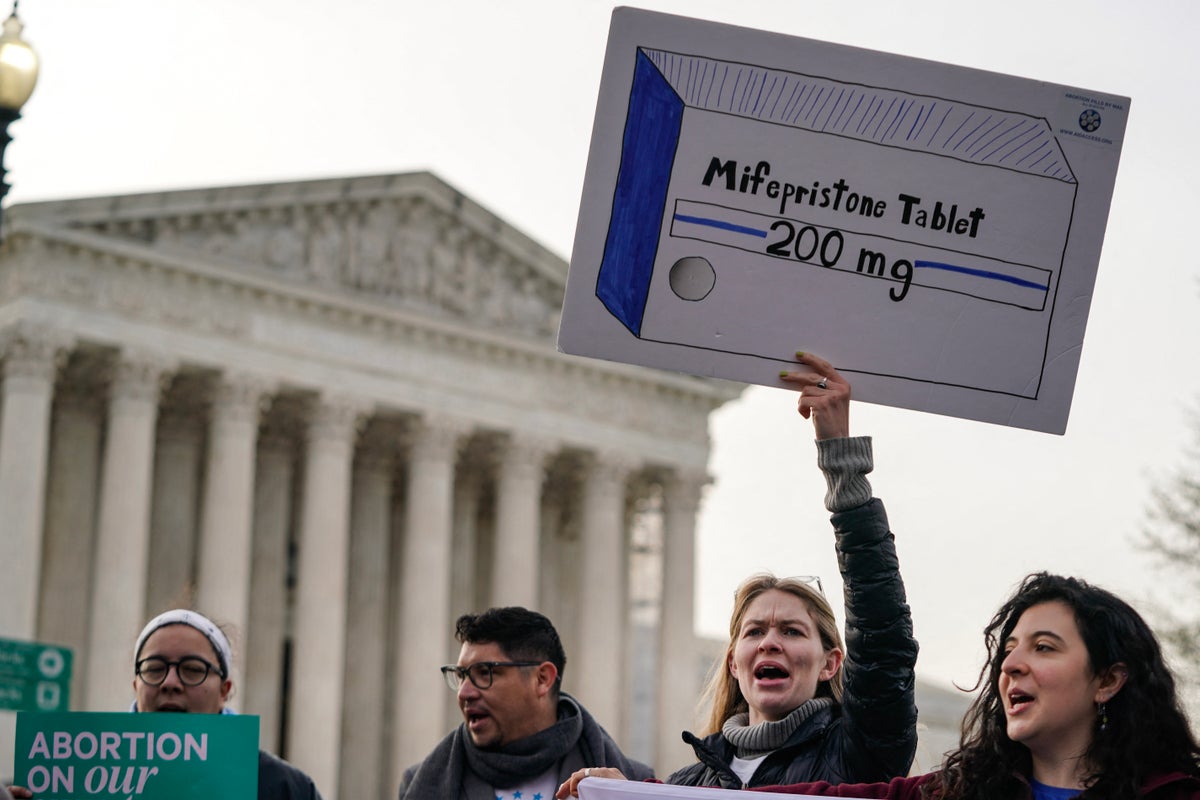
The Supreme Court will continue blocking nationwide restrictions on mifepristone after a conservative appeals court cut off mail-order and telehealth access to the widely used abortion drug.
If the lower court’s decision was allowed to take effect, millions of patients across the country could be forced to travel to a health center to take the mifepristone pill in person — a journey that could be hundreds of miles for people living in states where abortion is banned altogether.
The Supreme Court paused the appeals court ruling twice over the last week. The recent pause ended at 5 p.m. May 14, but justices have now frozen the lower-court ruling while the legal challenge continues.
Conservative Justices Clarence Thomas and Samuel Alito dissented.
Advocates have warned that in-person requirements for mifepristone in a country with fragmented access to legal abortion could pose the biggest threat to abortion access since Roe v Wade was overturned. The latest fight for access to the commonly used drug will likely trigger another high-profile battle for abortion rights at the nation’s high court.
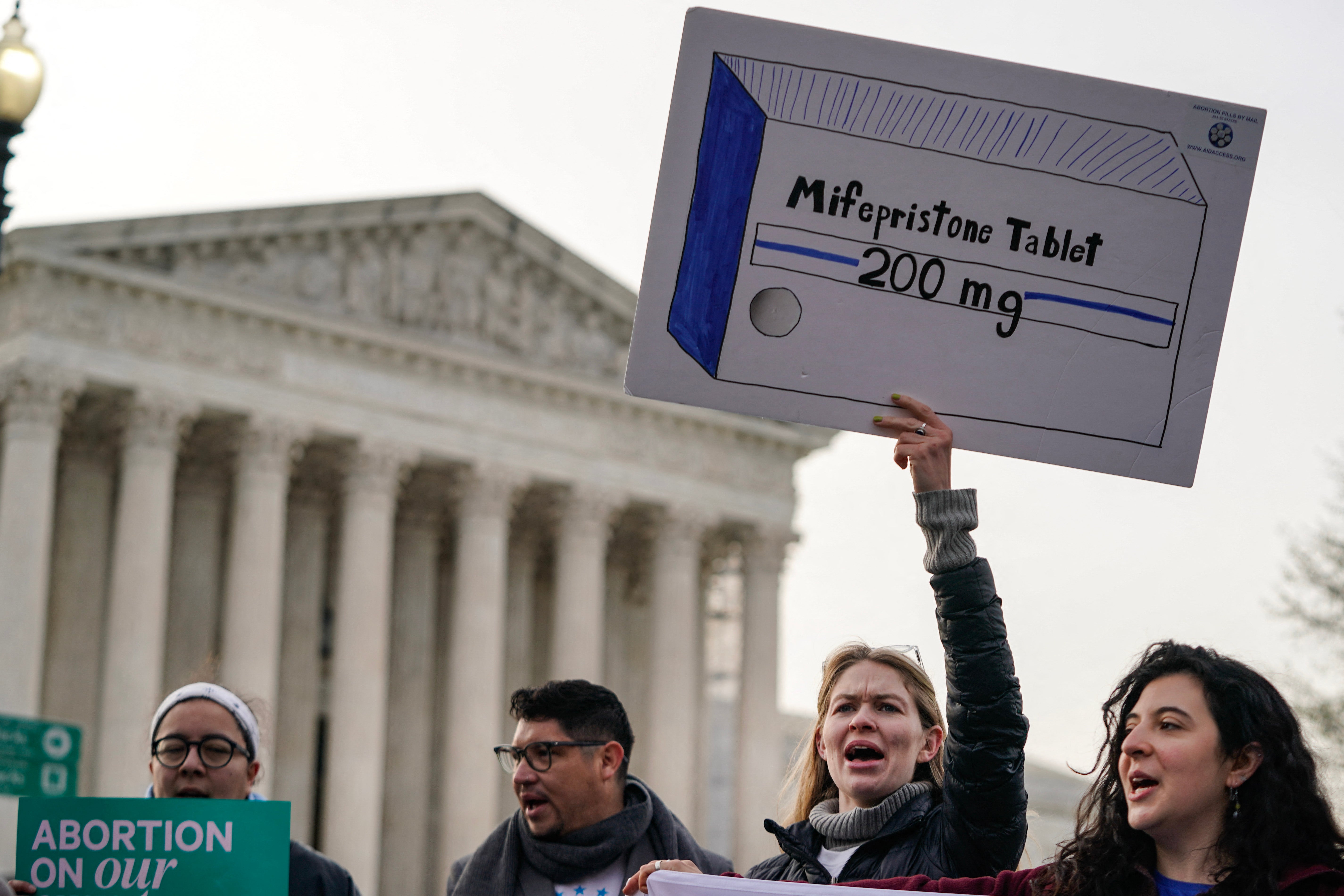
Medication abortion accounts for the vast majority of abortions. Roughly 63 percent of all abortions are medication abortions, according to the Guttmacher Institute, a reproductive health advocacy group.
Mifepristone, one of two prescription drugs used in medication abortions, is approved for use by the Food and Drug Administration up to 10 weeks of pregnancy. Nearly 93 percent of all abortions are performed before the 13th week, according to the CDC.
In 2021, the FDA under then-President Joe Biden permanently lifted the in-person requirement for mifepristone prescriptions, allowing patients to access the drugs via telehealth appointments and online pharmacies.
More than one in four people who have an abortion get their medication through telemedicine, according to Guttmacher.
Anti-abortion activists have urged Donald Trump’s administration and the courts to revoke telehealth access while demanding the FDA strip mifepristone’s approval altogether — a campaign that critics have called a backdoor effort to ban abortion nationally.
The FDA first approved mifepristone more than 20 years ago, but the Trump administration has pledged to revisit the drug’s approval process.
On May 1, the Fifth Circuit Court of Appeals in Louisiana reinstated a nationwide requirement that patients obtain the drug in person, briefly upending abortion access for millions of people across the country.
Drug manufacturers then turned to the Supreme Court to block the ruling.