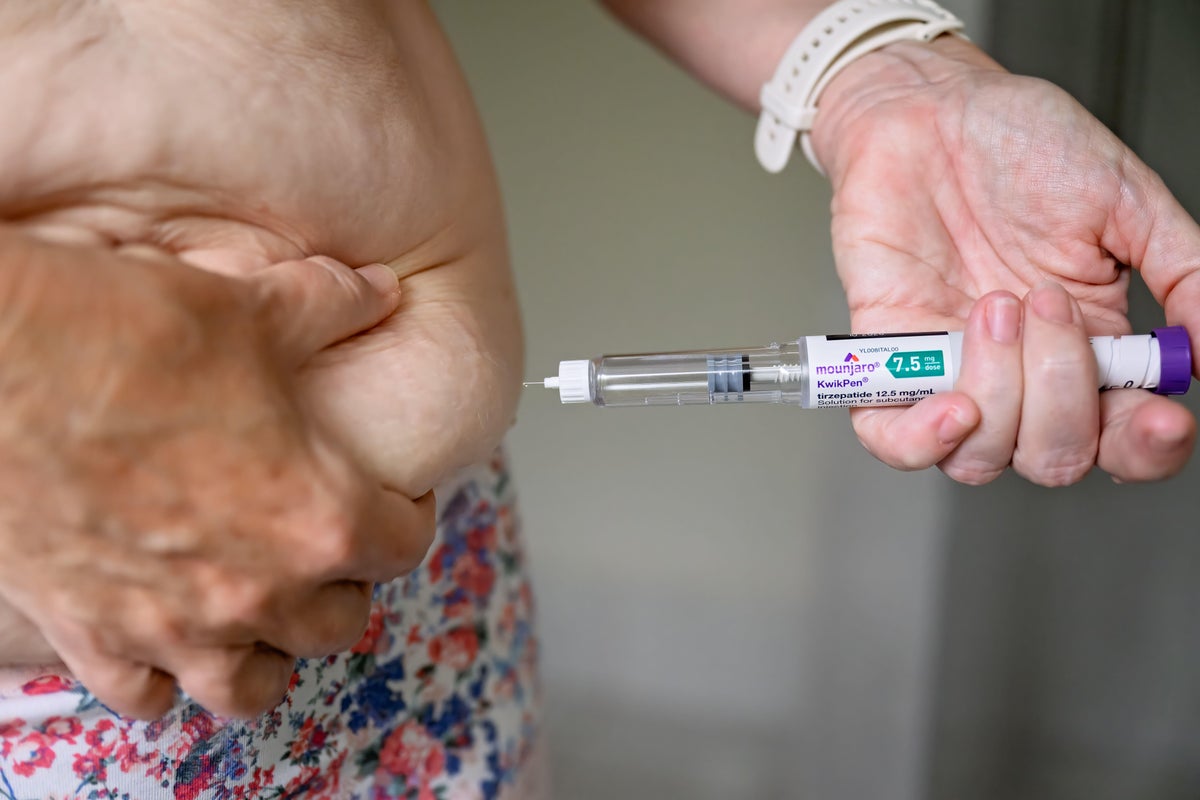

Stopping GLP-1 weight loss and diabetes drugs for just six months can quickly erase any related benefits for cardiovascular health, researchers have said.
A three-year study by Washington University in St. Louis included more than 333,000 U.S. veterans with type 2 diabetes taking the drugs showed that halting or interrupting treatment was linked to a significant increase in the risk of major cardiovascular events.
After two years off GLP-1 drugs, patients had a 22 percent higher risk for heart attack, stroke and even death.
The findings build on previous research showing stopping taking the drugs can also reverse weight loss, and may help to reduce inflammation and lower blood pressure, which are factors in cardiovascular events.
“There is enormous exuberance about starting GLP-1 drugs, but not nearly enough attention to what happens when people stop,” Dr. Ziyad Al-Aly, a clinical epidemiologist at the university and the study’s senior author, said in a statement.

“Many quit after a few months because of cost, side effects or shortages,” he continued. When they stop, it’s not just weight that comes back; they experience a resurgence in inflammation, blood pressure and cholesterol. Weight regain is visible; the metabolic reversal is not.”
The study compared 132,551 participants who were prescribed GLP-1s for their type 2 diabetes, with 201,136 participants who were prescribed another diabetes treatment known as sulfonylureas.
The participants’ health was tracked every six months, and more than a quarter stopped taking GLP-1s and 23 percent had an interruption of six months or more.
But participants who consistently took the medications for three years had an 18 percent reduced risk for life-threatening cardiovascular events.
A slightly reduced benefit was seen for people who were on the drugs for two to 2.5 years before discontinuing treatment.
GLP-1 users who stopped taking the drugs for a year had a 14 percent increased risk of cardiovascular events.
“Our data suggest this metabolic whiplash is detrimental to heart health,” Al-Aly said. “Restarting the medication helped restore some protection, but only partially, showing that discontinuation leaves a lasting scar.”


One in eight U.S. adults use the medications, such as semaglutide-based Ozempic and Wegovy and tirzepatide-based Mounjaro and Zepbound.
About half of users stop GLP-1s shortly after treatment, due to the high cost of medications, uncomfortable side effects and age, researchers say.
Drugmakers are working to make their products more accessible and affordable. Novo Nordisk, the pharmaceutical giant that makes Ozempic and Wegovy, recently announced plans to slash prices by up to 50 percent.
Experts say that the drop off is concerning, and that the medications aren’t meant to be used as a quick fix.
“For them to work effectively, they need to be taken long-term. All of the beneficial effects on appetite control are lost if the medication is stopped,” Reimar Thomsen, a professor at Denmark’s Aarhus University, explained in a statement.