

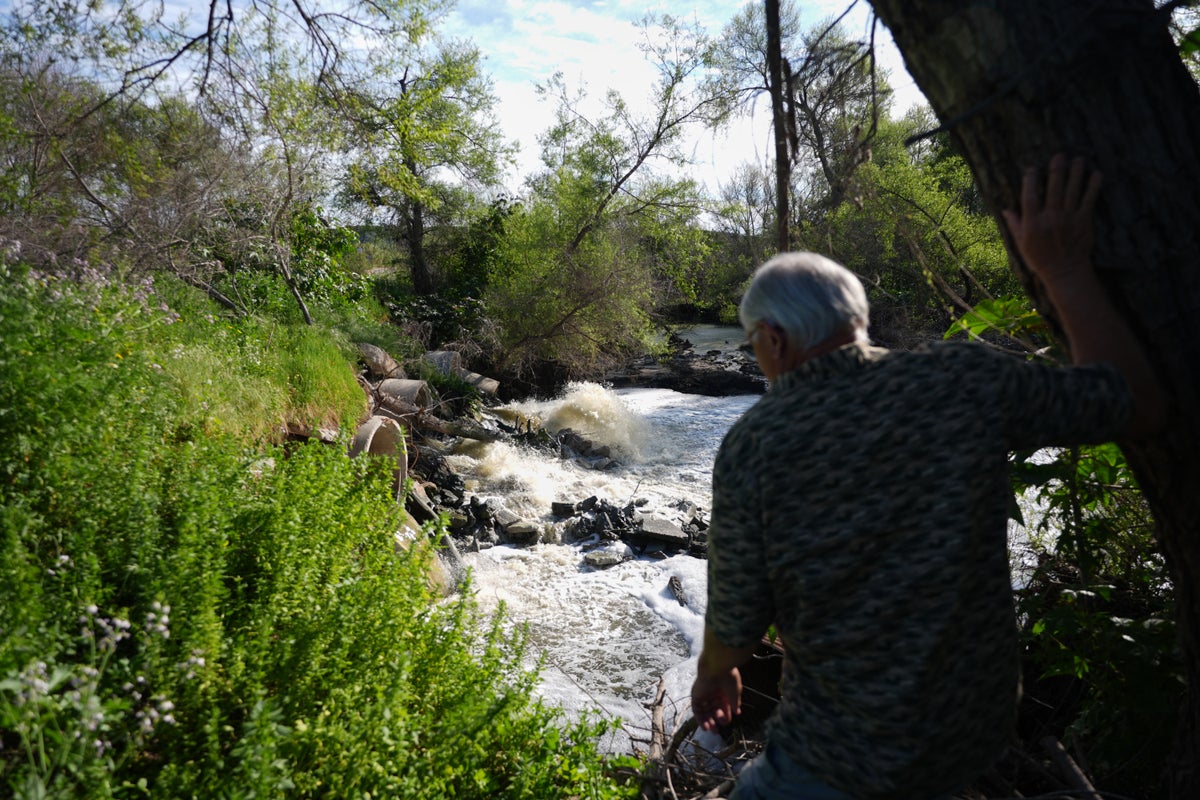
The pervasive stench of rotten eggs has become an unwelcome constant in Steve Egger’s Southern California home, particularly at night, as the nearby Tijuana River churns with raw sewage from Mexico before emptying into the Pacific Ocean.
Egger, 72, and his wife frequently suffer from headaches, waking up congested and coughing up phlegm, despite their home being equipped with a hospital-grade filtration system that cycles the air every 15 minutes. “Most nights we breathe in a horrible stench,” he said. “It’s awful.”
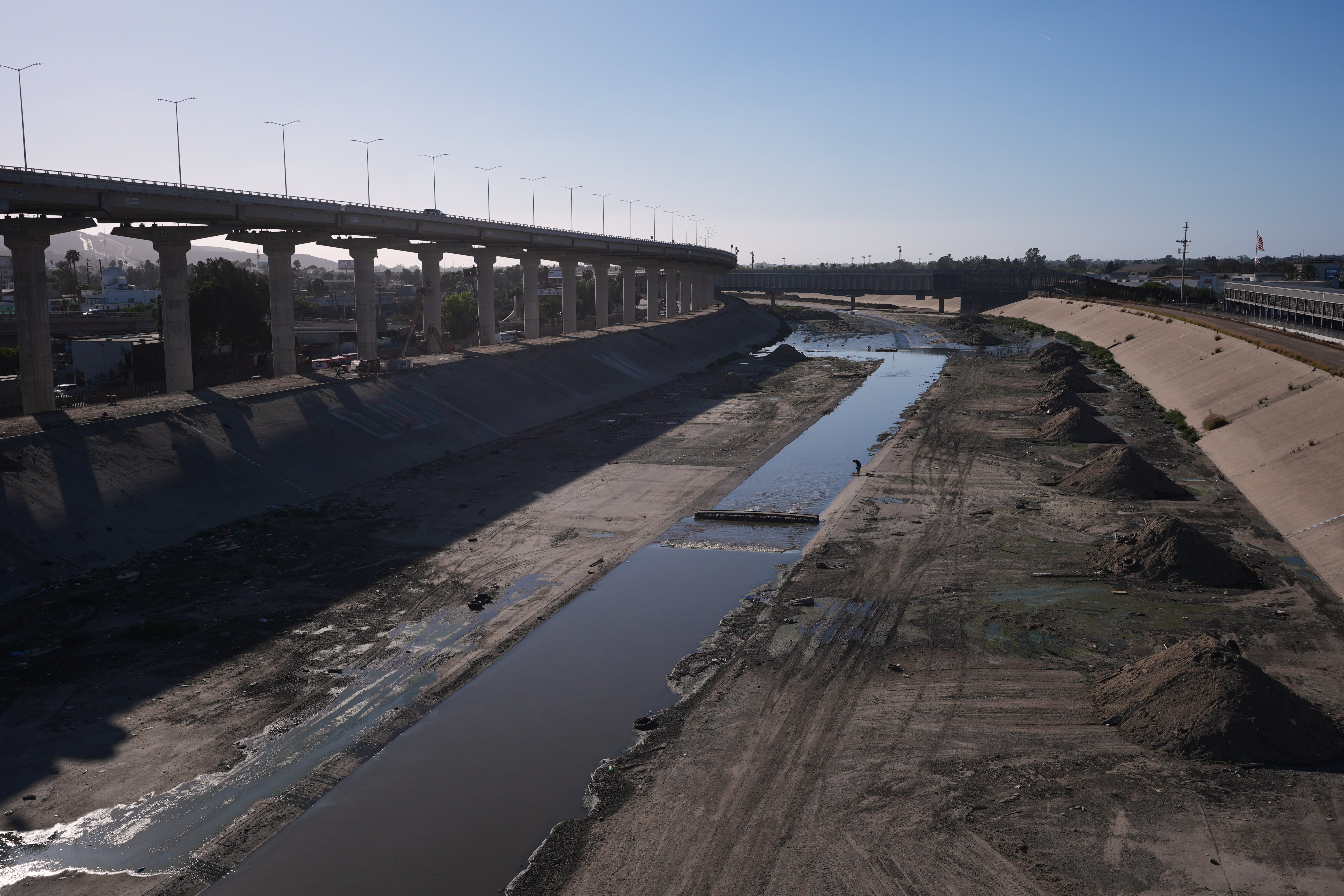
Since 2018, the International Boundary and Water Commission reports that over 100 billion gallons of raw sewage, laden with industrial chemicals and trash, have inundated the Tijuana River. This waterway flows through land where three generations of the Egger family once raised dairy cows.
While the United States and Mexico signed an agreement last year to address the long-standing issue by upgrading wastewater plants to cope with Tijuana’s population growth and industrial waste, tens of thousands of people continue to be exposed to the sewage.
Environmental Protection Agency Administrator Lee Zeldin indicated during a February visit to San Diego that resolving this environmental crisis, which disproportionately affects a largely poor, Latino population, could take approximately two years.
The dangers of raw sewage extend far beyond its foul odor. It releases hydrogen sulfide, a toxic gas capable of eroding nasal neurons and triggering asthma attacks. According to the Centers for Disease Control and Prevention, exposure can lead to headaches, nausea, delirium, tremors, cough, shortness of breath, skin and eye irritation, and even death.
The long-term health implications are only beginning to be understood.
Currently, there is no federal safety standard for hydrogen sulfide, except for workers in high-risk environments like wastewater treatment plants. Outdated state standards, some decades old, are now being re-evaluated. A California proposal seeks to update the state’s 56-year-old standard to reflect current health risks, while Texas lawmakers are also considering revisions.
Democratic Senator Steve Padilla, who represents the Tijuana River Valley and authored the California bill, noted, “I think when you look back when the standard was first established and then it was reviewed, it was all about nuisance — basically it was all about odor.”
He added, “I don’t think we had the understanding scientifically of what the health impacts were here, and now we do.” Even if the bill passes, a new standard is unlikely to be developed before 2030.
A “Stop the Stink” sign adorns Egger’s fence, part of a campaign by Citizens for Coastal Conservancy demanding official action on the cross-border sewage. The 120-mile river originates in Tijuana, Mexico, crosses into California, and empties into the ocean.
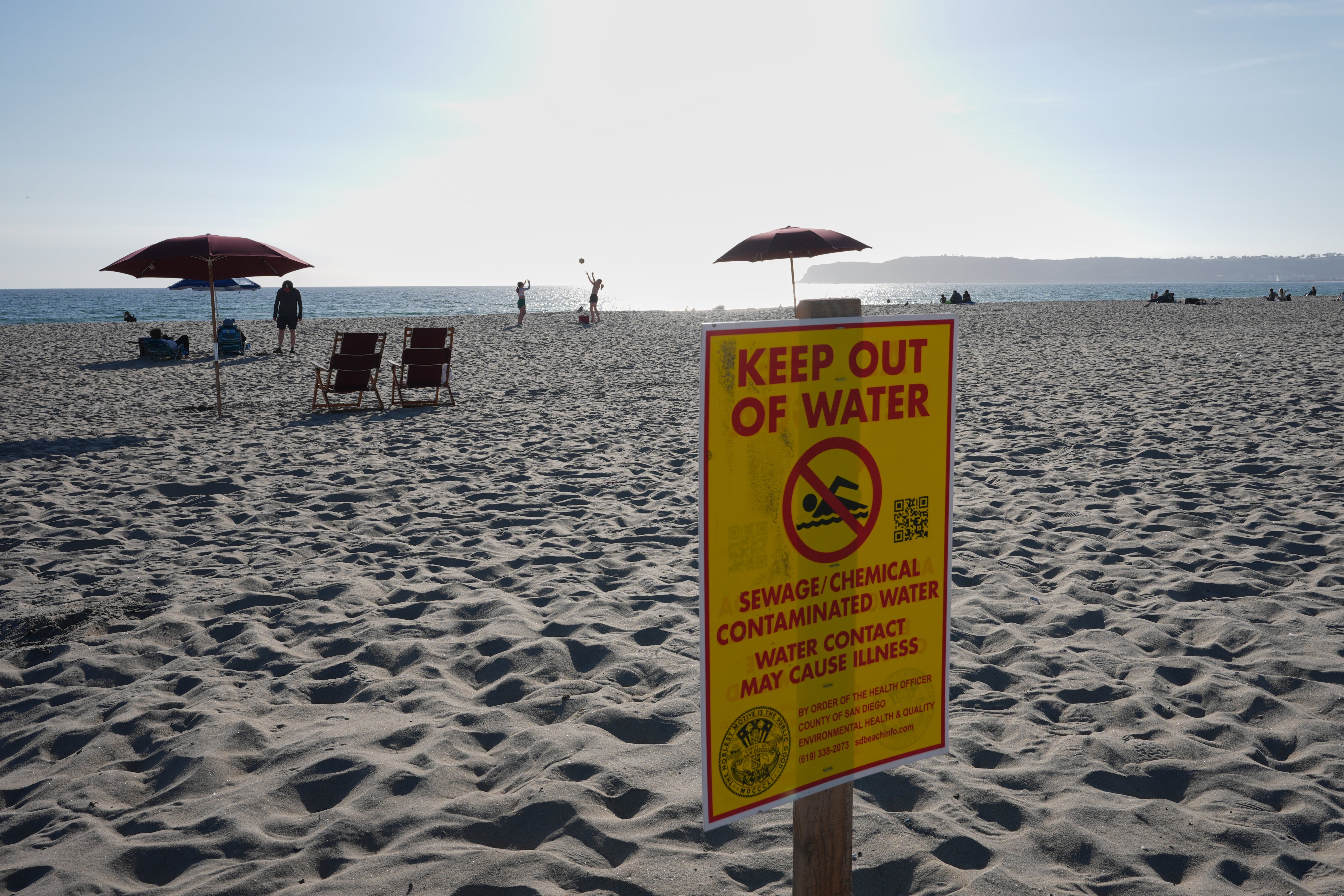
Nearby San Diego County beaches have faced years of closures, and Navy SEALs training in the waters have reported illnesses. Since January alone, the Tijuana River has carried 10 billion gallons of mostly raw sewage and industrial waste across the U.S. border.
This contrasts sharply with a January pipe rupture that sent 244 million gallons of untreated sewage into the Potomac River, affecting affluent, largely white communities, which prompted federal intervention within weeks.
A 2024 sampling by San Diego County and the CDC, covering approximately 40,000 households near the Tijuana River, found that 71% could smell sewage inside their homes, and 69% had a family member fall ill from exposure. Ryan Sinclair, an associate professor of environmental microbiology at Loma Linda University School of Public Health, explained that even at low levels, “you’re going to feel like it’s in your sinuses. You can’t get rid of the smell.
It’s going to be a constant irritation.” The EPA has stated it is working with local and state officials to mitigate the smell, and San Diego County distributed over 10,000 air filters this year. Yet, the air remains a threat, with the river’s foam now visible from space.
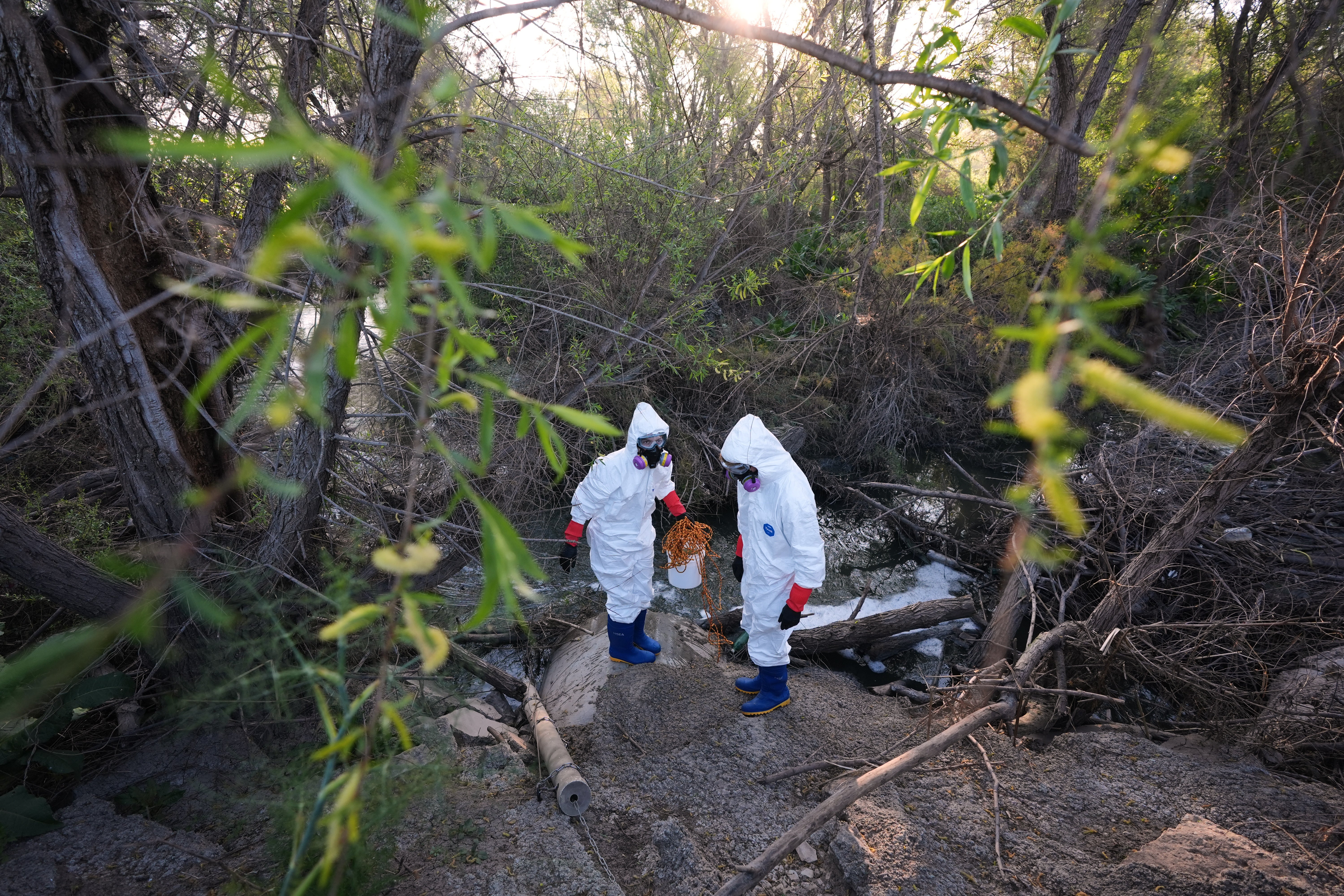
In September 2024, Kimberly Prather, a chemistry professor at the University of California, San Diego, and her research team installed air monitors in Egger’s neighborhood.
Their findings were stunning: hydrogen sulfide concentrations were 4,500 times higher than typical urban levels and 150 times higher than California’s air standards when river flows peaked at night. Many residents, including Egger, felt vindicated.
“They’d been being more or less gaslit and told, ‘There’s gas. It’s a nuisance. It smells, but it’s not bad,’” Prather said. Her researchers have since detected thousands of other gases from the river that are odorless and “many of them are more toxic.”
Egger’s doctors have advised him to move, though they haven’t provided a written diagnosis of hydrogen sulfide exposure. However, his family’s roots run deep; his wife grew up in Tijuana, and his brother and late brother’s family live in neighboring houses on what was once Egger Dairy, with dilapidated barns and rusting farm equipment nearby. “This is where I’ve lived all my life, with my family, my parents, my grandparents,” he said. “This is home.”
Egger recalls swimming in the river as a boy when it only flowed during the rainy season. Now, mostly filled with sewage and industrial waste, it flows year-round. He believes restoring the river to its historical route, closer to the border and away from residences and schools, would prevent ponding and the creation of hydrogen sulfide hotspots.
Less than half a mile from Egger’s home, the smell is overwhelming where the river emerges from pipes after being forced briefly underground near Saturn Boulevard, a location scientists call “the Saturn hot spot.” The stench permeates passing cars, lingering for days even with windows closed.
Dr. Matthew Dickson and his wife, Dr. Kimberly Dickson, operate a clinic about a mile from this hot spot. Many of their patients present with migraines, nausea, wheezing, eye infections, and brain fog. Asthma sufferers report increased inhaler use when the air is foul. “They’d say, ‘You know, I feel better when it doesn’t smell outside,’”
Dr. Kimberly Dickson observed. In August 2023, a tropical storm caused the river to overflow onto the streets, tripling the doctors’ caseloads within days. Electronic health records confirmed their suspicions: when river flows surged, the number of patients treated for respiratory problems increased by 130%. “Every day that this isn’t fixed,” Dr. Matthew Dickson warned, “more people are getting sick.”