





Solar power has reached unprecedented milestones in the United States, emerging as the leading source of new electricity generation, even as Donald Trump’s administration actively promotes coal.
New data reveals that solar energy is rapidly gaining ground, underscoring a significant shift in the nation’s energy landscape despite federal policy.
For the first time in May, solar supplied a greater share of the nation’s electricity than coal, accounting for 12.8% compared to coal’s 12.2%, according to global energy think tank Ember.
This marked coal’s fourth-lowest monthly share ever. The findings, supported by a report from the Solar Energy Industries Association (SEIA) and Wood Mackenzie, highlight solar’s continued growth and coal’s ongoing decline.
“For years solar power has risen in the U.S. electricity mix,” said Nicolas Fulghum, senior energy and data analyst at Ember.
“At the same time, coal power has lost its status, first as the largest source in the U.S. mix, and then gradually over the years has fallen even further.”
Fulghum added that solar became the third-largest source of electricity in the U.S. in May, trailing only natural gas and nuclear. Coal generation hit an all-time monthly low in April, rebounding only modestly, which allowed increasing solar generation to surpass it.
Electricity demand in the U.S. is on the rise after two decades of stagnation, driven by the needs of artificial intelligence, domestic manufacturing, and the electrification of transportation and heating.

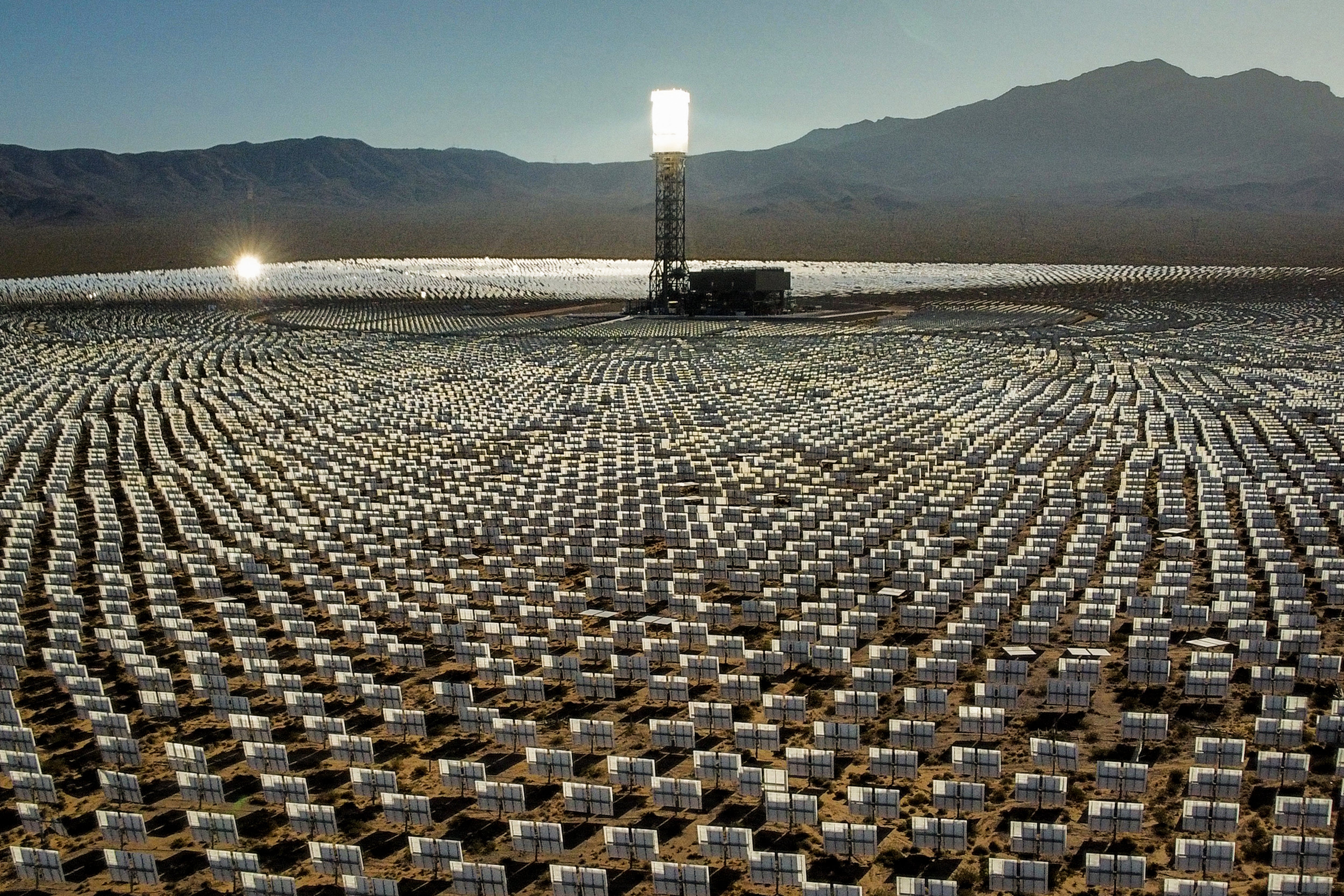
Fulghum anticipates more months where solar generation will exceed coal, eventually overtaking it on an annual basis within a few years. These milestones, he noted, demonstrate solar’s “staying power” despite reduced federal support for renewable energy.
Despite these trends, Donald Trump announced plans last week to bolster the struggling U.S. coal industry, allocating nearly $700 million to support coal-fired power plants and exports.
At a White House event, Trump declared that “coal’s a great business,” adding that “in terms of power, there’s really nothing like it.”
However, industry leaders like Martin Pochtaruk, CEO of solar panel manufacturer Heliene, argue that investors prioritize returns, making solar the fastest-growing fuel for power generation.
A White House spokeswoman defended the administration’s energy policies, stating they aimed to strengthen national security.
“The President has reversed the Left’s devastating policies, saved the American coal industry, prevented the retirement of more than 17 gigawatts of power, and saved lives during heightened demand periods,” Taylor Rogers said.
Yet, SEIA reports that solar has been the top source for new power for five years, with solar and battery storage comprising 91% of all new generating capacity in the first quarter.
The Trump administration has canceled solar and wind projects, implemented policies that slowed clean energy permitting and development, and terminated $7 billion in funding for affordable solar energy projects.
“As power demand skyrockets, political and regulatory attacks are slowing down the exact resources we rely on,” said Darren Van’t Hof, interim president and CEO of SEIA.
“Impeding the only sector that is actively building new power is a reckless gamble that will only drive electricity bills higher.”
Legal challenges have followed, including a lawsuit against the Environmental Protection Agency over the cancellation of the Solar for All program, and a federal judge recently struck down IRS guidance restricting tax credits for wind and solar projects.
Interestingly, states won by Donald Trump in the 2024 election accounted for 74% of all solar capacity installed in the first quarter of 2026. Texas, Florida, Ohio, Indiana, Michigan, Arizona, and Mississippi were among the top 10 states for new solar additions.
The U.S. now boasts over 6 million solar installations across all sectors. Johanna Neumann of the Environment America Research and Policy Center called this growth “good news for our health and our planet,” noting that solar is now more affordable, scalable, and abundant than any other energy source.
She emphasized that the growth of renewable energy is a “50-state story,” challenging the misconception that it is limited to coastal or liberal areas.

