




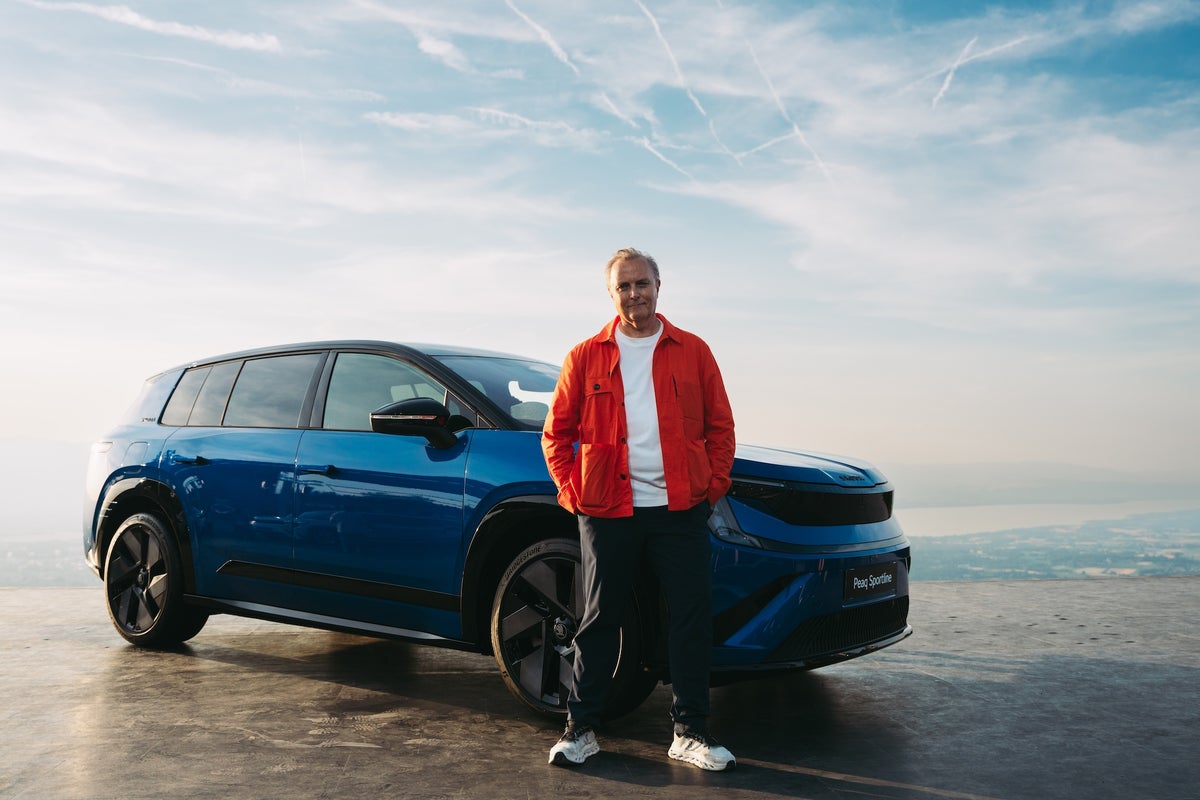
Škoda has spent years building a reputation for making sensible family cars that do the everyday jobs properly. You get the useful boot, the sensible cabin, the little details you never knew you needed until you have them, and usually a price that makes you look twice at what else is on offer.
The Peaq takes that familiar Škoda formula and stretches it about as far as it will go. This is the company’s new electric flagship, its biggest production car yet and its first proper seven-seat EV. It sits above the Enyaq in the range and measures nearly 4,900mm long. It also gives Škoda a car to take on the larger electric SUVs that have increasingly become the default choice for families who need plenty of seats, plenty of room and enough range to make longer journeys less of a logistical exercise.
The timing is interesting, too. Škoda has recently been busy filling in the lower reaches of its electric line-up with the smaller Epiq, while the Peaq arrives at the other end of the scale. In a fairly short space of time, the brand has gone from having one electric SUV in the Enyaq to offering an increasingly broad selection of them with the brilliant Elroq and a coupe version of Enyaq, too.
The Peaq is a very different proposition from the little Epiq, of course. It is designed for families with a lot of people to move, a lot of luggage to carry and, potentially, a lot of miles to cover. It has seven seats, an 86kWh battery, an official range of up to 390 miles with a boot that can grow from a useful 299 litres with all seven seats in place to a van-like 2,075 litres with the second and third rows folded flat.
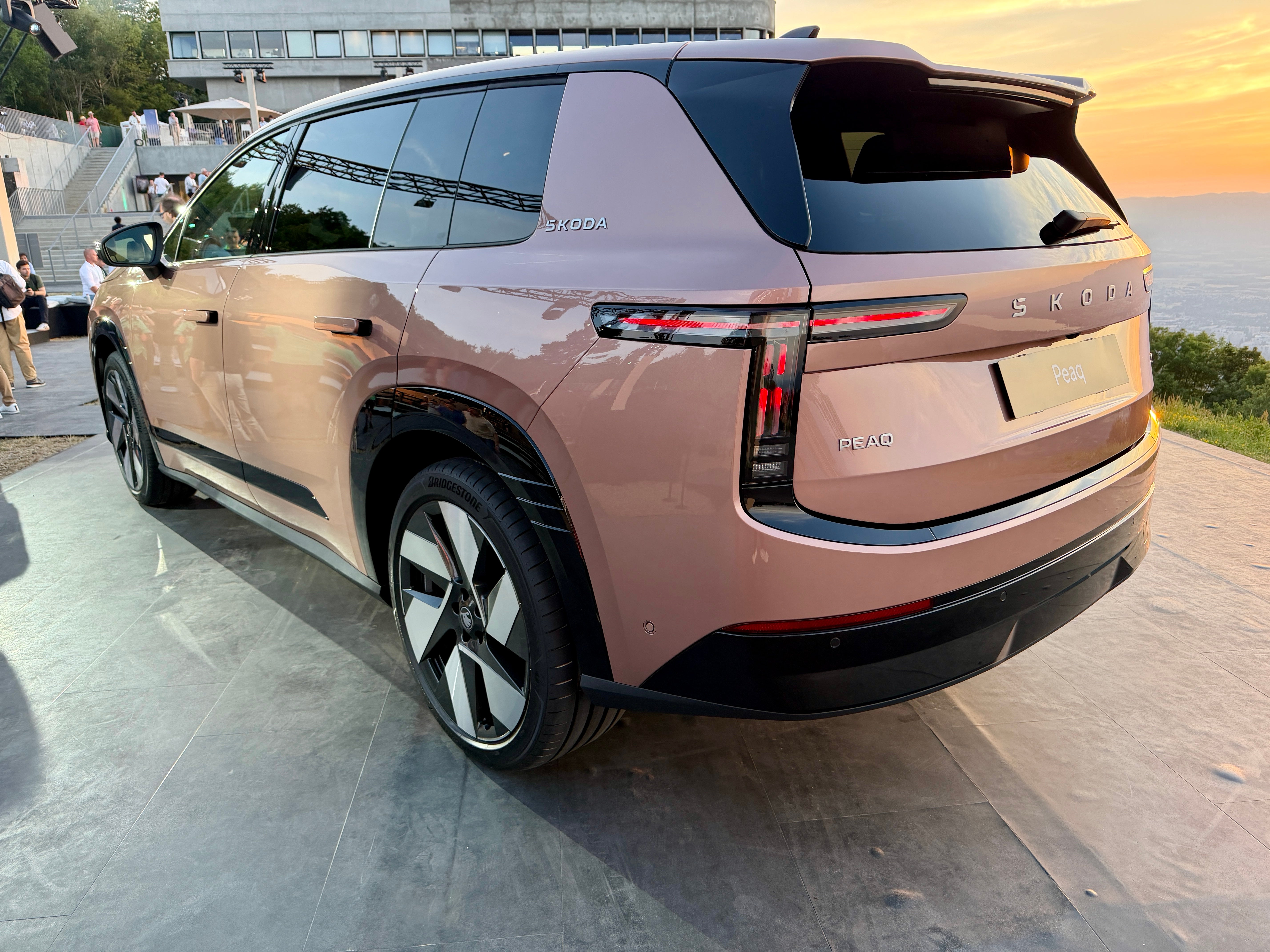
At first glance, the Peaq looks like a big, slightly posh Škoda. That is no bad thing. It follows the company’s Modern Solid design approach, with the illuminated Tech-Deck Face at the front rather than a conventional grille, slim T-shaped lights, a chunky stance and clean surfaces. It is not trying to look unnecessarily dramatic, but it has a proper sense of presence, especially on larger wheels.
This is also the first Škoda production model with flush door handles, which sit neatly within the bodywork when the car is locked or moving, then extend when you approach with the key. It is a small detail, but it makes the Peaq feel like a step up from the brand’s more familiar models.
The real story, though, is inside. Before I drove the car, I had already spent time climbing through all three rows, trying the technology, checking the storage and generally poking around the areas family buyers will care about most. The quality inside, the space, the style, the kit and all the clever thinking were immediately obvious. Škoda has clearly worked hard to make the Peaq feel like a proper flagship rather than simply a larger Enyaq with an extra pair of seats in the boot.
How we tested
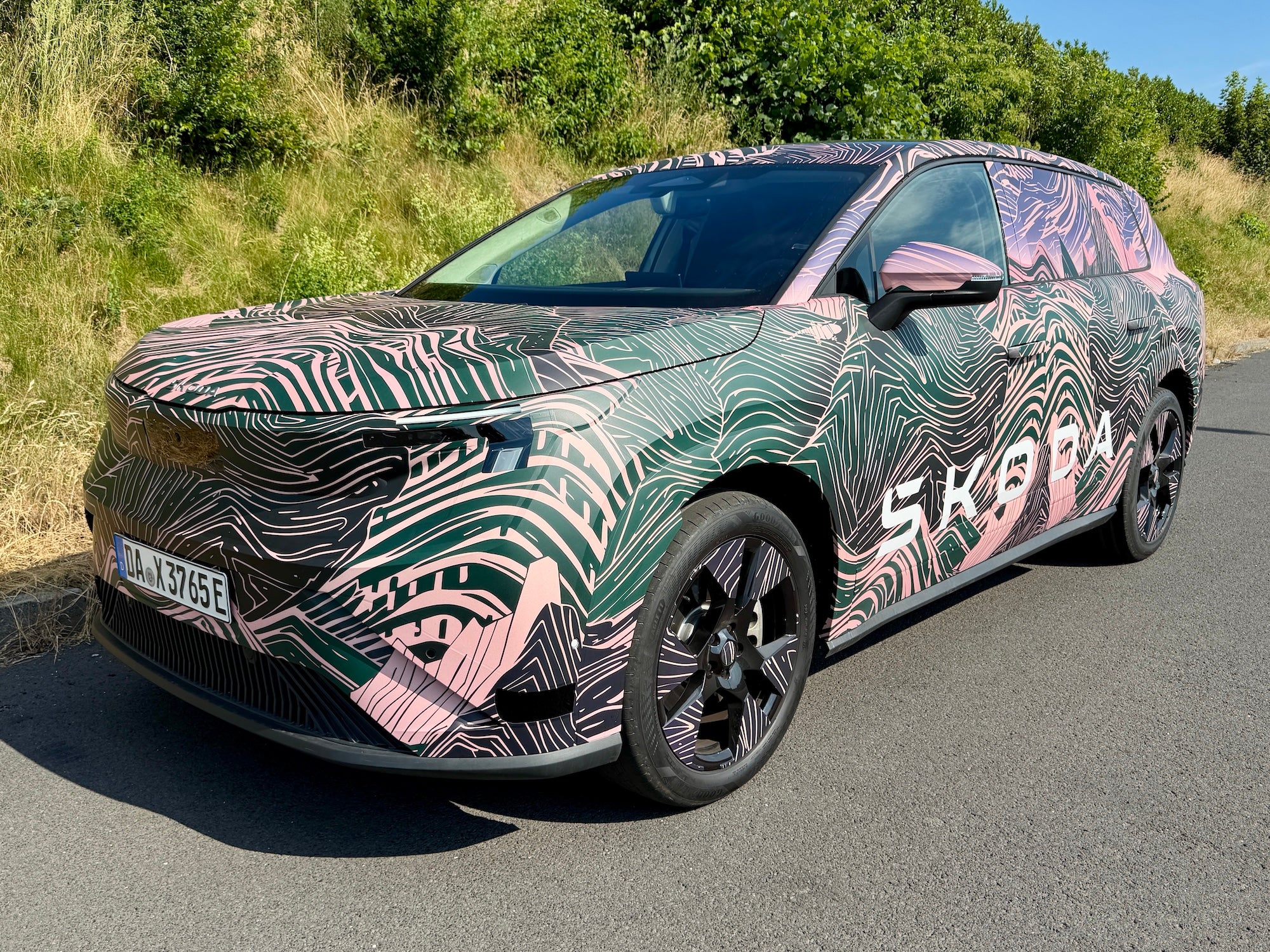
I drove a disguised pre-production Škoda Peaq on familiar roads in Germany as part of my annual German Car of the Year judging. That included town roads, tight car parks and unrestricted autobahn running. I had also assessed production cars at the launch event a week earlier, assessing the space, quality, practicality and technology on board.
Independent rating: 9/10
- Pros: Exceptional passenger and luggage space, surprisingly easy to manoeuvre, polished cabin, strong range, impressive refinement, generous standard equipment
- Cons: Some of the most appealing options arrive later, rapid charging not especially fast
Škoda Peaq specs
- Price: £51,980
- Battery size: 86kWh
- Maximum claimed range: 390 miles
- Miles per kWh: 4.6
- Charging : 199kW, 10-80 per cent in 28 minutes
Battery, range, charging, performance and drive
Every UK Peaq gets the same 86kWh battery, the largest fitted to any Škoda EV to date. There are two powertrain options: the rear-wheel-drive Peaq 90, with 282bhp, and the all-wheel-drive Peaq 90x, which produces 295bhp.
The latter is the quicker of the pair, getting from 0-62mph in 6.8 seconds. That is brisk enough for a large, seven-seat family SUV, although the Peaq is not trying to be a sports car. The point is not to make the children in the third row feel as if they have accidentally climbed into a rollercoaster. It is to make overtaking, joining motorways and carrying a full load of people and luggage feel easy – and on my test there was the usual EV kick in the back with plenty of power for when you need it most.
The official range figure is up to 390 miles for the rear-wheel-drive model, which works out at around 4.5 miles/kWh. That puts it among the longest-range larger electric SUVs sold in the UK. As ever, the real figure will depend on weather, speed, road conditions, wheel size and how much of the Peaq’s considerable space is occupied by people, bags, pushchairs, football boots, dogs and the rest of family life.
Rapid charging is reasonable at up to 199kW, with a 10 to 80 per cent charge taking around 28 minutes on a suitable rapid charger. That is not the fastest figure in this part of the market, but it is quick enough to make long journeys workable without turning every stop into a drawn-out family summit meeting.
The Peaq also has Vehicle-to-Load capability, allowing energy from the battery to power external electrical equipment. That could be useful for an e-bike, camping gear, a laptop or a caravan, depending on how much of an Everyday Explorer you really are.
There is one-pedal driving, too, which felt intuitive on test, while a next-generation heat pump is available to improve efficiency. SportLine versions get regenerative-braking paddles behind the steering wheel, although the Peaq’s driving experience is more about smoothness and calm than attempting to turn a seven-seat SUV into something more engaging.
The bigger surprise comes from how it drives. I had expected it to feel big, and it is big. But it doesn’t feel as cumbersome as its size suggests. One thing I really liked was the turning circle. My old Škoda Yeti has an exceptional turning circle and it is one of those things you appreciate more and more in everyday use. The Peaq is nowhere near as tight as a Yeti, obviously, but there is a similar sense that the steering keeps giving you a little more lock than you expect.
You turn the wheel, then turn it a bit more, then just a little bit more again, and suddenly this enormous seven-seat SUV is manoeuvring in a way you would not expect. I parked it in a very tight car-park space without drama, and that is a very useful quality in a car that will spend plenty of time outside schools, supermarkets and family attractions with parking spaces designed for much smaller vehicles.
The view out is good, too. Even in the disguised prototype with a camouflage wrap that I drove, it was easy to place on the road and easy to manoeuvre. That matters in something this large, because no amount of camera technology entirely replaces being able to see what‘s around you.
Ride comfort shows a little bit of firmness, or perhaps it’s slightly communicative if we are being kind, but it is broadly comfortable in the way you would expect from a Škoda. The body control is good, so the Peaq does not float around or lean excessively through bends. That should help avoid too much head toss for passengers, particularly in the rear rows, and should make it a calmer place for children who are not always at their best when a car starts pitching and rolling about.
I also drove the Peaq at speeds well over the UK maximum on the autobahn. It was stable, secure, safe-feeling and quiet on the motorway. That is reassuring in a big electric SUV intended to carry families over long distances. It is not a sports car, but the balance between comfort and control is a good one.
Interior, practicality and boot space
The Peaq is Škoda’s largest and most spacious model yet, and that is obvious before you even sit inside. At 4,874mm long, with a 2,965mm wheelbase, it is longer than the Kodiaq and has enough space between the wheels to make a real difference to passenger room.
The cabin has a more premium feel than you might expect from a brand that has traditionally played the practical, sensible role within the Volkswagen Group. It still feels like a Škoda, though. The layout is clean, the materials have been chosen with care and there is plenty of proper functionality alongside the more expensive-looking bits.
Five interior Design Selections are offered from launch, including the loft-style grey textile and black Techtona combination, the Lodge interior with green-toned details, the darker SportLine Lounge treatment and two Suite options. The Suite Black interior uses leather and artificial leather, while the lighter Ceramic interior is finished in Techtona, a leather alternative.
All versions get ambient lighting and a heated multifunction steering wheel. Most models use a two-spoke wheel, while SportLine cars get a three-spoke design with regenerative-braking paddles. There is also more than 50kg of recycled material in selected interior choices.
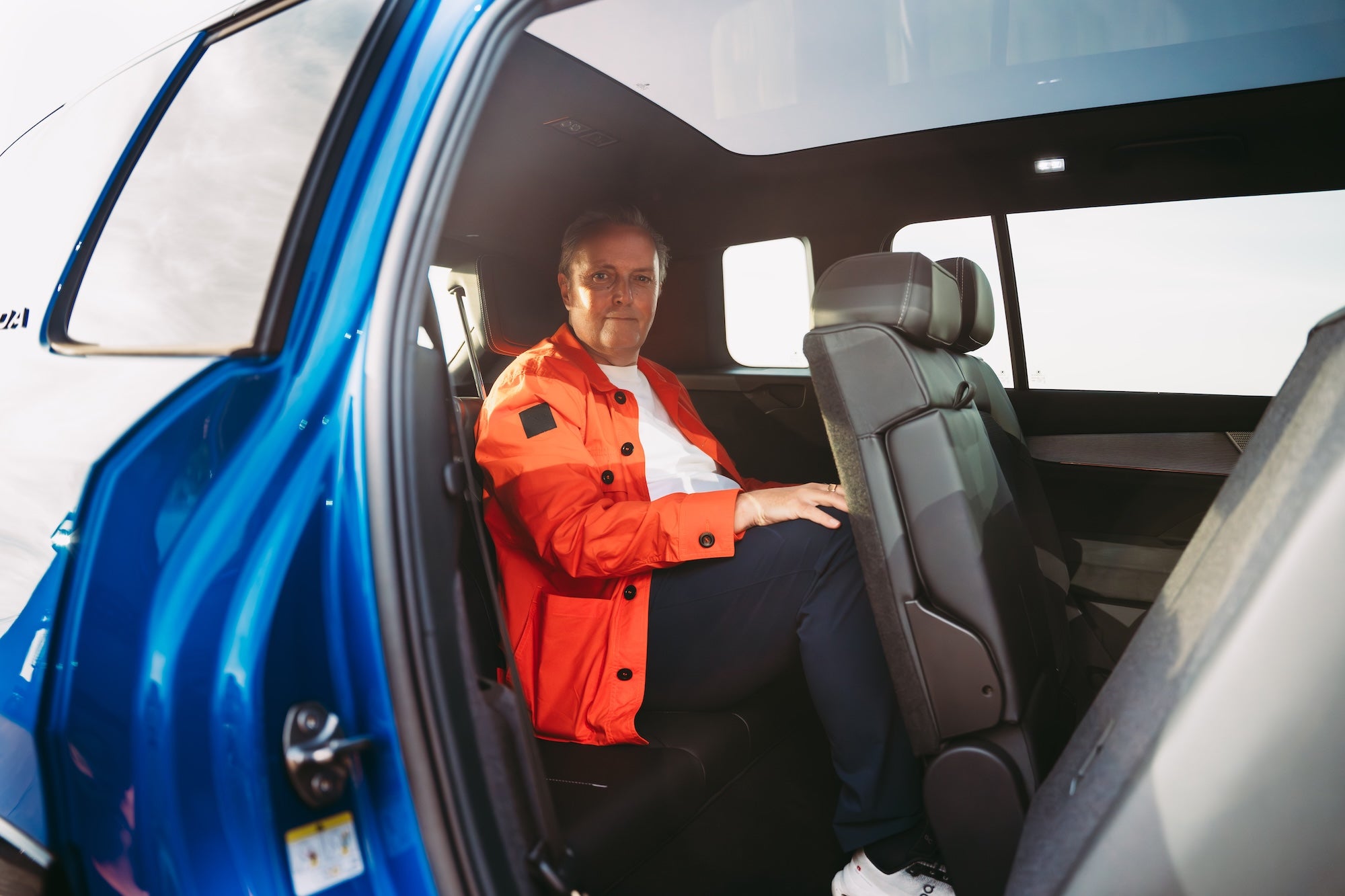
Space is the main event. The second row has generous legroom, while the third row is more than the usual pair of emergency seats you often find in seven-seat SUVs. I am close to six feet tall and not exactly with snake-thin hips, but I could get into the third row and be comfortable on a short trip with the middle seats moved slightly forward.
That does involve a small compromise, but there is still plenty of room in the middle row afterwards. In other words, the Peaq is trying to be a proper seven-seater, rather than a five-seater with two chairs squeezed into the boot for whoever loses the family vote.
There is plenty of headroom in row three, too, and the whole cabin feels airy rather than enclosed. The available panoramic roof helps with that. It is the largest glass roof ever fitted to a Škoda and uses Dynamic Shade Control rather than a conventional blind. The roof is split into nine sections and uses electrical voltage to adjust how much light comes through. Occupants can choose from three preset settings or adjust the sections individually through the infotainment screen.
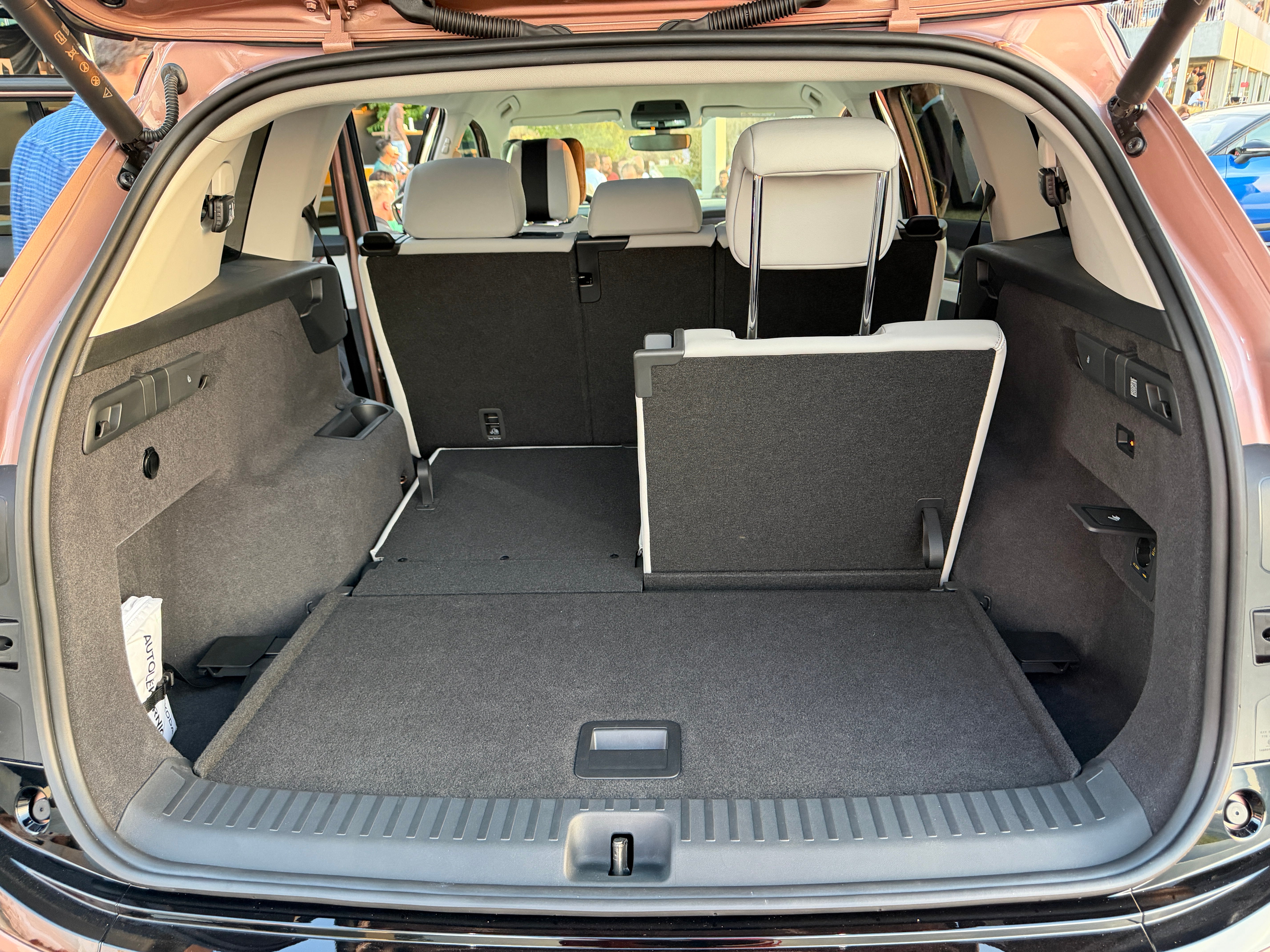
Practicality is exactly what you would hope for. With all seven seats in place, there are 299 litres of boot space. Fold the third row and that rises to 890 litres. Fold both the second and third rows flat and the Peaq offers 2,075 litres.
There is also a 37-litre storage space under the bonnet, a frunk if you insist on calling it that. Personally, I think it should be called a froot! It is large enough for charging cables and can hold the parcel shelf when it is not being used, which is exactly the sort of little solution Škoda owners tend to appreciate because there is usually nowhere sensible to put one.
Other Simply Clever touches include a foldable table, a display cleaner, a parking-ticket holder, a USB socket integrated into the rear-view mirror that could be useful for a dash cam, and an additional USB port for third-row passengers. There are also wipers with integrated washer jets, designed to use washer fluid more efficiently and clean the windscreen more effectively.
Technology, stereo and infotainment
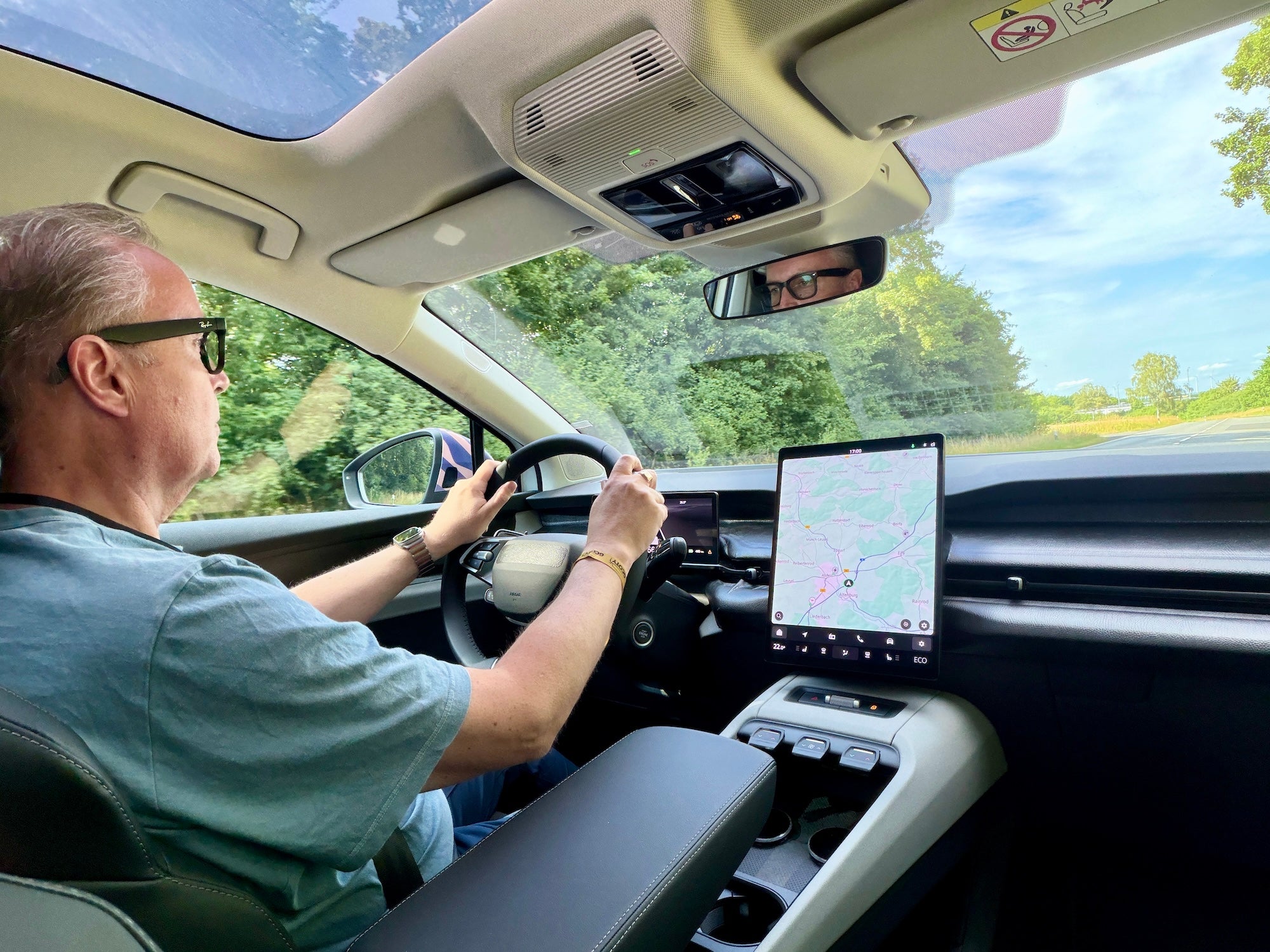
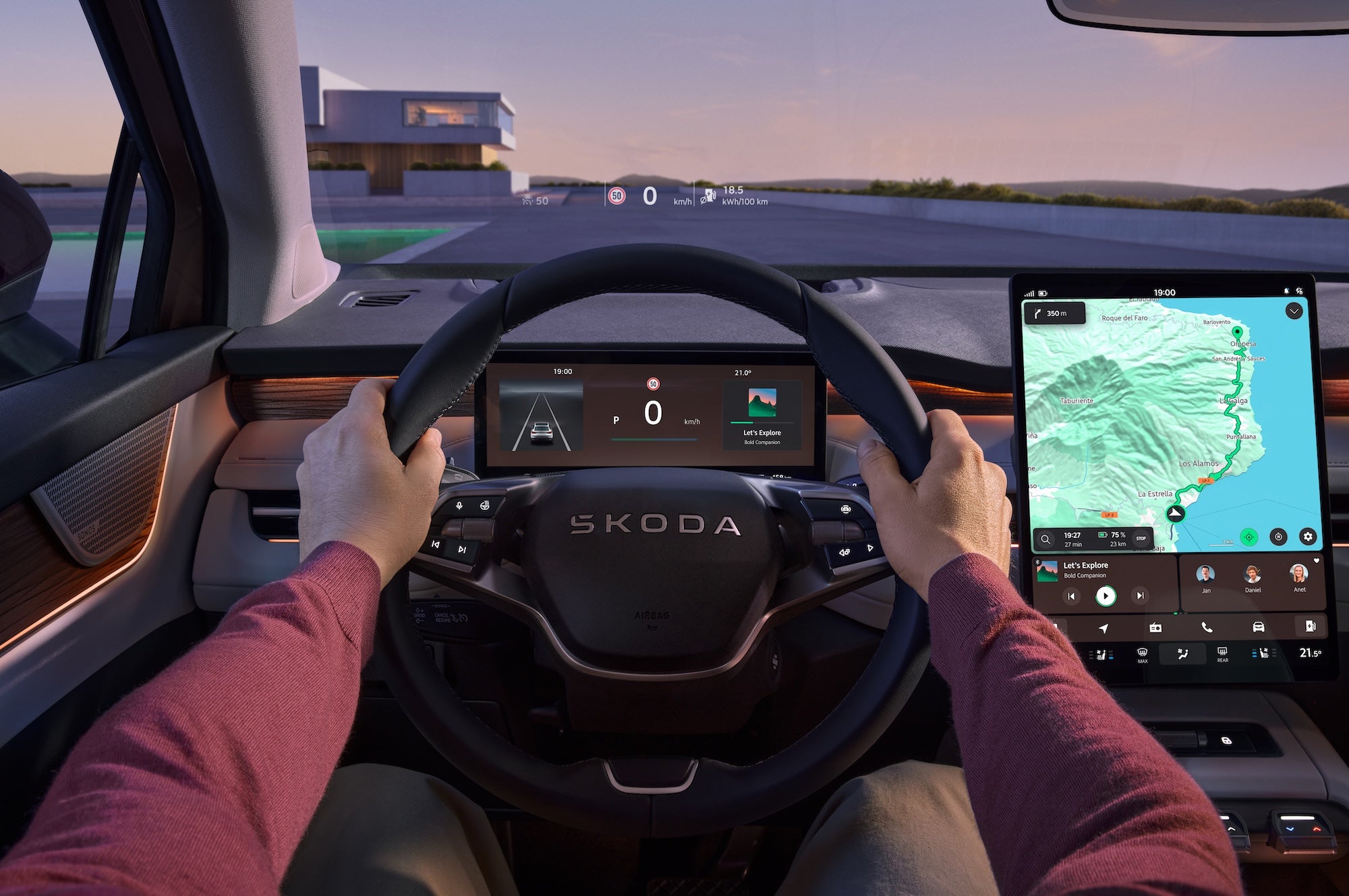
The Peaq introduces a new Android-based infotainment system for Škoda, built around a vertically mounted 13.6-inch central touchscreen. It is the largest infotainment screen the company has fitted to one of its cars, and it is joined by a 10-inch digital driver display.
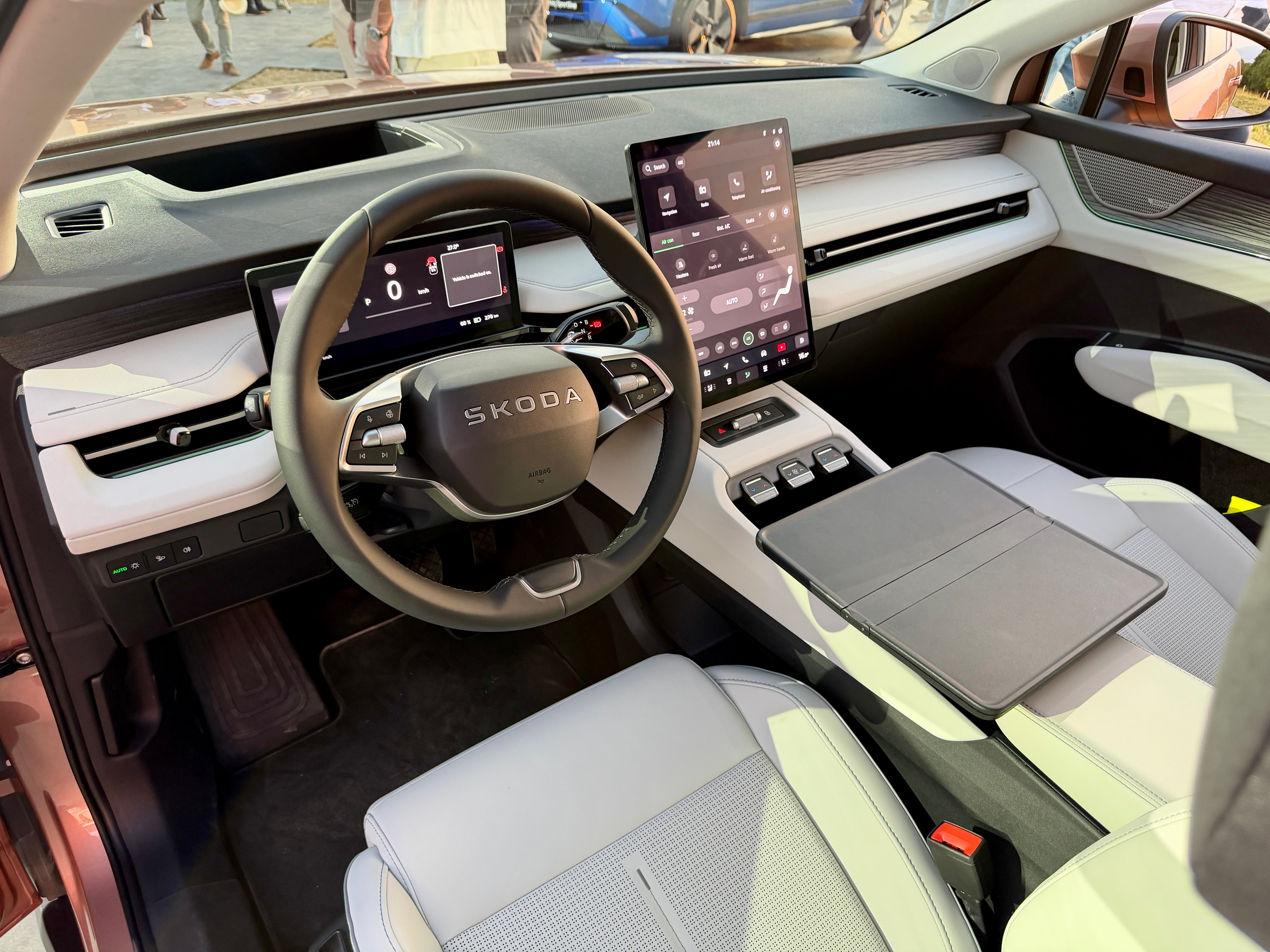
The key thing is that Škoda seems to have thought about how people will actually use it. The lower portion of the screen is where the main controls sit, which means you do not have to stretch upwards and prod at the top of the display with a finger hovering somewhere in mid-air. The adjustable centre armrest helps here, too. Rest your elbow, steady your hand and use the lower part of the screen. It sounds simple, but it makes a difference and was the feature that Skoda’s design chief, Oliver Stefani, told me he liked best in the car.
The heating and ventilation controls use properly designed toggle switches, there are proper buttons on the steering wheel and a useful scroll wheel for adjusting the volume. It is all refreshingly straightforward. The Peaq has plenty of technology, but it does not appear to have been designed by somebody determined to make operating the air conditioning feel like a test of hand/eye coordination.
The Android system includes native Škoda apps, plus services including Spotify, YouTube and Google Maps. It also offers plenty of personalisation options, while a mobile digital key allows a smartphone or smartwatch to replace the conventional key. That could be particularly useful for a shared family car, where handing a key between different drivers can become another little daily admin job.
There is wireless phone charging, too, with charging at up to 25W. The charging area has illumination and integrated magnets to help keep phones positioned correctly – the first time I’ve seen that used and another stroke of genius.
An augmented-reality head-up display will be available as an option from 2027. It will project useful driving information, including navigation directions, onto the windscreen, allowing the driver to keep their eyes closer to the road ahead.
The other major technology story is the optional Sonos sound system. It uses 16 speakers and was co-architected and tuned with the US audio company. I tried it at the launch using my usual selection of test tracks.
The clarity, separation and depth were impressive, although the speakers in the launch car clearly needed a little running in. It is slightly bass-heavy on its default settings in the way you might expect from an American audio brand, but that can add to the drama if you are parked up and watching a film while charging.
There were also hints at the launch that over-the-air updates could eventually add Dolby Atmos capability. Nothing has been confirmed, but the 16-speaker arrangement and Sonos’s home-cinema experience would make that a plausible development.
Safety technology is comprehensive. Standard equipment includes traffic-sign recognition, Front Assist, Turn Assist, Cross Traffic Assist, blind-spot detection, electronic child locks and ISOFIX mounting points for the front passenger seat and the outer seats in the second row.
Edition models add matrix LED headlights, a horizontal light band, an Area View camera, Remote Park Assist and Trained Parking. The latter lets the car repeat a learned parking manoeuvre, which could prove particularly handy for a narrow driveway, an awkward garage entrance or a regular parking space that needs a bit of careful wheel-twisting.
SportLine models add Dynamic Chassis Control, which adjusts the suspension according to conditions and driving style, as well as sports seats, aluminium pedals and a more driver-focused interior treatment.
Prices and running costs
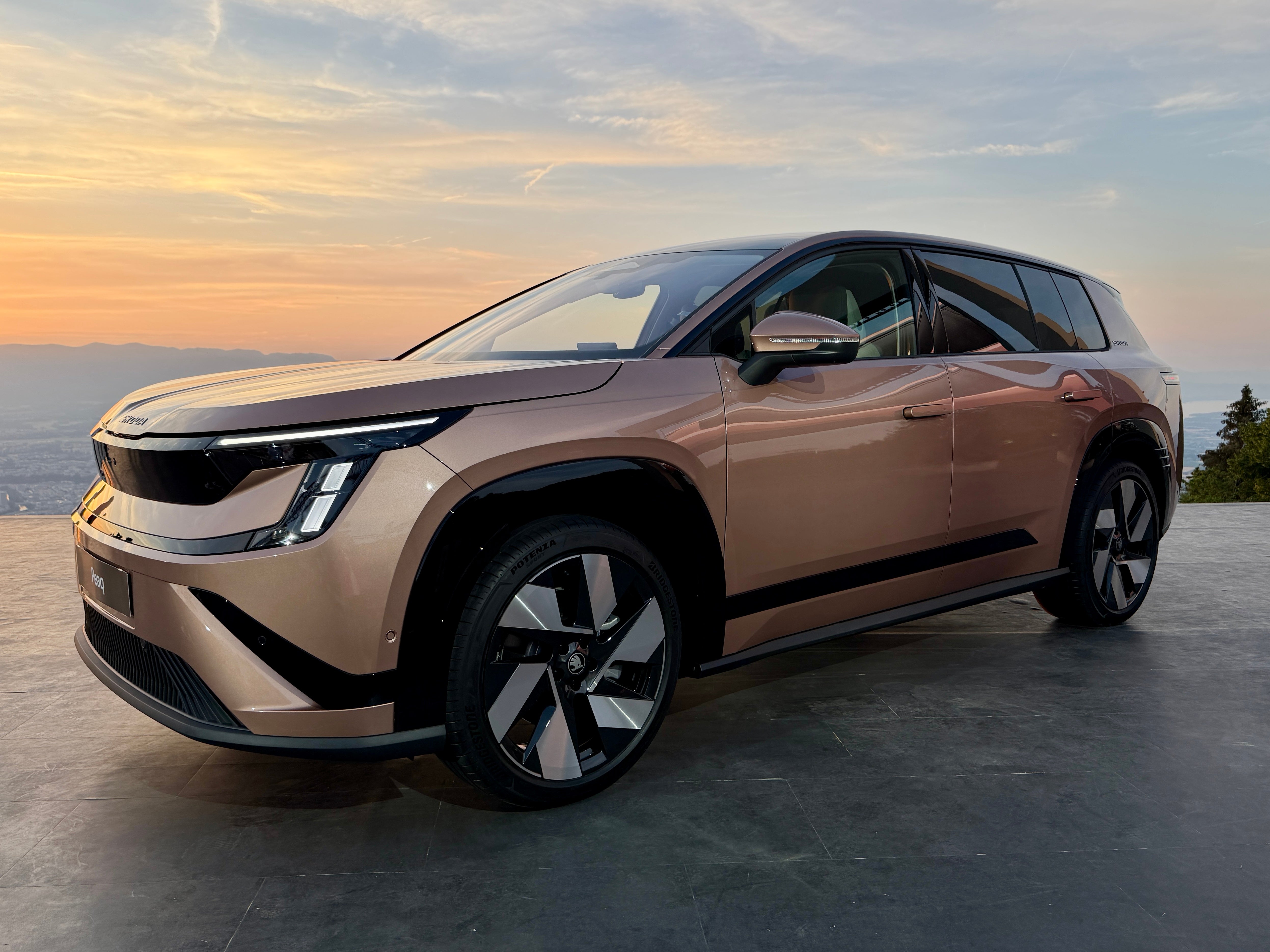
The Škoda Peaq starts from £51,980 for the rear-wheel-drive SE L 90. That gives it a useful gap to some rival electric seven-seat SUVs, while offering a generous equipment list as standard.
The entry-level car gets 19-inch alloy wheels, LED headlights, a powered tailgate with a virtual pedal, heated front and rear seats, a heated windscreen, Android navigation, the 13.6-inch infotainment screen, Virtual Cockpit, wireless phone charging and a mobile digital key.
The Edition 90 costs £55,130, while the all-wheel-drive Edition 90x is £57,230. The SportLine starts at £58,280 with rear-wheel drive and rises to £60,380 in all-wheel-drive 90x form.
The Peaq’s 390-mile maximum claimed range and 199kW charging capability should make it workable as a family car for longer trips, while Vehicle-to-Load could add some useful flexibility for buyers with outdoor hobbies, e-bikes or caravans.
The main decision for buyers will be how much equipment they want. SE L already looks well equipped, Edition adds more of the technology and comfort features, while SportLine brings a sportier look, Dynamic Chassis Control, 20-inch wheels, more supportive seats and darker interior trim.
Optional extras include the Relax Package with massage seats and front footrests, the panoramic glass roof, a black roof finish for SportLine models, a folding table integrated into the front centre armrest and the Sonos sound system, although the latter will arrive after launch.
The verdict: Škoda Peaq
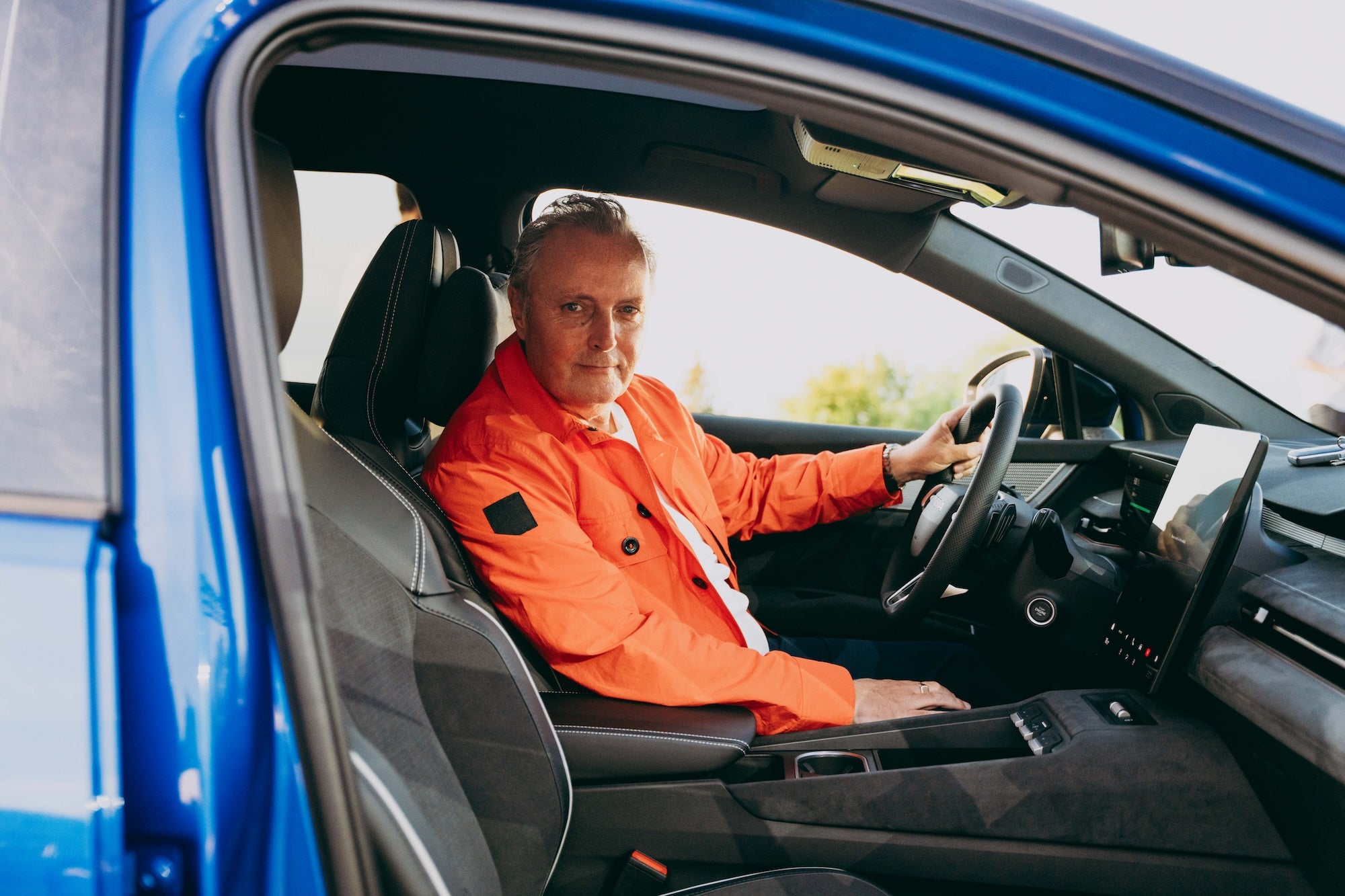
The Peaq is another winner from Skoda. It’s a remarkably complete seven-seat electric SUV that’s spacious, clever, quiet, easy to use and unexpectedly manoeuvrable, with the sort of polish and practicality families will appreciate. Even though it looks pricey, it undercuts seven-seat EV rivals and matches or beats them on quality and kit.
Škoda Peaq rivals
FAQs
How long does it take to charge?
The Škoda Peaq can charge from 10 to 80 per cent in around 28 minutes using a suitable rapid charger, thanks to peak DC charging of up to 199kW.
How much does it cost and is it worth it?
The Peaq starts from £51,980 for the rear-wheel-drive SE L 90, rising to £60,380 for the all-wheel-drive SportLine 90x. It combines seven seats, up to 390 miles of claimed range, a huge boot and a strong standard equipment list, with the choice of more luxurious or sportier versions higher up the range.
Does Skoda replace batteries for free?
Škoda will cover the battery for any faults for eight years, while the standard warranty of three years is less than rivals like Kia and Hyundai offer.
Why trust us
Our team of motoring experts have decades of experience driving, reviewing and reporting on the latest EV cars, and our verdicts are reached with every kind of driver in mind. We thoroughly test drive every car we recommend, so you can be sure our verdicts are honest, unbiased and authentic.
