
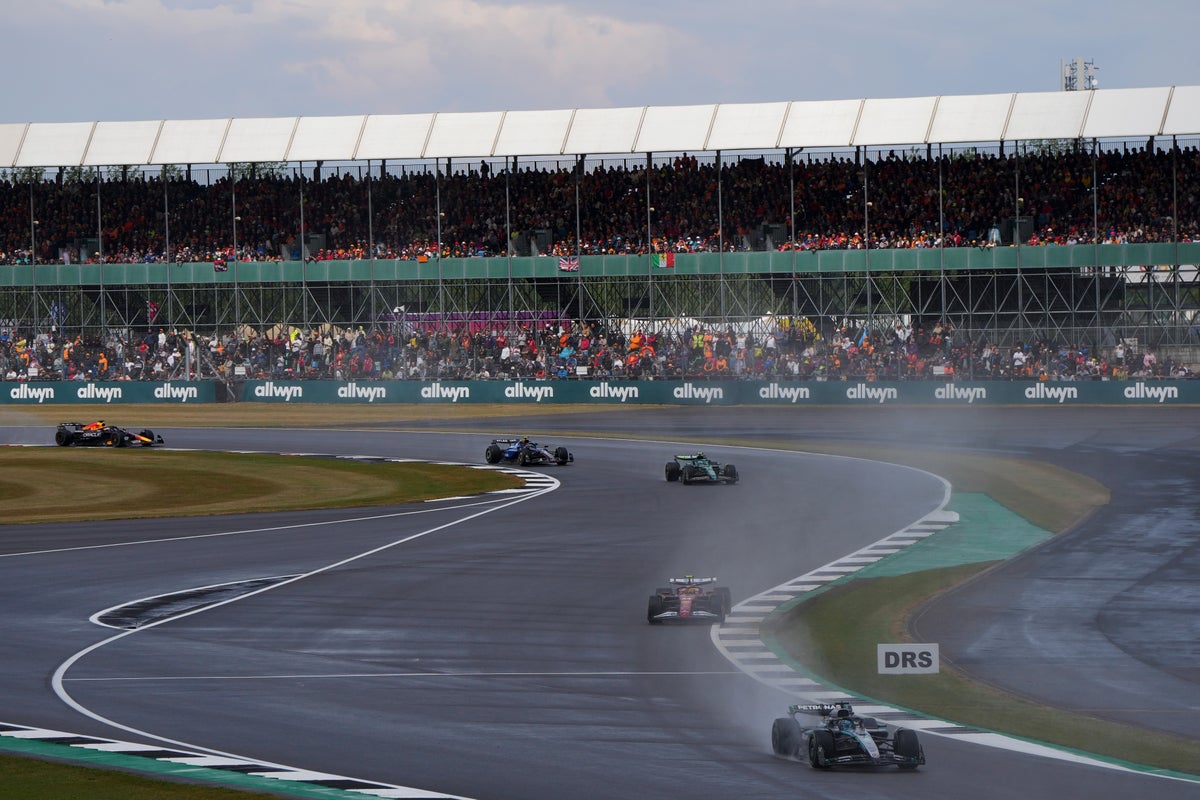
Silverstone has offered to host two grands prix next season in order to alleviate a “crisis” in the F1 calendar.
The complex geopolitical landscape has seen a major reshuffle to this year’s race schedule. Races set to take place in Bahrain and Saudi Arabia in April were cancelled as a result of the war in the Middle East, with bosses confirming that alternative hosts were not viable in April.
F1 returns this weekend with the Miami Grand Prix after a five-week break, with no action since Kimi Antonelli took the chequered flag in Japan on 29 March. There will also be a three-week break between Miami and the next race in Canada.
Silverstone stepped in to host multiple races during the 2021 season which was disrupted by the Covid-19 pandemic, and the circuit’s CEO Stuart Pringle says the track could do so again in 2026.
“I have offered, because we stepped in during Covid and we were able to help Formula 1, and if that would help then of course we will,” he told Sky News. “There are numerous practicalities that need to be considered. The offer is in and they know we’re here. We can move quickly if asked.”
Silverstone has a packed schedule of races and other events, but Pringle said F1 can still be hosted at the track. “I pride myself on not having spare windows but everything is moveable in a crisis.”
There will be some tweaks to F1’s controversial new regulations when the season resumes in Miami this weekend.
Max Verstappen has been especially vocal, labelling the sport “Mario Kart” and hinting the regulations will hasten his exit from the sport. The Dutchman, among others, dislikes the rules which introduced a 50-50 split between combustion and electrical power, placed an onus on drivers managing their battery, effectively slowing down on a qualifying lap, and added “gimmicks” such as a boost button to overtake.
There have also been safety concerns due to dangerous closing speeds – as evidenced by Ollie Bearman’s high-speed crash in Japan.
But talks have been held between the governing body, the FIA, F1 and the teams and drivers since the last round in Japan.
Energy harvesting will be reduced from eight megajoules to seven, and the hybrid power unit will be increased from 250kw to 350kw. Both changes are aimed at allowing the drivers to go flat-out for longer in qualifying.