





When Porscha Tynisha Brown collapsed aboard a Korean Air flight from Washington, D.C., to Seoul, clutching her chest and struggling to breathe, members of the cabin crew responded with an oxygen mask to place over her nose and mouth.
However, Brown continued to gasp for air, and soon “lost consciousness and became nonresponsive,” according to a federal lawsuit reviewed by The Independent.
A number of passengers rushed over to assist, as flight attendants “alternated between panicking, observing and taking notes,” the complaint alleges.
“At no point in time did the Korean Air flight personnel attempt to take charge of the situation, provide instructions to the volunteering passengers, or render aid to Ms. Brown,” it contends.
The pilot eventually diverted to Japan, where Brown, a civilian employee for the U.S. Department of Defense, was pronounced dead.
“Only after the flight made its emergency landing did [Brown’s travel companions] learn that the Korean Air flight personnel had never plugged the oxygen mask into the oxygen tank,” according to the complaint. “Consequently, during the frantic attempts by passengers to save Ms. Brown’s life, Ms. Brown never received supplemental oxygen from the oxygen tank provided by Korean Air flight personnel.”
Had the cabin crew responded properly, Brown “would not have experienced intense physical and emotional pain before dying at the age of 33,” the complaint states.


Attorney Hannah Crowe, who is representing Brown’s estate in the suit, described her as “a really remarkable young woman.”
“She was at the beginning of her young adulthood, and was a really accomplished and beloved member of her community,” Crowe told The Independent.
She said that all airlines have strict policies and procedures for how to respond when passengers have a medical emergency, and to deviate from those protocols is to invite tragedy.
Darren Nicholson, Crowe’s co-counsel, said he found the circumstances of Brown’s death particularly disturbing.
“What is unusual about this case is that the apparent violations are so bad, it really shocks the conscience how the airline personnel handled this situation,” Nicholson told The Independent. “There were some very simple things they should have done, that they didn’t do.”
Korean Air did not respond to a request for comment.
On March 29, 2024, Brown boarded Korean Air flight 94, set to fly from Washington Dulles International Airport to Incheon International Airport in Seoul, South Korea. She was going there on vacation with three friends, according to the complaint in her case, filed March 27 in U.S. District Court for the Eastern District of Virginia.
Brown, a Maryland native with a master’s degree and plans to pursue a doctorate, worked at Fort Belvoir, a U.S. Army installation in Virginia, as a civilian DoD employee, the complaint states. A workplace safety specialist, Brown received an award of excellence from her garrison commander four days before she left for Korea, the complaint continues.


Around 12 hours into the 15.5-hour flight, Brown – who had just told one of her travel companions that she was feeling fine – got up to go to the restroom, the complaint goes on.
A few minutes later, the complaint says a flight attendant got on the PA and asked if there was a doctor on board. Putting two-and-two together, Brown’s friends hurried to the back of the plane, where they found Brown on the floor, grasping at her chest while repeating, “I can’t breathe,” according to the complaint.
“Korean Air flight personnel handed an oxygen mask to Ms. Brown to place over her face, leading [her friends] to believe that Ms. Brown was receiving oxygen,” the complaint states. “Despite the mask, Ms. Brown’s belabored breathing continued and she continued to indicate… that she could not breathe.”
Several passengers tried to assist, but Brown soon blacked out, the complaint says. Flight personnel fetched a medical kit, and the passenger volunteers gave Brown a shot of an epinephrine, which did not reverse her symptoms.
At this point, the crewmembers brought over the onboard defibrillator and set it down, according to the complaint. However, though they were all trained on how to use the machine, the Korean Air crew did nothing and provided no instructions, it alleges.
Instead, the Good Samaritans were left to figure it out on their own, according to the complaint.
“Several times, and in the presence of Korean Air personnel, the… machine gave the audio command, ‘[S]hock advised, shock advised,’” the complaint states. “The passengers, who were not trained on the… machine, did not know that they needed to press the ‘shock’ button to administer a shock. Consequently, no lifesaving shock was administered to Ms. Brown.”

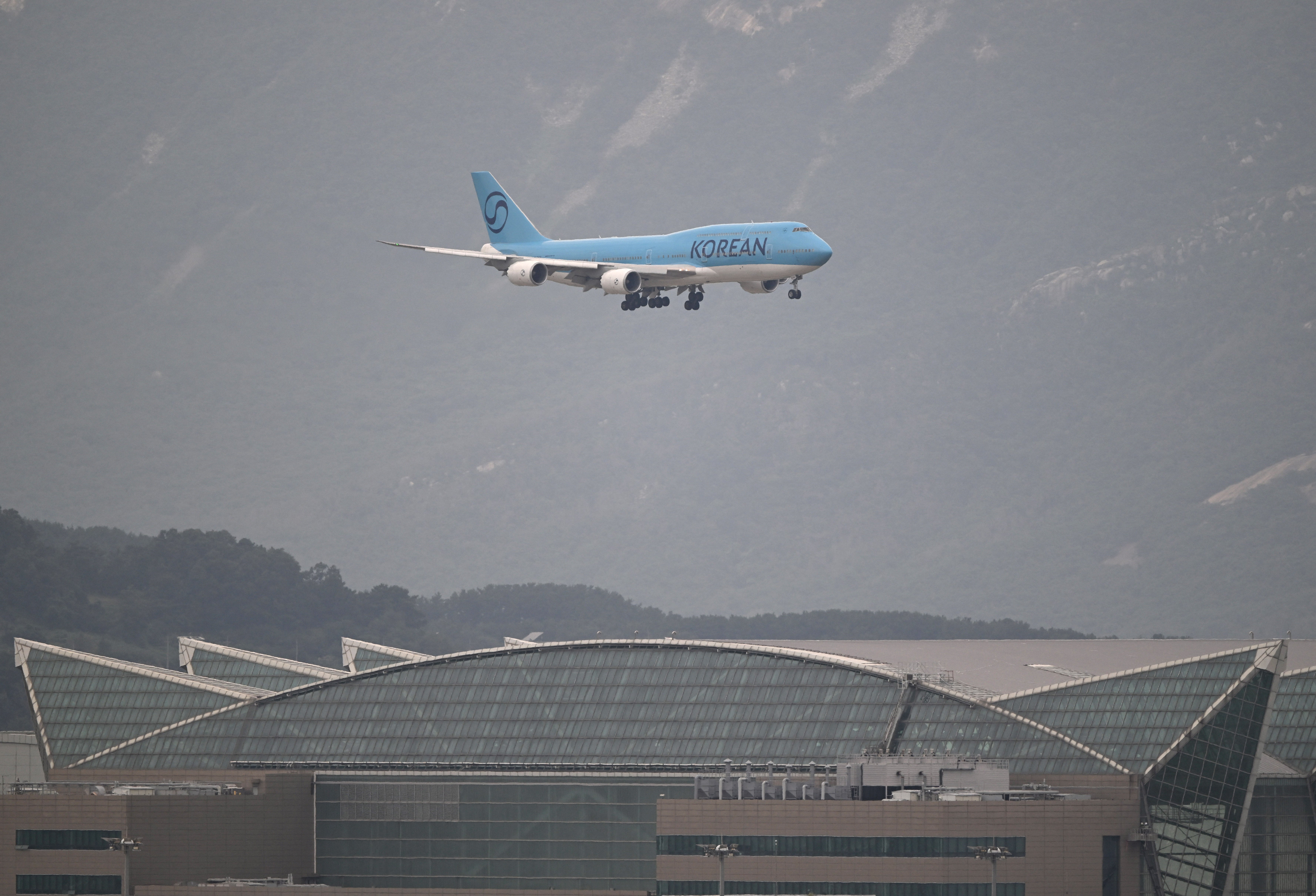
With the situation getting worse by the second, the captain made an emergency landing in Osaka, Japan, where she was rushed to Rinku General Medical Center and pronounced dead, according to the complaint.
“Ms. Brown’s Japanese death certificate lists her cause of death as ‘acute cardiac failure,’” it says.
Traumatized, Brown’s three friends then had to figure out the logistics of getting her remains back to the U.S. from Japan, a country none of them had ever been to before and where they knew no one, Crowe told The Independent.
The global incidence of medical emergencies aboard commercial aircraft runs somewhere between 18.2 per million passengers and 39 per million passengers, or one every 212 flights, depending on the study. Survival rates in the event of cardiac arrest are far lower than those that occur on the ground, a team at the Duke University School of Medicine found.
“The potential for a very unfortunate outcome is high because flight crews often lack proper training to deal with these types of situations,” attorney Abram Bohrer, who specializes in cases involving airlines but is not involved in Brown’s lawsuit, told The Independent.
When a person dies mid-flight, International Air Transport Association guidelines say the body should be moved to a seat “with few other passengers nearby,” if possible, and restrained with a seat belt “or other equipment.”
“Close the eyes, and cover the body with a blanket up to the neck if a body bag is not available,” the guidelines suggest.

Last year, a couple were reportedly forced to sit beside a corpse aboard a Qatar Airways flight from Melbourne, Australia, to Doha, Qatar, after a fellow passenger died 10 hours into the 14-hour flight and was stored next to them for the remainder.
“They tried to wheel her up towards business class, but she was quite a large lady and they couldn’t get her through the aisle,” traveler Mitchell Ring told an interviewer at the time.
Earlier this month, a woman in her 60s died shortly after takeoff aboard a British Airways flight from Hong Kong to London, and was stashed in a galley until the plane landed at Heathrow some 13 hours later. A “foul smell” reportedly soon began to waft about the cabin, which was blamed on the galley’s heated floor.
In 2024, a Turkish Airlines captain died while piloting a passenger plane from Seattle, Washington, to Istanbul, Turkey, forcing the crew to make an emergency landing in New York. The crew attempted a medical intervention but it was “ineffective,” Turkish Airlines spokesperson Yahya Ustun wrote on X.
The complaint filed in Brown’s case says the Korean Air crew violated company policy by not rendering effective aid, and accuses them of waiting too long to declare a medical emergency and not diverting sooner.
“As a direct and proximate result… Ms. Brown was caused to suffer great pain, distress, agony, and mental anguish,” the complaint states.
Brown’s family, via the administrator of Brown’s estate, is now seeking damages from Korean Air, to be determined by a jury.


