

The article below includes an excerpt from Steve Fowler’s DriveSmart newsletter. To get the email delivered straight to your inbox every Monday, simply enter your email address in the box above.
With fuel prices currently the highest they’ve been for two years – and the highest in over three years for diesel – the cost of running a car has again become a concern for many drivers. Whether it’s the sting of filling at the pump, or the broader uncertainty around energy costs, drivers are rightly starting to rethink what car they drive – and how much it costs to run.
That’s why this recent email from reader Simon Clarke caught my attention. He wrote: “I’m seeing more plug-in hybrids being pushed again by manufacturers, and some friends are telling me they’re a safer bet than going fully electric. Should I be considering a plug-in hybrid instead of a pure EV?”
Simon’s question comes at an interesting time, since plug-in hybrid electric vehicles – also known as PHEVs – are seeing a surge in interest, with UK sales up 35 per cent in 2025.
Not long ago, plug-in hybrids were criticised for being the worst of both worlds. Early efforts amounted to cars that managed just a few miles of electric-only range, then forced their engine to work harder while dragging around a heavy but empty battery. But, as with any new technology, this situation has rapidly improved, and today I think plug-in hybrids offer drivers a great step towards full electrification.
Today’s newest hybrids can go much further on electric power, with some managing up to 90 miles without ever firing up the engine. Plug such a hybrid in at home each night, and your fuel bill for daily commuting and weekly errands could be slashed – and even more so if you make the most of a flexible electricity tariff.
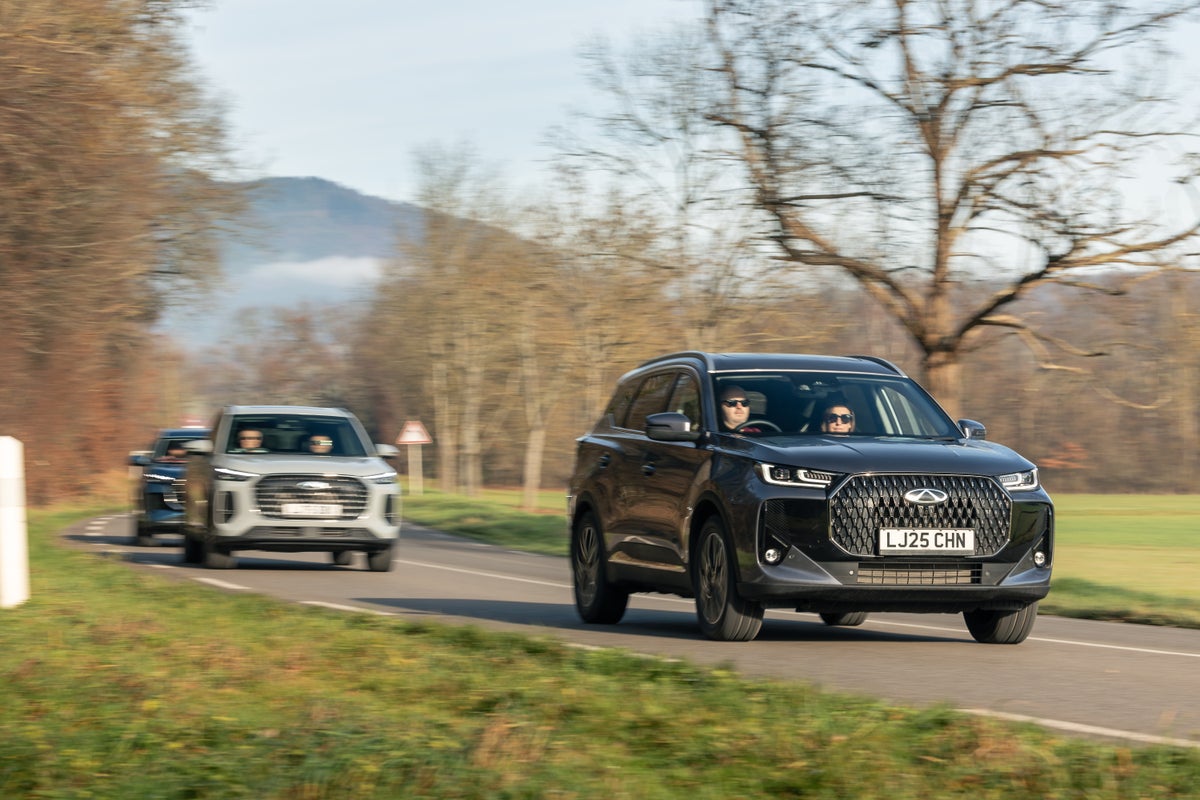
Our list of the best plug-in hybrids will help you decide which one to buy, and – unsurprisingly – it’s the new Chinese brands that are leading the way with their plug-in hybrid tech. They call these cars New Energy Vehicles, and already brands like BYD, Chery and Geely all offer compelling models that have both a long electric range and extremely efficient hybrid drive systems.
If your daily driving fits within that electric range – often several dozen miles from the latest models – and you’re disciplined about charging regularly, a PHEV can work very well. Many owners effectively run them as electric cars during the week, only using the petrol engine for longer trips.
However, that “if” is important. The real-world efficiency of a plug-in hybrid depends heavily on how it’s used. If you don’t plug it in frequently, and often let the battery fall to zero charge, you are essentially carrying around the weight of a battery and an electric motor while relying on a petrol engine. Doing this can actually make it less efficient than a conventional hybrid (one that isn’t plugged in) or even a regular petrol car.
If you don’t want to juggle a fuel tank and a battery, this is where a full EV can often have the edge. There’s also a simplicity to EV ownership that shouldn’t be underestimated. No engine, no exhaust system, fewer servicing requirements and often much lower running costs if you’re charging at home with a cheap overnight tariff. And from a tax perspective, particularly for company car users, pure EVs still benefit from the most favourable rates.
Ultimately, a PHEV can make perfect sense if you regularly make long journeys in areas where charging infrastructure is limited, or if you’re not yet able to install a home charger. Here, the added flexibility of a petrol engine can provide reassurance.
So it’s less about one being universally “better” than the other, and more about how you’ll use it. If you can charge easily and most of your driving is predictable, a full EV is usually the smarter, simpler choice. If not, a plug-in hybrid can act as a useful stepping stone – just make sure you use it as intended.
Do I need a home charger to drive a plug-in hybrid?
No, but being able to charge a plug-in hybrid’s battery, cheaply and quickly, is key to getting the most out of it – and lowering your fuel bills.
Say you have a Jaecoo 7 SHS – one of the most popular PHEVs of the moment – and want to run it as efficiently as possible. If you have a 7kW AC home charger you can fill its 18.3kWh battery in a little over two hours; with each full charge you’ll get up to a claimed 56 miles of electric-only driving, or closer to 30 miles in colder weather. Plug in after each drive, or overnight, and you’ll be getting the most out of your hybrid for the least cost.
It’s possible to charge the Jaecoo at up to 40kW using a high-speed DC public charger, and that’ll fill the battery from 30 per cent to 80 per cent in around 20 minutes. Handy for a quick top-up while away from home, but public DC chargers are much more expensive than using an AC charger at home. If you exclusively top up the battery at public chargers, you’ll be paying a significant premium to do so.
Lastly, it’s also possible to charge PHEVs from a standard, three-pin plug socket. The Jaecoo’s battery takes somewhere between six and eight hours to fully charge this way. That’s pretty slow, but if you have an external socket on your drive (or a suitable socket in your garage) the battery can be filled cheaply overnight.
What’s the difference between a mild, full and plug-in hybrid?
You may have decided on a hybrid instead of a full EV, but it’s important to know that not all hybrid cars are built equal. There are in fact three main types of hybrid, with each supplementing their engines with batteries and electric motors in different ways.
We mentioned plug-in hybrids earlier. These tend to have fairly large batteries, typically in the region of 10kWh to 20kWh, and can manage somewhere between 20 and 90 miles of electric-only driving. They can also use their battery to help the engine, in a bid to be as fuel-efficient as possible on longer journeys. Different drive modes can be selected – to prioritise the battery, stick to the engine and save the battery’s charge for later, fill the battery using the engine, or a combination of all three.
Full hybrid cars have smaller batteries, of around 1.0kWh to 2.5kWh, and can manage just a few miles of electric-only driving (sometimes just one or two miles of low-speed driving). Mild hybrids automatically charge their batteries while driving, and there’s actually no plug socket at all. So instead of remembering to plug in and charge the battery between journeys for maximum efficiency, you just drive as normal and let the car charge and deploy the battery as it sees fit.
You’ll often find a full hybrid drives in electric mode in slow, stop-start traffic, and will cut the engine when coasting to save on fuel. Manufacturers sometimes refer to full hybrids as “self-charging hybrids”.
Lastly, the mild hybrid is a petrol or diesel car that replaces its typical starter motor and alternator with a 48V battery and small electric generator. Mild hybrids cannot be driven in electric-only mode, but aim to improve efficiency and lower emissions (and your fuel bill) by using the battery to handle the start-stop system and assist the engine. The generator keeps the battery topped up, and like full hybrids these vehicles also don’t have a charge socket.
Sign up for the DriveSmart newsletter
To get the latest motoring insights from EV editor Steve Fowler delivered straight to your inbox, simply enter your email address in the box at the top of this page.
Each edition of DriveSmart offers clear, expert guidance on the fast-moving world of electric vehicles and modern motoring, from trusted reviews and practical tips to the biggest industry news of the week.
You can also head to our newsletter preference centre to sign up for the email.