

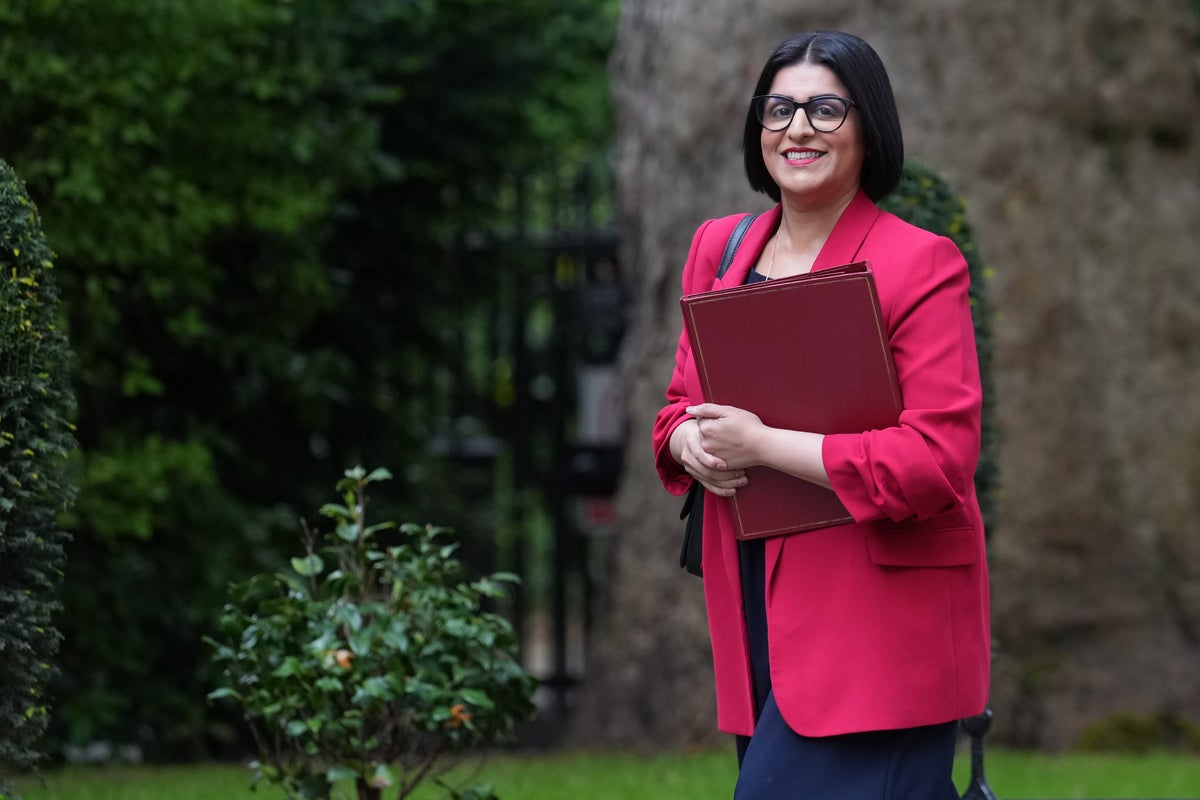
As if to prove that she has not been distracted by an unusually fierce dispute with Mike Tapp, a junior Home Office minister, Shabana Mahmood has announced changes to Britain’s asylum system that ought to command broad support.
What she proposes is a balance: a safe legal route for a limited number of refugees, matched by stricter eligibility and stronger enforcement. This is the right approach, and Ms Mahmood has been commendably brisk in moving in that direction in the nine months that she has been home secretary.
There are details to be resolved, most importantly the limit on the number allowed to apply via the safe route, which is modelled both on the British resettlement scheme for Ukrainians and on the Canadian scheme that has operated successfully for decades.
A source close to the home secretary says that the numbers “will be modest at first”, but that as public confidence grows and as the other measures to remove those who are not eligible take effect, the numbers will grow, “with the aim of thousands of refugees a year eventually coming to build a new life here”.
Again, this is the right approach: to increase the generosity of Britain’s contribution to accommodating refugees once order and control of the immigration and asylum system has been restored.
We can, for the moment, ignore the criticisms made by the official opposition. Chris Philp, the shadow foreign secretary, said: “The public has had enough of open borders under Labour.” This is unconvincing from the party that quadrupled net immigration after Britain left the European Union, and which is criticising a Labour government that has started to get the numbers moving in the right direction again.
Net immigration has returned to normal pre-Brexit levels, mainly as a result of measures taken in a panic by the Conservative government after it realised what a mess it had made. But Labour has succeeded in increasing the number of removals from Britain of people with no right to be here, and has recently seen the numbers arriving by small boat across the Channel falling.
On both those fronts, the government will have to improve its performance much further before it can claim to have “restored order”, but it does not need advice from the people who allowed it to get out of control in the first place.
Ms Mahmood should not listen, therefore, to suggestions that Britain should repudiate the European Convention on Human Rights – something the Tories talked about endlessly when in government but never did, for good reasons. It is only now that the Tories luxuriate in the irresponsibility of powerlessness that they have converted to Nigel Farage’s policy of reneging on a treaty that is one of the proudest legacies of British legal and moral leadership in Europe.
Ms Mahmood is pursuing a better, more pragmatic course, of trying to curb some of the wayward interpretations of the convention that have undermined support for its noble principles.
Her plans, to be published in a new immigration and asylum bill on Tuesday, will include tightening the definition of “family” in the right to “respect for private and family life” guaranteed by the convention, and making it harder to claim protection under modern slavery law, which has also been abused. The bill will also disallow claims against deportation if there was an opportunity to make an earlier claim.
These are sensible changes, which should be accompanied by tougher action against small boats and the reforms – the subject of the dispute with Mr Tapp – to require the right to permanent settlement to be earned rather than granted automatically.
We do not know if Ms Mahmood will be home secretary under a new prime minister, but whoever occupies that position must do what she is doing, only more so.