The future of the Gaza Strip is hanging in the balance as Hamas prepares to elect its first political leader since the death of Yahya Sinwar, a decision which could alter the future direction of the Palestinian militant group and the wider Middle East.
Depleted but still operational after more than two years of war with Israel, Hamas has been holding a highly secretive internal ballot to decide who will run its political wing for the past several weeks. Their decision has long been delayed by Israel’s invasion and bombardment of the enclave, which has brutalised its civilian population.
There have been briefings to suggest that a new leader has now been chosen – but it is unclear if and when Hamas will formally announce the identity of their new leader.
One report in Egyptian newspaper Al Manassa states that Khalil al-Hayya, a Gaza-born close associate of Sinwar, has won the leadership after securing 65 per cent of the vote.
But Khaled Mashal, a long-serving Qatar-based member of Hamas’s politburo, who served as its leader for two decades from 1996 to 2017 – when he was succeeded by the late Ismail Haniyeh – is reported by others to have won the ballot, experts say.

Moderates against hawks – but is it that simple?
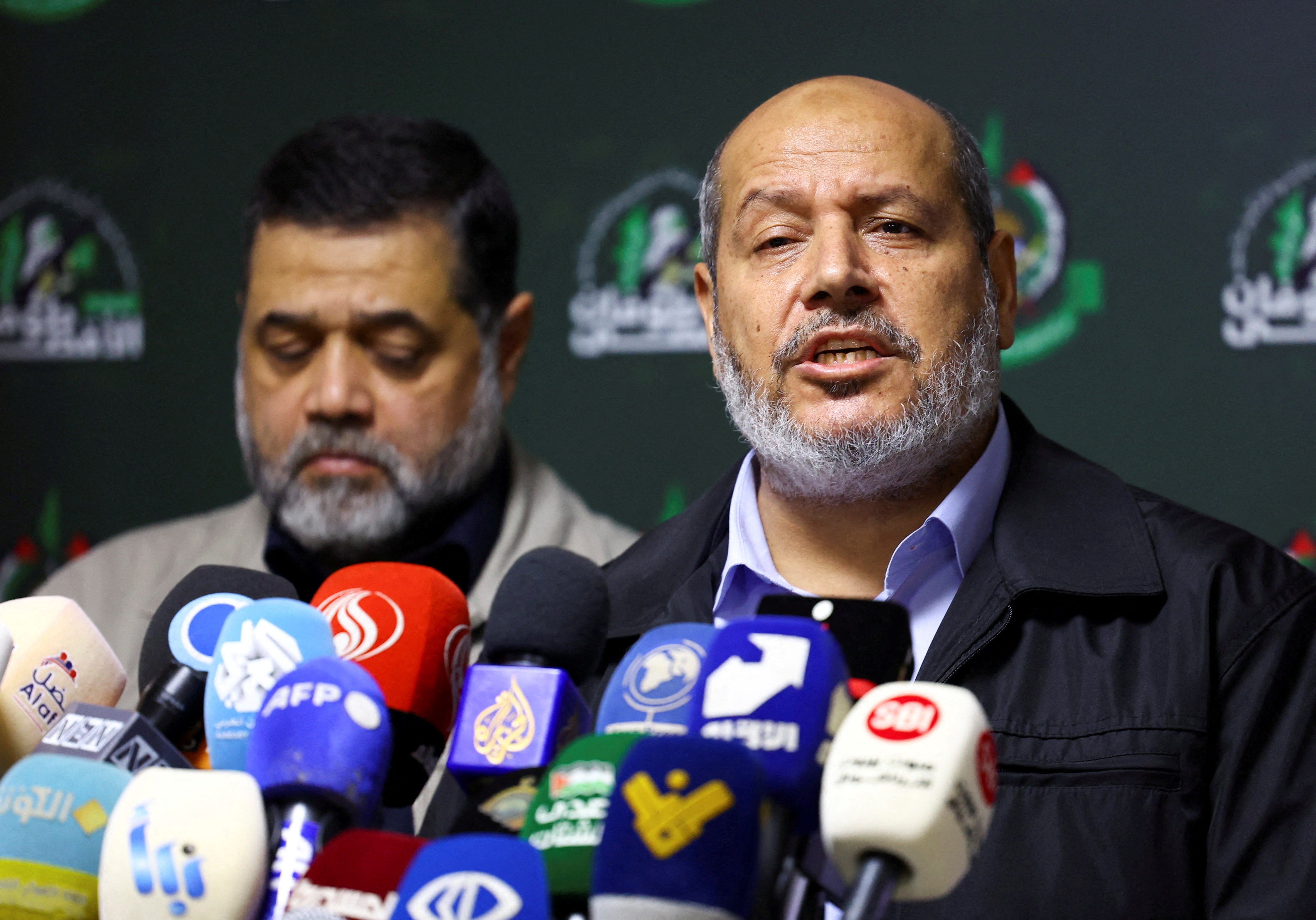
The election has been presented by Western media as a choice between a more moderate Mashal and the hawkish al-Hayya. Zaher Jabarin, the leader of Hamas in the West Bank, was also reportedly a candidate. The trio are now based in Doha, and currently share the title of acting chairman of the Hamas political bureau.
Peace talks between Hamas and Israel appear have hit a wall, despite a ceasefire agreement in October 2025. Hundreds have been killed by Israeli fire in Gaza since the ceasefire began, and its military has continued creeping forward from the agreed “yellow line”, which was intended to demarcate the boundaries of its partial control in the strip.
Mashal, born in the West Bank, is believed to be more open to working with the Palestinian Authority (PA) and holds close diplomatic ties with Turkey and Qatar. Al-Hayya serves as the de facto leader of the Gaza Strip and is one of the group’s chief negotiators.
“[Al-Hayya] also lost two sons in the war,” says Dr Yaniv Voller, an expert in internal Palestinian politics at the University of Kent. “He is also reportedly closer to Iran, which might indicate a stronger inclination to resume the armed struggle.”

Michael Milshtein, an expert on Hamas at Tel Aviv University, said it is “far more important to continue developing the issue of control in Gaza and the matter of [military] rebuilding.”
Dr Rob Geist Pinfold, an expert on the region at King’s College London, says his understanding is that Mashal, al-Hayya, and Jabarin have been elected into senior roles, with Mashal at the helm.
If this selection is confirmed, it would suggest the elections have served only as a “rubber stamp” for the existing balance of power, with the trio taking on “different portfolios with Mashal as the leader”.
The Western tendency to view the Hamas election as a choice between hawks and moderates, he says, does not reflect the more complex reality of Hamas’ internal politics.

“Both those groups have different reasons to be moderate or extreme. So the Doha group is the diplomats, they’re the ones who have relations with world leaders, including talking with the US, so we often see them as moderates for that reason. However they are also prone to bombastic rhetoric, they have less of a need to worry about their domestic constituency,” he says.
The military wing in Gaza, known as the al-Qassam Brigades, are viewed as more hardline given their active role in pushing for the October 7 attacks.
“At the same time, they also have a reason to be more pragmatic in that they have a domestic constituency and domestic base to answer to, with more than 90 per cent of Gazans still under Hamas rule,” Dr Pinfold explains.
Will Hamas change their approach to controlling Gaza?
In the absence of any truly reformist candidates, there is little prospect of any kind of wholesale change in Hamas’ approach to controlling Gaza and how it projects power internationally.
There are growing concerns, however, about the possibility of the group’s influence in the West Bank increasing despite the reelection of Mahmoud Abbas as leader of Fatah. As one of the world’s oldest leaders at 90 years old, he is under mounting pressure ti implement reforms and tackle accusations of corruption.

“Succession battles are beginning to take place,” says Dr Voller. “Hamas is more popular in the West Bank than it is in Gaza and the situation there seems to be spiralling toward instability, partly also because of the intensifying settler violence.”
On Thursday, Abbas reiterated pledges to reform the PA and hold long-delayed presidential and parliamentary elections during the Fatah party conference this week.
“We renew our full commitment to continuing work on implementing all the reform measures we pledged,” Abbas said, although he failed to produce a timeline for the elections.
Dr Voller says that the PA “should and could play an important role in Gaza’s reconstruction” warning that its “collapse into internal rivalries could have an even more detrimental impact on the lives of Palestinians in both Gaza and the West Bank”.