

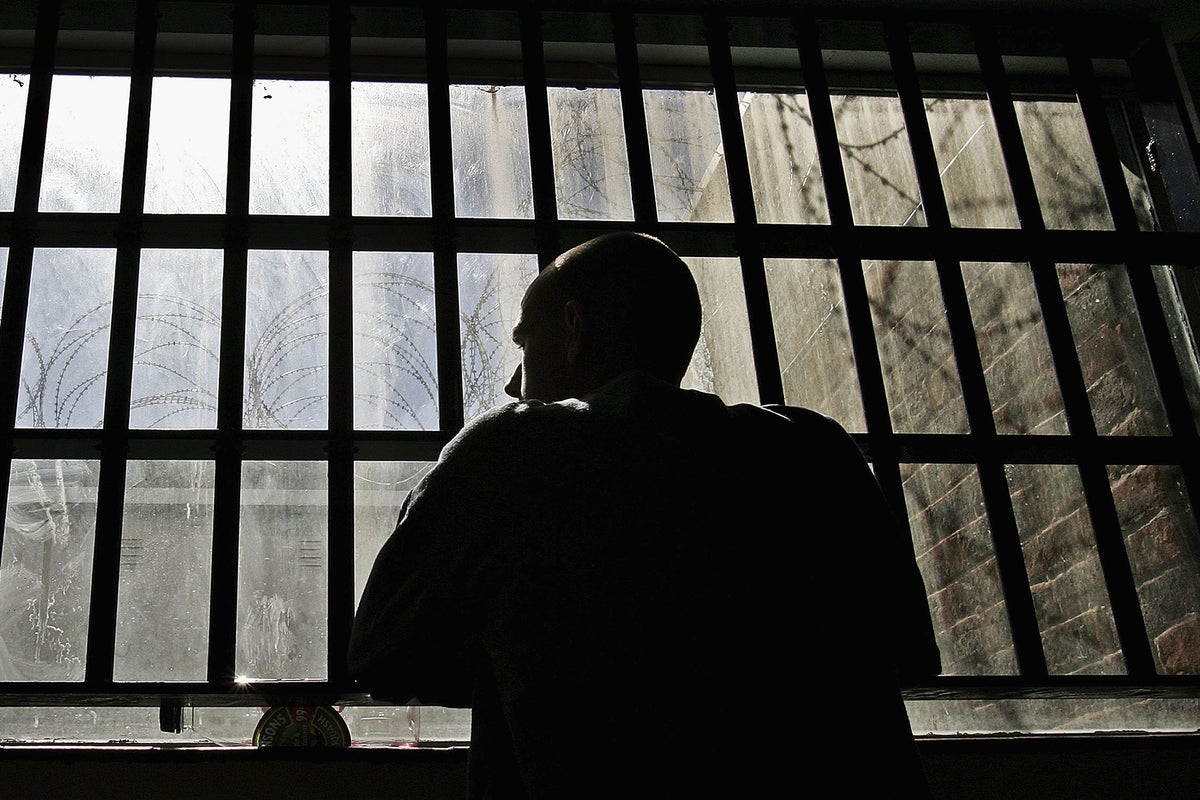
Damning prison projections uncovered by The Independent reveal the government’s action plan to tackle the scandal of indefinite jail terms will leave hundreds of prisoners to rot.
The shocking Ministry of Justice figures, obtained through a Freedom of Information request, show at least 520 prisoners serving widely discredited, and now abolished, Imprisonment for Public Protection (IPP) jail terms are expected to be incarcerated in March 2030. They will never have been freed.
The revelations undermine the government’s claim that its ‘IPP Action Plan’, which promises to help prisoners progress towards safe release, will address the scandal.
Britain’s former top judge, Lord John Thomas, has said the figures prove the government’s plan is a “failure” which will not end the “obvious injustice” for those serving the abolished jail term.
The open-ended punishments, which have been linked to almost 100 suicides in prison, have been compared to a “gulag system” for trapping thousands without a release date, including some for minor crimes.
The architect of the flawed sentence, Lord David Blunkett, has since admitted that ushering in the draconian punishments under Tony Blair’s Labour government is his “biggest regret”.
But the latest projections suggest the government is prepared to leave IPP prisoners such as Leroy Douglas – who was jailed in 2005 for robbing a mobile phone – to languish for up to 25 years. His case is currently being investigated by the United Nations, which is reviewing whether Britain is breaching human rights law by arbitrarily detaining him.
The total IPP prison population in 2030 is likely to be even higher because the projections exclude those who have been released but find themselves trapped in a vicious cycle of indefinite prison recalls for breaches of strict licence conditions.
They also exclude hundreds of people being held in secure hospitals after their mental health deteriorated on the jail term, which has been described as a form of “psychological torture”.


The controversial sentencing policy was scrapped in 2012, but not retrospectively, leaving thousands incarcerated indefinitely, with some trapped for up to 22 times longer than their original minimum term.
Almost 2,400 were still languishing on IPP sentences in December 2025, including 924 who have never been released. The majority have served at least ten years longer than their original minimum term.
In 2022, the cross-party justice committee inquiry found the sentences were “irredeemably flawed” and called for all IPP prisoners to be resentenced, but successive governments have refused.
Lord Thomas, a crossbench peer who served as head of the judiciary as lord chief justice from 2013 to 2017, has repeatedly warned that the government will have blood on its hands unless it takes action to help those trapped under the “simply unjust” punishments.
He has urged prisons minister James Timpson to give all IPP prisoners a release date within two years of their next parole review, as part of a package of proposals put forward by the Howard League for Penal Reform.
However, prison service officials have insisted inmates should follow the government’s IPP Action Plan, which is supposed to help them progress towards being granted release by the Parole Board.

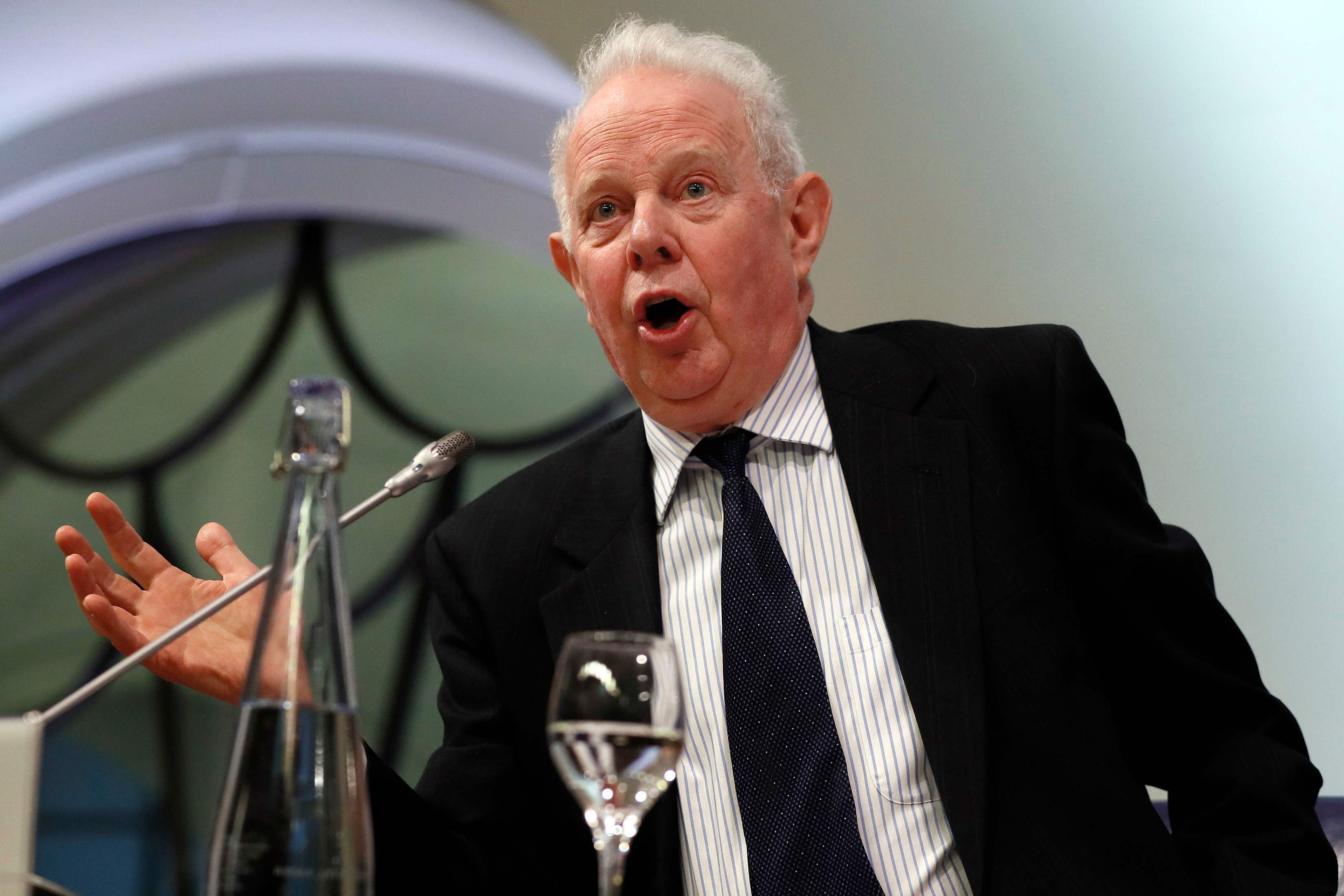
Responding to the projection figures, he told The Independent: “These figures demonstrate the failure of the government’s ‘action plan’ and the consequences of the government’s refusal to do justice to those who were given an IPP.
“They show it accepts that its plan will result in the obvious injustice to a significant number who have never been released by keeping them in prison 18 years after abolishing a form of sentence that all have long accepted as misconceived and wrong in principle, and in many of these cases for well over 20 years after sentence.”
Other victims of the scandal whose cases have been highlighted by The Independent include Thomas White, 43, who has served 13 years for stealing a phone and set himself alight in his cell; and Abdullahi Suleman, 43, who is still incarcerated 20 years after he was first jailed for a laptop robbery; and Wayne Williams, 37, who has spent more than 19 years in prison without release for attempting to injure a police officer in a fight.
Campaign group United Group for Reform of IPP (UNGRIPP) agreed that the government’s action plan will not “move the dial” and called for the government to end the nightmare.
A spokesperson added: “The government is substituting ‘projections’ for justice. We know the IPP sentence kills; the government knows it too.
“For 11 years, they have hidden behind ‘Action Plans’ that do nothing to move the dial.
“It is time for civil servants and ministers to do the job they are paid for: stop managing this nightmare and start ending it through a full resentencing exercise or other sensible options that have been put forward.”
Families and supporters last month joined UNGRIPP as they launched an exhibition in justice secretary David Lammy’s north London constituency, which will see thousands of stones painted red for every IPP prisoner languishing in a cell. Others will be painted white for those who have not survived the jail term.
Meanwhile, three families, who have watched their loved ones’ mental health crumble while serving an IPP sentence, met with prisons minister Lord Timpson earlier this month, urging him to intervene to help such prisoners work towards release from hospital.

Shirley Debono, of IPP Committee in Action, said many had been “left to rot” for so long that they no longer have friends or family on the outside to support them.
Responding to projection figures, she added: “Those figures tell the story. How the government can just watch this when they know they can stop this right now by resentencing all these IPP prisoners… It’s beyond words what is happening.
“This has been going on for 20 years. We are already into our third decade. Are we going to go into the fourth decade until the last one dies in prison?”
Her son, Shaun Lloyd, is also among five IPP prisoners whose cases are being investigated by the UN after a major complaint was lodged with their working group for arbitrary detention.
Separate data, revealed in answer to a Parliamentary question in December, also shows that the government is continuing to block many IPP prisoners from progressing to open conditions.
Between January and March 2025, the Parole Board recommended 34 IPP prisoners for moves to open prisons. However, then-justice secretary Shabana Mahmood rejected their decision in a third of the cases.
A Ministry of Justice spokesman said: “It is right that IPP sentences were abolished, and we have already taken action to support these offenders to move on with their lives.
“This includes additional support for IPP prisoners and changing the law to ensure those serving these sentences in the community can be more swiftly considered for licence termination.
“Since April 2023, the never‑released IPP population has fallen by 30 per cent, and all but a handful of those remaining IPP prisoners have repeatedly been found by the independent Parole Board to be too dangerous to live in the community.”