




Design
The Samsung Galaxy S26 Ultra now looks more like the regular S26, with more generously curved corners than the tighter ones seen on last year’s S25 Ultra, which gave it a squarer look and feel. The other visually noticeable design change, apart from new colours, is the camera panel. There are still four rear cameras: three arranged in a vertical column, and the fourth lens, plus a laser focus sensor and flash, in another.
Where it differs from last year’s Ultra model is that the left column now sits on a raised panel, which enables the cameras to maintain focal lengths (this is a matter of physics) while keeping the main body of the camera nice and thin.
In fact, this is the thinnest-ever Ultra, down from 8.2mm last year to 7.9mm in 2026. You may ask whether a fraction of a millimetre could make a difference. It does. This is a big phone, but the thinness achieved makes it just that little bit more comfortable. It’s also the lightest Ultra, around 4g lighter than last year’s model. It feels good in the hand, though it’s certainly still big: those with smaller mitts should try it out for size before buying.
Of course, it’s even bigger if you put it in a case, which you probably will, as it’s an expensive piece of kit. For this phone, there’s another really good reason to clad it. Although the S26 series phones are capable of fast wireless charging, they lack the ring of magnets that enable the phone to snap into place on a compatible charging pad. Without these, you could wake up in the morning to find that when you plonked the phone down, it didn’t quite connect and didn’t charge at all.
Many third-party cases offer Qi 2 capabilities to overcome this problem, and since Samsung has increased the wireless charging speeds on the new phone, it’s a feature worth having. I’ve been testing the phone with the Spigen Ultra Hybrid MagFit, which works like a dream.
Samsung hasn’t said why there’s no magnet ring, but in the past, it’s been said that the S Pen and magnets would interfere with each other. If you’re not familiar, the S Pen is the slim stylus that slots into the base of the phone and lets you scribble on the screen for notes, impromptu artwork and lots of other features. You can use Galaxy AI to turn simple drawings into something more sophisticated, too.
The new phone has an improved vapour cooling chamber inside. That’s important if you’re playing a game on your phone, for instance, and you don’t want to feel as though the phone is turning into a hand warmer.
The main colourways this year are black, white, sky blue and cobalt violet, with pink gold and silver shadow available as online exclusives at the Samsung store.
Galaxy AI
Samsung’s flavour of AI is enhanced this time around. Previously introduced features, such as live translation of phone calls, are still here, along with Now Brief, which serves up your day’s activity proactively – for instance, telling you when you need to head to the airport to be in time for your next flight.
And there’s a new feature, Now Nudge, which is similar to the Magic Cue found on Pixel phones. It aims to make the phone more useful by being proactive. For instance, it scans data on your phone so that if, say, someone texts you about photos taken recently, it can find them and suggest them to you – no need to change apps to scour for them yourself.
Note that it works with the Samsung keyboard, the default option on the phone, so if you habitually switch to Gboard or another keyboard, you won’t be able to use Now Nudge.
Processor and performance
The latest flagship has the most recent top-flight processor from Qualcomm in a bespoke version for Samsung: the Snapdragon 8 Elite gen 5 for Galaxy. The other two phones in the range use Samsung’s own Exynos 2600 in the UK, but have the Qualcomm chip in the US, China and Japan.
Qualcomm’s processor is fast and efficient, capable of running Galaxy AI at speed and ensuring everything happens on the device quickly, whether that’s opening apps or applying Samsung’s fancy photo-improvement features.
Cameras
Samsung has been the leader in the best smartphone camera category for years, matched only by Apple iPhones and Google Pixels. Like the S25 Ultra, there are four snappers here, including a 200MP main sensor. Though pixel levels are the same as last year, there have been improvements under the hood, including wider apertures on the main and 5x telephoto lenses, meaning low-light photography has improved. Overall, stills and video are exceptionally good: detailed, realistic and effective.
Privacy display
This is a really useful innovation. You know how you sometimes wonder if the person sitting next to you on the train or bus is looking at what’s on your screen? Well, privacy display makes what you’re looking at invisible to anyone shoulder-surfing, even though it’s still visible to you. Until now, the only way to achieve this on a phone was to slap on a physical screen protector. These are effective, but when you want to show somebody what’s on your screen, you always have to remember to angle your phone just right (or remove the protector).

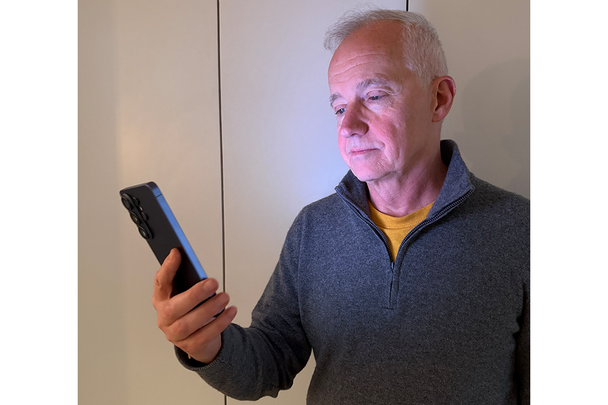
Samsung’s new feature works differently, using the display pixels rather than a superficial covering. It’s achieved through software and hardware, so it can be controlled to a granular level and switched on and off quickly.
By going to the quick controls, you can toggle it on or off instantly. More than that, you can set it up so it only comes into play for particular apps. All the apps on your phone are listed, and by adding one to the list, the privacy swings into action automatically when it is launched. It’s handy for checking your account balance in a banking app, for instance.
Samsung has gone further: you can set it to activate the privacy for parts of the display only. For example, if you set it up for notifications, when a text message, WhatsApp or other notification comes in, it will be visible only to you. People viewing at an angle will only see a blacked-out area of the display. It works because it uses what Samsung calls “narrow pixels” as well as “wide pixels” (which are the sort found on other phones). By turning down the wide pixels, the viewing angle is reduced.
One more thing: it also works when you’re holding the phone in landscape orientation, so no over-shoulder peeper can see what movie you’re watching on your S26 Ultra.
Battery life
This is the same 5,000mAh battery that previous generations of Ultra have toted and it’s easily enough to get you through a day with energy to spare.