One evening this week, a taxi took Rose Wylie to the Royal Academy of Arts, but it dropped her off round the back. “I said, ‘this isn’t right. I want to go to the front’. The driver was surprised,” she tells me. The reason? The 91-year-old painter wanted to see the banner bearing her name that currently hangs across the front of the building, where her work is on show in a major exhibition. “I wanted to see it lit up,” she says, with a wry laugh. “I love it.”
The response to The Picture Comes First, which is full of exuberant canvases several feet high – and several times the size of their minute nonagenarian creator – has been glowing. “Guaranteed to leave you in a better mood than when you arrived,” said Time Out. “There won’t be a more invigorating exhibition all year,” wrote The Telegraph in a five-star review. Wylie this year features on The Independent’s annual influence list for International Women’s Day, for her trailblazing career in the art world. When I call her landline at her home in Kent, the week after the show’s opening, she describes herself as “completely happy” about it all.
Somewhat staggeringly, Wylie’s exhibition is the first time a female painter has had a solo show in the Royal Academy’s main galleries in its 268-year history. “I think it’s high time,” Wylie says of the oversight. “Obviously it’s a very poor situation that that’s happened. I don’t know, I can’t… I can’t believe that there’s been no woman painter in the main gallery since it started. It’s quite unbelievable and quite, quite obscene, don’t you think? I’m glad it’s broken.”
But Wylie, who studied at Folkestone and Dover School of Art and the Royal College of Art, doesn’t want people to think that’s why the show is there, and wants to be celebrated for her work rather than her gender. “I want people to respond to the paintings. Because that’s my business. That’s what I want.”

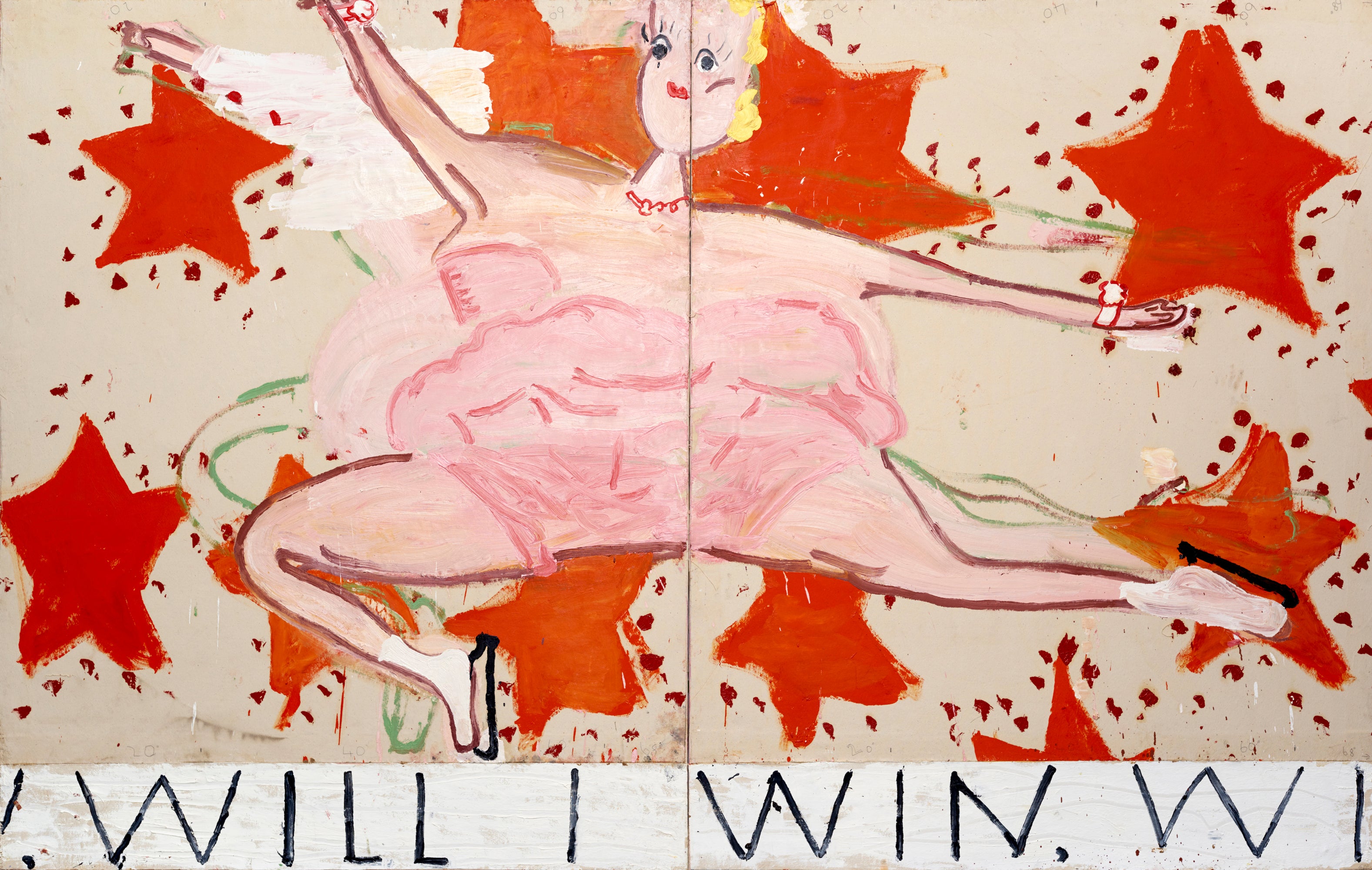
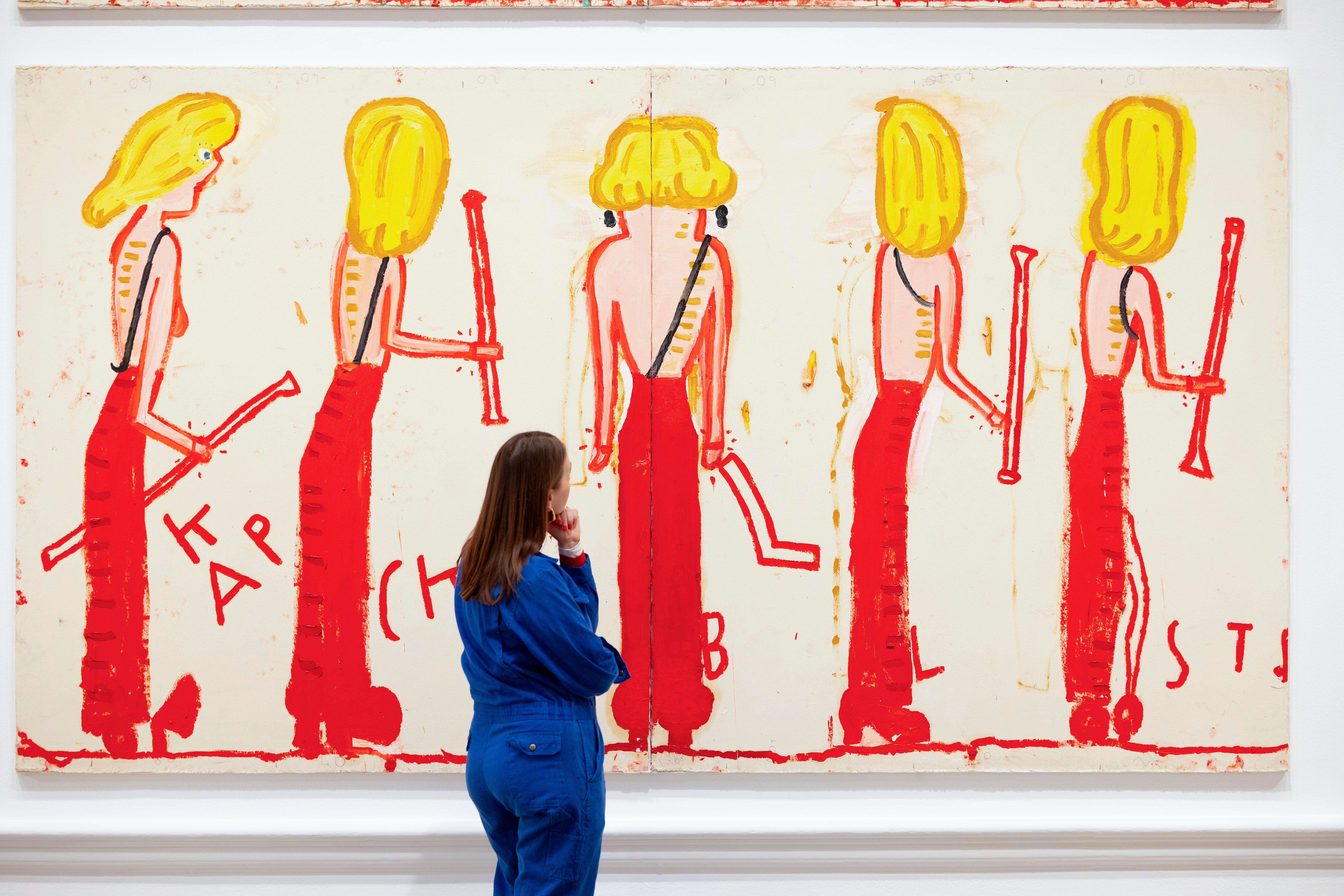
Featuring new work as well as art from across her career, The Picture Comes First is full of enjoyably giant canvases that showcase Wylie’s humour, and her eye for moments of everyday pleasure. A plate of breakfast – with “BREAKFAST” emblazoned underneath – towers over viewers, while there are several works inspired by her cat Pete. Doodlebugs from a childhood lived through the Blitz creep into works in the show’s first room, while “Pink Skater (Will I Win, Will I Win)”, shown on the exhibit’s posters, features a figure skater almost bursting out of the wall. It’s a work that seems to encapsulate the artist’s moment of triumph. My personal favourite, “RW Party Clothes”, is literally that: Wylie in her party clothes. “It’s the first time I’ve painted myself with grey hair,” she says of a work that brims with joie de vivre. “I still wear that outfit.”
Writing about Wylie in 2010 at a time when her reputation was first beginning to rise, Germaine Greer said: “Everyone in the art world knows Wylie, but no one knows what to do with her.” Wylie found that an astute comment. “It was absolutely true,” she says. “Sometimes people think they’re not paintings, they think they’re something else. I mean, if you look at the Bayeux Tapestry, you don’t have to think ‘painting’. It’s something else. So I think people are expecting something else, and they simply didn’t know what to do with them. I think I straddle various directions in the art world and people couldn’t quite pigeonhole me or put me in a box, and they weren’t quite sure how to deal with it.”
Over the years, Wylie has had her detractors. The late art critic Brian Sewell famously called one of her works “a daub worthy of a child of four”. But Wylie says it wasn’t painful to be misunderstood, because she never expected to be. “In fact I think it was a trigger. It was like a carrot. Get on with it.”

After marrying fellow artist Roy Oxlade, who died in 2014, Wylie didn’t paint for 25 years while she raised their three children. It’s not something she resents, because she returned from her years of mothering with more experience, and could paint “in a very focused way”. She rarely hesitates when asked a question, and is instant in her response when I ask if she wished her success had come earlier. “No. Success, if it comes earlier, can entrap you a bit. If you’re older and you’ve got a lot of work done before anything happens, you’ve been much freer. I think it’s about freedom. I think you need to be free.”
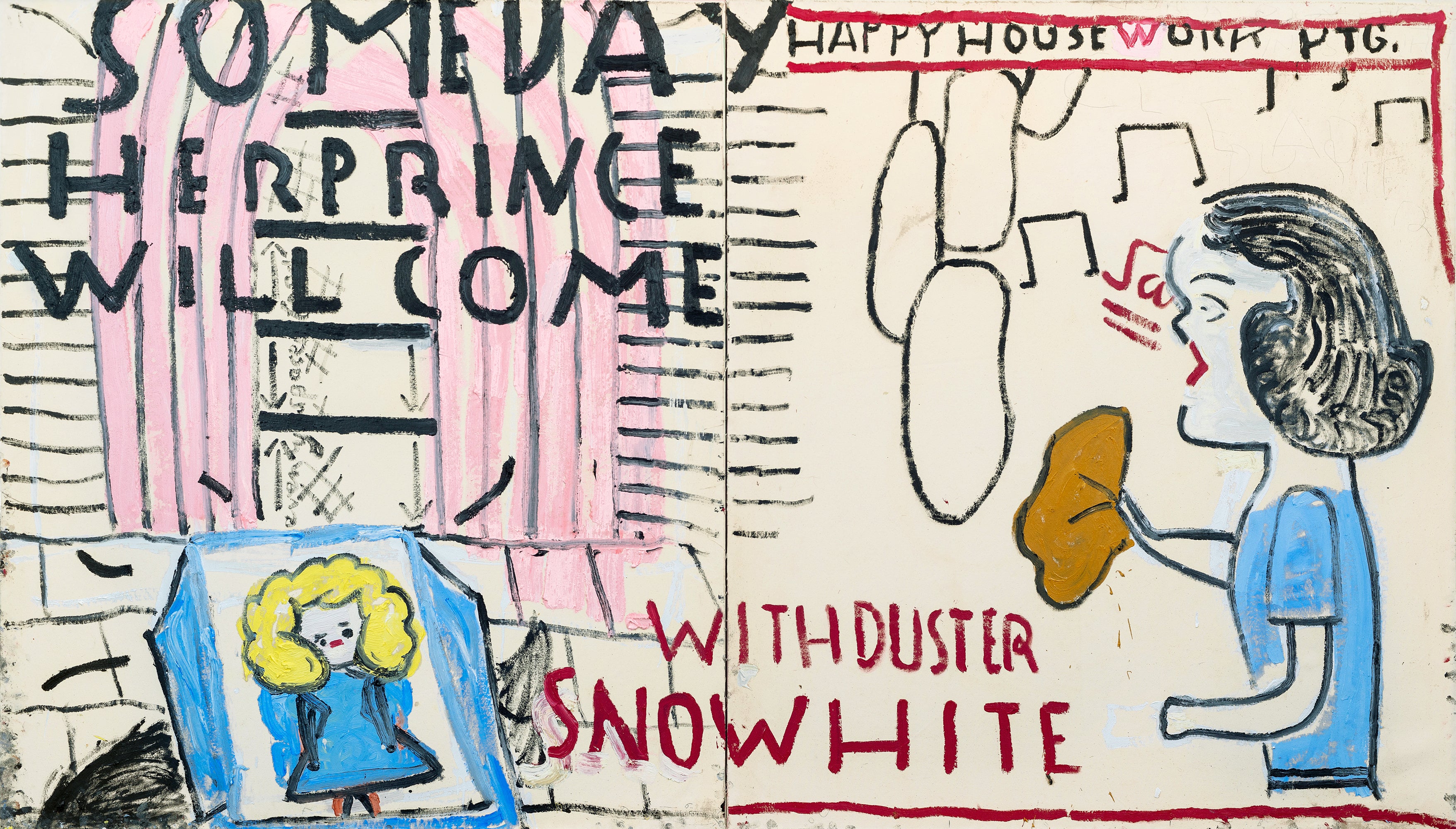
One of the most enjoyable aspects of Wylie’s work is her ongoing love affair with cinema. The Picture Comes First includes paintings inspired by Nicole Kidman, Quentin Tarantino films and Disney’s Snow White; she recently watched Saltburn, but hasn’t yet seen Emerald Fennell’s divisive adaptation of Wuthering Heights. (She’s a fan of Jacob Elordi: “terribly good”, “an incredibly handsome young man”.) At the moment she’s painting Bette Davis, “a great muse” with “a terrific face”, and recently made a work featuring her twentysomething granddaughter placed between Mary Queen of Scots and Philip II of Spain.

So what’s next for a painter in her nineties who shows no signs of stopping? “I’m laughing, I thought I’d finished with this, but the thing is I’ve got a show starting off in Paris in April. Did you know?” Her future ambitions are resolute. “What I would like is to be in some major museum exhibition, major, major. I’d love that.” Museums, she says, matter because “they are for the people. They’re open, they’re free, they’re part of our cultural heritage.”
Her Royal Academy show may be a historic first for female painters, but Wylie’s in good company in a strong year for exhibitions by and about women. Tracey Emin’s recently opened retrospective at Tate Modern, which has visitors clamouring to see her work, will be followed by shows about Frida Kahlo and Cuban artist Ana Mendieta. “There’s a whole clutch of us, a mass of women. The country will be sick of women in a minute.” But surely not! “That’s a good answer,” Wylie says with gusto. “I agree with you. I’m never sick of women.”
The Picture Comes First is at the Royal Academy until 19 April.
Read The Independent’s influence list for International Women’s Day 2026 here.