



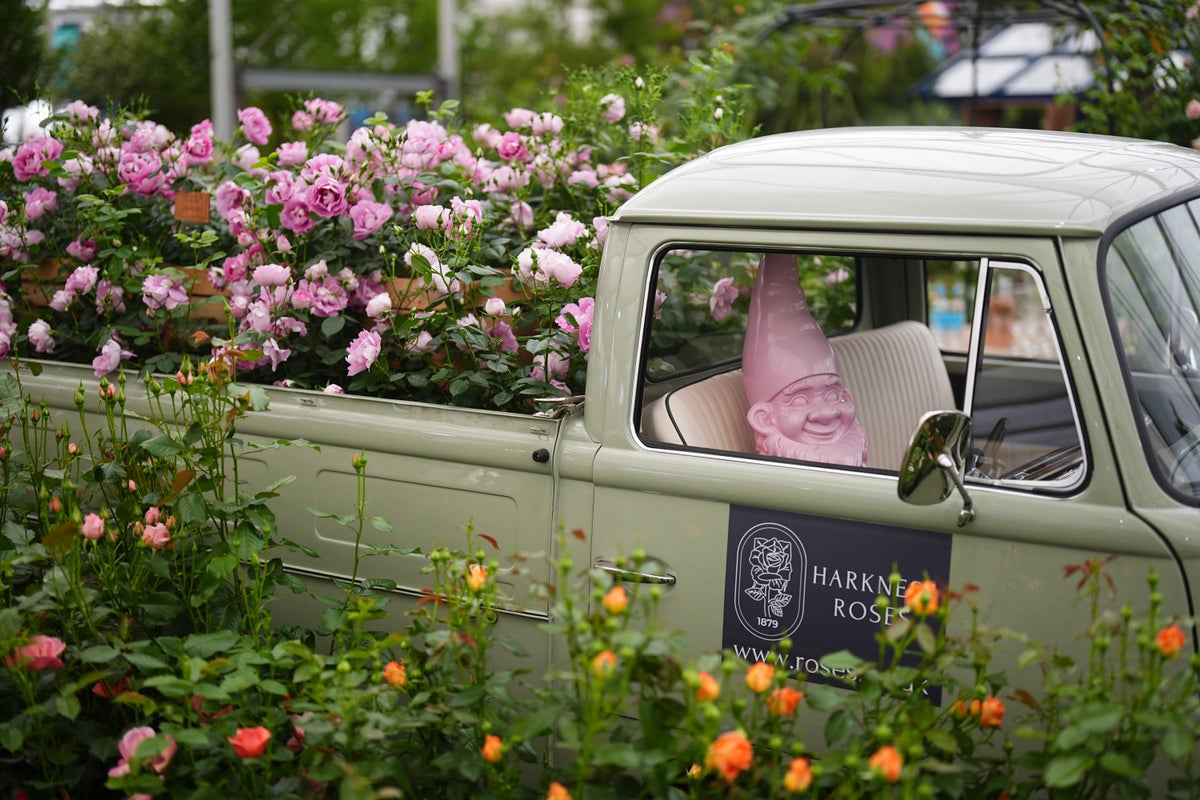
The world-renowned RHS Chelsea Flower Show has once again opened its gates, inviting visitors into a realm where horticultural artistry meets cutting-edge innovation.
This year, designers are pushing boundaries, not only with breathtaking garden masterpieces but also by showcasing trends that home gardeners can readily adopt, from serene Japanese-inspired spaces to the embrace of wildlife and even artificial intelligence.
Japanese-inspired design

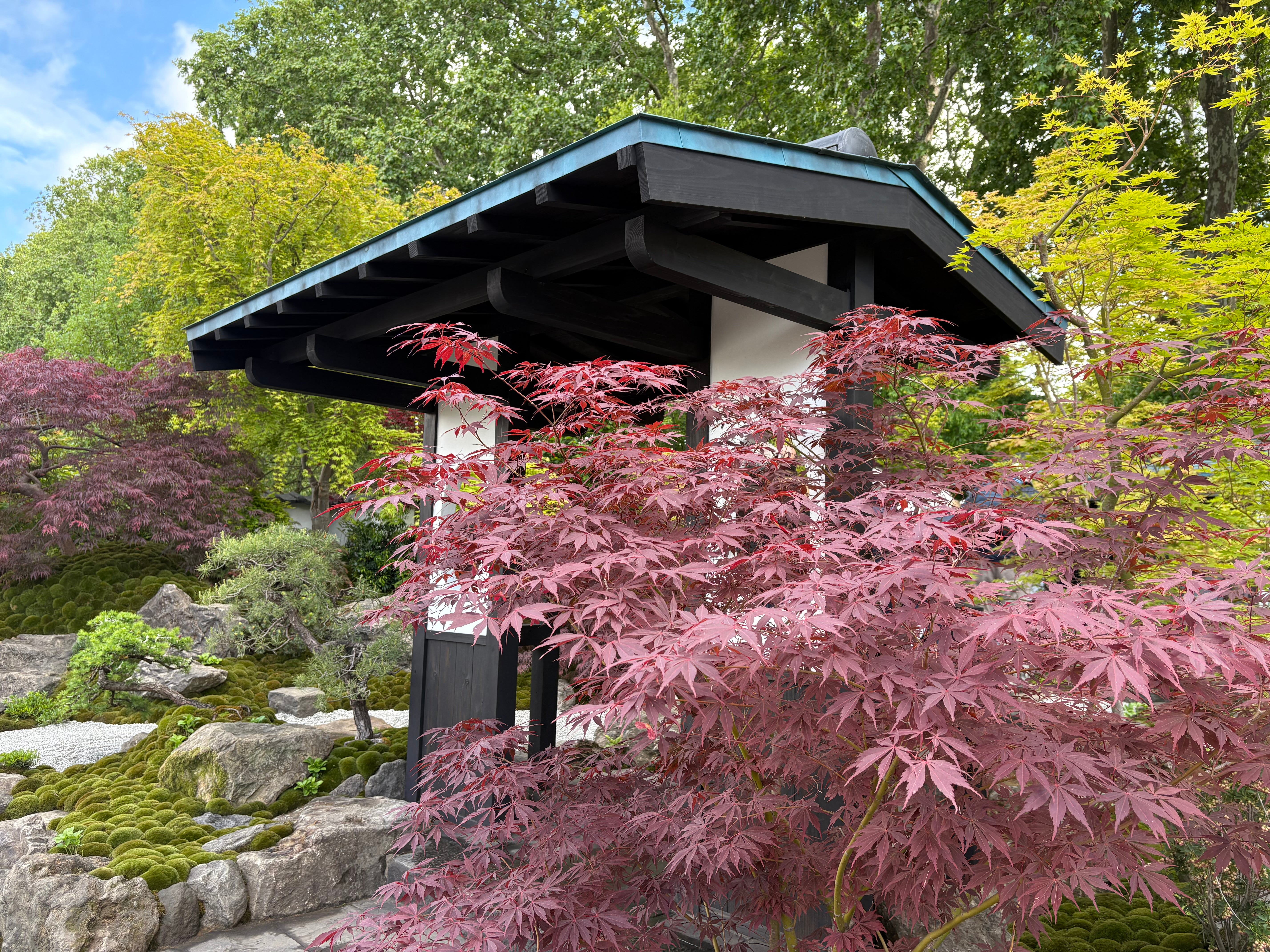
A significant theme emerging from the show is the profound influence of Japanese design, appealing to those seeking mindfulness and a deeper connection with nature. Four of the nine large show gardens draw directly from these traditions. Award-winning designer Kazuyuki Ishihara’s Tokonoma Garden – Samumaya no Niwa, for instance, is crafted for contemplation and the appreciation of beauty.
RHS chief horticulturist Guy Barter notes, “One of the things coming through this year, particularly in small spaces where you want something neat and full of interest and which gives you Zen feelings of wellbeing, is delicate textures of things like Japanese maples and other graceful plants.”
This minimalist approach extends to the beauty of empty space, exemplified by Angus Thompson’s Asthma and Lung UK Breathing Space Garden, which balances classic Japanese planting with uncluttered areas. Thompson explains, “The quiet, uncluttered style acts as the perfect antidote to a hectic, digital modern life.”
Wildlife gardening

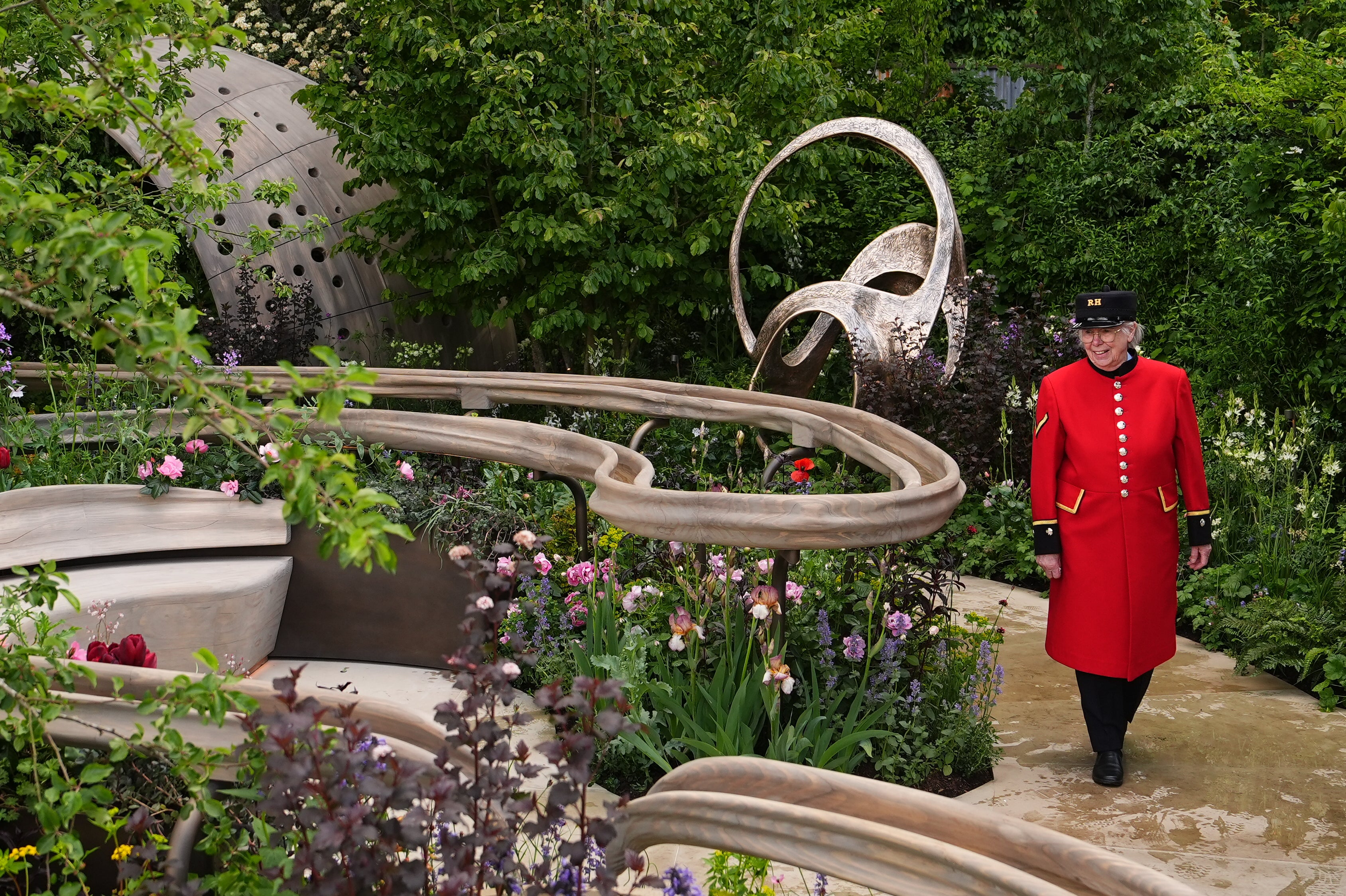
The commitment to biodiversity and wildlife gardening remains paramount, with it becoming a prerequisite for major show gardens by 2026.
Helen Bostock, RHS senior wildlife specialist, highlights how wildlife elements are “sensitively wrapped into the design, even where it’s not the primary narrative.”
This mirrors a broader trend among the public, with over half (52 per cent) of gardeners adapting their practices to support local fauna. From the Boodles Garden, replete with ornate insect houses and bird boxes, to the Parkinson’s UK garden featuring late-flowering plants for night-time pollinators, inspiration abounds.
Jamie Butterworth, RHS ambassador and co-designer of Monty Don’s dog garden in 2025, observes a significant shift: “If you go back a decade, every plant, tree or hedge going to Chelsea would have to be beautifully manicured, with not even a hint of a bite out of a leaf, which meant everybody was growing them in pristine conditions. But now a lot of gardens are celebrating wildlife. Even on Main Avenue you see gardens where maybe there will be a hedge with a bit of caterpillar damage. Now, we’re embracing wildlife and working with it. The more insects you have, the more birds you will have, the more bats you will have, the more biodiverse our gardens will be.”
Roses

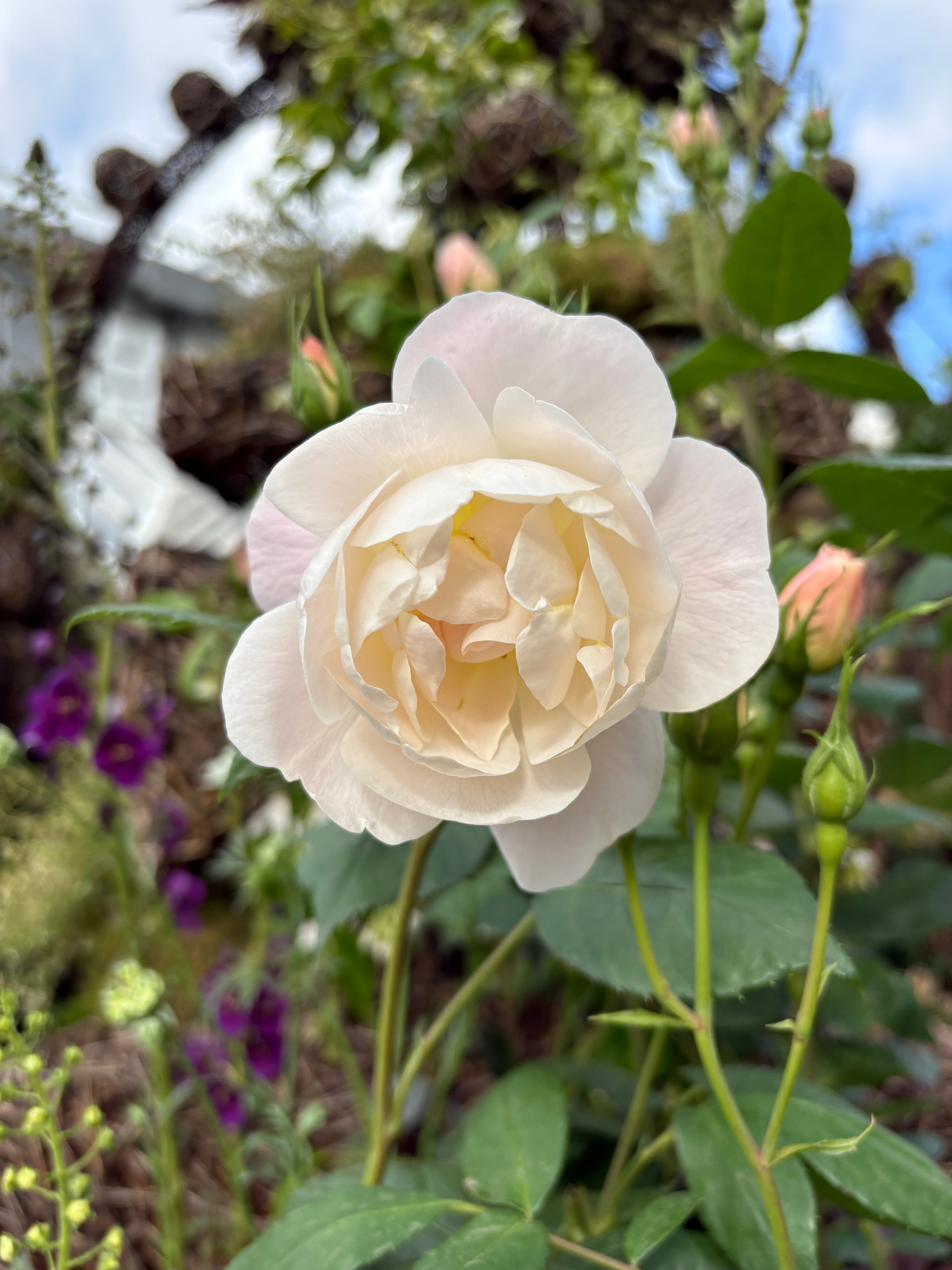
Roses, a perennial favourite, are generating considerable buzz, particularly with the launch of the Sir David Beckham rose by David Austin Roses.
This variety, featuring luminous white flowers with soft pink buds, is showcased in The RHS and The King’s Foundation Curious Garden, alongside roses named after the King and Alan Titchmarsh.
More colour
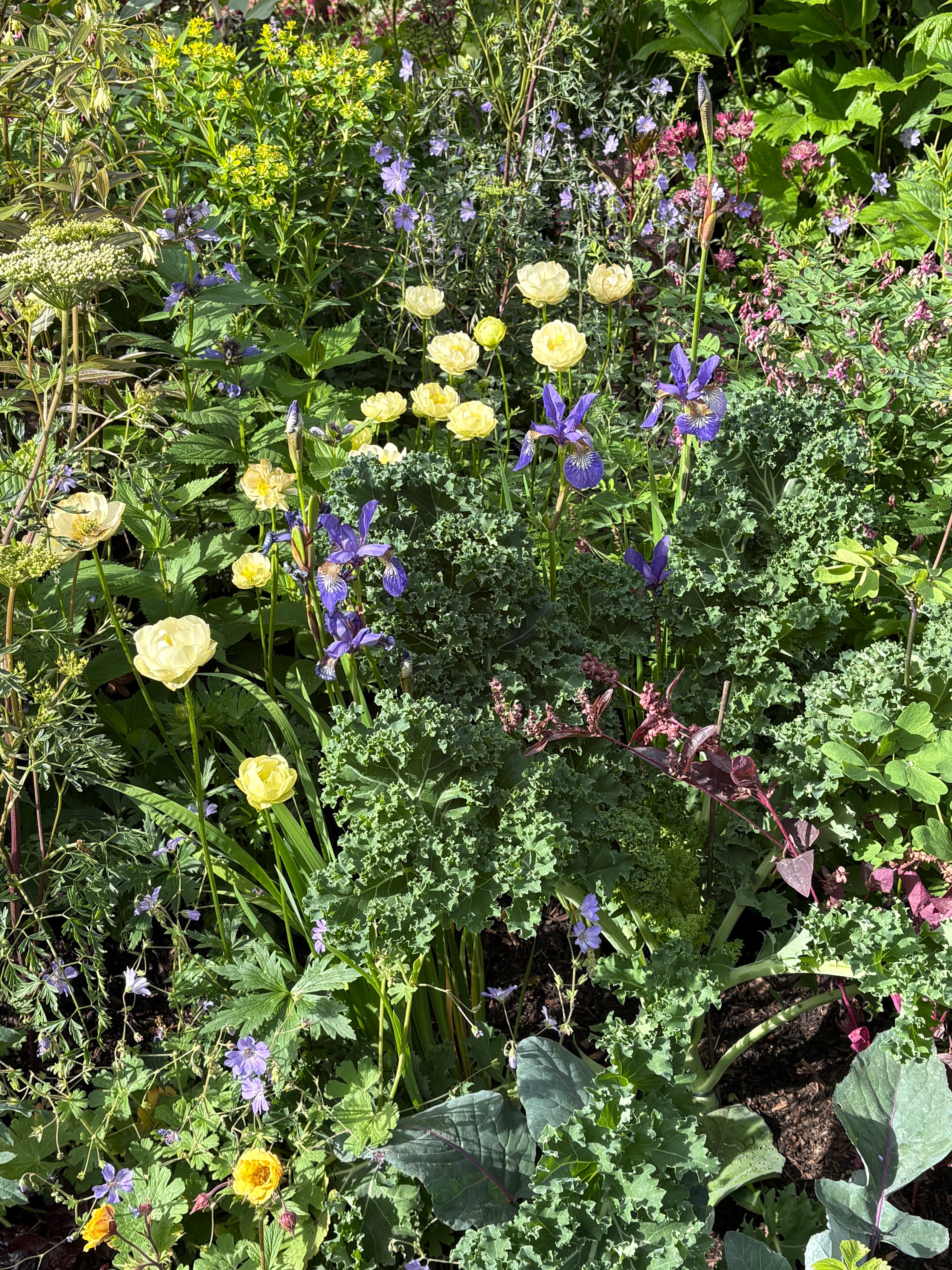
Beyond specific varieties, a vibrant palette dominates this year’s show. Butterworth attributes this to a warm spring, resulting in an abundance of plants in full bloom. “Think lupins, delphiniums, geums, bright bulb colours, Iris germanicas are very popular this year – the reds and the oranges – along with nepetas and salvias galore,” he enthuses.
Multi-award-winning designer Sarah Eberle concurs, “There is more colour. Maybe people feel we all need cheering up.” Ornamental grasses, such as Miscanthus, calamagrostis, and sesleria, are also prominent, offering movement and texture while proving resilient to varied weather conditions.
Naturalistic layouts
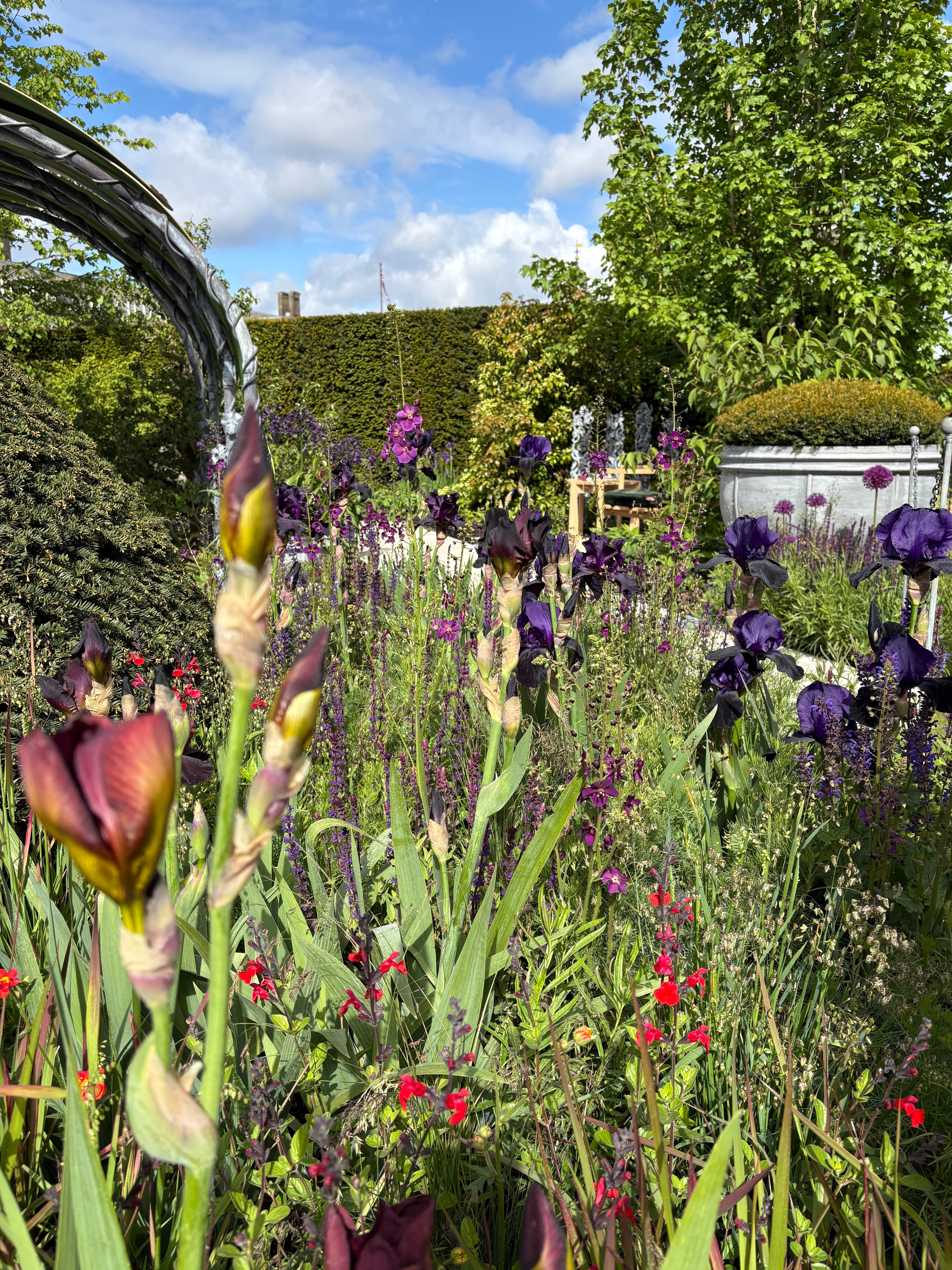
A return to naturalistic layouts is evident, with designers like Sarah Eberle in The Campaign to Protect Rural England Garden “On The Edge” and Tom Stuart-Smith in the Tate Britain Garden demonstrating how rural landscapes can be evoked even in urban settings.
Andrew Duff, chairman of the Society of Garden and Landscape Designers, notes, “This is particularly strong in Tom Stuart-Smith’s Tate Britain Garden and that informal use of gravel or Hoggin, and in the way there’s no defined edged to the plants and a much more natural approach to positioning the plants this year.”
This approach moves beyond rewilding to a more domestic, functional naturalism. Award-winning designer Matt Keightley adds, “It’s brave to loosen it up, whether it’s gravel or soil you are seeing, immediately those spaces feel more relaxed and accessible in as much as you can picture those combinations at home.”
British native plants like hazel, hornbeam, and hawthorn are also forming the backbone of many designs, valued for their adaptability to climate change. Complementing these natural aesthetics is a strong focus on sustainable hard landscaping, with Guy Barter highlighting “cement-free walls and low-carbon cement made from seashells.”
Delphiniums
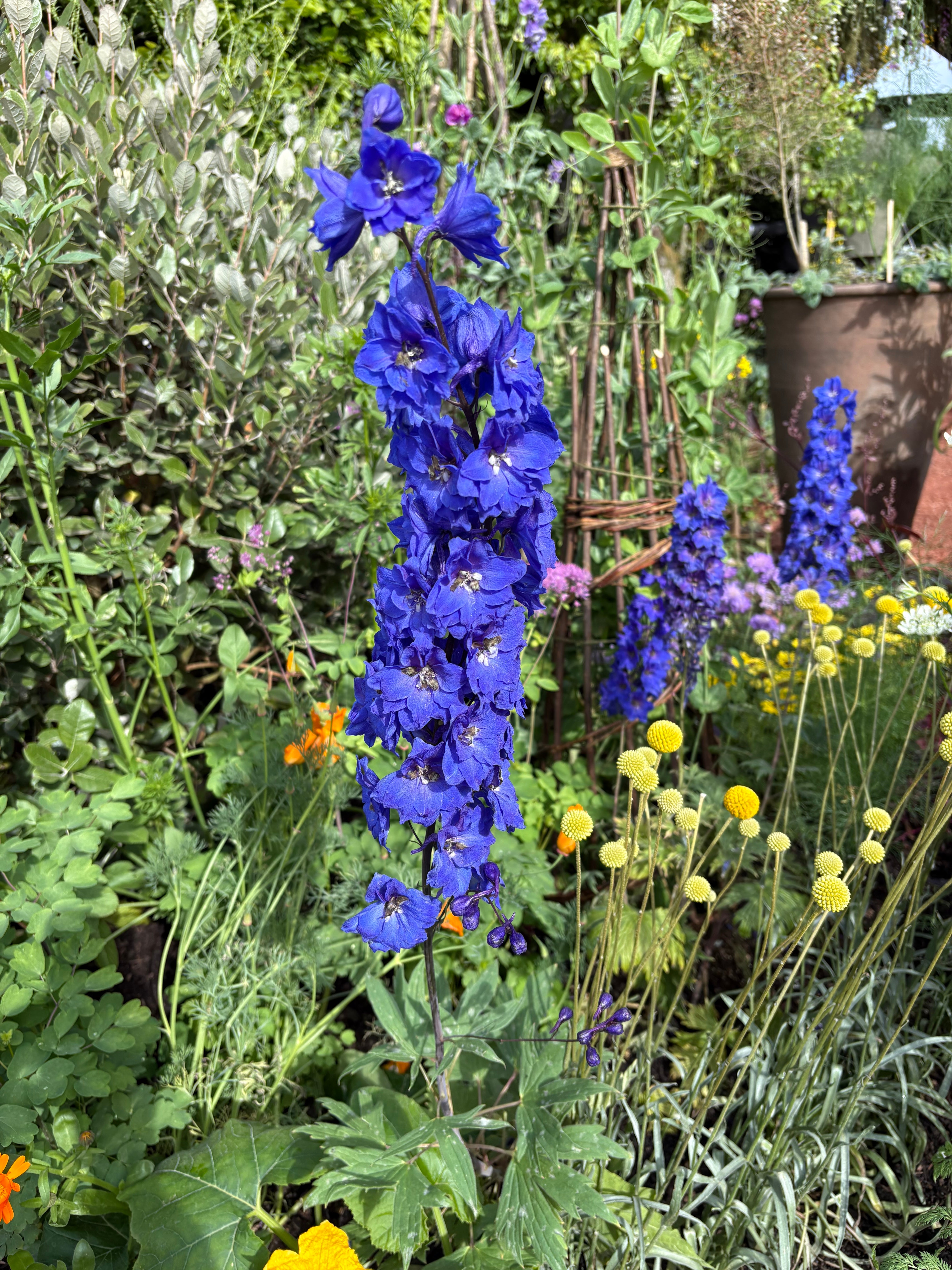
The King’s favourite plant, delphiniums, are prominently featured in The RHS and The King’s Foundation Curious Garden, likely inspiring many home gardeners. Technology also takes centre stage, building on last year’s Avanade ‘Intelligent’ Garden, which used soil sensors for insights into plant health.
AI possibilities
This year sees the debut of Spacelift, an AI-powered garden design platform co-created with Matt Keightley. Aimed at DIY enthusiasts, it allows users to “shop the look” with realistic AI visions, assisting with furniture placement, plant selection, and layering.
Gnomes?

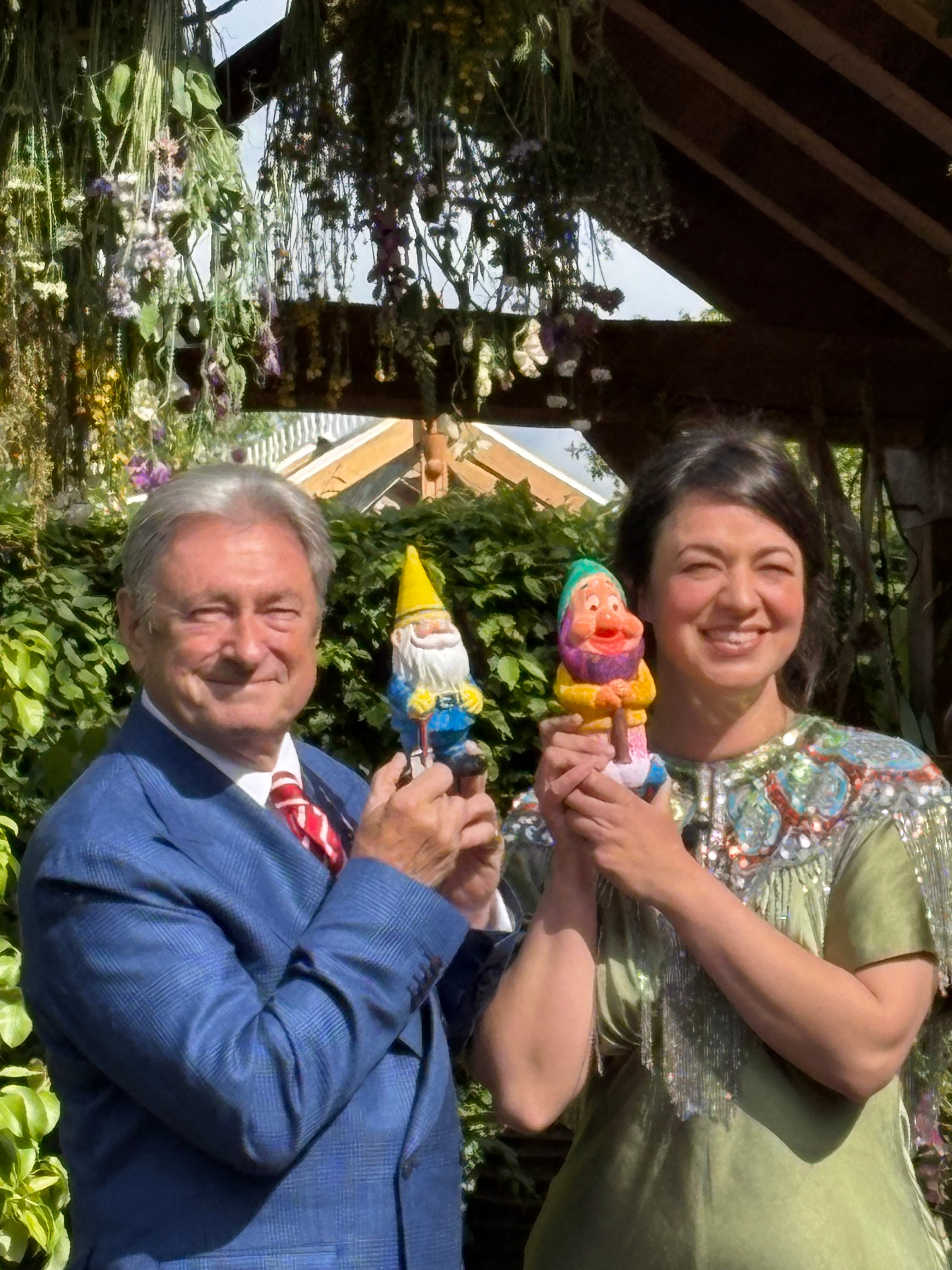
And for a touch of whimsy, the RHS has temporarily lifted its ban on gnomes, allowing them into The RHS and The King’s Foundation Curious Garden with celebrity backing. While Guy Barter finds them “a bit kitsch,” he acknowledges their “loyal following” and the freedom they offer for self-expression. He quips, “People who fancy gnomes can feel enabled, because if others poking in their garden say, ‘That’s a bit naff’, they can respond, ‘Well, they’re at Chelsea’.”