


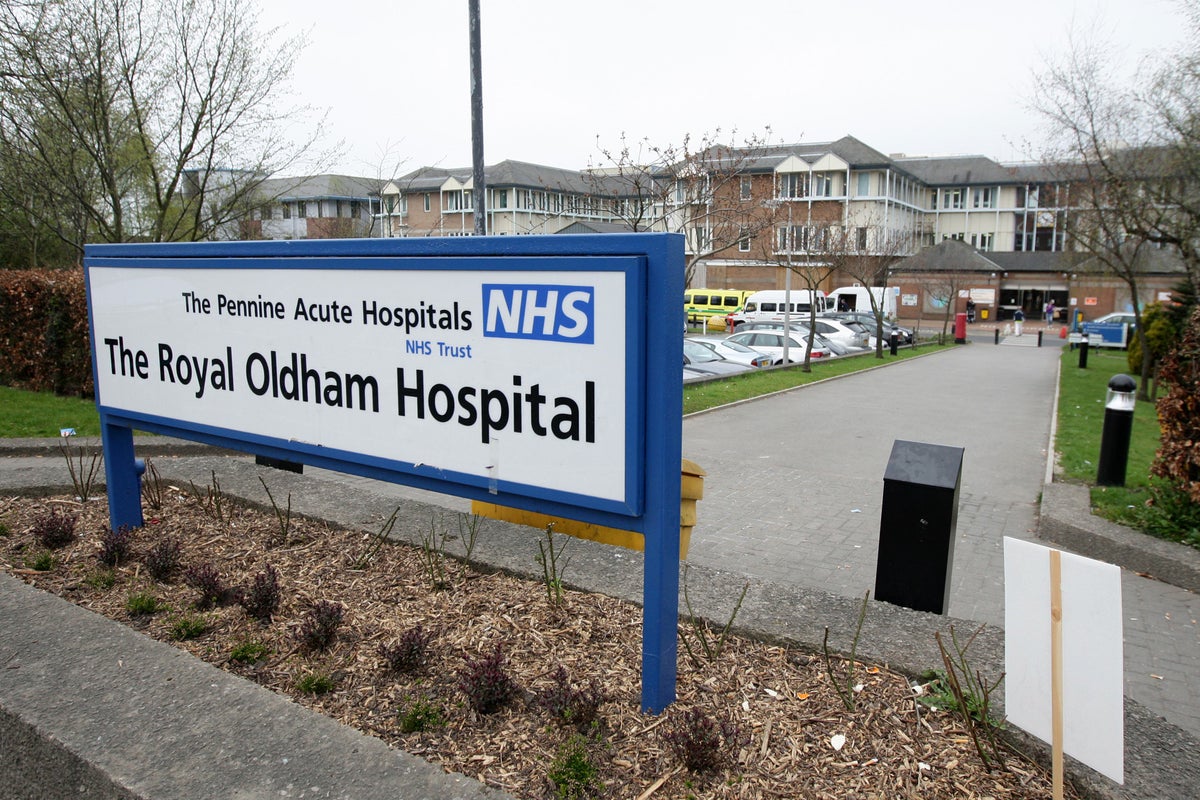
Resident doctorsat a major hospital trust have been warned they may not get jobs in the future if they take too much sick leave, The Independent can reveal.
In an email sent to staff at the Northern Care Alliance NHS Trust, which has four main hospitals in Manchester, a senior director advised doctors to wear masks if they are “sniffly with cold symptoms” rather than call in sick.
The email, seen by The Independent, also warned that the trust had withdrawn job offers from medics whose records showed they had taken “several” sick days in a year.
Dr Matt Church, chair of the resident doctors’ committee at the HCSA (Hospital Consultants and Specialists Association), a trade body and union for hospital doctors, said the email from Northern Care Alliance was “an outrageous attempt to bully sick doctors into work” and warned that the threat would only drive up sickness rates.
The news comes amid wider unrest from resident doctors across the NHS, with a fresh round of strike action planned to take place over six days from 7 April in the British Medical Association’s ongoing dispute with the government about pay.
According to Northern Care Alliance NHS Trust, its sickness rate for December was 7.4 per cent – above the 5.9 per cent average across NHS organisations in England overall.
The email, sent on 17 March by the trust’s director of general and specialist medicine to its on-call resident doctors, said it had been a “rough few months, and not over yet, with winter viruses”, but noted that on-call staff sickness rates had improved since October.
The email acknowledged that being on call “is difficult”, but cautioned that “no one wants to have a reputation for being unreliable and not turning up”.
The director advised any medics feeling anxious about on-call shifts that there are “lots of ways to handle those feelings”, adding that “anxiety can be worse when we avoid our responsibilities”.
In a final paragraph, the senior doctor warned: “One last point to make, some of you may not be aware that sickness records form part of your references when applying for future jobs. They are part of the references for good reason.
“If someone applying for a job has had several sick days in a single year, then this may signal to the decider that they are a risk to an employer. We have withdrawn one conditional offer of JCF [junior clinical fellow] for a post recently, and almost two offers, to people who have unsatisfactory sickness records on their references.”
Dr Church said the email had “echoes of the callous disregard” shown towards health and safety, which led to staff being made to work in substandard PPE during Covid.
He added: “It’s disturbing to see an employer show such contempt, potentially further damaging the health of the doctor and risking patients. Doctors are already demoralised and burnt out. Menacing language about the future career prospects of people suffering from ill health really is a new low, which will do nothing to reduce sickness absence. If anything, it will drive it.
“Employers have a health and safety duty, which in a hospital environment must be applied to the letter for obvious reasons. Sick doctors aren’t able to deliver safe care.”
The chief medical officer at Northern Care Alliance, Rafik Bedair, said the trust’s approach to sickness is rooted in care and compassion, adding: “We support staff to recover properly so they can provide safe, high‑quality care.”
He added: “Our leaders consistently look for ways to support colleagues, including our resident doctors, who do an incredibly difficult and important job.
“We also know attendance matters for patient safety, which is why we work with teams to prevent avoidable sickness and support anyone experiencing anxiety or other wellbeing concerns. Sickness information is included in employment references across the NHS, but this is handled sensitively and in line with national guidance.”


