




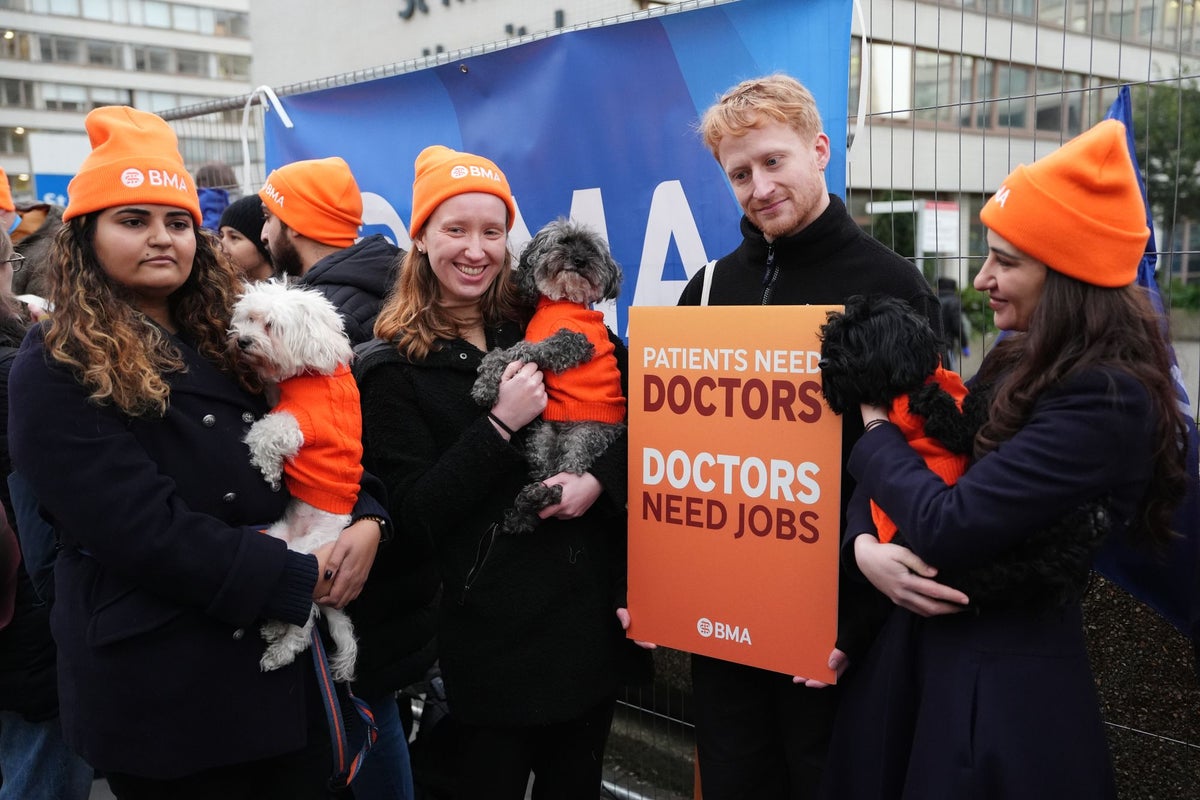
Resident doctors claimed there is a sense that “the system is breaking” as they started a five-day strike in England due to an ongoing row over jobs and pay.
Doctors took to picket lines across the country on Wednesday morning as the British Medical Association (BMA) called for a “genuinely long term plan” to raise pay for doctors, addressing years of below-inflation rises.
Health secretary Wes Streeting said the government did “everything we could” to avoid the strike, including holding 11th-hour talks with BMA officials on Tuesday, where its members rejected a last-minute offer.
Mr Streeting said health officials are doing “everything we can” to minimise the impact of the strike, but warned patients will face disruption as the walkout comes at the “worst time” for the NHS, as hospitals are dealing with rising flu cases and other winter illnesses.
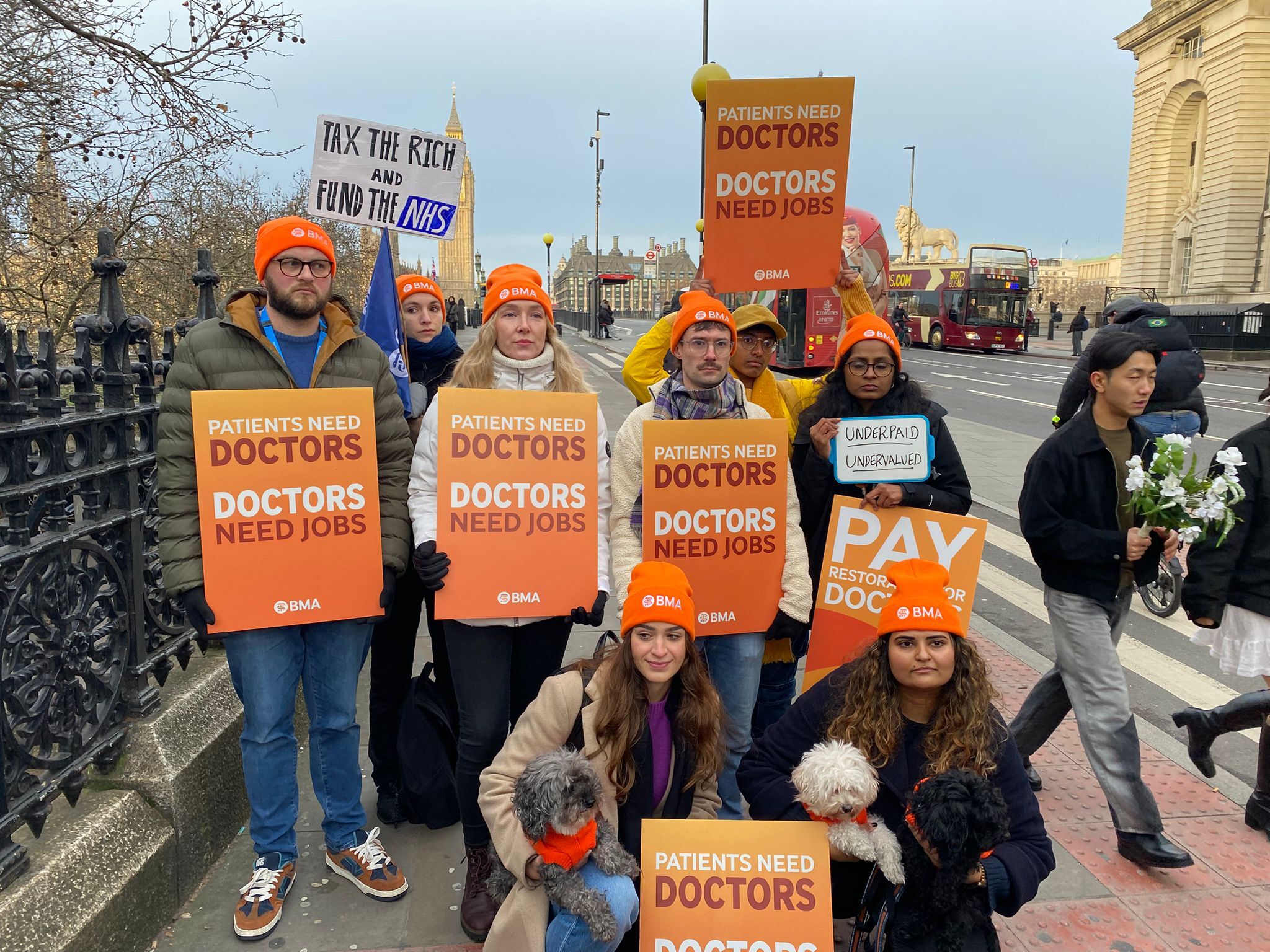
At St Thomas’ Hospital in London, a number of resident doctors, formerly known as junior doctors, formed a picket line and were supported by passing drivers on Westminster Bridge Road, who beeped their horns in solidarity.
The doctors, who were led in a number of chants, including ‘Come on Wes, do it today, fix our jobs, fix our pay’, told The Independent they felt they had to walk out due to their salaries, staffing in the health service, and conditions they work under.
Among them was Dr Julia Thornton, a second year doctor in the intensive care unit. She told The Independent: “Morale is pretty low. The combination of the pay erosion and the fact that people can’t get jobs – if people can get jobs they’re doing the jobs of multiple people – creates a sense that the system is breaking.

“No matter how hard you work you can’t treat the patients you want to.”
Dr Thornton recalled a moment in her first year as a doctor, which she believed encapsulated the challenges facing the NHS.
She said: “I was working in A&E last year as a first year doctor, I had a patient who was waiting 12 hours to see me. By the time I got to them, they had died in the corridor.
“It’s that kind of thing that really hits you and breaks your emotional morale and sense of pride in the profession.
“You’re dealing with people in corridors, working as hard as you can, but still they’re waiting hours and hours to be seen in A&E and they’re waiting months and months for operations.”
The number of doctors leaving the NHS to work in another profession or to work overseas was also a concern for those on the picket line in the capital.
Dr Shivam Sharma told The Independent: “We are Australia’s best medical school. We have record numbers of doctors leaving for Australia and that is a waste of taxpayers’ money.
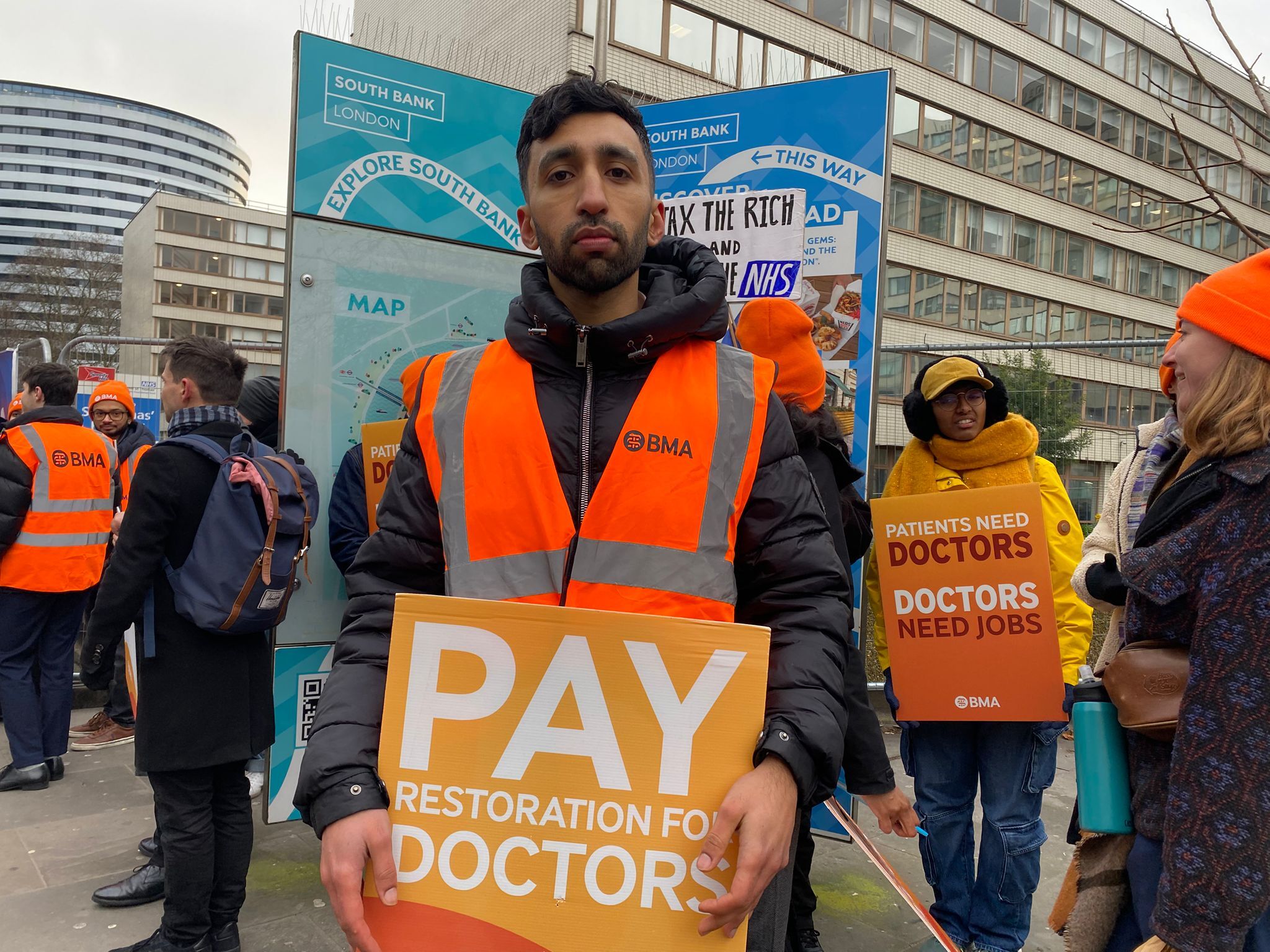
“Doctors are being trained up only to leave and that is because doctors don’t feel valued within this healthcare system.”
Dr Sharma described the timing of the strikes as “short-term action for long-term patient safety”, adding that there “must be a serious attempt to increase the staff in the NHS so that patients can be seen”.
Those on the picket line at St Thomas’ were supported by former Labour Party leader, the MP for Islington North Jeremy Corbyn.
Asked by The Independent what he would do if he were in Mr Streeting’s position, Mr Corbyn said: “I’d meet with doctors, listen to them and spend time in A&E to understand what the pressures are like – and the moral blackmail that’s used against doctors all the time to try and do the impossible, as they do almost every day in our A&E.”
Dr Layla McCay, from the NHS Confederation, told Sky News: “What healthcare leaders are telling us is that the impact we will see from these particular strikes will affect particularly things like the waiting lists, and the disruption that is being caused this week will be felt all the way into January and beyond.”
Resident doctors will return to work on December 22.

