

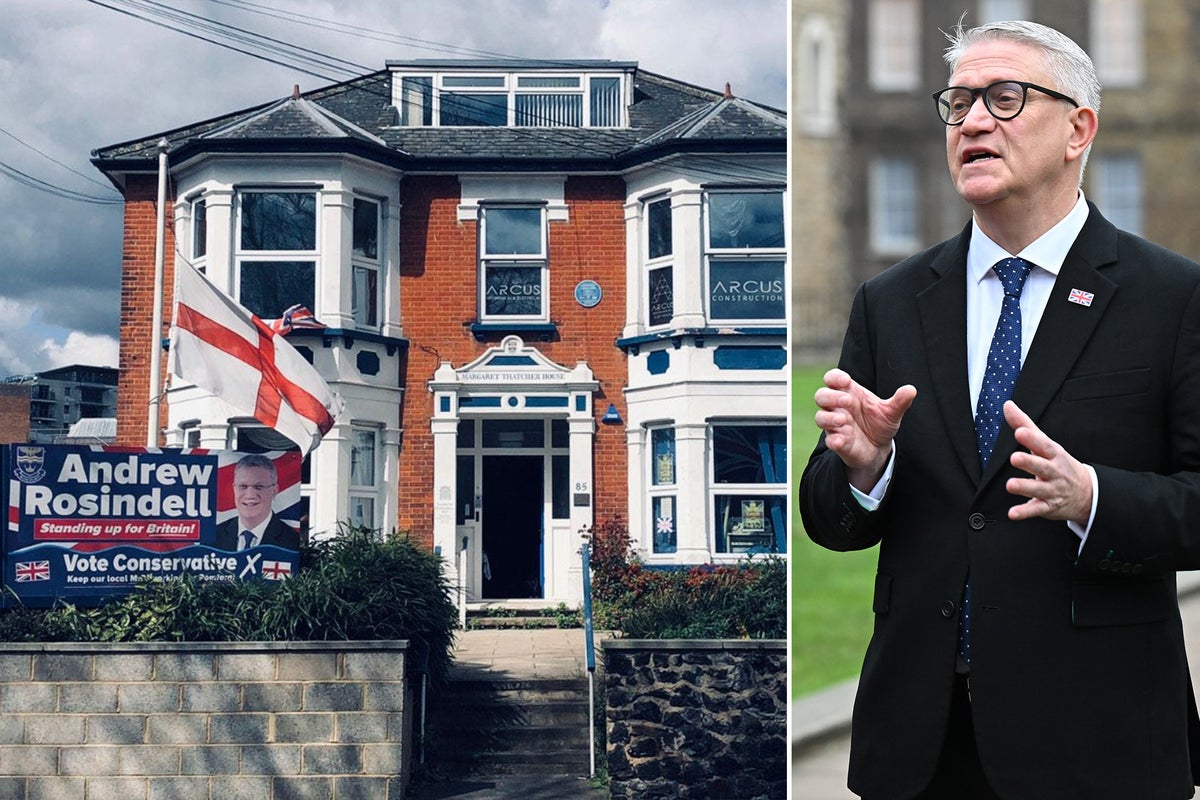
A Tory MP who defected to Reform UK earlier this year is now suing in the High Court after he was locked out of his office at the local Conservative HQ.
Andrew Rosindell, who has served as Tory MP for Romford since 2001, became London’s first Reform MP when he joined Nigel Farage’s party in January, declaring that the Tories are “irreparably bound to the mistakes of previous governments”.
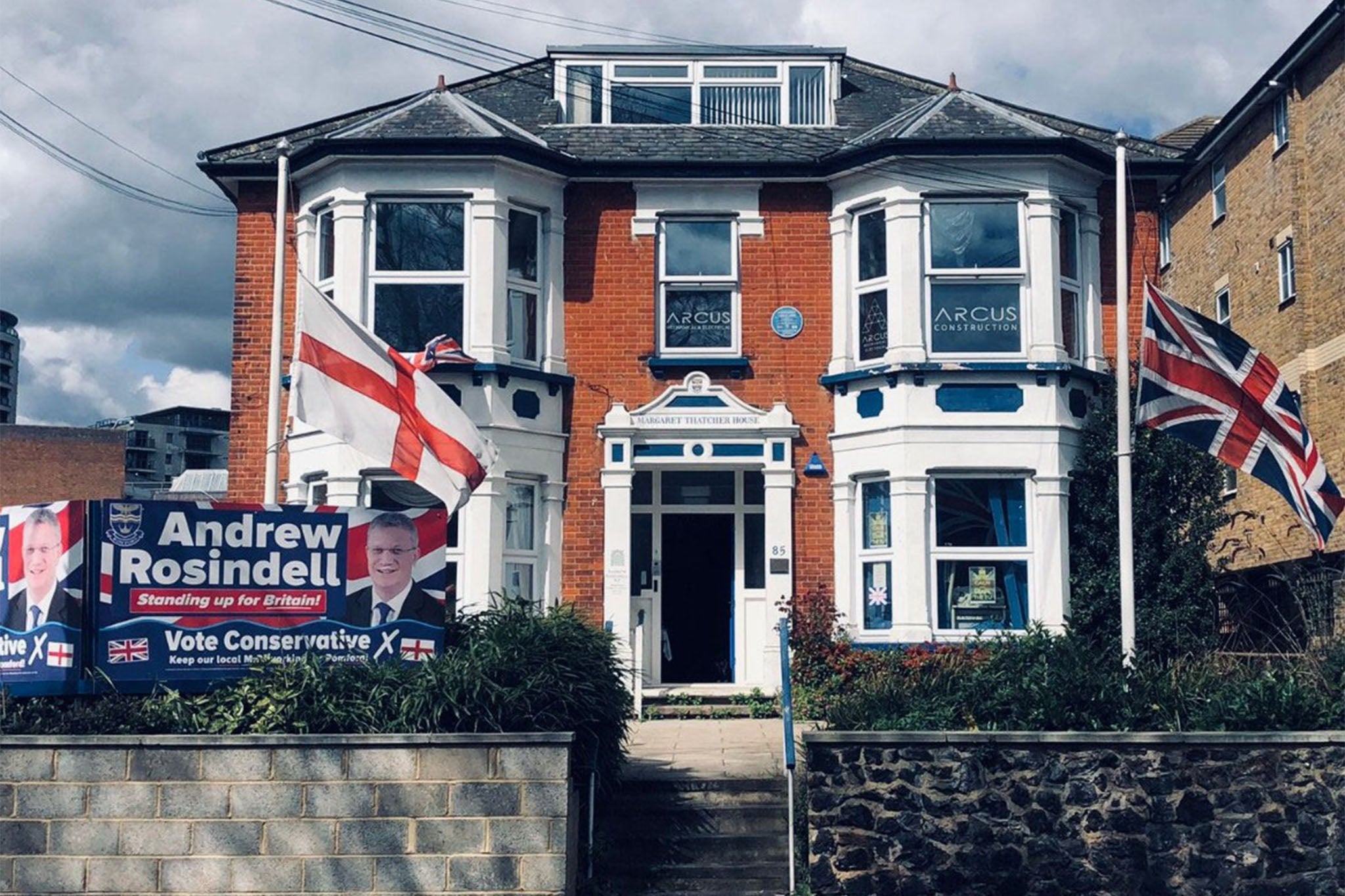
For more than 20 years, he has had exclusive use of a private room at the Romford Conservative Association’s Margaret Thatcher House, using it as a constituency office.
But last Wednesday, the association changed the locks overnight and blocked him from accessing the building.
He is now suing, claiming the local association had no right to lock him out and asking a judge to order them to let him back in.
Among other complaints, the former Tory says he has concerns for “his personal safety”, as he has been blocked from accessing his personal “panic room” at work as a result of being locked out.
The case reached London’s High Court for an emergency injunction application yesterday afternoon, but after hearing that the association had been given only 90 minutes’ notice, it was adjourned by a judge.
A veteran politician, Mr Rosindell, 60, had served as a Conservative MP for decades before he announced his defection to Nigel Farage’s party in January.
In a statement, he claimed that the “views and concerns of constituents such as mine in Romford have been consistently ignored for far too long”.
“Our country has endured a generation of managed decline,” he said. “Radical action is now required to reverse the damaging decisions of the past and to forge a new course for Britain.”


In court, Mr Justice Pepperall was told that Mr Rosindell has had exclusive use of an office at Margaret Thatcher House for decades, as well as shared use of other parts of the building, including the campaign room.
However, after defecting to Reform, he was told by the association that he could not stay, as his status as a Conservative MP was an “implicit condition” of any right to the office.
On the night of 18 March last week, the locks at Margaret Thatcher House were changed and Mr Rosindell was locked out of his constituency office.
That prompted his application, issued on Monday this week, for an emergency injunction, forcing the association to let him back in.
His barrister, Adam Richardson, told the judge that the MP wants “full and unfettered access, including keys, fobs and security codes”.
“The respondent has excluded the applicant from the premises by changing the locks and refusing access. No court order has been obtained by the respondent,” he said.
“The applicant has occupied the premises continuously for over 20 years as his official parliamentary constituency office.
“That occupation has at all times been open and known to the respondent. The occupation has been governed by successive written agreements described as service agreements, the most recent of which is dated 12 December 2025.
“The premises function as a working parliamentary office and contain active constituency casework and sensitive constituent records; parliamentary IT systems and communications equipment; office furniture and infrastructure; parliamentary equipment… and security systems, including controlled access, CCTV and a panic room.”

He said that, although the association had allowed limited access to Mr Rosindell’s staff to collect his laptop and some other items, he “remains excluded”.
“He cannot access his constituency office, his active casework, his IT systems or the security arrangements installed for his personal safety,” he said.
“The exclusion is ongoing and is materially impairing the applicant’s ability to perform his duties as a member of parliament.
“The exclusion is causing immediate and daily prejudice to the performance of his parliamentary duties.
“Constituents are unable to contact their MP in the usual way. Ongoing casework has been frozen. The applicant is unable to hold surgeries or respond effectively to urgent representations from his constituents.
“Further, the premises contain specialised parliamentary security infrastructure, including controlled access systems, CCTV and a panic room.
“These systems were installed for the applicant’s personal safety in his capacity as a member of parliament. The applicant is currently deprived of these essential safety measures.”
He added: “The proper course would have been to seek possession through the court. Instead, the respondent has taken the law into its own hands.
“Such conduct is unlawful, irrespective of the ultimate determination of any dispute as to the validity of the arrangements.”
For the association, barrister Alison Wu said the injunction application should not be heard in circumstances where it had only been given 90 minutes’ notice of the hearing.
The association claims that it is “implicit” in the agreement that he can use the office that it depends on him being a Conservative MP.

Adjourning the application until next week, Mr Justice Pepperall said he could not find that it was so urgent that it needed to be heard at such short notice, particularly given the MP has not yet filed a claim form.
He continued: “The locking out happened on the evening of Wednesday March 18. I am hearing this matter on Tuesday March 24.
“If it was thought that an urgent application needed to be brought, it is surprising that the solicitors didn’t think it appropriate to issue a claim form and a proper notice of application by the latest on Friday of last week.
“Instead, one and a half hours’ notice has been given. That is utterly inadequate. There is no good reason for not having given longer notice.”
The judge adjourned the application until after Mr Rosindell’s lawyers have issued a claim against the Romford Conservative Association.
Lawyers said the claim would be filed by Wednesday this week.