





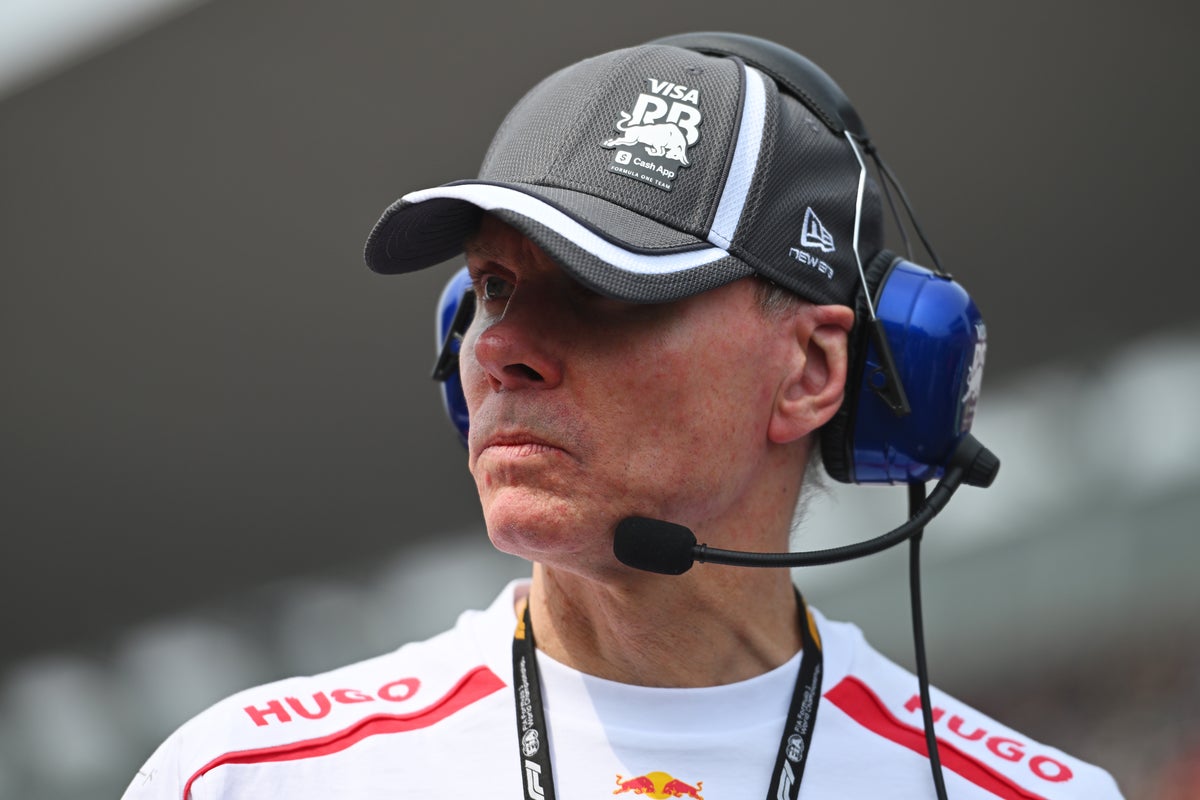
Racing Bulls team principal Alan Permane has defended Formula 1’s controversial new regulations – labelling some of the racing seen so far this season as “immense.”
New engine and chassis regulations this year, which see an almost 50/50 split between the internal combustion engine and electrical power, have divided opinion across the grid.
Issues with the nature of how F1 goes racing have reared their head, as well as problems with qualifying. Drivers are having to ‘lift-and-coast’ at the end of straights to harvest energy, while thrilling on-track battles have been labelled “artificial” by reigning world champion Lando Norris. Four-time world champion Max Verstappen has declared the new regulations “anti-racing” and “like Formula E on steroids.”
Yet Permane, who has been in F1 for over 35 years and has worked for teams such as Benetton, Renault and Alpine, believes some of the racing has been “exciting” yet acknowledged both the drivers and the audience need to be catered for going forward.
“It’s not an easy one,” Permane said, in a media session on Tuesday. “We obviously have to listen to the drivers. I think there are two groups. I think the die-hard fans are very upset about it.
“But also the casual viewers actually find it very exciting. I have to admit, I think that some of the race battles have been immense. I got distracted myself on the pit-wall watching the Ferraris race each other in Shanghai, I thought it was great.
“Even some of the stuff in Melbourne, I know those first laps, when you replay it and watch it back, you think ‘he’s using his energy there.’ But actually, when you watch it live, I found it quite exciting.
“But we have to listen to our audience. We have to listen to our drivers as well. And there’s lots of work going on.”

Permane added that a “very productive” meeting about tweaks to the regulations, ahead of the next race in Miami on 3 May, took place last week. Two more meetings between stakeholders are planned for tomorrow and next week.
“I know that there are two main focuses,” he detailed. “One is to make qualifying a bit more flat out, a bit more driver-focused and not power unit-focused.
“And then the other objective is the safety, with the Ollie Bearman incident, to try and reduce those closing speeds.
“But we need to be careful when we do so that we’re not taking away some of the spectacle or too much of the spectacle. Because if you remove things like the boost mode, the overtake mode… that will, no doubt, reduce those closing speeds, but it also likely reduces overtaking as well.
“So we just need to be careful that we strike the right balance there.”

