


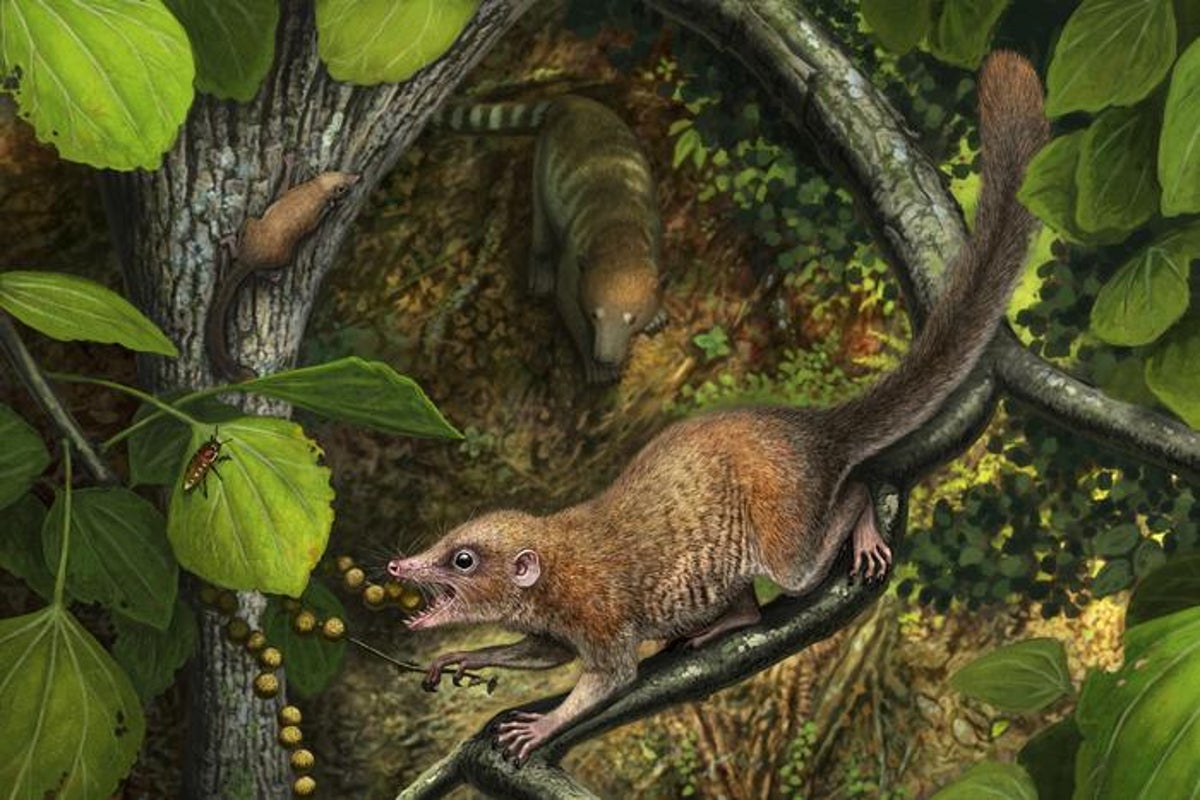
A minuscule fossil discovered in Colorado has offered scientists unprecedented insights into one of humanity’s earliest ancestors – a small, squirrel-like creature.
The tiny remnant belongs to Purgatorius, one of the earliest known relatives of all primates, including humans, which first emerged about 66 million years ago – living alongside dinosaurs before they vanished.
Previously, remains of Purgatorius had only been unearthed in what is now Montana and south-western Canada.
However, the latest discovery, detailed in a peer-reviewed scientific journal, places the species significantly further south, within the Denver Basin at the Corral Bluffs study area.
The find is crucial in resolving a long-standing mystery.
While slightly younger primate relatives have been identified in the south-western United States, their appearance roughly two million years later left a perplexing geographical void.

“The discovery helps fill the gap in understanding the geography and evolution of our earliest primate relatives,” said lead author Dr Stephen Chester of Brooklyn College and the City University of New York, who spearheaded the research alongside colleagues from the Denver Museum of Nature & Science.
“The presence of these fossils in Colorado suggests that archaic primates originated in the north and then spread southward, diversifying soon after the mass extinction at the end of the Cretaceous Period.”
Earlier theories had posited that the creature’s apparent absence further south might have been linked to widespread forest destruction caused by the asteroid impact that eradicated the dinosaurs, an event believed to have occurred near modern-day Mexico’s Caribbean coast.
“Ankle bones of Purgatorius exhibit features that indicate it lived in trees, so we initially thought its absence south of Montana could be related to the sweeping devastation of forests from the asteroid impact 66 million years ago,” Chester said.
“However, our paleobotanical colleagues suggested the recovery of plants in North America was fast, leading us to believe that Purgatorius should also be in more southern regions and perhaps we simply hadn’t looked hard enough.”

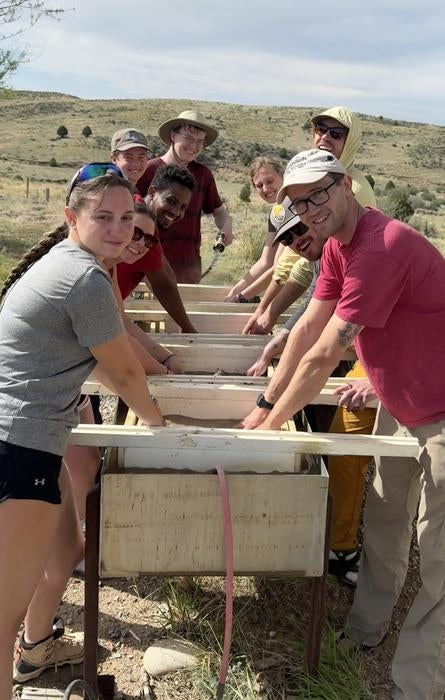
To investigate the hypothesis, the team employed an intensive screen-washing technique to sift through sediments – a meticulous process that enables researchers to recover fossils too small to be seen with the naked eye.
The work received support from a nearly $3m grant from the National Science Foundation, as part of a broader project led by Dr Tyler Lyson at the Denver museum, exploring how life recovered after the mass extinction event.
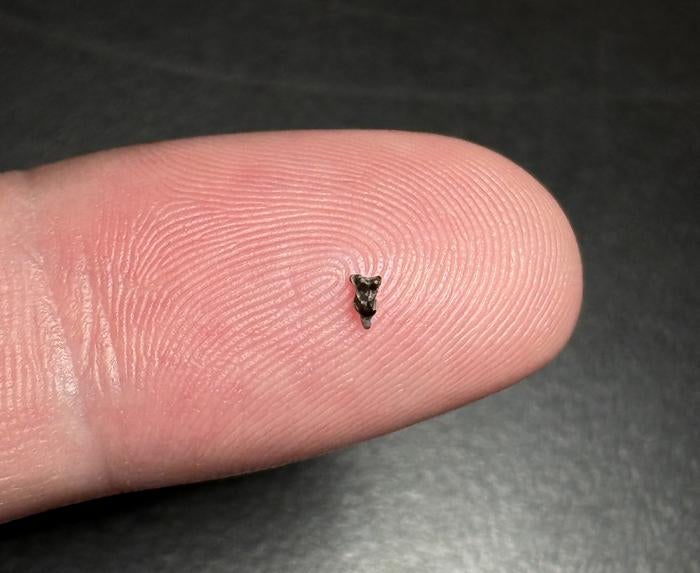
Students and volunteers played a vital role, processing vast quantities of sediment and uncovering numerous fossils of fish, turtles, and crocodilians. Eventually, they found a handful of tiny Purgatorius teeth, each small enough to rest on the tip of a baby’s finger.
Dr Jordan Crowell, a postdoctoral researcher at the Denver museum, said: “The specimens have a unique combination of features compared to known species of Purgatorius, but we are awaiting the recovery of additional material to assess whether these fossils represent a new species.”

The findings also indicate that the perceived scarcity of early primate fossils in southern parts of western North America was partly due to sampling bias. Traditional fossil-hunting methods, employed for over a century, tend to favor larger, more obvious remains.
“Thanks to our long-term partnership with the City of Colorado Springs, who own the land where the fossils were collected, as well as countless hours of work by our volunteers and interns picking through the dirt for the precious vertebrate fossils, we are building some incredible datasets that provide insights on how life including our earliest primitive primate ancestors, rebounded after the single worst day for life on Earth,” Lyson said.
Chester emphasized the importance of more diligent and detailed searching.
“Our results demonstrate that small fossils can easily be missed,” he said. “With more intensive searching, especially using screen-washing techniques, we will undoubtedly discover many more important specimens.”
The research also involved Dr David Krause, senior curator of vertebrate palaeontology at the Denver Museum of Nature & Science.