

.jpeg?trim=0,0,0,0&width=1200&height=800&crop=1200:800)
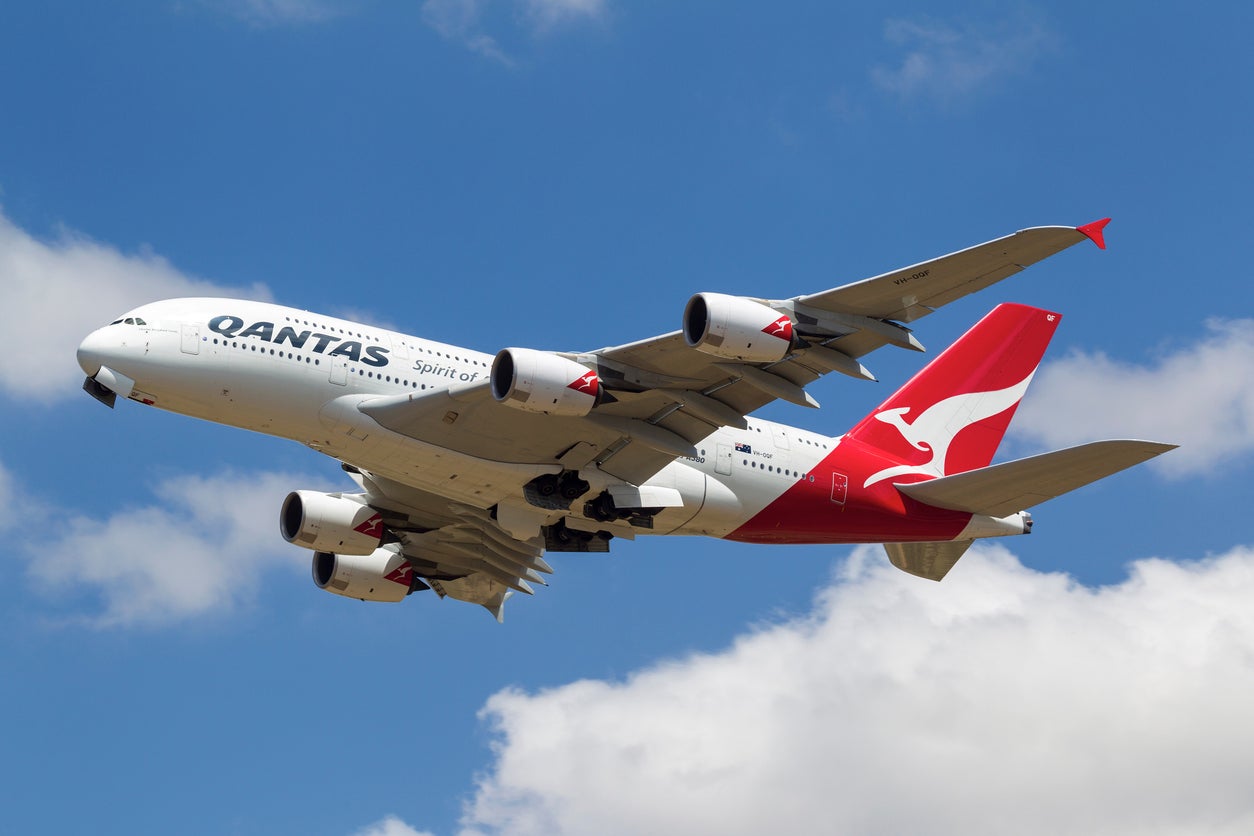
Qantas plans to launch a nonstop service between Sydney and either London Heathrow or New York JFK by late 2027 – five years later than originally scheduled.
London has always been the flagship destination for the Australian airline. Even if the US city is chosen first, the Heathrow link will follow close behind and will be by far the longest passenger flight in the world in terms of direct distance.
Currently the title holder is Singapore Airlines from its hub to New York JFK at 9,537 miles. The London-Sydney distance is over 1,000 miles further, at 10,573 miles – nearly two hours’ extra flying.
Qantas says the new nonstop link will overcome “the tyranny of distance”. But will people really want to step on board for a gruelling journey of up to 20 hours? And what about the adverse environmental effects?
These are the key questions and answers.
Surely you can already fly between the UK and Australia?
The Australian carrier flies nonstop between London and Perth, a direct distance of 9,009 miles. The route was launched in March 2018 and, with the exception of the Covid pandemic, has proved extremely popular. However, due to the extended flight time caused by avoiding Middle East conflict zones, Russian and Ukrainian airspace, the westbound Perth-London service is refuelling en route in Singapore at least until 25 July 2026. The prevailing jet stream means journeys in this direction take longer.
Connecting New South Wales with the UK is much more of a challenge than Western Australia. The direct distance from Sydney and London is one-sixth more than from Perth, beyond the range of any currently available passenger aircraft when fully loaded.
While Qantas test flights with a small number of passengers on board have made the London-Sydney trip nonstop (as early as 1989), the trick is to find an aircraft that can successfully operate between the two cities with a full payload of passengers and cargo.
The task is made more difficult by the current closure of Russian airspace to “western” carriers including British Airways, Singapore Airlines and Qantas.

What is the Qantas cunning plan, then?
The airline has ordered a dozen specially configured Airbus A350-1000 aircraft, each fitted with an additional 20,000 litre fuel tank, enabling them to fly for 22 hours without refuelling.
The aircraft will also offer only 238 seats, less than half the possible maximum. Passengers will get more space, and with fewer on board the plane’s weight will be lower.
A touch of class?
Four classes, in fact, comprising:
- Six first-class suites
- 52 business-class suites
- 40 premium economy seats, configured 2-4-2
- 140 economy seats, configured 3-3-3
For the cheap seats, there is enhanced legroom: a 33-inch seat pitch. That is one inch longer than on the existing Qantas London-Singapore-Sydney route using the Airbus A380.
When will flights start?
Qantas is expected to reveal the first route and start date in mid-June 2026. In late May, the airline said delivery delays mean the earliest it will get its first Airbus A350 will be April 2027. As a result, the first commercial flights cannot begin untl the second half of 2027, due to flight testing.
How much will the ‘cheap’ seats cost?
The Qantas CEO, Vanessa Hudson, predicted in 2025 that fares will be around 20 per cent higher than existing flights between London and Sydney, which refuel along the way. But the signs are that the premium for going nonstop may turn out to be much more, because of the huge London-Sydney market and limited supply.
The Middle East conflict has reduced the competitive strength of the Gulf-based airlines: Emirates, Etihad and Qatar Airways. Their hubs are all currently on the Foreign Office no-go list.
The Qantas nonstop from London to Perth has been selling for as much as £2,000 one-way in economy as travellers avoid Middle East connections.
Between London and Sydney, an economy fare at peak times of £3,000 to £4,000 return would not surprise me.
How can the airline justify such high fares?
Because Qantas is offering a unique product. No other airline has shown any interest in competing nonstop between Europe and Australia. But it is a extremely costly operation.
Four pilots will be assigned to each flight, along with perhaps 15 cabin crew – all of whom will need spells of rest.
The biggest cost, though, is fuel – because much of the expensive kerosene will be burnt simply to carry fuel for later in the flight.
Not ideal for the planet?
Far from it. The most efficient/least damaging way to fly between London and Sydney is with two intermediate stops, breaking the journey into three sectors of around 3,500 miles – roughly the distance between Heathrow and New York. Despite the increased fuel burn during take-off, such a schedule much more efficient.
Without taking weather and geopolitics into consideration, the optimum stops would be Almaty in Kazakhstan and Manila in the Philippines.
Will the plane take the straightest route?
Not at all. The direct route from London starts by heading northeast towards southern Scandinavia, then crossing from Latvia into Russian airspace. There should be about four hours spent over the territory of the world’s largest country before exiting via Kazakhstan. But with Russia off-limits, the new link will have to stay well south of the optimum track. Or, go north.
Ms Hudson says: “Geopolitics is a part of any operational consideration, but these aircraft won’t need to fly over Russia to be able to make the distance.”
Pilots are examining many months of wind data to run flight-planning simulations. “At some times of the year, the fastest way to get from Sydney to London will be over Japan and over the North Pole and down the other side because of the the wind direction,” the Qantas boss says.
Today London-Sydney, tomorrow …?
Melbourne is the obvious next target for an Australian nonstop from Heathrow – it is marginally closer than Sydney (70 miles for a direct routing). Being further south it will incur less of a “Russia penalty” being further south.
Brisbane is actually an easier prospect than either Sydney or Melbourne, being 300 miles closer to London than is Sydney. But the Queensland capital has a much smaller market.
This piece is kept updated with the latest information
Hear more: The Independent’s travel podcast on Australia