



Allocators are interrogating their private markets investments more rigorously as institutional investors question whether unlisted asset classes – with some having seen outsized returns for decades – are entering an era of “true alpha” where managers’ skills are put to the test.
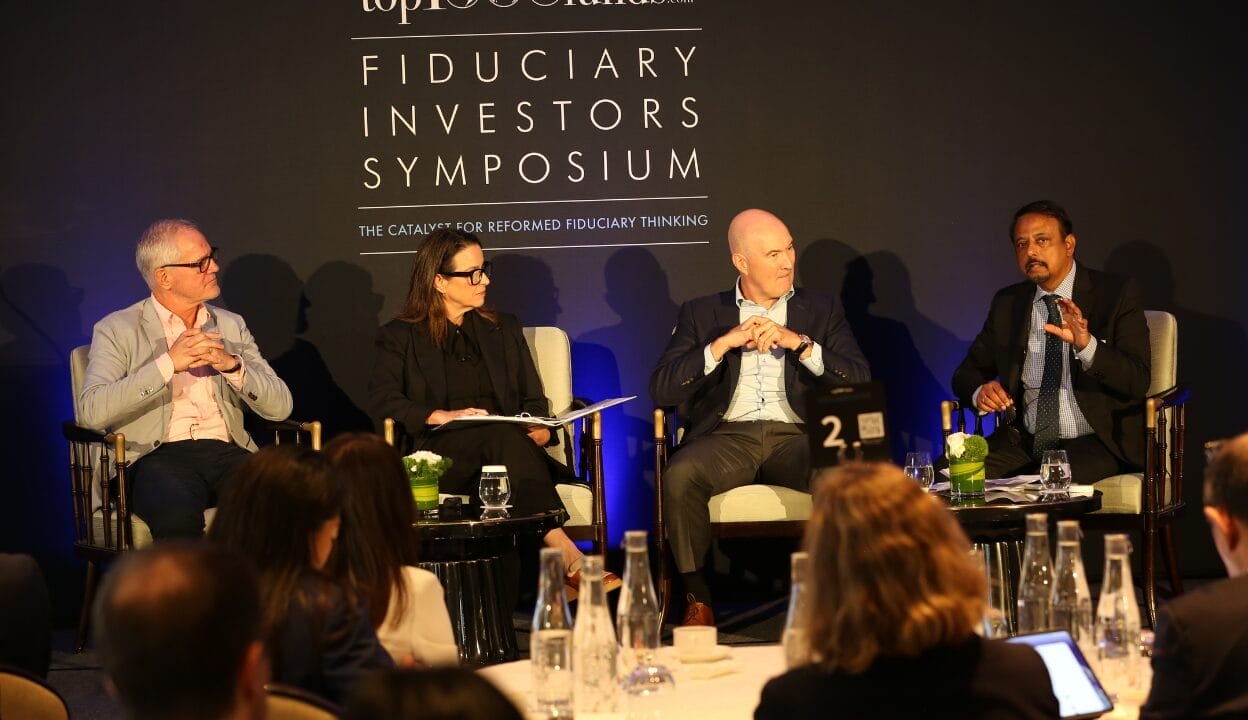
At the Top1000funds.com Fiduciary Investors Symposium in Singapore, a panel of asset owners and managers came to a consensus that the period of “easy beta” with near-zero interest rate and where some private markets managers juiced up returns using leverage has truly ended, particularly for the private equity asset class.
“We’re now into an environment where there’s a much more normalised yield curve. Funding costs are not zero. Therefore, it’s not simply a matter of applying leverage to an asset. It’s having to apply a bit of expertise and skill to the business in order to drive efficiencies or extract value,” said John Wilson, institutional head of client and product solution at Blue Owl Capital.
“There’s a small cohort of managers that can capture value, and there’s a wider set of managers who cannot capture value.”
Wilson said asset owners now need to be careful about the cost of participating in private equity, recalling a recent figure he saw in an SEC filing where a PE firm said to have returned 39 per cent in gross terms but 24 per cent in net term for investors.
“I was left wondering where the 15 per cent went. I suppose this is the cost of having grown up in the fixed income world where you get paid pennies – you start looking at that sort of fee grab, and you think, ‘wow, is that equitable?,” he said.
“One thing that’s certain in the private equity world – the fees you’re going to pay.
“But it’s all other people’s money, we’re concerned with member returns, I think we’ve got to be very vigilant about what the cost of participating in that asset class is.”
Thijs Aaten, chief executive of the $712 billion Dutch pension giant APG Asset Management’s Asia arm, raised the question of whether some private equity managers have “lost the skill” to improve the operations of portfolio companies during the era of easy returns.
The fund has been bullish on Asia for a long time, having established the Hong Kong office in 2007, and Aaten said local PE managers haven’t enjoyed the easy exit environment and the “financial engineering to pump up returns” like in the US markets.
“This improvement of companies that you take ownership of is still more ingrained in Asian GPs than maybe in GPs that operate solely in the US or in other regions where the rates were zero,” he said.
But with rates now lower in a lot of parts in Asia, with Hong Kong becoming the strongest IPO market globally last year, Aaten said the tides may have turned for the region’s companies and its managers.
“Now there is this windfall of having a strong market and relatively low rates offering lots of opportunities, combined with the skill set of still improving companies that you take ownership of operationally [for Asian markets and managers],” he said.
Aaten also warned against treating the illiquidity premium as the X factor that drives private markets’ return.
“If I take an office building and I keep it privately, or I put it in a REIT, the performance of the asset doesn’t change. So it’s not that magical because you are locking up money, you suddenly get the 300 basis points illiquidity premium,” he said.
“The illiquidity premium, or complexity premium or whatever it is, comes from maybe it’s less accessible. If you need to write cheques of a billion, not everybody can do that. Then maybe there’s less competition – that’s why returns are higher.
“You take full ownership of a company so you can make material changes off the get-go.”
‘Every fund calls itself an AI fund’
Another piece of the puzzle for choosing the right investments in private markets is finding the right thematics. According to Prabhu Palani, chief investment officer of the San Jose City Retirement System, situated at the heart of Silicon Valley, “every fund in the valley now calls itself an AI fund, and of course, they’ve been investing in AI for 10 years, even before AI was there”.
The fund had 4 per cent target allocation to venture capital, and Palani said investors need to keep their perspectives on how short-lived some of the investment thematics are.
“Five years ago, we were all chasing all these ride-hailing apps, and we’re throwing money at all these delivery apps, and now it’s AI,” he said.
“I’ll give you an example. I got a term sheet not too long ago from a company that was founded by two former employees of one of the large LLMs. The business plan is on a sheet of paper, opening valuation? $5 billion.
“Of course, I passed on it. But who knows? This could be the next $50 billion or $100 billion company. But you have to have some perspective, because if you overpay, as you all know, it’s going to come back and haunt you.”
Palani said the fund is focusing on unloved sectors like healthcare at the moment, which is being overlooked due to the cyclical nature of venture, but can be snapped up by investors at a fraction of the cost five years ago.
“I’m bullish on venture and you want to stay close to your managers. On a daily basis, I meet with venture funds and I meet with entrepreneurs. It’s also the most dangerous place to be, because all the disruptors can get disrupted”, he said.
“So on the one hand, there’s opportunity, but also you have to watch out for where you’re investing in.”


