
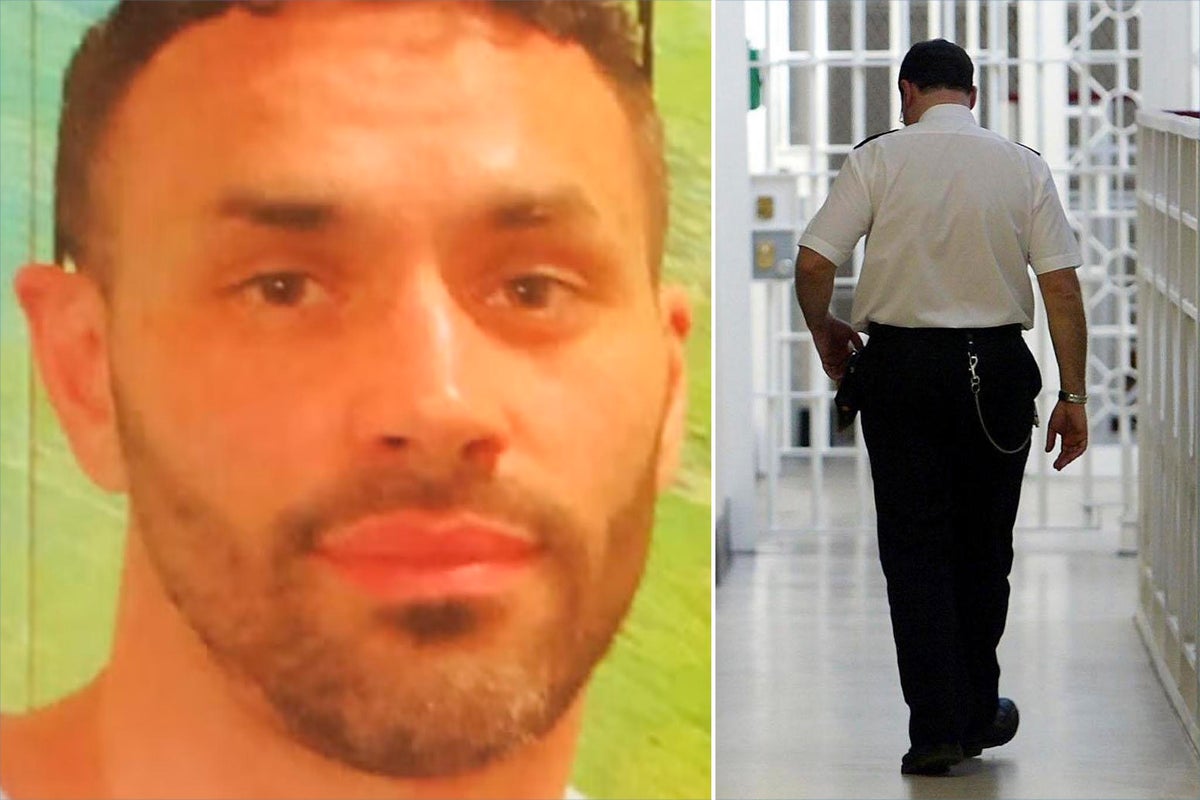
A prisoner serving an abolished indefinite jail term has renounced his British citizenship and issued a desperate plea to be deported, claiming it is his “only hope” of freedom.
Nicholas Bidar has languished for more than 17 years without release – almost 10 years longer than his original minimum eight-year tariff – after he was handed a controversial imprisonment for public protection (IPP) jail term aged 21.
Despite the Parole Board recommending he should be moved to open conditions and urging the Ministry of Justice (MoJ) to review his high-risk category A status, he is still languishing in a maximum security prison.
Now 38, he has revealed he has given up all hope of being released and rebuilding his life in Britain. The former British-Egyptian dual national has revoked his British citizenship and is applying to be deported to Egypt, where he hopes to start afresh with his father.
Labour has pledged to ramp up removals of foreign offenders to save taxpayers’ money and free up desperately needed prison cells. Under the government’s Tariff-Expired Removal Scheme, foreign offenders are considered for deportation once their minimum term is up.
Bidar is incarcerated at HMP Manchester, where holding a prisoner costs taxpayers more than £100,000 a year.
He told The Independent: “I’ve lost all hope with the Parole Board. This is the only chance I’ve got left. They keep going on about deporting foreign nationals. I’m here. I’m costing you money. I’m asking to go.”
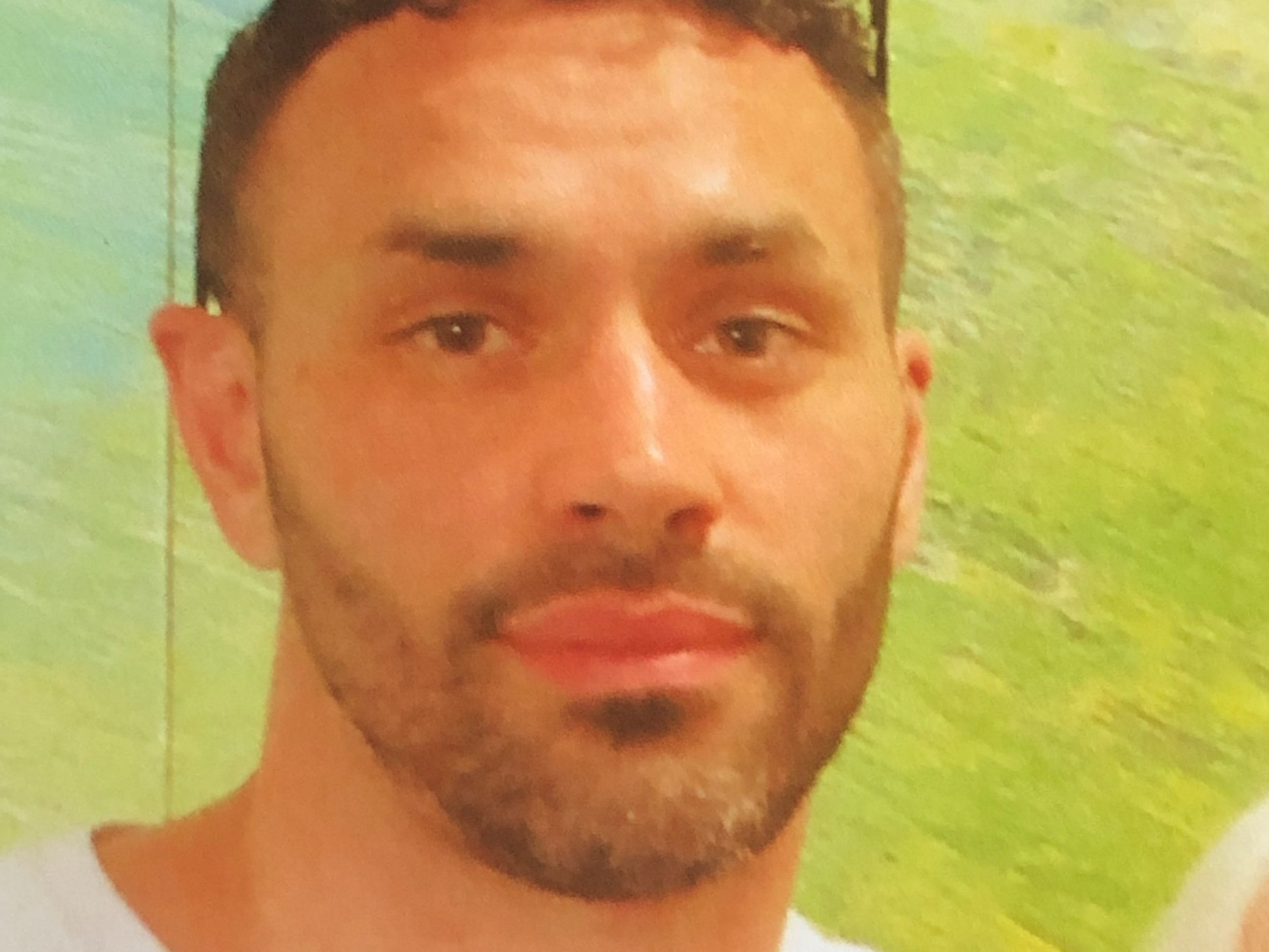
He has appealed for the MoJ – which has the power to block his removal – to support his deportation. If they refuse he would be left stateless and trapped in indefinite detention.
Bidar was handed an IPP for a string of robberies and using a gun to resist arrest in 2008, with later convictions for assaults in prison and a period in which he escaped custody.
But he says he has changed, adding: “I’m no risk to [the] public, I accept what I did and I served my time and I am no longer that person. I am nearly 40 now.”
The open-ended punishments were abolished in 2012, but not retrospectively, leaving thousands already sentenced trapped in prison without a release date.
The jail terms have been linked to 96 suicides in prison and widely condemned, with the UN describing the punishments as “psychological torture”. However, successive governments have refused calls to re-sentence almost 2,400 remaining IPP prisoners.
In 2024, Bidar was the first IPP prisoner to have his parole hearing held in public. He argued he was a political prisoner because his category A status – which is decided by the MoJ – was preventing him from progressing to open conditions.
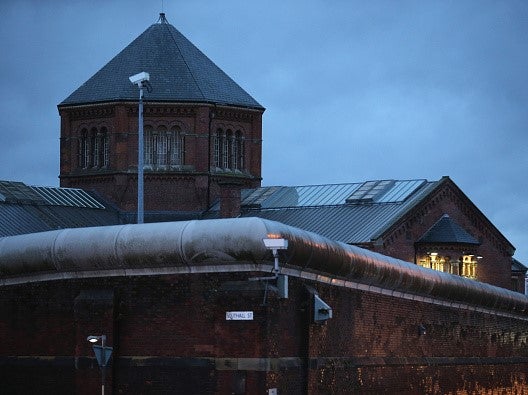
In a written decision, the board agreed that Bidar’s category A status was interfering with his progress and called for “immediate action” to be taken. However, more than two years later, his status remains unchanged.
“My only hope I’ve got left now is deportation,” he told The Independent, adding that the uncertainty of his jail term had an “immense impact” on his wellbeing and mental health.
“It’s just cruel,” he said, noting other criminals are being released a third of the way through their sentence under government measures to ease overcrowding.
“Some of us [IPP prisoners] haven’t committed offences in over a decade. They’re never, ever gonna let us go.”
He continued: “It’s a shame I’ve had to renounce my citizenship and leave everything, especially my family, but I’ll be free – because otherwise I will die, they’re never ever gonna let me out.
“I’m on 18 years inside, on Category A. There’s no law, no solicitor who can save me, no nothing. No one can do anything. They’ve got no power. I’ve got no power.
“I’ve tried everything. So that’s the only hope, and I still think these people [the government] will still try to keep me.”
An MoJ spokesperson said: “While we do not comment on individual cases, it is right that IPP sentences were abolished and we have already taken action to support these offenders to move on with their lives.”