


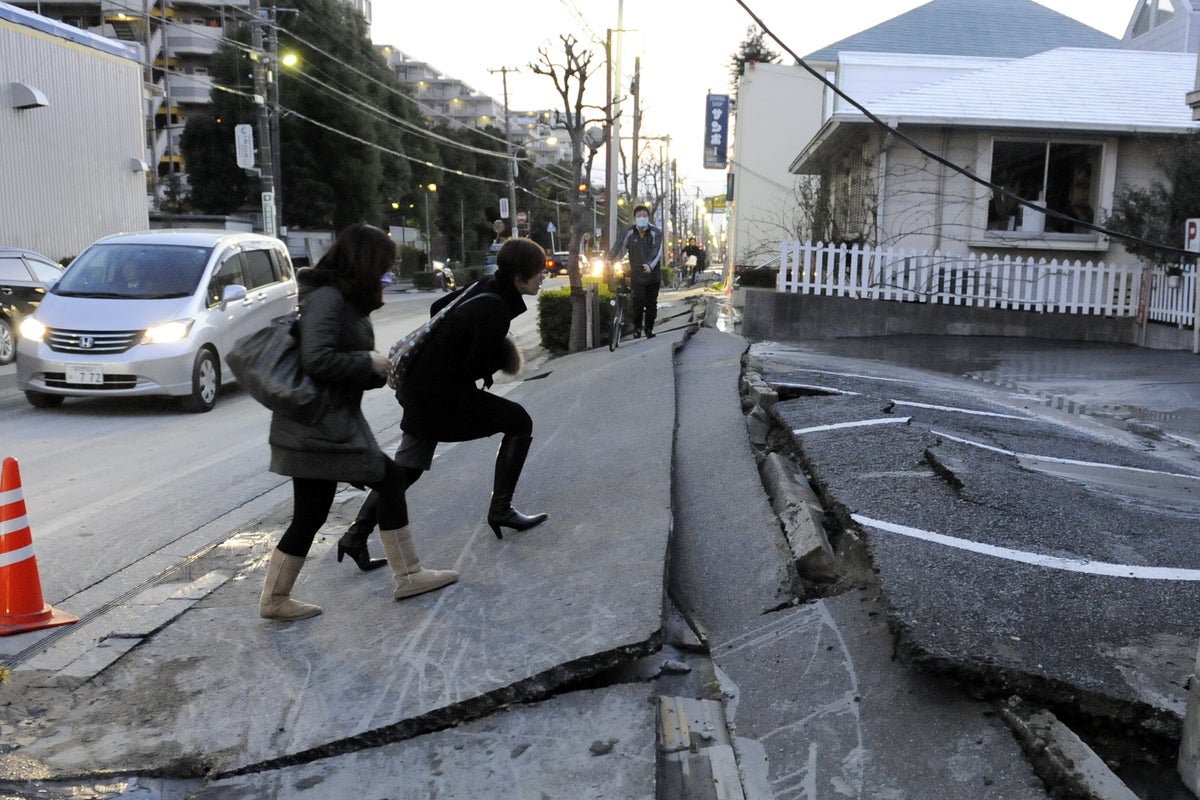
Minutes after the massive 2011 Japan earthquake and tsunami that killed nearly 20,000 people, “a previously unrecognised” phenomenon may have caused the whole country to shift further eastwards, a new study reveals.
Such megaquakes are often followed by events that cause additional ground motion, which are related to aftershocks.
But exactly all the different ways in which aftershocks arise aren’t very clear, scientists say.
In a new study, researchers assessed satellite data to study the magnitude 9-Tohoku-Oki earthquake and its seismic aftereffects.
Researchers found that the devastating quake led to a sudden sliding of blocks of rock past each other along the fault line.
It also led to seismic waves travelling through the Earth, bouncing off the planet’s core, and traveling back to the surface to reactivate the region’s tectonic plate boundaries.
These were “shear waves” that travelled through the Earth’s interior and caused rock particles to vibrate in a “shear” or side-to-side motion.
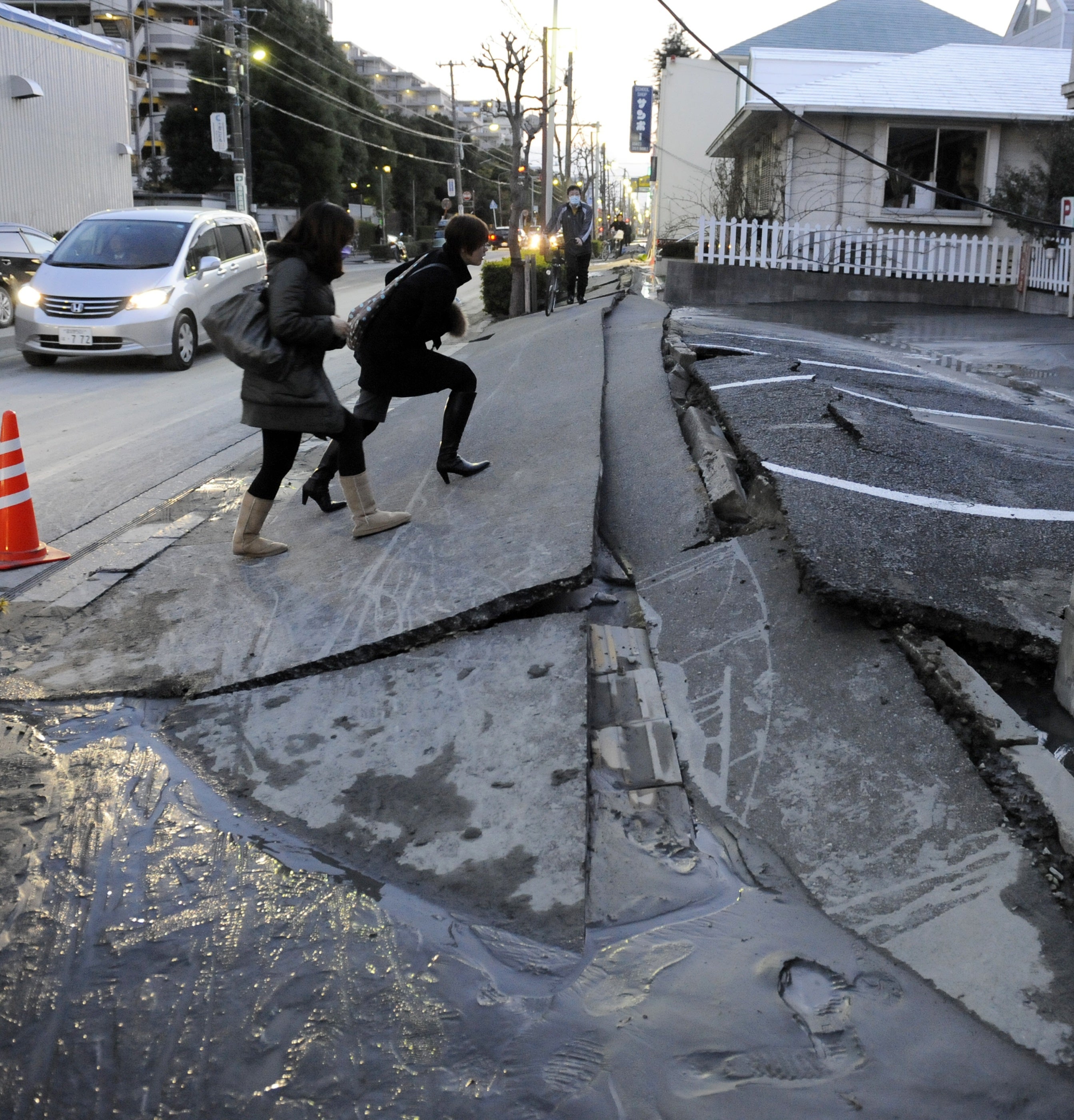
The latest findings reveal a previously unknown hazard that could potentially activate or reactivate the main area of a quake, according to the study published in the journal Science.
“We report an extraordinary observation of ground motion in Japan after the moment magnitude 9 2011 Tohoku-Oki earthquake attributed to a multiplate-interface slip event triggered by a shear wave that travelled to the Earth’s core and back,” researchers wrote in the study.
In the study, scientists re-examined satellite data to look for subtle movements in the minutes surrounding the 2011 quake.
They found that seismic waves travelling through the Earth and bouncing off the core shifted the whole of Japan by as much as 5-6mm.
While this may not be a lot and is a common amount of ground movement following large earthquakes, what surprised scientists was the area of land that had actually shifted.
The triggered slip “has the broadest rupture area of any single event yet documented”, researchers wrote.
“Its overall length is similar to that of mainland Japan (~3,000 km), exceeding the mainshock rupture length by 6‒7 times and more than doubling that of the 2004 great Sumatra Earthquake,” they wrote in the study.
As this ground movement was spread out over several minutes, people may not have felt it happen under their feet, researchers say.
Yet, this new type of seismic hazard needs to be further studied, researchers say.
“I think we should be aware of the fact that there could be this potential triggering of an event many minutes after [an earthquake’s] main shaking has passed,” study author Sunyoung Park told Scientific American.