

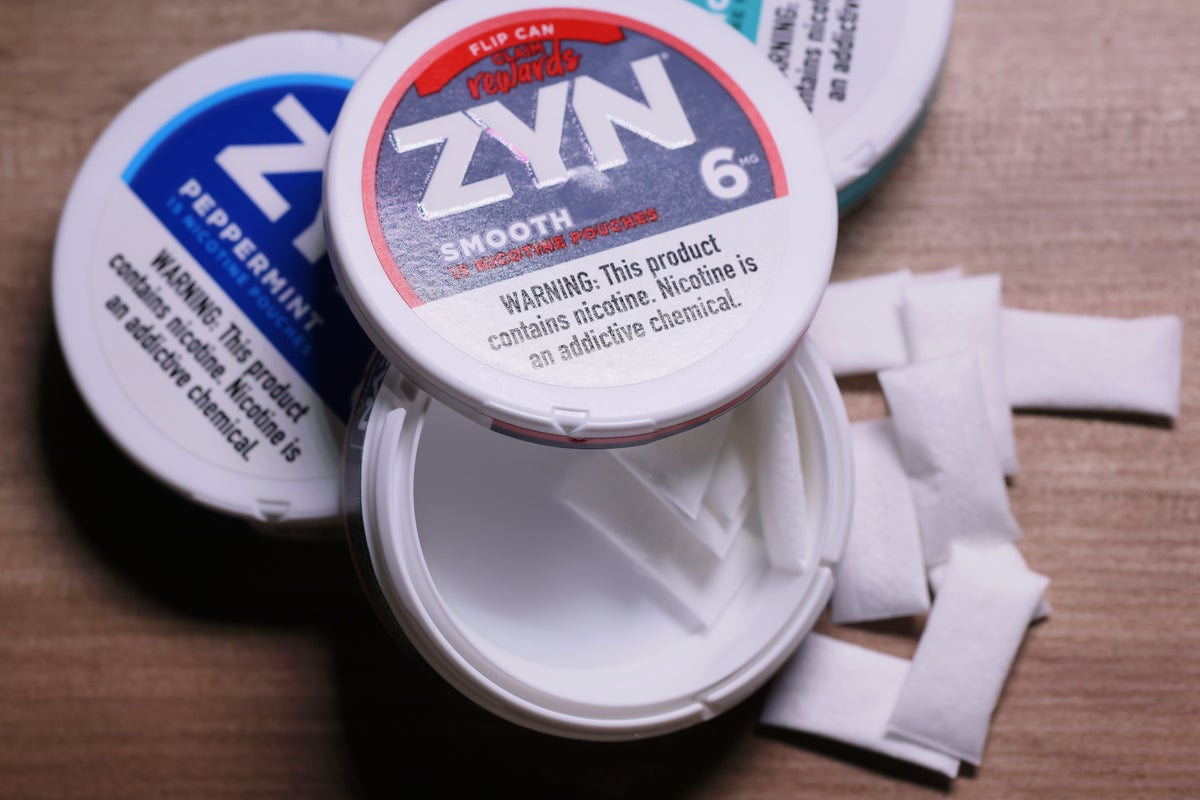
ZYN nicotine pouches can now be marketed as less harmful to human health than cigarettes, the U.S. Food and Drug Administration said this week.
The agency said it had issued orders for 20 of the products made by the tobacco and nicotine company Swedish Match USA, Inc., “following extensive scientific review.”
The pouches, including cinnamon, coffee and spearmint flavors, may now be marketed using the risk modification claim that “using ZYN instead of cigarettes puts you at a lower risk of mouth cancer, heart disease, lung cancer, stroke, emphysema and chronic bronchitis.”
The popular products, which have been authorized for sale in America since January 2025, contain nicotine but don’t have tobacco. Smoking tobacco is what causes cancer, but experts say highly addictive nicotine is still harmful to human health.
“FDA’s review of modified risk products is intended to ensure that adult users have clear, science-based information about the relative harms of tobacco products, so they can make informed choices,” Bret Koplow, acting director of the FDA’s Center for Tobacco Products, said in a statement. “Today’s decision allows these products to be marketed with a modified risk claim that informs adults who smoke about the lower risks associated with these products.”

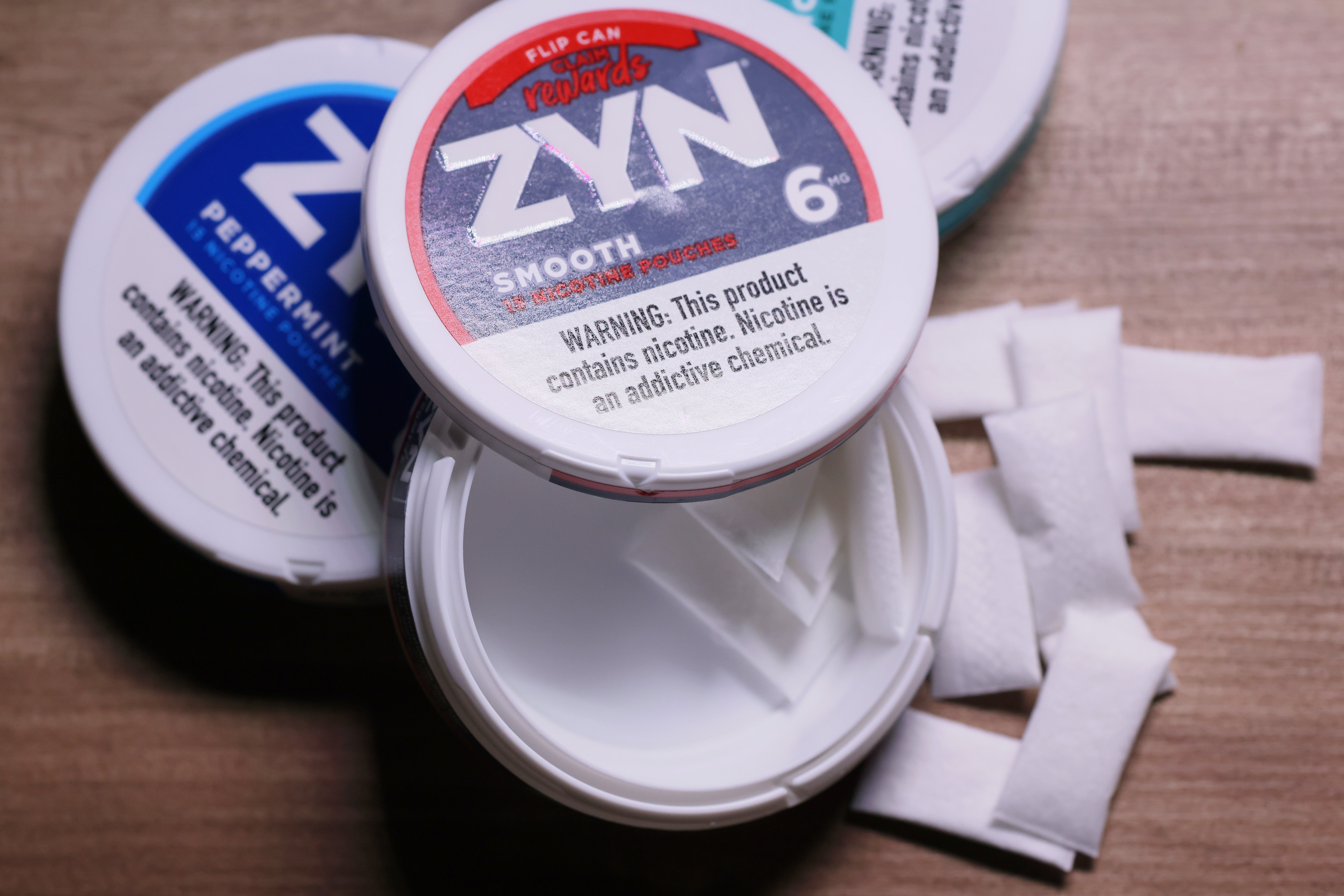
While ZYN and other nicotine pouch products may pose lower risks, health groups say that doesn’t mean they’re free of any risk.
“Nicotine pouches and nicotine drinks may be marketed as ‘smoke-free,’ however smokeless doesn’t mean harmless,” Jennifer Folkenroth, American Lung Association’s Sr. Director of Nationwide Health Promotions, said in a statement.
One nicotine pouch contains about the same amount of nicotine in a cigarette, according to the Baylor College of Medicine. Users tuck the pouches between their lip and gum and nicotine is absorbed through the mouth.
Nicotine harms brain development, which continues until about age 25, the Centers for Disease Control and Prevention says, and the American Lung Association says long-term use can lead to permanent damage to lung tissue, stroke and heart disease.
“Although it does not cause cancer, nicotine causes dependence and may increase the risk of cardiovascular disease in people who do not already use nicotine products,” Vaughan Rees, of the Harvard T.H. Chan School of Public Health, previously explained to USA Today.
A spokesperson for the American Lung Association told NBC News that the FDA’s decision was “appalling.”
“The Lung Association calls on the FDA to reverse this action,” Mike Seilback, assistant vice president of nationwide advocacy and state public policy at the American Lung Association, told the network. “We must protect our children from a lifelong addition to nicotine.”
“It is important that the more than 45 million legal-age nicotine consumers in America have access to accurate, science-based information, including FDA-authorized evidence,” Corey Henry, Director Global Press Office & Issues Management for Philip Morris International, which owns ZYN, told The Independent in an email Wednesday.


“Everyone agrees that those under the legal age of purchase should never use nicotine. That is why our U.S. businesses apply strict safeguards, including robust age verification, responsible marketing and ongoing monitoring to guard against access by those under the age of 21. To that end, the latest FDA National Youth Tobacco Survey data show youth use of nicotine pouches continues to remains low, at around 1.7 percent,” he said.
The ZYN website says its product is only for consumers who are 21 and older who already use nicotine. But a recent survey from the FDA shows that 1.7 percent of middle and high school students reported using the pouches last year — and ZYN was the most popular brand.
The use of these pouches is only second to e-cigarettes, but e-cigarette use was declining while nicotine pouch use was “low and stable.”
Notably, the pouches are not approved by the FDA as nicotine replacement products helping people to quit smoking, such as Nicorette gum. The FDA says there is no safe tobacco product, that youth should not use tobacco products and that adults who do not use tobacco products should not start.
However, the FDA says that switching from cigarettes to pouches may reduce exposure to many harmful chemicals found in cigarettes.
“If at any point the agency determines that, among other things, the continued marketing of the products as [modified risk tobacco products] no longer benefits the health of the population as a whole, such as if there is a significant increase in youth uptake, the agency may withdraw the orders,” the FDA wrote.
The orders will expire in five years.