UK TimesUK Times
  • Home
  • News
  • TV & Showbiz
  • Money
  • Health
  • Science
  • Sports
  • Travel
  • More
    • Web Stories
    • Trending
    • Press Release
What's Hot
Psychiatrist Robert Coles, Pulitzer Prize-winning author who championed needs of children, dies – UK Times

Psychiatrist Robert Coles, Pulitzer Prize-winning author who championed needs of children, dies – UK Times

8 June 2026
Australian Kurtis Marschall becomes first person to beat Olympic champion in over 1000 days

Australian Kurtis Marschall becomes first person to beat Olympic champion in over 1000 days

8 June 2026
5 people hurt in stabbings at New York’s Penn Station with a suspect in custody, authorities say – UK Times

5 people hurt in stabbings at New York’s Penn Station with a suspect in custody, authorities say – UK Times

8 June 2026
Facebook X (Twitter) Instagram
UK TimesUK Times
Subscribe
  • Home
  • News
  • TV & Showbiz
  • Money
  • Health
  • Science
  • Sports
  • Travel
  • More
    • Web Stories
    • Trending
    • Press Release
UK TimesUK Times
Home » Poor childhood sleep doubles risk of teenage depression, study warns – UK Times
News

Poor childhood sleep doubles risk of teenage depression, study warns – UK Times

By uk-times.com8 June 2026No Comments4 Mins Read
Facebook Twitter LinkedIn Telegram Pinterest Tumblr Reddit WhatsApp Email
Poor childhood sleep doubles risk of teenage depression, study warns – UK Times
Share
Facebook Twitter LinkedIn Pinterest Email

Sign up for our free Health Check email to receive exclusive analysis on the week in health

Get our free Health Check email

Get our free Health Check email

Health Check

Children who consistently experience poor sleep during their early years face a significantly heightened risk of developing depression as teenagers, according to a new study.

Academics at the University of Birmingham are now urging parents to actively support better sleep patterns in their young children, suggesting this proactive approach could significantly curb the risk of future mental health issues.

They emphasised that sleep is a “modifiable factor”, highlighting that addressing poor sleep in early childhood is considerably easier than attempting to treat complex emotional symptoms later in life.

The research involved an extensive examination of data collected from more than 15,000 children who participated in the long-running Children Of The 90s study, also known as the Avon Longitudinal Study Of Parents And Children.

Nighttime sleep duration was meticulously recorded at various stages, including when children were six, 18, and 30 months old, and again at 3.5, four to five, five to six, and six to seven years of age.

Subsequently, self-reported depression symptoms were gathered from the same individuals when they reached 12.5, 13.5, 16, 17.5, 21, and 22 years old.

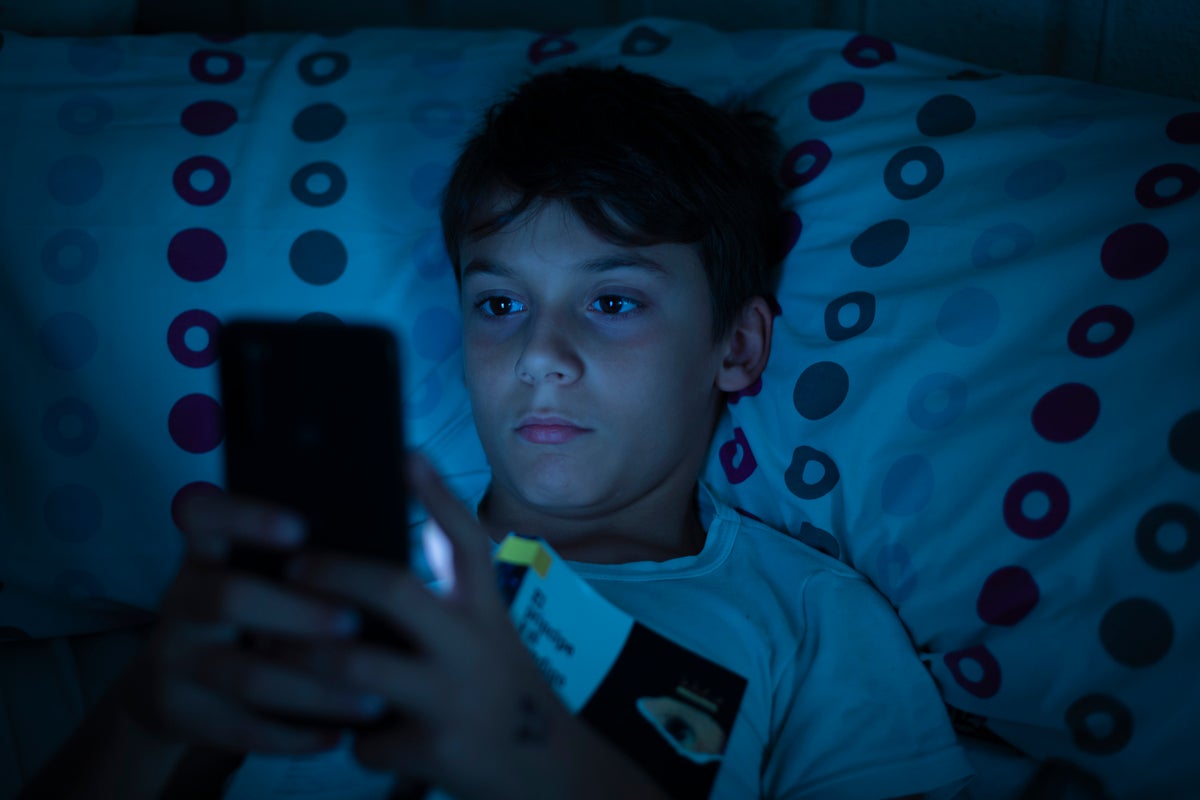
Academics at the University of Birmingham urged parents to try to help their children sleep better when they are young to curb the risk
Academics at the University of Birmingham urged parents to try to help their children sleep better when they are young to curb the risk (Local Library)

Researchers also looked at levels of inflammation – the body’s natural immune system’s response to injury or infection – in the blood when children were nine-years-old.

Some 308 children were found to have persistently high levels of depression across all of the time periods studied.

The research team found that children aged between six months and seven years who had “persistent” shorter sleep were almost twice as likely to report high levels of depression that persist between the ages of 13 and 22.

They said that it is the first study to show the “detrimental effect of persistent shorter nighttime sleep duration from infancy to childhood on more enduring and severe forms of depressive symptoms across adolescence and emerging adulthood”.

“Our results show that children who experience shorter nighttime sleep duration from six months to seven years are nearly twice as likely to exhibit a pattern of persistently high depression symptoms that persist from 13 to 22 years of age,” they wrote in the journal European Child & Adolescent Psychiatry.

The study, which was supported by the National Institute for Health and Care Research (NIHR) Biomedical Research Centre: Oxford Health, found “mixed evidence” on the role of inflammation.

Study lead Dr Isabel Morales-Munoz, from the University of Birmingham, told the Press Association: “What we found was when you compare the group of children that present with persistent shorter sleep, compared with the normative group, those children with persistent shorter sleep had a twice higher risk of presenting with persistent high levels of depression across all time points between adolescence and young adulthood.”

One doctor stressed that poor sleep is normal in childhood and that it was persistently poor sleep which was linked to depression
One doctor stressed that poor sleep is normal in childhood and that it was persistently poor sleep which was linked to depression (Getty Images)

She stressed that poor sleep is normal in childhood and that it was persistently poor sleep which was linked to depression.

“We found that the small numbers of children who had persistently shorter sleep across childhood saw some increased risk of developing depression during adolescence,” she added.

“A doubling of odds might sound like a lot, but we saw that persistent sleep issues only affected a small number of children who took part in the study and that there was still only a small percentage of children who went onto experience persistent depressive symptoms.

“Sleep is also an element of childhood that is possible to improve without needing medical interventions, and efforts to address persistent poor sleep during childhood will have a host of benefits including addressing any potential mental health risks.”

Measures to improve childhood sleep include implementing earlier and consistent bedtimes, reducing screen time before bed, encouraging physical activity during the day and creating a calm sleep environment, the University of Birmingham said.

Dr Morales-Munoz told PA: “I know sometimes they are not easy but sometimes they are easier than treatment for emotional symptoms.

“Sleep is a modifiable factor. It can be addressed, and we know that there are interventions at work.”

Dr Rebekah Amos, also from the University of Birmingham who co-authored this study, added: “This study advances our understanding of factors that increase young people’s risk for more severe and enduring depression.

“The findings suggest that chronic poor sleep may contribute to long-term mental health difficulties through biological pathways including inflammation.

“However, improvements in sleep behaviour and bedtime routines may interrupt this effect.”

Share. Facebook Twitter Pinterest LinkedIn Tumblr Telegram Email

Related News

Psychiatrist Robert Coles, Pulitzer Prize-winning author who championed needs of children, dies – UK Times

Psychiatrist Robert Coles, Pulitzer Prize-winning author who championed needs of children, dies – UK Times

8 June 2026
5 people hurt in stabbings at New York’s Penn Station with a suspect in custody, authorities say – UK Times

5 people hurt in stabbings at New York’s Penn Station with a suspect in custody, authorities say – UK Times

8 June 2026
Tony Awards viewers skewer CBS and call for boycott amid network turmoil – UK Times

Tony Awards viewers skewer CBS and call for boycott amid network turmoil – UK Times

8 June 2026

M25 anti-clockwise between J27 and J26 | Anti-Clockwise | Resurfacing

8 June 2026
Stabbing attack inside NYC’s Penn Station night before Trump’s Madison Square Garden visit leaves multiple injured – UK Times

Stabbing attack inside NYC’s Penn Station night before Trump’s Madison Square Garden visit leaves multiple injured – UK Times

8 June 2026
Trump urges Netanyahu not to respond after Iran targets Israel with first strikes since April – UK Times

Trump urges Netanyahu not to respond after Iran targets Israel with first strikes since April – UK Times

8 June 2026
Top News
Psychiatrist Robert Coles, Pulitzer Prize-winning author who championed needs of children, dies – UK Times

Psychiatrist Robert Coles, Pulitzer Prize-winning author who championed needs of children, dies – UK Times

8 June 2026
Australian Kurtis Marschall becomes first person to beat Olympic champion in over 1000 days

Australian Kurtis Marschall becomes first person to beat Olympic champion in over 1000 days

8 June 2026
5 people hurt in stabbings at New York’s Penn Station with a suspect in custody, authorities say – UK Times

5 people hurt in stabbings at New York’s Penn Station with a suspect in custody, authorities say – UK Times

8 June 2026

Subscribe to Updates

Get the latest UK news and updates directly to your inbox.

Recent Posts

  • Psychiatrist Robert Coles, Pulitzer Prize-winning author who championed needs of children, dies – UK Times
  • Australian Kurtis Marschall becomes first person to beat Olympic champion in over 1000 days
  • 5 people hurt in stabbings at New York’s Penn Station with a suspect in custody, authorities say – UK Times
  • Exclusive | NYT investigation into Dianna Russini still not finished 2 months after Mike Vrabel photo scandal –
  • Tony Awards viewers skewer CBS and call for boycott amid network turmoil – UK Times

Recent Comments

No comments to show.
© 2026 UK Times. All Rights Reserved.
  • Privacy Policy
  • Terms of use
  • Advertise
  • Contact Us

Type above and press Enter to search. Press Esc to cancel.

Go to mobile version