


.jpeg?trim=400,0,400,0&width=1200&height=800&crop=1200:800)
Rebecca Waller was working from home one Friday afternoon when she started to feel immense pressure in her upper back, as well as pins and needles in her arms.
The 26-year-old finished her call and lay in agony on her bed, hoping for the pain to pass. But as the pain worsened, she started to lose the ability to move from the neck down.
The recruitment consultant, who lives in Paddington, west London, was suffering a spinal stroke so rare it only accounts for 1.25 per cent of all strokes – and it seemingly happened out of the blue.
Overnight, she went from planning wedding invitations with her fiancé to learning that she may never walk or live independently without extensive support.
“If you had scanned me that morning, you wouldn’t have been able to predict what was going to happen,” she told The Independent about the ordeal on 9 January.

.jpeg)
“It started very gradually and as the call went on, I felt worse and worse. I managed to wrap up the call, and by that point I was kind of writhing in pain on the bed and hyperventilating. It felt like how people describe a heart attack.”
Still in pain, she called her fiancé James Naylor, who immediately dialled 999. But when the paramedics arrived 10 minutes later, they initially assumed she was having a panic attack rather than a life-altering stroke.
“I could tell that something was wrong. I thought it was strange that it would be a panic attack, but we never thought that it was a stroke,” she said.
As the paramedics tried to calm her down, she slowly started to lose the ability to move and recalled being unable to hold a glass of water.
“Eventually, I had to go to the bathroom to throw up, and when I tried to get back off the floor, I couldn’t move my limbs,” she said.
Despite her only being able to move her neck, paramedics were still convinced she was having a panic attack.

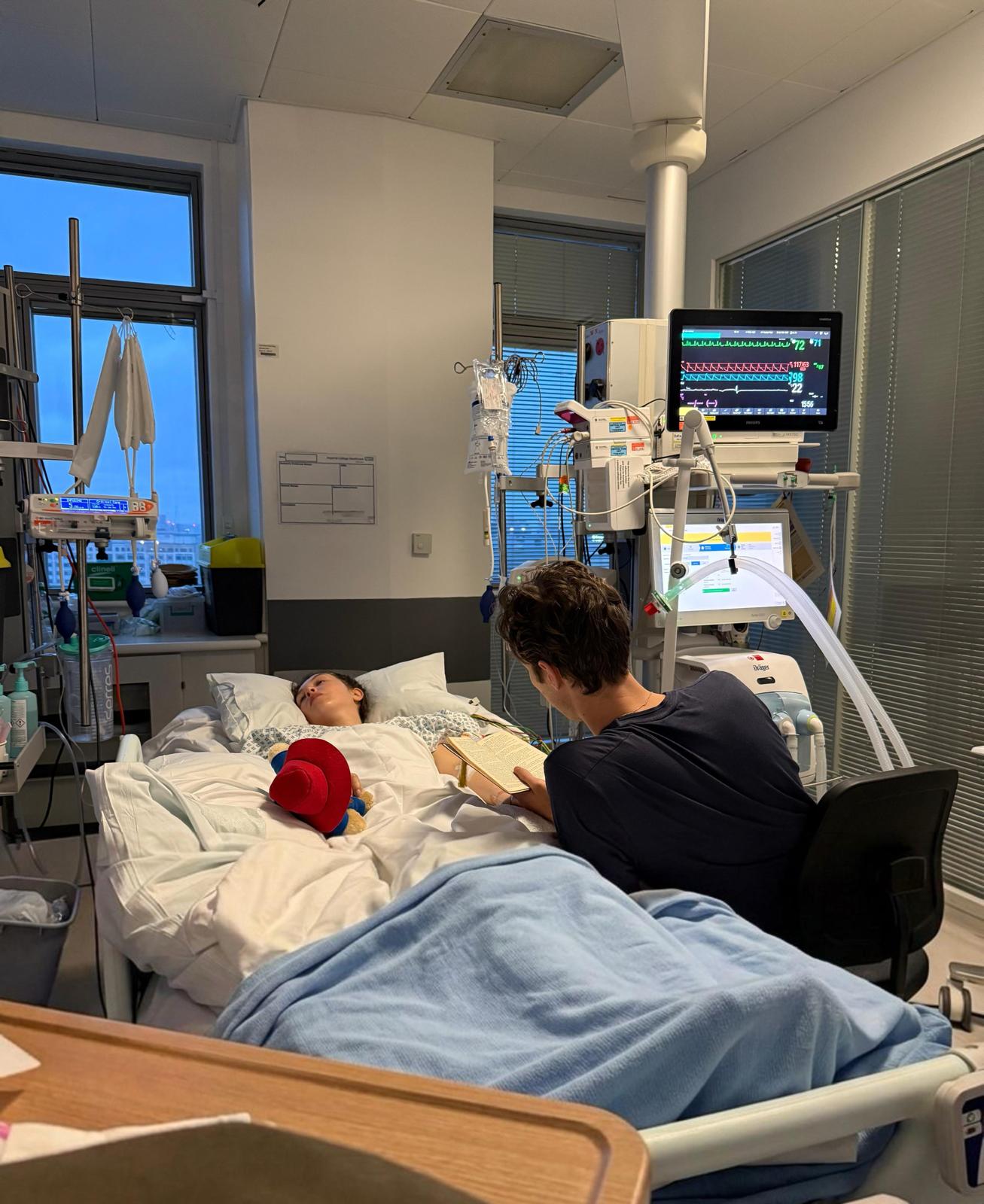
“I don’t blame them, because who would think that a 26-year-old was having a rare stroke,” Ms Waller said. “I was convinced that it would just pass, that I could just go to sleep and wake up and I’d be able to move again.”
Eventually, paramedics took Ms Waller to Charing Cross Hospital, where she had an MRI scan on her spine, heart and brain, and doctors were able to establish that she had a stroke.
“They’re not sure exactly why it happened, but they believe a fragment from my disc came loose from my spine and entered my vein, and blocked the blood flow to the spine,” Ms Waller said.
A spinal stroke is a disruption of the blood supply to the spinal cord, which can damage tissue and block messages travelling along it, according to the Brain and Spine Foundation.
About 100,000 people have strokes each year in the UK, but unlike most strokes, which affect the brain, spinal strokes are very rare and usually appear suddenly, over a matter of hours or even minutes.
The Brain and Spine Foundation said: “Diagnosis is done by taking a medical history, a physical examination and having a scan of the spine. It is important to rule out any conditions which might be causing pressure on the spinal cord such as a slipped disc or a tumour. As spinal strokes are very rare, this may not be the first thought of diagnosis until the scan shows the disruption of the blood supply to the spine.”
.jpeg)
After spending three months in hospital and a few weeks in a spinal rehabilitation facility, Ms Waller is slowly regaining some movement in her arms, fingers and abs, but her limbs are not fully functioning.
However, she has been left with a lot of uncertainty. The day before the stroke, she recalled feeling “euphoric” that she and Mr Naylor had secured a wedding venue.
But now she is focused on learning how to move again, in the hopes she will be able to walk down the aisle.
“Everything has been put on hold, and I’m trying to take it day by day and not worry too much about how dramatically my life may have changed,” she said.
Ms Waller has six weeks left of rehabilitation provided by the NHS before she will need to pay for private sessions, a carer and adjustments to her home. Her family has set up a GoFundMe page to help cover the extra costs.
Dr Fenella Wrigley, chief medical officer at the London Ambulance Service, said: “We’re sorry to learn of Ms Waller’s rare diagnosis.
“While our crews arrived at the scene quickly, we will be reaching out to Ms Waller to look into the care we provided and ensure any lessons are learnt.”