

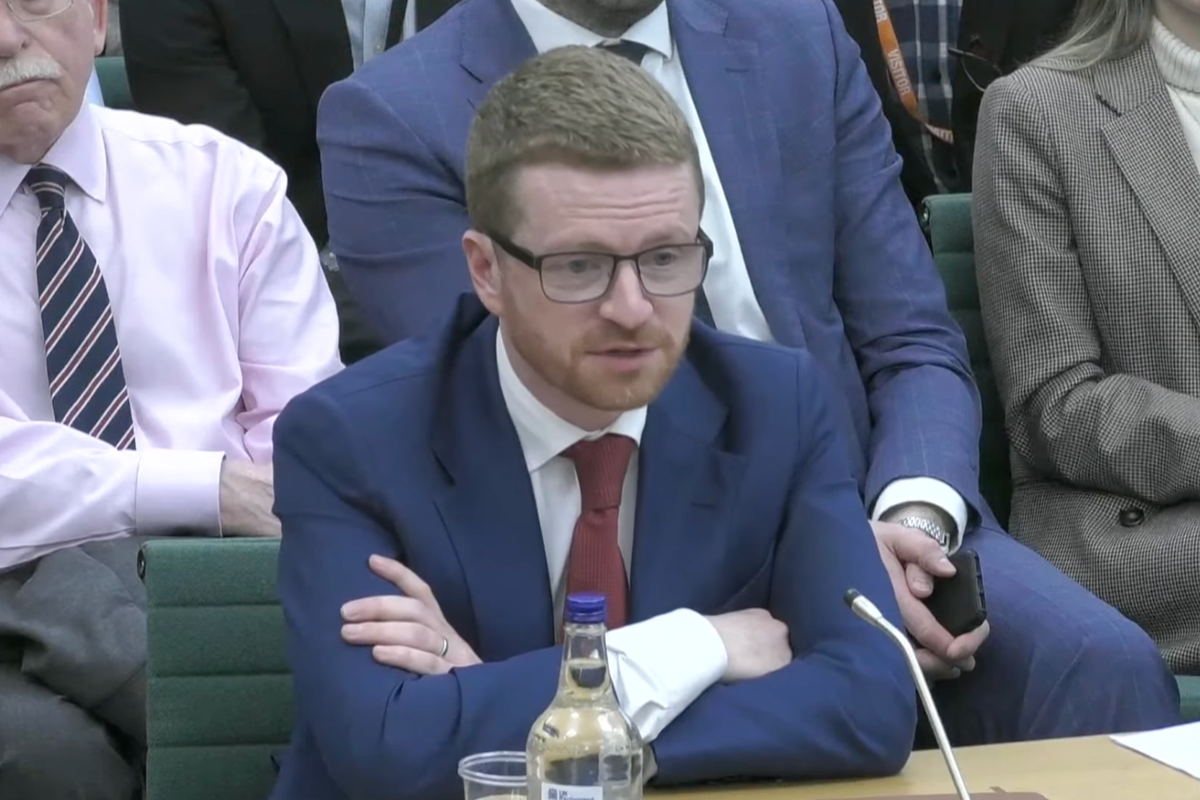
Parliament can sometimes be an illuminating place. The latest testimony on the Mandelson scandal to the Commons Foreign Affairs Committee has revealed that the legendary figure of Morgan McSweeney – the man credited by Sir Keir Starmer with rebuilding the Labour Party, and who, mostly unseen and unheard, was assumed to be a cross between Stalin’s sinister KGB henchman Lavrentiy Beria and the wildman Begbie in Trainspotting – is, in fact, a mild-mannered, soft-spoken and thoughtful individual.
It had been supposed that it was the prime minister’s former chief of staff who had pushed for his old comrade Peter Mandelson to be made ambassador to Washington at all costs. It turns out, in the McSweeney version, that not only was Lord Mandelson not his “mentor”, but a mere adviser, and that he too had been betrayed by him, not told the truth about the Epstein connection, and taken for a fool. He took responsibility for the blunder and resigned, but he was also careful enough to make clear that it was, of course, the prime minister’s decision to give him the job… Et tu, McSweeney?
It hardly needs saying that almost everything that could go wrong with the appointment of Peter Mandelson as ambassador to Washington did go wrong, including for Mr McSweeney. Initially widely applauded as a political masterstroke, hindsight reveals that it should never have happened. The only crumb of comfort is that Lord Mandelson was in post for such a short time that any further potential damage to the UK national interest was avoided.
That, however, was purely an accident of timing, to do with when the revelations contained within the Epstein files eventually emerged. Lord Mandelson’s continuing strong and undeclared links with the paedophile financier, long after they should have been severed because of his criminal conviction, shocked even those who thought they knew the peer fairly well.
It was the media – including The Independent – that helped reveal the information. Whether the British secret security services, the Foreign Office or others could, or should, have discovered the contents of the files held by the US Department of Justice, given their shared intelligence conventions, is one of the great remaining mysteries in this whole affair.
Yet one of the few things that has gone right in this sorry saga is the way the prime minister has treated parliament throughout. From all the public testimony given by those involved and the documentation that has thus far been placed into the public domain, it is clear that Sir Keir did not mislead parliament. He has told the truth.
And yet, in the most lurid terms, the prime minister has been accused of a cover-up, of overruling the reservations of the security services, and of not telling parliament of dangers in the appointment of which he was aware and of which MPs were not. It is claimed by his opponents that due process was not followed. It has become obvious that it was – and all the serving and former civil servants concerned have confirmed that.
The other witness at the latest session of the Foreign Affairs Committee could hardly have been more helpful to the PM. Sir Philip Barton, who oversaw the earlier stages of Lord Mandelson’s approval, made a number of criticisms – but he maintains, as his successor Sir Olly Robbins did last week, that it was “proper process at pace”, albeit “unusual”.
It would have been more satisfactory if, as the former cabinet secretary Simon (now Baron) Case recommended, the appointment of Lord Mandelson had been announced after his developed vetting had been completed satisfactorily. Nonetheless, Sir Philip and Sir Olly maintain that due process was still followed.
Sir Keir says that he did not know about the doubts raised during the vetting process, and that is true: no one with knowledge of the process has so far said otherwise. He says that when questions were later raised by The Independent about security concerns, he sought to find out the facts via the then cabinet secretary, Sir Chris Wormald, and the Foreign Office withheld the information. That is not in dispute.
There is, therefore, as yet no need for the prime minister to face an investigation by the House of Commons Committee of Privileges, and that is why the opposition motion to refer him was premature, electorally driven and deserved to fail.
There may yet be trouble ahead. Not all the documents relating to the Mandelson appointment demanded by the Humble Address have been released. The Foreign Affairs Committee has not finished interrogating witnesses, one of whom, Mr McSweeney, was still explaining himself when the leader of the opposition, Kemi Badenoch, launched her performative attack in the Commons. Imploring MPs to support her motion to put Sir Keir before an ethics inquiry, she berated the Labour benches for “acting like sheep” and intimated that voting to spare the prime minister was to side with Epstein.
Although not actually addressing the alleged contempt of parliament, where her case was weak, Ms Badenoch was right during her fluent parliamentary performance in asserting that the Mandelson appointment was a “profound failure of judgement” by the prime minister. He happens to agree, acknowledging a mistake that he now bitterly regrets.
However, it is correct that he did not know then what he knows now, and there is nothing to suggest otherwise. On this matter at least, Sir Keir has no case to answer.