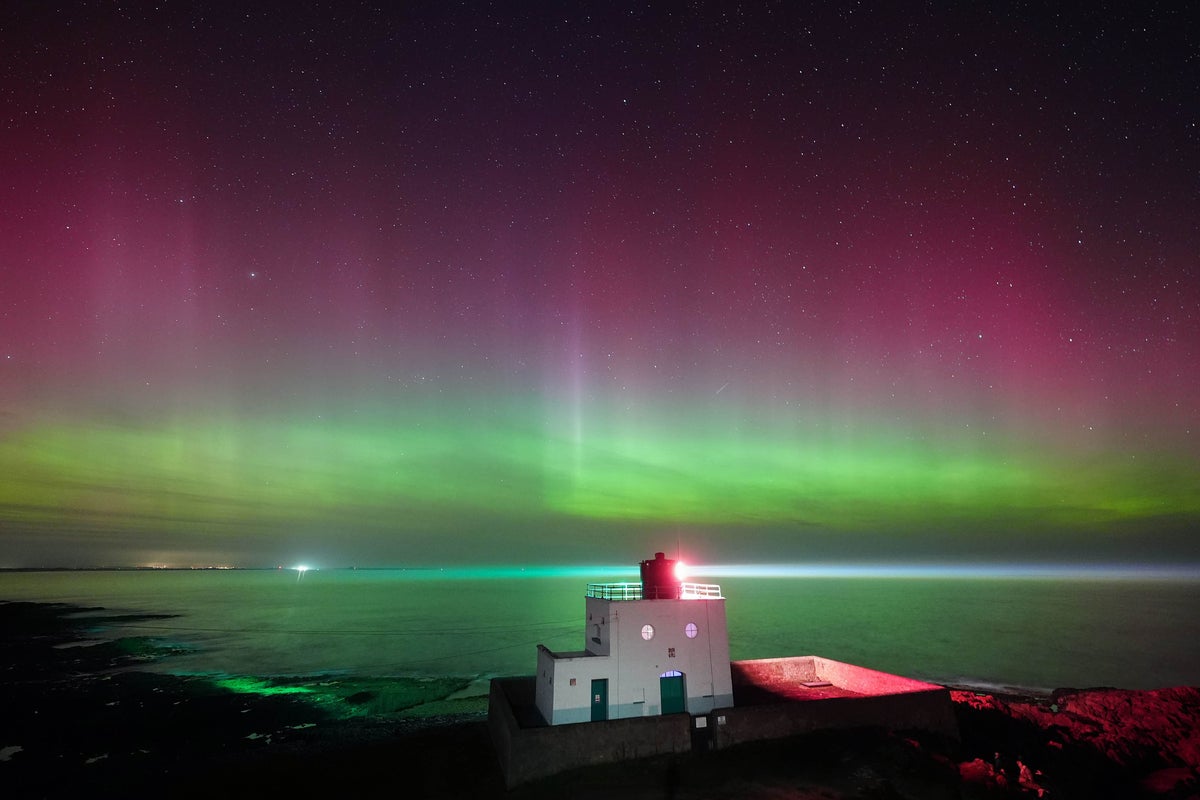
Britain’s skies are set to show another display of Northern Lights on Saturday night after parts of the UK enjoyed views of the auroras overnight.
The natural phenomenon is a rare occurrence in the UK, and requires a severe or extreme geomagnetic storm to bring the aurora belt southwards from Norway, Iceland, and Greenland.
Although the spectacle is more often seen near the Arctic Circle and northern Scotland, it was visible as far south as Norfolk on Friday night, with forecasters expecting some to see lights again on Saturday night.
The Met Office said: “The Northern Lights can produce a spectacular light show sometimes seen as far south as Scotland and Northern England/Ireland – if skies are clear.”

The lights are forecast to be visible until midnight on Saturday.
Aurora borealis displays are caused by massive explosions on the sun known as coronal mass ejections (CME). The particles that erupt from the sun’s surface interact with gases in Earth’s atmosphere and create a colourful display that can be seen 100 to 200km above Earth.
Oxygen, nitrogen, and other gases in the atmosphere light up in reds, blues, and pinks.
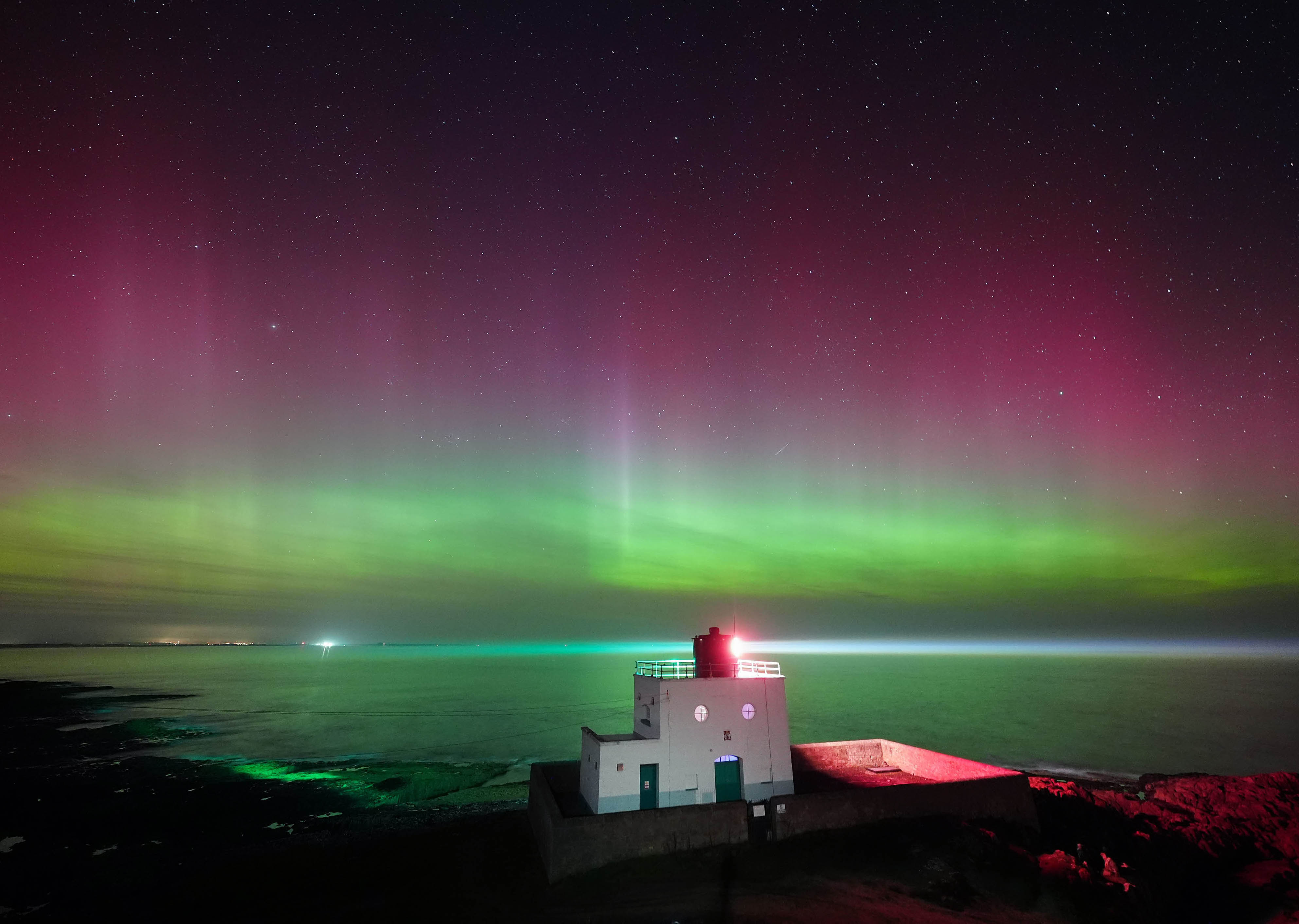
Some pictures from Friday showed the sky illuminated green at Bamburgh in Northumberland in the UK. People also reported seeing the lights in Canada and Russia.

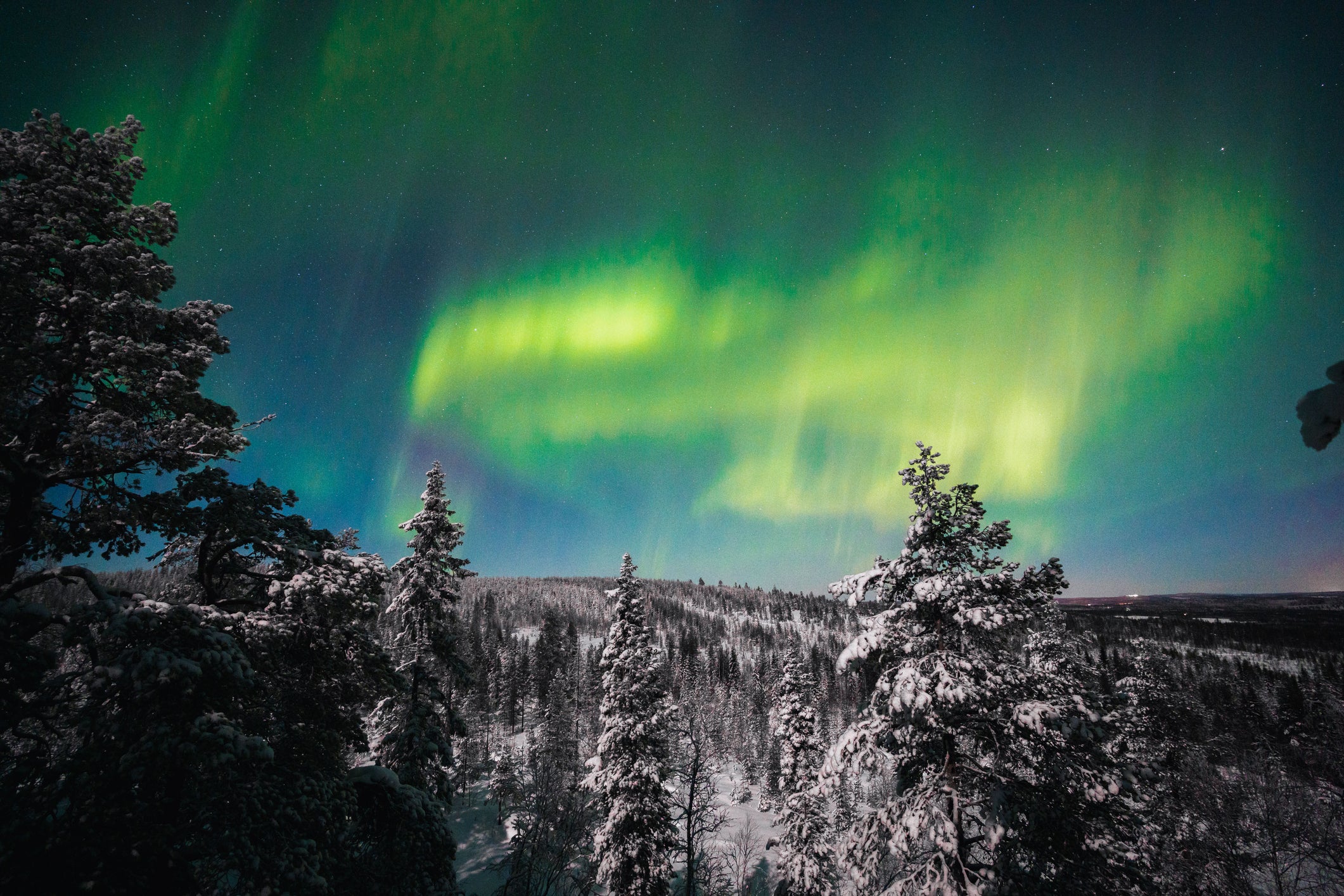
On Thursday, the Met Office said to “keep an eye out” for the northern lights over the next couple of nights, adding that “sightings are most likely across Scotland where skies are clear but perhaps into northern England too”.
The weather agency encouraged people to find a dark location with no light pollution, and look toward the northern horizon, for their best chance at seeing the auroras.
Its space weather forecast for Saturday said: “Ongoing influence from recent Coronal Mass Ejections (CMEs) and the expectation of increasing solar wind speeds into the 22 March will likely maintain enhanced geomagnetic activity.
“Aurora likely to be visible across higher latitudes and potentially viewable further south at times, particularly in long exposure photography, however any cloud cover will limit viewings. A slowly decreasing chance of enhanced auroral visibility likely into the period.”