


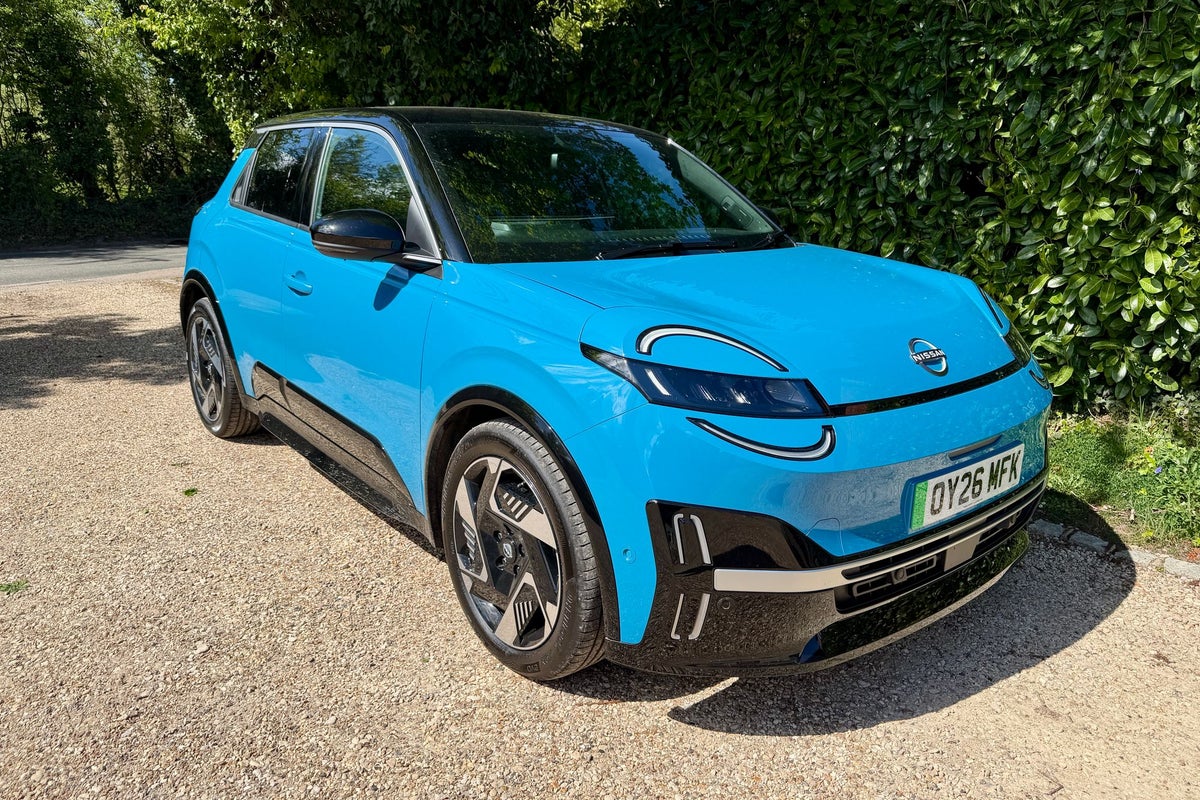
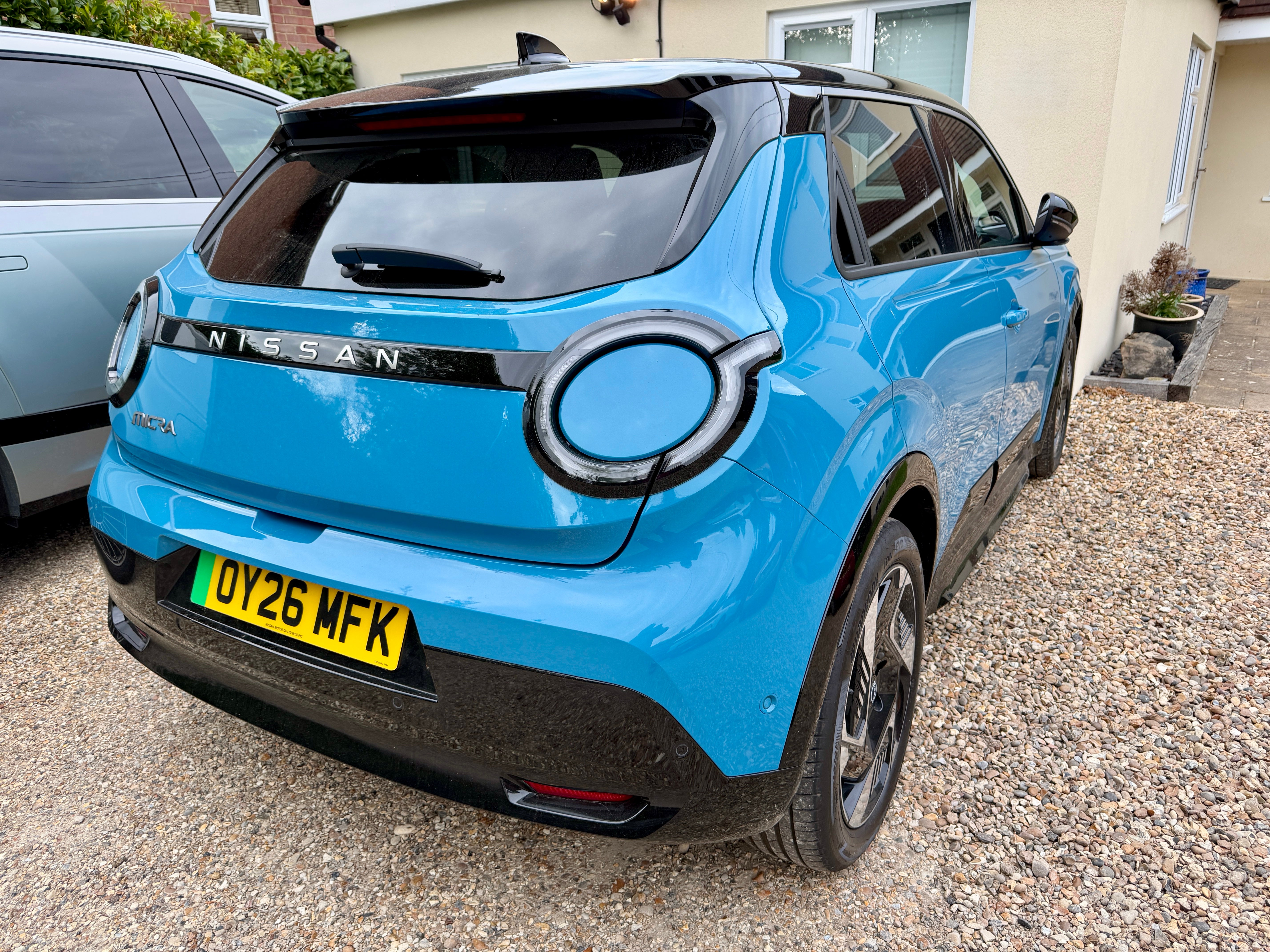
The Nissan Micra is back – and this time it’s gone fully electric. That might sound like a predictable move in 2026, but what makes this new, sixth-generation Micra particularly interesting is how it’s been developed. Because while it wears a Nissan badge and has been styled by Nissan’s design team in London, underneath it’s essentially a Renault 5.
That’s no bad thing. In fact, it’s probably the smartest way for Nissan to bring the Micra back into the spotlight. The two cars share Renault Group’s AmpR Small platform, are built side-by-side in northern France, and even share their bodyshell and interior architecture. There’s even still a French cockerel on the windscreen if you look closely enough.
Yet despite those shared bones, Nissan has worked hard to give the Micra its own identity. It’s more forward-looking in its design than the retro-leaning Renault 5, with a chunkier, more SUV-inspired stance, pronounced wheelarches and details like the “ice cream scoop” indentation running along the sides. It feels modern rather than nostalgic – and that suits the Micra name perfectly.
This is also a hugely important car for Nissan in Europe. Over six million Micras have been sold globally over more than 40 years, and this new electric version is part of a broader push that will see multiple new Nissan EVs arrive by 2027. The brief is simple: make something stylish, affordable and easy to live with – a proper everyday EV.
On paper, it ticks plenty of boxes. Two battery options, up to 257 miles of range, fast-ish charging, Google-powered infotainment and a competitive starting price that undercuts many rivals once grants are applied.
But perhaps more importantly, it feels like a car that understands what it needs to be. Compact enough for the city, capable enough for longer journeys, and with just enough personality to stand out in an increasingly crowded market.
And having spent time with it, that sense of purpose really does come through.
How we tested
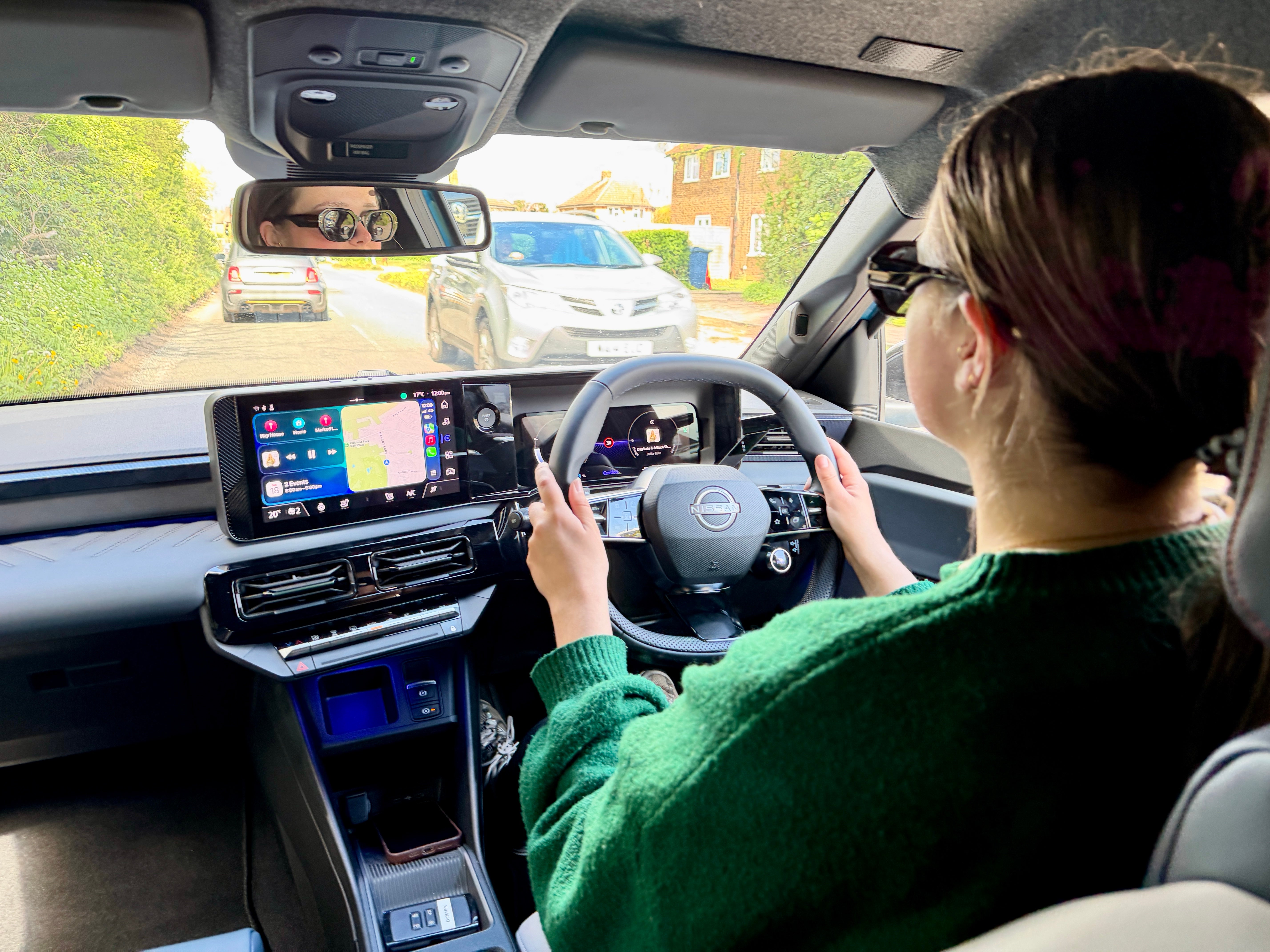
I lived with the new Micra for a week and tested it on the streets and motorways near my home in South Buckinghamshire. I used it for shopping trips, commutes, longer journeys up the M40 and gave it one crucial test… My daughter, Gemma, currently drives a Mini and is contemplating her first EV – and the Micra (along with the Renault 5) is on her shortlist. So she spent some time assessing the car, too – doing everything a 27-year old school teacher is likely to do with a car. With my daughter driving, I tried the back seats for size, plus we filled the boot and assessed the tech, too.
Independent rating: 9/10
- Pros: Distinctive design, strong tech, enjoyable to drive, excellent quality, good value with grant
- Cons: Rear space limited, awkward gear selector, dark cabin
- Price range: £21,495 to £26,115 (incl. grants)
- Battery size: 40kWh and 52kWh
- Maximum claimed range: 257 miles
- Maximum charging rate: up to 100kW DC, 15–80 per cent in around 30 minutes
Battery, range, charging, performance and drive
Let’s start by comparing the specs of both the Micra and the Renault 5. Both cars start at £21,495 for models with 40kWh batteries, but Nissan offers two versions with a higher-spec version costing £23,495.
With the larger 52kWh battery cars getting a £3,750 Electric Car Grant (the smaller battery cars only qualify for £1,500 off), the lower grade Micra with the bigger battery costs slightly less (£23,245) than the higher-grade, smaller-battery car. The lowest grade Renault 5 with the larger battery costs £23,495 – or £25,945 for the next step up, which makes it slightly cheaper than the equivalent £26,115 Micra. Renault also has the Roland Garros special on the 5 at £26,945.
Nissan has a slight edge when it comes to range – very slightly – with 196 or 257 miles for the 40kWh and 52kWh batteries; the Renault claims 192 and 252 miles. Both 40kWh cars claim the same 0-62mph time of nine seconds, but Renault says the bigger battery 5 will do 0-62mph 0.1 seconds quicker than the Micra, at 7.9 seconds. I defy anyone to notice that.
That all puts the Micra right in the sweet spot for a car of this size. It’s clearly designed with urban and suburban use in mind, but the larger battery gives it enough range to handle longer trips without any real anxiety. In reality, it feels like a car you could comfortably live with as your only vehicle.
Charging is equally well-judged. The smaller battery supports up to 80kW DC charging, while the 52kWh version goes up to 100kW, allowing a 15–80 per cent charge in around 30 minutes. There’s also 11kW AC charging for home or workplace use, plus a heat pump and battery thermal management system to help maintain efficiency in colder conditions.
On the road, the Micra delivers exactly what you’d hope for from a small electric car. Switching out of her Mini, my daughter was impressed by how sprightly and eager the Micra felt, particularly at lower speeds where the instant torque of an EV really comes into play. We both agreed that it’s genuinely fun to drive around town; quick off the line, easy to slot into traffic and light on its feet.
It’s not just a city car, though. Out on faster roads, like our trips up the M40, the Micra holds its own surprisingly well. It doesn’t feel out of its depth, and there’s enough performance to comfortably keep up with traffic.
Ride and handling are another highlight. The multi-link rear suspension – shared with the Renault, and a welcome bonus at this end of the market – gives it a level of composure and maturity that you don’t always get in small cars. It rides bumps well and feels stable through corners, with a slightly sporty edge to the way it handles.
There are multiple driving modes, allowing you to tweak accelerator response, steering weight and efficiency settings, plus regenerative braking that can be adjusted via paddles. Nissan’s e-Pedal system is also included, enabling one-pedal driving in most situations.
We found the Micra easy to park, too, with my daughter impressing her Dad with her parallel parking skills. She remarked how the corners of the car are easy to judge when parking and the visibility is good, especially with a crisp, clear rear camera.
In our time with the car, it felt reasonably efficient, too – in line with expectations for something of this size and weight.
Overall, it’s a well-rounded driving experience that feels more grown-up than you might expect from a small hatchback.
Interior, practicality and boot space
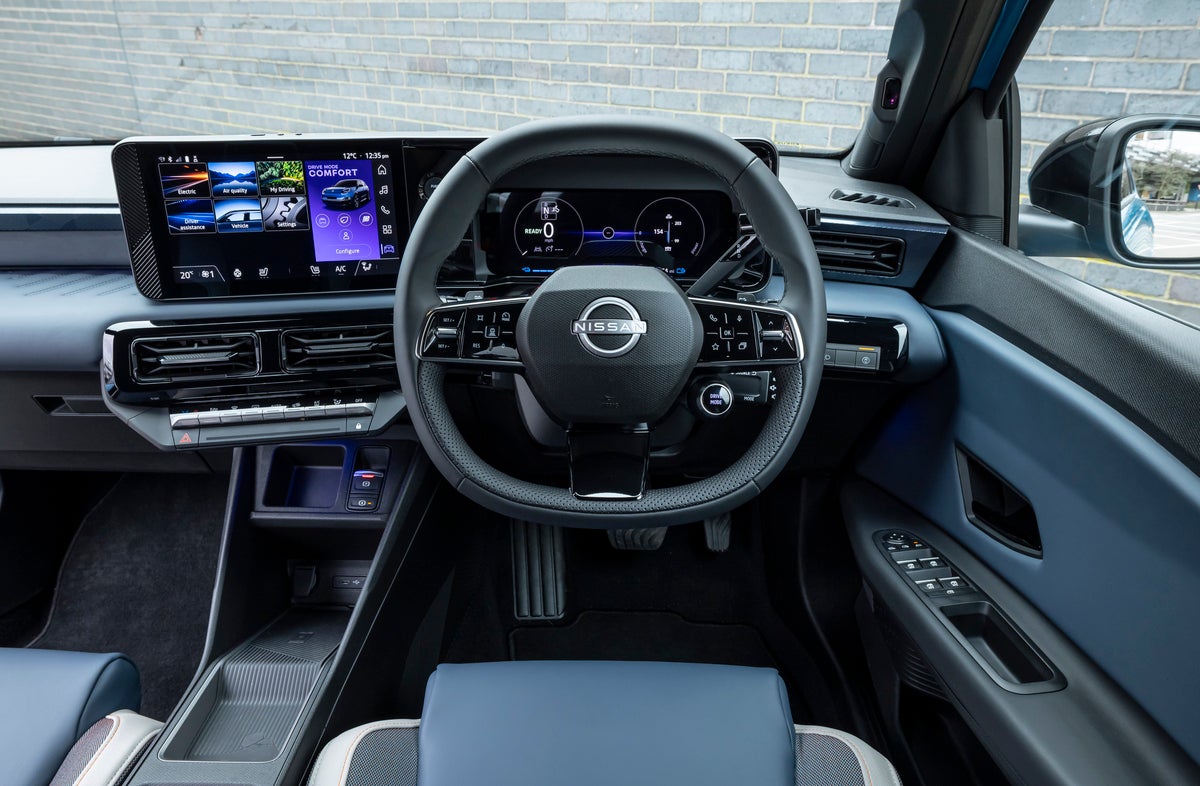
Step inside the Micra and you’re immediately reminded of its Renault 5 roots. The layout, dashboard screens and general architecture are shared, but Nissan has added its own touches to give the cabin a slightly different feel.
First impressions are positive. Quality feels good both inside and out, with a mix of soft-touch materials and more durable plastics where you’d expect them. There’s a sense of solidity to the build, and nothing feels especially cheap or flimsy.
The driving position is particularly comfortable, with plenty of adjustment in the seat and steering wheel. It’s easy to get settled in, and visibility is generally decent – although the relatively shallow windscreen does give the slightly odd sensation of driving while wearing a baseball cap, limiting your upward field of view. My daughter remarked that she felt the car was quite dark inside when she first got in.
Space in the front is good for a car of this size, helped by the long wheelbase. There’s a decent sense of room, and storage solutions are well thought out, with useful cubbies and compartments dotted around the cabin.
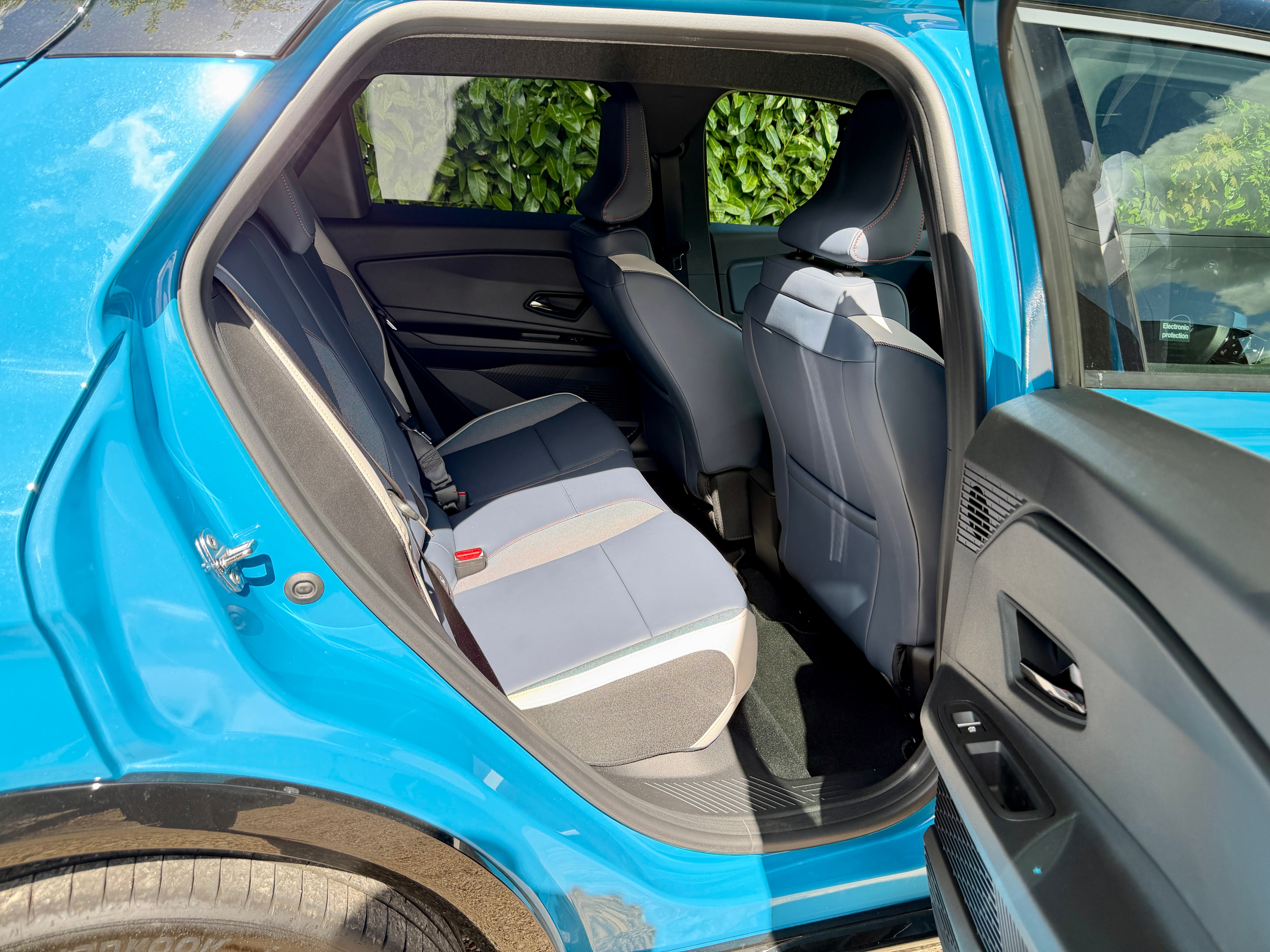
In the back, things are a little tighter. There’s not a huge amount of legroom, and while I managed to squeeze in, it’s not somewhere you’d want to spend long journeys if you’re taller and – like the Renault 5 – there’s nowhere to put your feet under the seat in front. That said, for a supermini, it’s about what you’d expect.
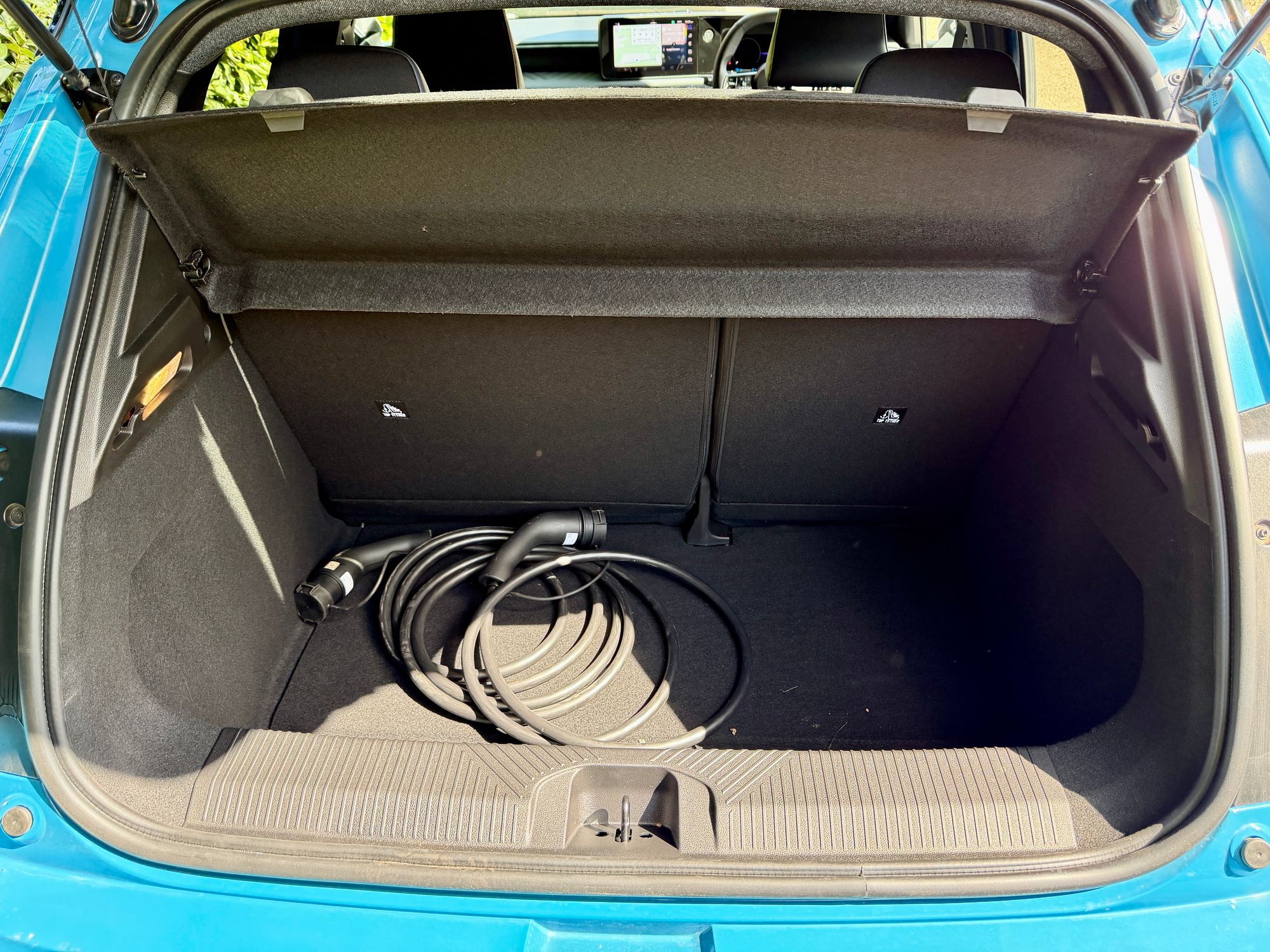
Boot space is, as with the Renault too, one of the Micra’s stronger points. At 326 litres, it’s competitive for the class and offers enough room for everyday use, with the option to expand it to over 1,100 litres by folding the rear seats.
There are a few quirks though. The gear selector setup is a bit awkward, lacking a dedicated park function. Instead, you have to select neutral and apply the parking brake – or simply switch the car off and let it do it automatically. It’s not a dealbreaker, but it feels unnecessarily fiddly. A simple Park button on the end of the gear stalk would fix this, as it would on the Renault too.
Overall, though, the Micra’s interior is well executed. It’s practical enough for daily use, comfortable on the move and built to a standard that feels appropriate for its price.
Technology, stereo and infotainment
This is an area where the Micra really shines. Like its Renault sibling, it punches well above its weight when it comes to in-car tech.
The dual 10.1-inch screens dominate the dashboard, combining a digital instrument display and a central touchscreen into a shared housing that’s slightly angled towards the driver. The setup looks modern and is easy to use, with clear graphics and responsive inputs.
At the heart of the system is Google’s Android Automotive operating system, which brings native Google Maps and Google Assistant, plus access to more apps from the Play store. Simply log in with your existing Google account, and it’s ready to go. And since the Google Maps app knows the battery charge, it’ll help guide you to charge stations when they’re needed – something a connected phone running its own maps app cannot do.
It works well in practice, with intuitive navigation, native support for music streaming apps like Spotify, voice control from Google Assistant, and the promise of over-the-air updates to help keep everything current.
There’s also a strong level of connectivity through the NissanConnect Services smartphone app, allowing you to check battery status, control charging, pre-condition the cabin and access vehicle data remotely.
Apple CarPlay and Android Auto are included as standard – and while the Google system is impressive, I still found myself preferring CarPlay for its familiarity and ease-of-use.
The audio system is another highlight. The Harman Kardon setup delivers a rich, powerful sound that feels surprisingly sophisticated for a car of this size. It’s easily one of the better systems in this class and adds a touch of premium appeal. Voice control via Google Assistant is genuinely useful, allowing you to adjust settings, set the navigation or control media playback from connected devices, all without taking your hands off the wheel.
There’s also plenty of additional tech on offer, including wireless phone charging, ambient lighting with multiple colour options and a range of advanced driver assistance systems, including ProPilot assist with adaptive cruise control and lane-keeping.
All of which makes the Micra feel like a much bigger, more expensive car when it comes to technology.
Prices and running costs
One of the Micra’s biggest strengths is its pricing. Starting from £21,495 for the 40kWh version – including the £1,500 government grant – it undercuts many rivals and makes a strong case for itself as an accessible entry point into EV ownership.
Step up to the 52kWh model and prices start from £23,245 with the full £3,750 grant applied, which oddly makes it slightly cheaper than the £23,495 Advance model with the smaller battery! Higher-spec versions push over £26,000, but bring more equipment, including the excellent upgraded audio, larger wheels and additional comfort features.
Running costs should be low, thanks to the car’s efficiency, relatively small battery and the inherent simplicity of an electric drivetrain. Charging at home will be significantly cheaper than running a petrol equivalent, while servicing requirements are reduced compared with combustion-engine cars.
The inclusion of a heat pump should help improve efficiency in colder weather, while features like regenerative braking and adjustable drive modes allow you to maximise range depending on your driving style.
There’s also the benefit of zero tailpipe emissions and potential savings on road tax and congestion charges, depending on where you live.
All in all, the Micra looks well positioned in terms of value, particularly when you factor in its technology and overall usability.
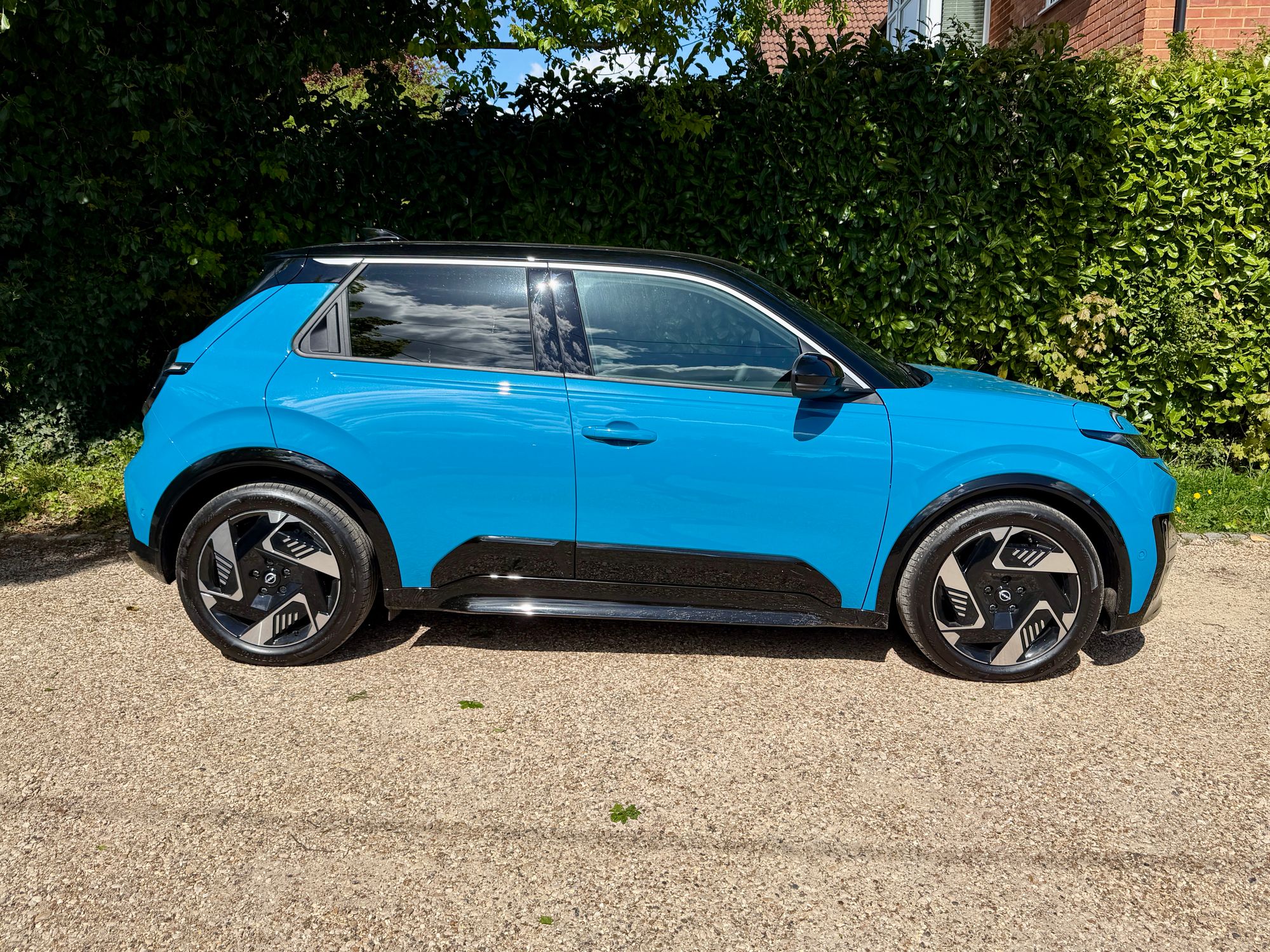
The verdict: Nissan Micra
The new Nissan Micra is a smart, well-judged return for a nameplate that has always been about simple, accessible motoring.
By leveraging Renault’s proven EV platform, Nissan has been able to deliver a car that feels modern, capable and competitive from the outset. And while it shares much of its DNA with the Renault 5, it manages to carve out its own identity with a more forward-looking design and a slightly different character on the road.
Both my daughter and I found the car enjoyable to drive, well equipped, and offering enough range and practicality to work as a daily driver. There are a few compromises – particularly in rear space and some of the interior quirks – but nothing that feels out of step with the class.
Most importantly, it feels relevant. This is exactly the kind of EV many buyers have been waiting for: compact, affordable and easy to live with. And in that sense, the Micra’s return is a well-timed one.
Nissan Micra rivals:
FAQs
How long does it take to charge?
The Micra offers up to 257 miles of range from its 52kWh battery, with 100kW DC fast charging allowing a 15–80 per cent top-up in around 30 minutes.
How much does it cost – is it worth it?
With prices starting from £21,495 including the government grant, and strong tech and range for the class, the Micra represents competitive value among small electric cars.
Does Nissan replace batteries for free?
Nissan offers an eight-year warranty on the battery and a three-year or 60,000-mile warranty on the car itself.
Why trust us
Our team of motoring experts have decades of experience driving, reviewing and reporting on the latest EV cars, and our verdicts are reached with every kind of driver in mind. We thoroughly test drive every car we recommend, so you can be sure our verdicts are honest, unbiased and authentic.
With more than 30 years of experience, Steve Fowler is one of the UK’s best-known automative journalists. Steve has interviewed key industry figures, from Tesla’s Elon Musk to Ford’s Jim Farley, and is a judge for both Germany’s and India’s Car of the Year Awards, as well as being a director of World Car of the Year. When it comes to electric vehicles, Steve reviews all the latest models for The Independent as they launch, from Abarth to Zeekr, and he uses his expert knowledge of car buyers’ needs to provide a comprehensive verdict.