
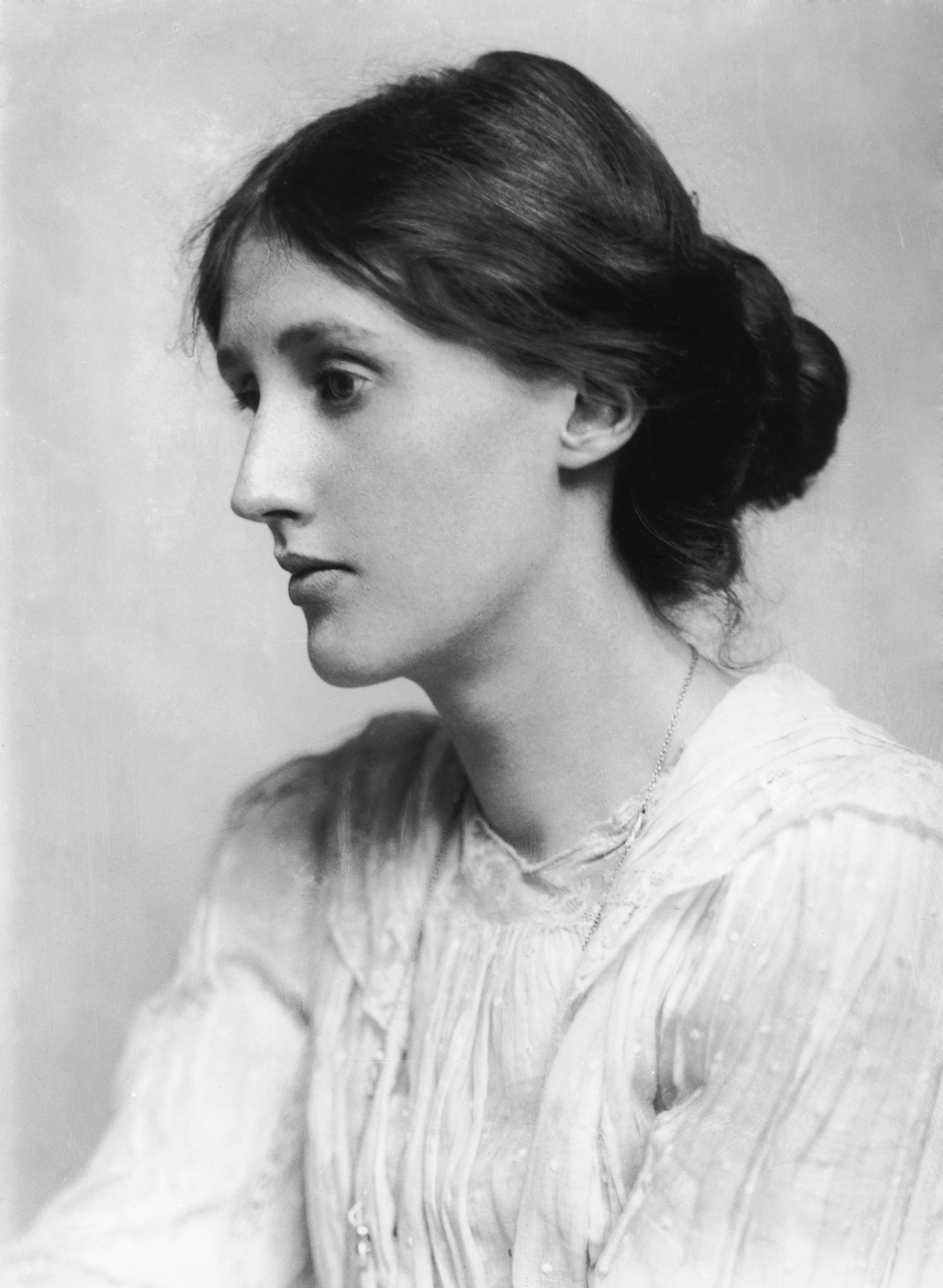
Mrs Dalloway said she would buy the flowers herself. But what if Mrs Dalloway had to buy the flowers herself, make breakfast, hang out the washing, sing every nursery rhyme under the sun (twice), walk to the swings and source a thermometer from a neighbourhood WhatsApp group, all while shepherding two small humans alone, having been up since 4.45am?
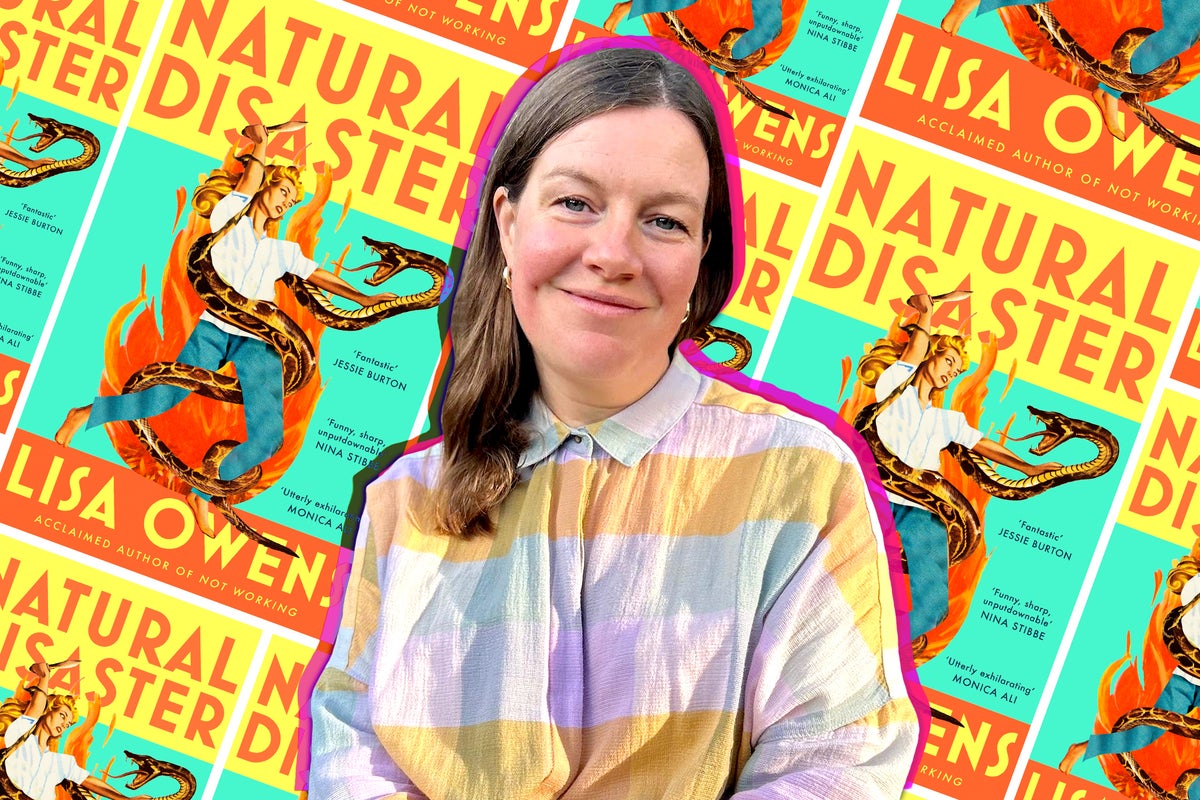
Like Virginia Woolf’s classic tale, Lisa Owens’ second novel, Natural Disaster, is set over one day. Although it’s prefaced with a quote nodding to that book’s influence (“she always had the feeling that it was very, very dangerous to live even one day”), you could argue that the protagonist is more of a Jack Bauer than a Clarissa Dalloway. In 24, Kiefer Sutherland’s counterterrorist operative had to single-handedly neutralise any number of threats while facing an onslaught of tasks and fraught negotiations, all on very little sleep. And I doubt even he could have extricated a double buggy that had become wedged in the door of a corner shop.
For Owens’ protagonist – who is never named and only referred to by other characters as “mum” – it is the final day of maternity leave. Tomorrow she will return to her job and commence the exhausting work of dividing herself in two, so she romantically decides she’ll have the perfect last day with her two sons, relishing in the mundanities of library rhyme time and walks to the shops. Of course, life (or more specifically, little people who discovered literally only months ago that they have hands) has other plans.
As a self-employed writer, Owens herself did not have maternity leave in the traditional sense. Having worked in publishing for five years, her debut novel, Not Working, about a woman looking for her true purpose after leaving her job, was released in 2016. It came out when her daughter was just four months old, and her second child was born less than two years later (they are now eight and 10).
When her children were younger, Owens ended up working more in screenwriting, including the 2019 film Days of the Bagnold Summer, which her husband Simon Bird (of Inbetweeners fame) directed. That more collaborative process “felt like a more natural fit for those years when I was not really able to give my whole brain to writing,” she says. The mental juggle is still very much part of her reality: on her way to meet me, Owens got a message to say her daughter was sick at school. Bird went to collect her.
As she emerged from the trenches of early parenthood, Owens found it difficult to initiate work on a new novel; doing so requires long stretches of time spent alone, something to which she’d become unaccustomed. She had been writing short stories, and eventually her agent suggested that she just keep going with one to see if it could grow into a longer work. Owens realised the moment in which the mum gets her double buggy stuck in a shop door (a scene which one reader told Owens left them needing to “pop a betablocker”) was too intense to be a standalone story, but could be the heightened point of something bigger.
I came back from maternity leave myself at the start of the year and found Natural Disaster to be an incredibly evocative, funny and often profound depiction of the wild early days of looking after a very small child by yourself all day. How in a single day – a single hour – you might find yourself juggling the sublime with basic survival, and how impossible that is to describe to someone else. Attempting to explain it to her partner – who has very helpfully slipped away to Barcelona for a work conference – Owens’ protagonist finds it “as futile as relaying a dream – all the urgency and significance evaporate in the telling, leaving only a puzzling residue”.
Natural Disaster is only 196 pages, but everything is here. The inability to not channel “children’s TV presenter voice” the instant your progeny so much as frowns. The “Arguments Not Worth Having” with your partner. The lingering prospect of boomer judgement whenever you have to parent in front of the older generation. The self-inflicted despair of attending regular group activities despite the fact your child is far too young to understand anything that is happening. The surprising number of YouTube instruction videos you have to watch in order to be able to assemble basic equipment. And the incessant internalised guilt and shame at not being a good enough parent.
For the mum in the novel, even her failure to summon the energy to take her two kids swimming becomes “yet another way she is disloyal to womankind and motherhood”. Feeding her son sugary, processed foods like Coco Pops for breakfast is “something she can’t confront without inviting a full mental pile-on”. She assumes her husband “doesn’t lie awake at night drafting tabloid headlines about the potential fallout of his own poor judgement” as she does.
I remember googling ‘Greta Gerwig childcare’ when she was making ‘Barbie’, just like, I know she has two kids and she’s doing ‘Barbie’… how does that work?
It’s amazing, it’s hard; it’s A Lot. As Owens puts it in her novel, “The point is that no single moment, neither wailing low nor euphoric high, can come close to representing the round-the-clock immersive theatre that is parenthood.”
A day, suggests Owens, is “the classic unit of parenthood, particularly when they’re tiny”; it’s how newborn babies’ lives are measured. But it also felt like a good form for a novel about motherhood, “which does really fly up and down the scale all day every day of the existential and the totally mundane,” she says. “I hadn’t seen that kind of minute-to-minute experience on the page and that was what I was trying to go after.” The “hectically close” experience of watching Uncut Gems, a nerve-flaying film about a New York City jeweller balancing debt collectors with marital affairs, was also an influence.
Owens does think having her children accounts for the 10-year gap between her novels. “I wouldn’t change that,” she says, although admits that “I think I thought that maybe the two might be more compatible than they turned out to be.” We don’t tend to ask male authors how they manage to write and be dads, and Owens says, “I’ve seen some people refuse to answer that question unless you ask their male counterpart.” She, however, craves that information. “I’m desperate to hear that stuff. I remember googling ‘Greta Gerwig childcare’ when she was making Barbie, just like, I know she has two kids and she’s doing Barbie… how does that work?”
She recently read an interview where novelist Lauren Groff described time as “the secret currency of art”. “I had just not quite appreciated that before having children,” Owens says. What Natural Disaster so brilliantly captures is how the finite resource that is an hour, a minute, a second in a day becomes just another logistical conundrum to solve when you have small children, particularly in an age where families can be more isolated from their “village” and there is pressure on both parents to earn.
A simple laundry-related question from her protagonist’s husband becomes “dark and loaded”, the woman affronted by the idea that “she wasn’t perpetually engaged in a game of domestic Tetris”. She marvels at the realisation that “as a mother, her entire infrastructure was… herself!”, that she always ends up changing the bedsheets during the child-free 20 minutes granted to her by her husband on a Sunday night. But the way that the rituals which mark these days become almost unbearably freighted with emotional significance is here too, as the mum keeps putting off “the finality of The Last Feed”.
Because oh, the love! The love is here too. “To be in such great demand,” thinks Owens’ main character, “will she ever know love like it again? Nothing could have prepared her for this: the unimaginable bliss of true, unconditional love. But also the crushing pressure of it.”
It’s the kind of love that unfurls in the intimate hours and hours of reading the same picture book together, over and over. These books were an influence on Natural Disaster too, the Jill Murphys and the Janet and Allan Ahlbergs, all “so full of episode but also somehow survivable”, where “they always end up in bed at the end”. Owens recently wrote a beautiful ode to picture books in The New York Times, about how they helped her process her day too. “Formerly lived on our own independent terms, it has suddenly been turned inside out,” she wrote of life as a parent, “dictated first and foremost by the infant whose needs and parameters keep changing.”
Children love those books because they see themselves in them at a time when they are adapting to their existence in the world. It’s very hard to write about something as subjective and relentlessly various as motherhood, particularly in a way that reflects that reality, but I feel I need to thank Owens on behalf of every new mum I know. When we are adapting to our new existence in the world, her book feels like a comrade on a journey packed with events, exhaustion and ecstasies. Because, as Owens put it in her piece, “good art has the power to move us, but it also has the parent-like capacity to contain us”.
‘Natural Disaster’ is out now, published by Virago. Lisa Owens will be speaking at Henley Literary Festival on Sunday 4 October at noon; henleyliteraryfestival.co.uk