.jpg?width=1200&height=800&crop=1200:800 "Earning around 0,000 will just qualify you as ‘lower-middle class’ in these 12 states, report says – UK Times")

Bikepacking – the combined activity of cycling and wild camping – has unlocked adventure cycling for a new generation as it means you don’t need to bring the kitchen sink, and can nimbly get out into the great outdoors for multi-night travels.
Originally termed “cycle touring” in Victorian times, the bikebacking trend has gained pace in the past decade, and now lightweight, strap-on bike bags offer riders greater convenience and comfort on long journeys. With more affordable technical kit now readily available, and increasingly well-signposted, well-travelled routes globally, accessibility for the novice is also improving.
The idea of bikepacking appealed to me personally as it offered more of a challenge than wild camping, and the promise of travelling farther distances than by hiking. Though, as enthusiastic as I was to bikepack for the first time, it was also daunting: “Am I too average a cyclist to handle the distances?” I asked myself. “Even though I’m a competent wild-camper, would the added challenge of peddling around feel liberating or cumbersome?” I wondered.

Scotland was the perfect destination for my inaugural, beginner-friendly bikepacking trip. Thd plan was to cycle 100km over two nights along the National Cycle Network (NCN) from Glasgow to the Trossachs National Park.
Read more: I fell in love with this island-to-island cycling trail in Japan
The right to roam and wild camp country-wide (which campaigners in England are still fiercely fighting for), along with dozens of popular cycling routes within a stone’s throw of the major cities of Edinburgh and Glasgow, make Scotland a bikepacker’s paradise. Not to mention the unspoilt beauty of its gorse-covered hills and windswept glens.
Before setting off, I sought the wisdom of pro British cyclist and Vango ambassador Mark Beaumont – the impressive record-holder for cycling around the world in just under 80 days. He told me: “You need a good night’s sleep, dry and warm clothes, and enough food to get you to your next supply point.” That and a good bike.
Edinburgh-based bike experts ProjektRide hand-picked the Genesis Croix De Fer 40 gravel bike for me, which was the perfect mix between a lightweight road bike (that I can commute around London on once back home) and a sturdy off-road mountain bike capable of carrying extra weight and crunching gravel.
With a carefully researched kit including a lightweight Endura Hummvee helmet, compact Big Agnes Bikepack tent, insulating Vango sleep mat, breathable LeCol ARC bib shorts, and grippy True Motion shoes, my friend Taryn and I were off.

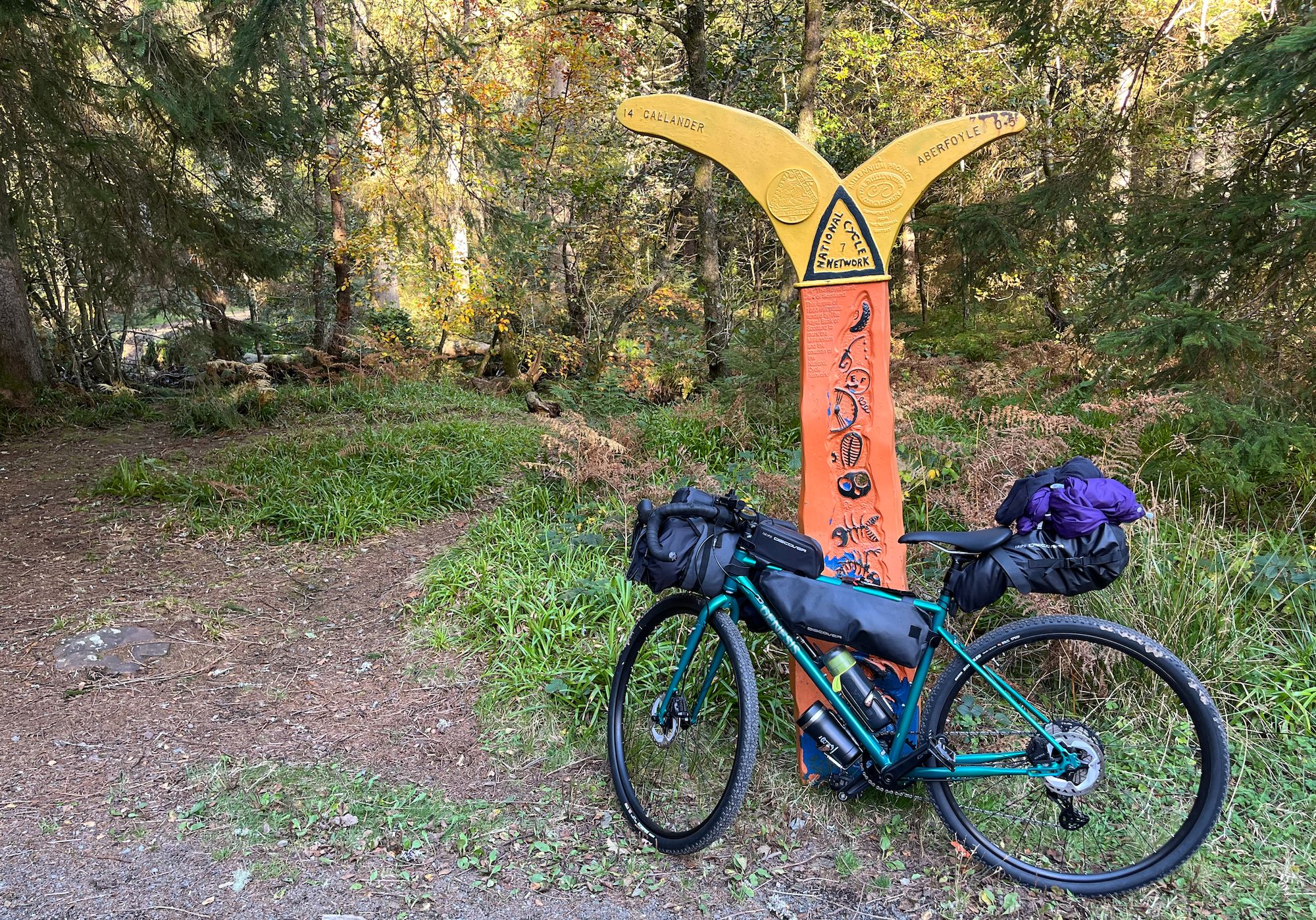
We opted for stage seven of the NCN route from Glasgow to Callander to allow us to catch a return train from London to Glasgow, and to avoid getting too remote in the Highlands, with villages nearby for restocking supplies. Bikepacking Scotland proved a fantastic resource for planning routes.
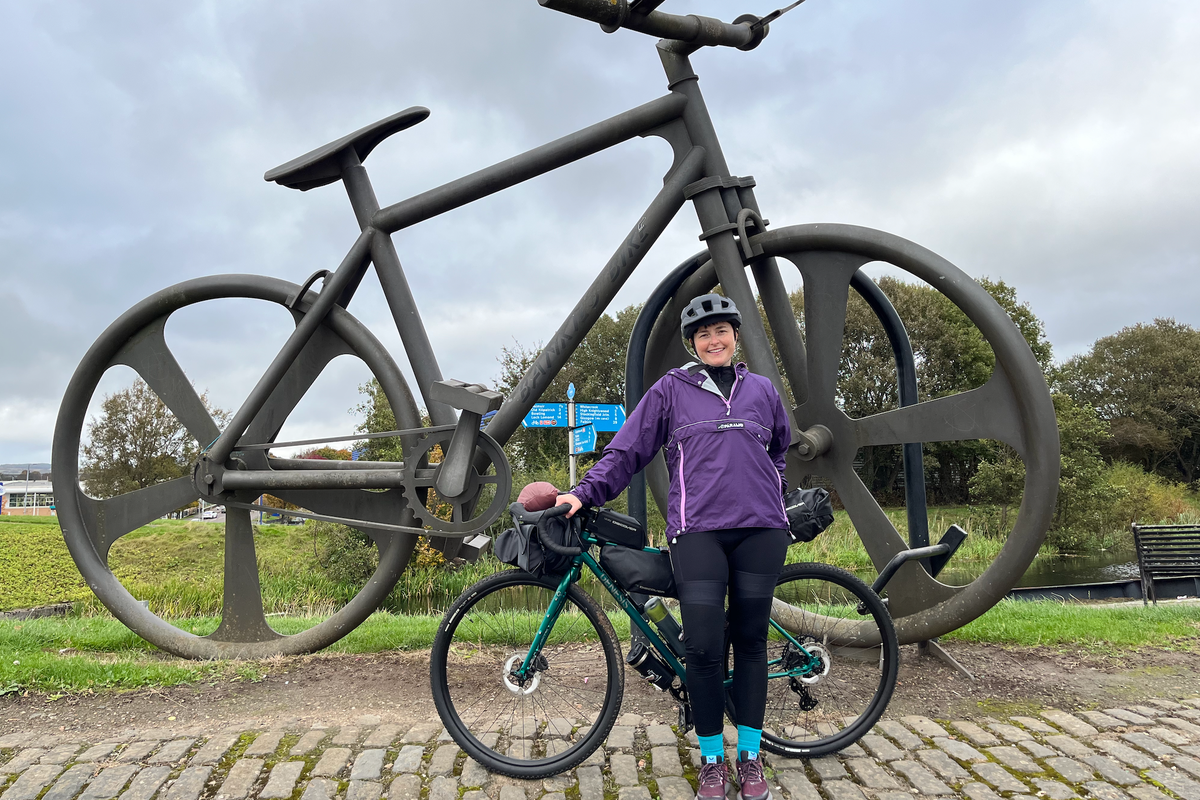
From Glasgow Central Station we followed the mostly flat Forth and Clyde canal past swans and falling autumn leaves to the Bankies Bike Sculpture – a crossroads that has welcomed many a novice bikepacker.
Read more: Eight of the best cycling destinations around the world
Along the River Leven, we meandered through industrial back-alleys past mills and factories, before finishing the 35km first leg in Balloch at the foot of Loch Lomond. Arriving just as the sun set, muscles aching, and ready for a big meal, we opted for a pub dinner and chose cosy Balloch House Hotel to rest and recoup at, knowing tomorrow we’d be up in the Trossachs with plentiful wild camping spots.
Day two saw a particularly sore backside and a chunkier 46km ride as we pedalled into a more mountainous landscape up into Trossachs National Park. We traced a portion of the West Highland Way down leafy country lanes with undulating hills where small climbs were rewarded with fun downhills, stopping at Drymen village for a cosy carb-loading lunch at Skoosh tea room, along with a delicious cream tea.

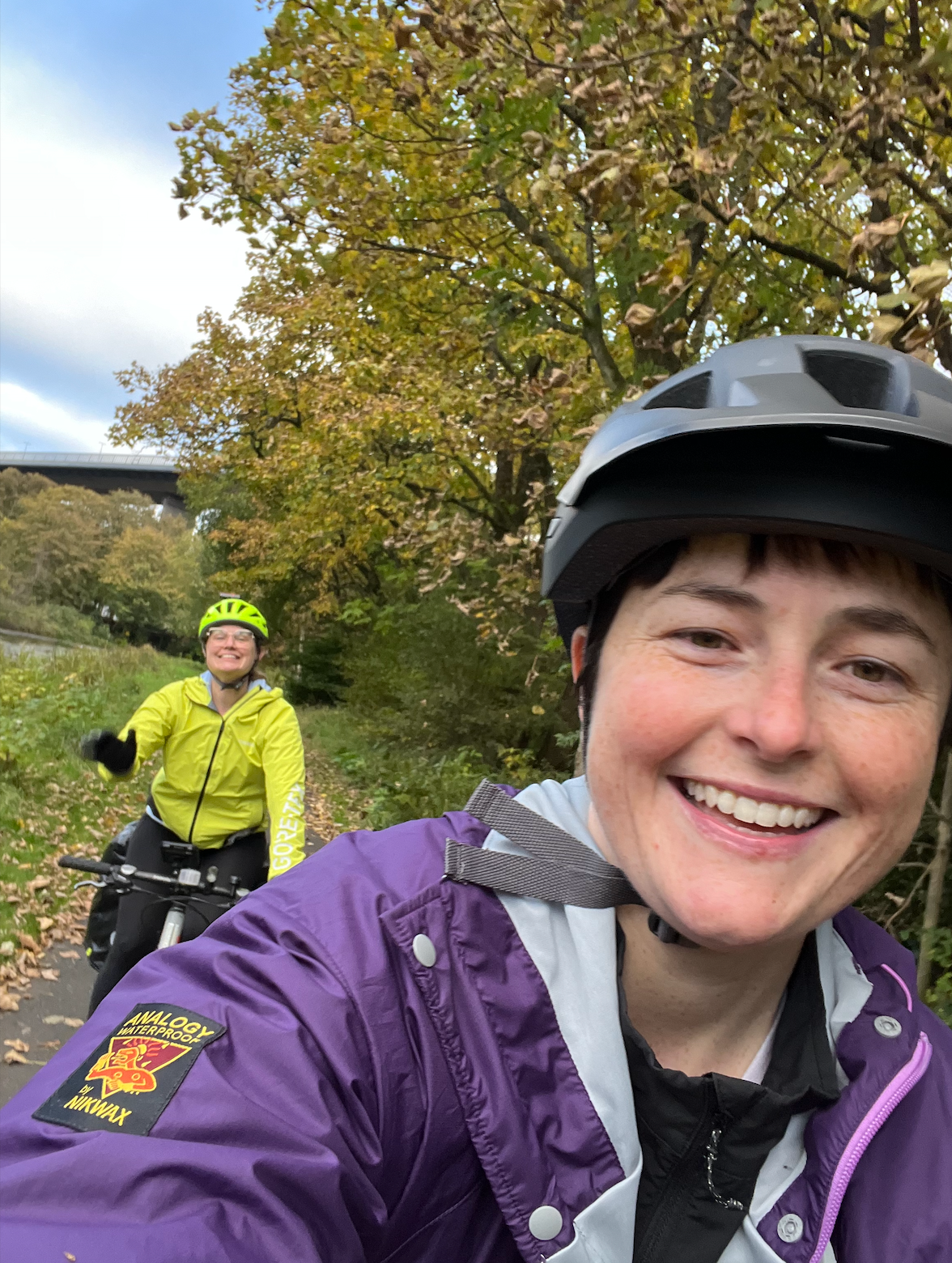
By this point, I was impressed by the strong sense of community from both fellow bikepackers who were quick to initiate conversation, and local drivers who were patient and courteous, well used to cyclists on this popular route. Water refill and cycle repair stations were also more plentiful than expected.
Hitting the halfway point also meant hitting the first of two major hill climbs. Our inexperience really kicked in on the hills, and saw us walking up most of them; losing precious daylight hours but also giving us a moment to delight in the clear blue skies we’d lucked out on.
Arriving in Aberfoyle, a cute-as-a-button town nestled at the base of Queen Elizabeth Forest Park, we could see the mega mountain that we were about to summit before us, and grabbed some light dinner snacks knowing we’d spend the night up in the hills.
Read more: Here’s how to experience one of the most iconic Tour de France climbs
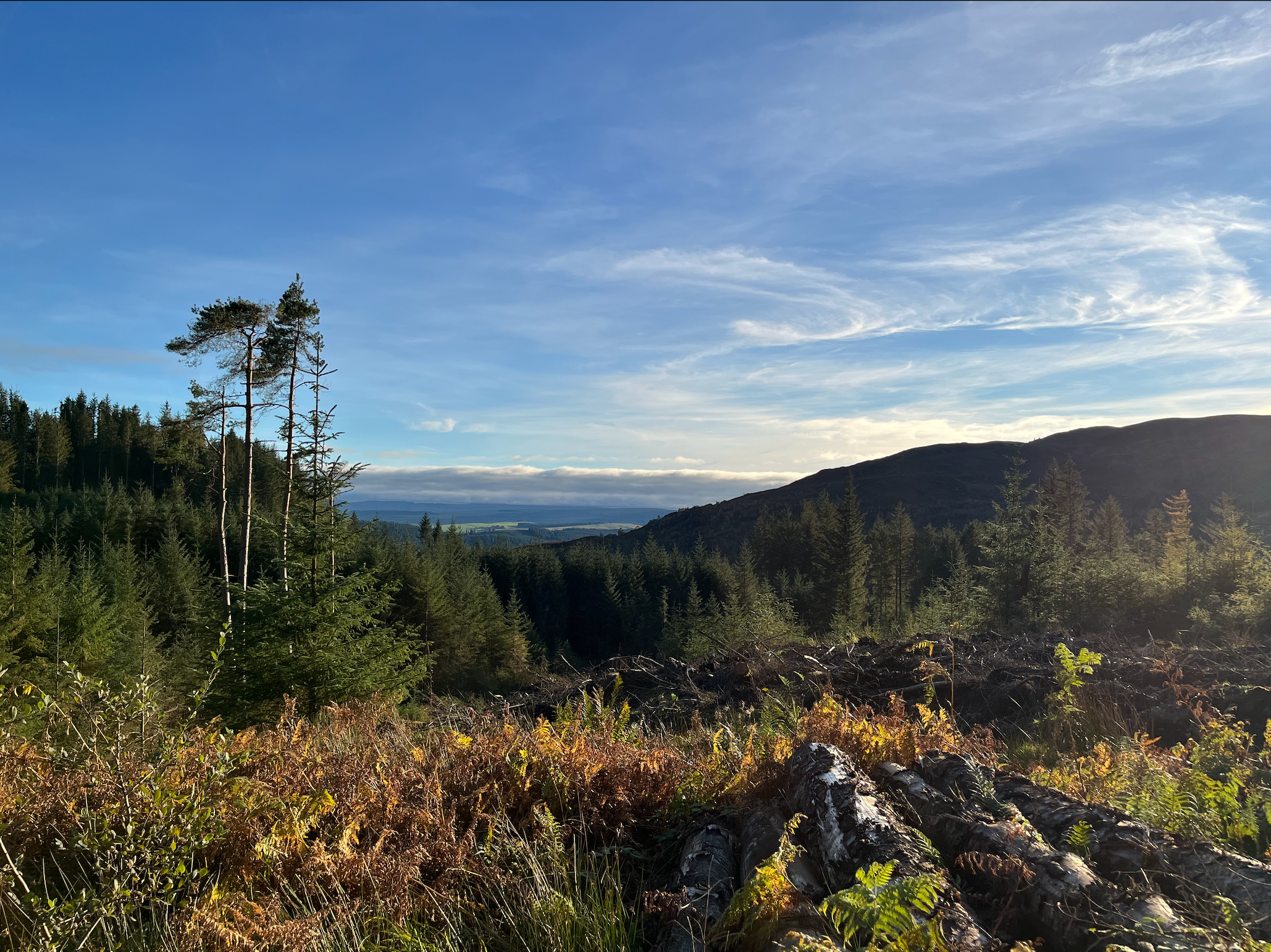
Cycling up the steep Three Lochs Forest Drive was a challenge and we pushed our bikes on foot once again (with no shame!) as lycra-clad pros zipped past. Surrounded by conifer trees, Atlantic oakwoods, and the occasional red squirrel, we took big breaths (and big breaks) and were rewarded with sweeping views of waterfalls and the glistening Loch Drunkie.

With the sun now quickly setting – a vivid display of swirling purples and fiery auburn – we picked a secluded wild camping spot beside a long stretch of gravel path flanking the shores of Loch Venachar. A wild swim washed away the grime of a full day’s cycle, before a restful lakeside sleep. Bear in mind that when wild camping, campers must follow the outdoor access code.
Day three was an early start to race 30km back to catch our pre-booked trains. We completed the NCN7 route to Callander, grabbed a quick breakfast at delicious Mhor Bread bakery, and sped down the scenic cycle route to Dumbarton, where we jumped on a quick train back to Glasgow.
The verdict? Bikepacking was liberating but also stressful at times. Everything took longer than anticipated, and we cycled a lot slower and needed more stops than predicted, which made us feel like we were always behind schedule.
There were many beautiful moments we could have better savoured if we weren’t racing to our wild camping spot before sunset or carefully timed train. You must have a cycling ticket for most train journeys in the UK, and they are in short supply, so missing a train could cause hours or days of delay. Poor weather also could have set us back, so make sure to build flexibility into your schedule.
If you’re a novice like me, it’s also worth brushing up on technical bike riding skills. The second day I used my gears a lot more and varied my seat position, which almost entirely rid me of my day one aches and pains.
Plus, pack lots of nutritious snacks; we were burning over 1,000 extra calories a day and refuelling is no joke. Prioritise nuts, oat bars and fruit over pure sugar to get more energy.
I was grateful to do the trip with a female friend and we felt safe, but if the prospect of bikepacking solo as a woman or with a fellow newbie is daunting, consider cycling with Queens of Pain Cycle Club.
Being able to access wild corners of the world and cover more terrain than on foot comes with both its joys and challenges. Bikepacking inspired wanderlust for me; offering the freedom to get both a really good workout and immerse myself totally in nature. But, with added equipment comes added responsibility, and planning is essential to award yourself moments of true freedom in the wild.
Read more: The best spa hotels in Scotland
Maryann cycled through Scotland with help from Edinburgh-based bike experts, ProjektRide.