


When British citizens Alison Woodward, 71, and Gul Woodward, 70, boarded a flight to Dubai last week, they were expecting a beach holiday, plenty of sun, and a birthday celebration. But within days, they found themselves caught in a rapidly escalating regional conflict that has grounded flights across the Gulf and left thousands stranded.
What began as a short holiday for the pair has become an anxious wait, punctuated by the sight of missile and drone interceptions unfolding in the skies above Dubai.
“It was really scary. We were shaking,” Alison told The Independent, describing the air alerts and loud explosions that have echoed across Dubai since Saturday morning, hours after coordinated US-Israel strikes on Iran triggered retaliatory attacks on key US allies in the region.


The conflict has since disrupted aviation across much of the Middle East. Several Gulf states have temporarily closed their airspace with Iran continuing to launch strikes on both military and civilian targets in the UAE, Qatar, Kuwait, Saudi Arabia, and Bahrain. Authorities on Saturday said Iran launched 137 missiles and 209 drones at the UAE, most of which were intercepted.
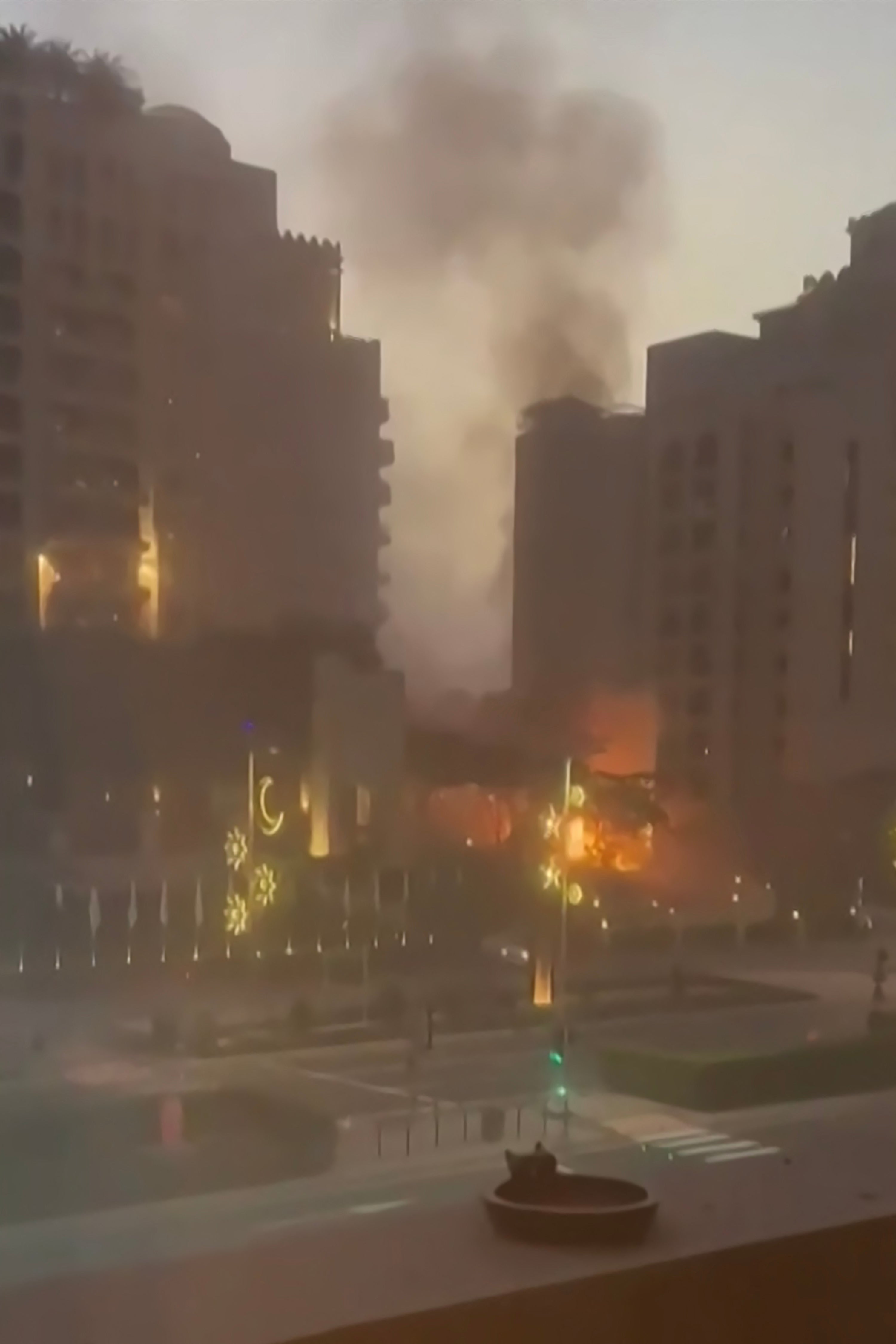
Dubai International Airport, one of the world’s busiest hubs, remains closed after what was reported to be an Iranian strike, in which authorities confirmed four people were injured.
On Sunday, an explosion near the airport sent a thick plume of black smoke into the air as fresh wave of Iranian strikes rocked the Gulf states following the killing of Iran’s supreme leader in US-Israeli strikes.
In Abu Dhabi, authorities confirmed that an incident at the Zayed International Airport resulted in one death and seven injuries. Residential buildings, air traffic hubs, ports and urban areas have also been hit across several Gulf states.
Alison and Gul are among thousands of travellers now stranded in Dubai, a glitzy tourist destination considered one of the safest in the world. The emirate, also a global business hub, attracted nearly 20 million tourists in 2025, according to government figures.
“We flew into Dubai on February 25 and were supposed to fly back on March 2 after celebrating Gul’s birthday,” Alison, whose son and family lives in Dubai Marina, said. The pair had checked travel advisories before departure and found no warnings that suggested imminent danger.
“We did not see this coming,” she said. “At least we’re staying with family and not stuck in a hotel like many others. That’s a big relief.”
Living in a high-rise, a common feature of Dubai’s upscale neighbourhoods, has brought its own anxieties.
“We’re on the 17th floor, and that doesn’t feel very safe,” Gul said. “The government’s safety advice is to shelter indoors and stay away from glass windows. But the entire building is a glass façade.”
On Sunday, when sirens sounded warning of an incoming missile, the two women hurried downstairs to the lobby, where they remained for several hours.
Though they insist there is no panic and they are trying to remain calm, both say they want to return home as soon as possible.
“We’re trying to manage this with the British spirit, and a cup of tea. That solves everything,” Alison said, in a lighter tone. For now, however, they are reluctant to risk travelling. “I don’t want to be in the sky while this is happening.”

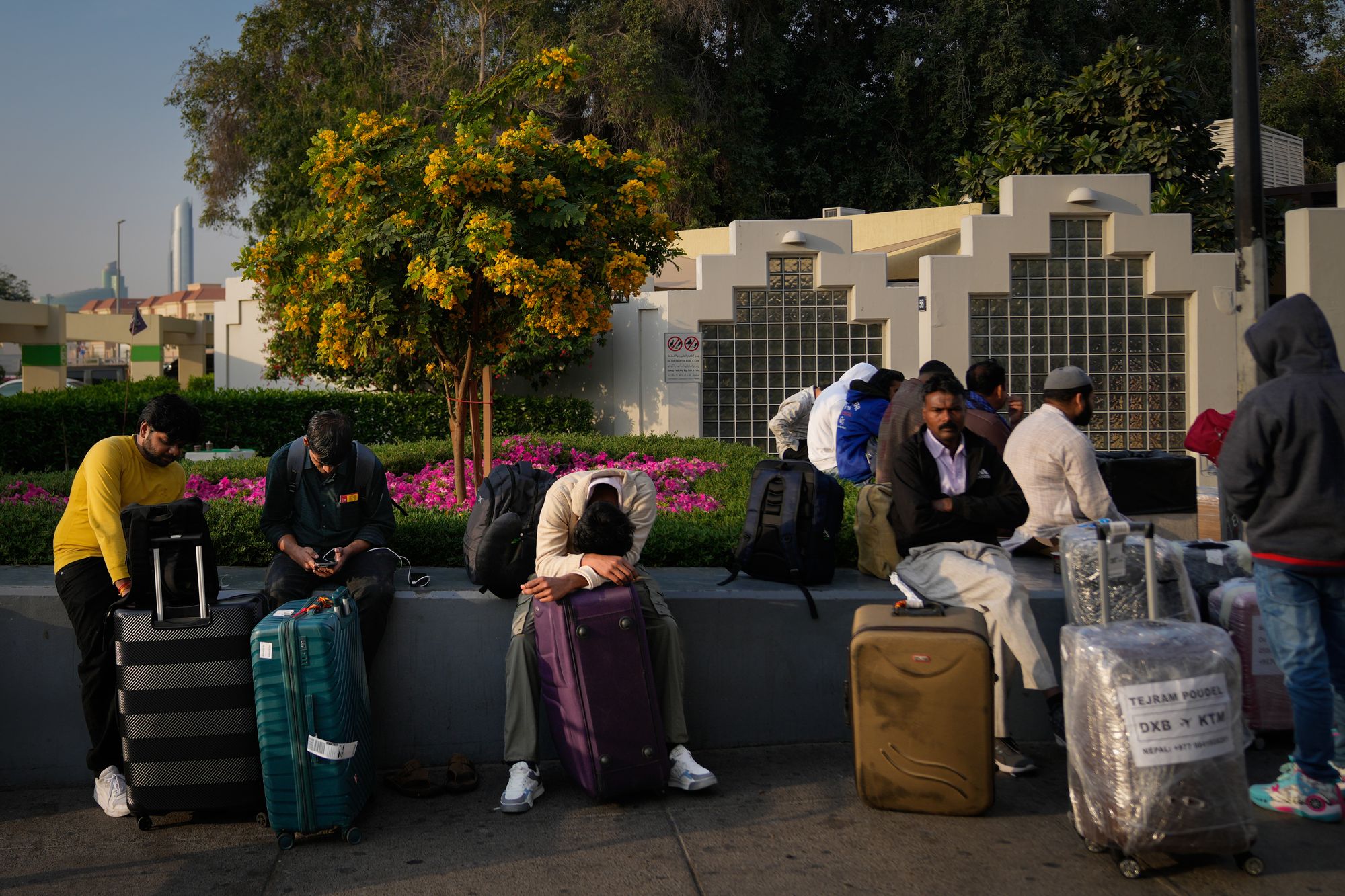
As the region braces for further escalation, several travellers said they are worried about indefinitely getting stuck in Dubai.
An American couple who came to Dubai on a short holiday said they are living an ordeal.
The husband and wife, both doctors from California, said the explosions and repeated missile and drone interceptions have been “really scary.”
“This is our fourth holiday in Dubai, and we never expected anything like this to happen,” said the woman, who asked not to be identified. She said their five-year-old daughter has been terrified by the sound of explosions.
“We saw missiles flying past in front of our hotel. We’ve seen this in movies. Now we’re living it.”
She said the uncertainty has been the most difficult part. “It’s the not knowing that keeps us anxious. We’re worried these attacks could go on for weeks and that we won’t be able to get home. That’s unimaginable.”

Martin, an Irish IT professional, and his wife were transiting through Dubai after honeymooning in New Zealand and Australia when their journey home took an unexpected turn.
“We landed on Saturday at 1pm on an Emirates flight from Sydney and were heading to the gate for our connecting flight to Dublin,” said Martin, who declined to give his surname. “Now we’re in a hotel, not knowing when we’ll be able to fly home.”
He described chaotic scenes at the airport as flights were suspended. “We waited for more than six hours before anyone spoke to us and explained what was happening,” he said.
The couple are increasingly anxious to return to Ireland, where both are due back at work.
“We don’t even have our laptops with us,” he said. “We need to get back to Dublin at any cost.”
The UAE government has reassured stranded passengers that it will cover the costs of extended stays and related expenses. The Department of Culture and Tourism in Abu Dhabi confirmed that accommodation costs for affected visitors would be covered by the state. In a statement, the General Civil Aviation Authority (GCAA) said the country’s airports and national carriers had managed 20,200 passengers affected by flight rescheduling, as authorities worked to minimise disruption.
David Drury, 65, a British national who lives in Portugal and works as a senior adviser to the Emirates Nuclear Energy Corporation (ENEC) in Abu Dhabi, said he was “impressed by the calm and organised” manner in which authorities handled the disruption.


“I was at the airport when they announced the flight cancellations. Within less than an hour, they had offered me accommodation. That was impressive,” said David, who spends two to three weeks every few months in Abu Dhabi.
With flights suspended, he said he would miss a keynote address at a European nuclear energy conference in Brussels, along with other business commitments.
He said he was “more amazed than scared” to see missiles crossing the Dubai skyline.
“It felt surreal like something out of British Pathé footage of London during the war,” he said.
“There’s no point in panicking. If I’m stuck in Dubai for a few more days, I will find a golf course,” David said.