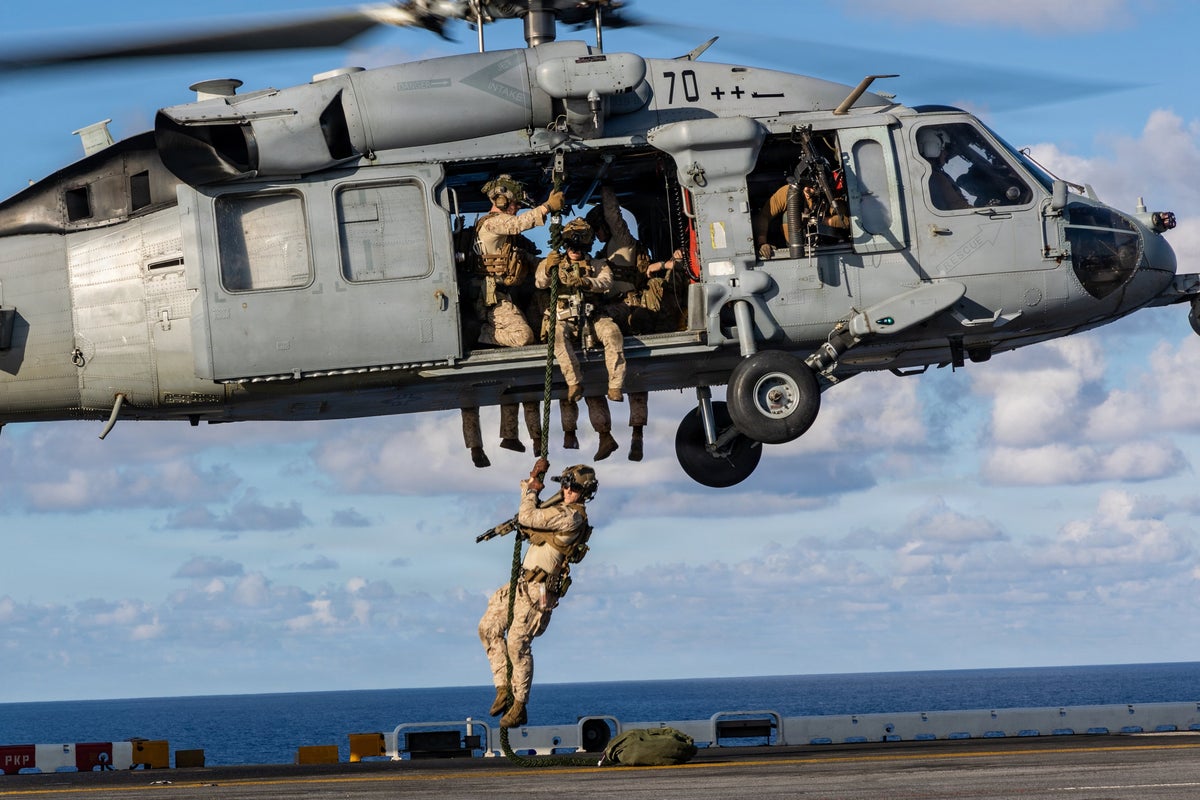
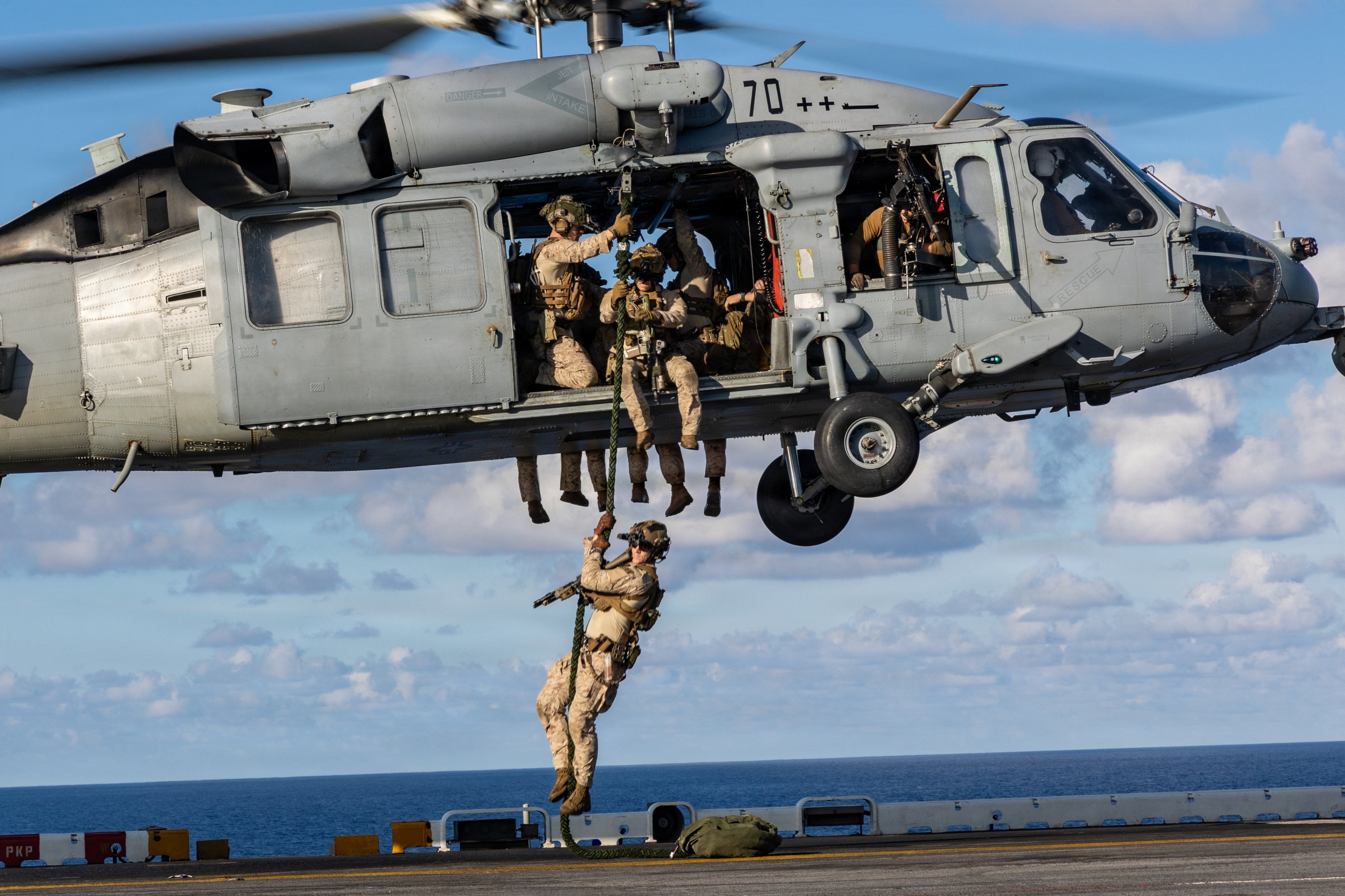
The U.S. has spent months positioning ships, aircraft and troops around the Caribbean, as the White House considers invading Cuba.
The assets, which include the USS Nimitz aircraft carrier strike group, guided missile destroyers and fighter planes stationed in Florida and Puerto Rico, are part of the largest build-up of U.S. forces outside the Middle East, Politico reports.
The military does not comment “on speculative reporting” and does not “disclose details or comment on U.S. naval ship operational movements and activities or disclose details of specific operations or routes,” a spokesperson for U.S. Southern Command told The Independent.
The president is reportedly not actively planning to invade Cuba just yet, though military planners have reportedly gamed out scenarios to send American forces to the blockade-and-sanction-gripped island if it descends further into chaos.
“Everything is on the table, but no invasion is planned or imminent,” a Trump official told Axios.
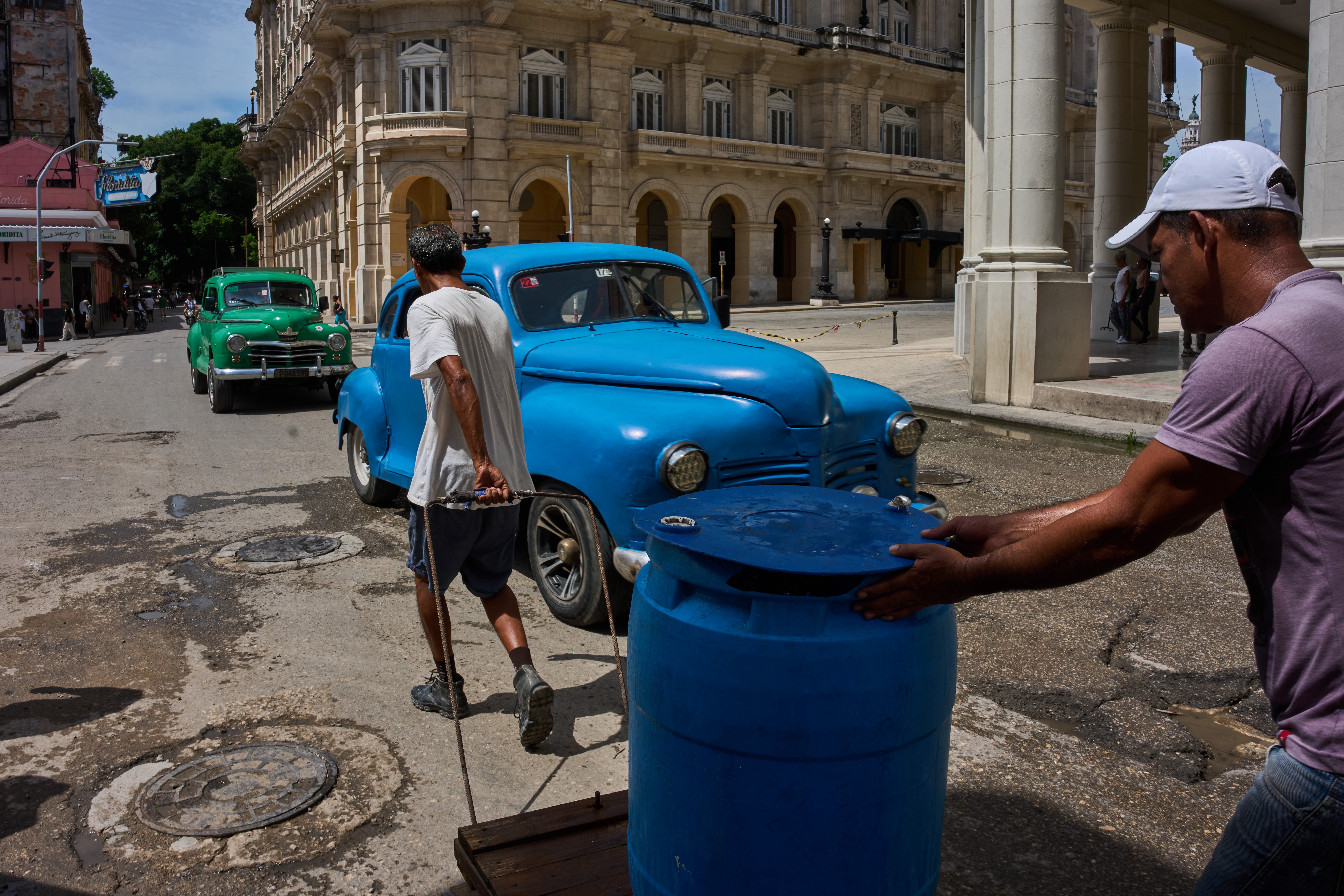
Another administration adviser told the outlet that the White House is pursuing a strategy of “accelerationism” against Cuba, hoping to hasten the downfall of the island’s communist regime through the existing U.S. blockade and the more recent American effort to choke off oil supplies to the island, which has resulted in widespread blackouts and civilian suffering across Cuba.
“We don’t want to kill off the regime just yet,” the official said. “There’s a method to this. It’s in stages.”
A third official told Axios that the president is not in a “rush” to escalate with Cuba, given the ongoing Iran war.
The U.S. has been ratcheting up pressure on the island and the Caribbean region as a whole for months.
Under Trump, American forces have regularly conducted lethal military strikes on alleged drug boats passing between mainland Latin America and the Caribbean.
The January operation to capture Venezuelan leader Nicolás Maduro and take over Venezuela’s oil sector cut off Cuba from its most important patron.
Last week, the U.S. indicted former Cuban president Raúl Castro, the same day the Nimitz arrived in the Caribbean.
“The Nimitz is likely there primarily for intimidation, though it could be used in a military operation if needed,” Mark Cancian, a senior analyst at the Center for Strategic and International Studies, told Politico.
Observers also believed Secretary of State Marco Rubio was sending a warning shot earlier this month when he posed in front of a map of Cuba while shaking hands with U.S. Southern Command’s Gen. Francis Donovan.
CIA Director John Ratcliffe also held high-level talks with Cuban officials on the island earlier this month.
He was there “to personally deliver President Donald Trump’s message that the United States is prepared to seriously engage on economic and security issues, but only if Cuba makes fundamental changes,” a CIA official told the Associated Press.