
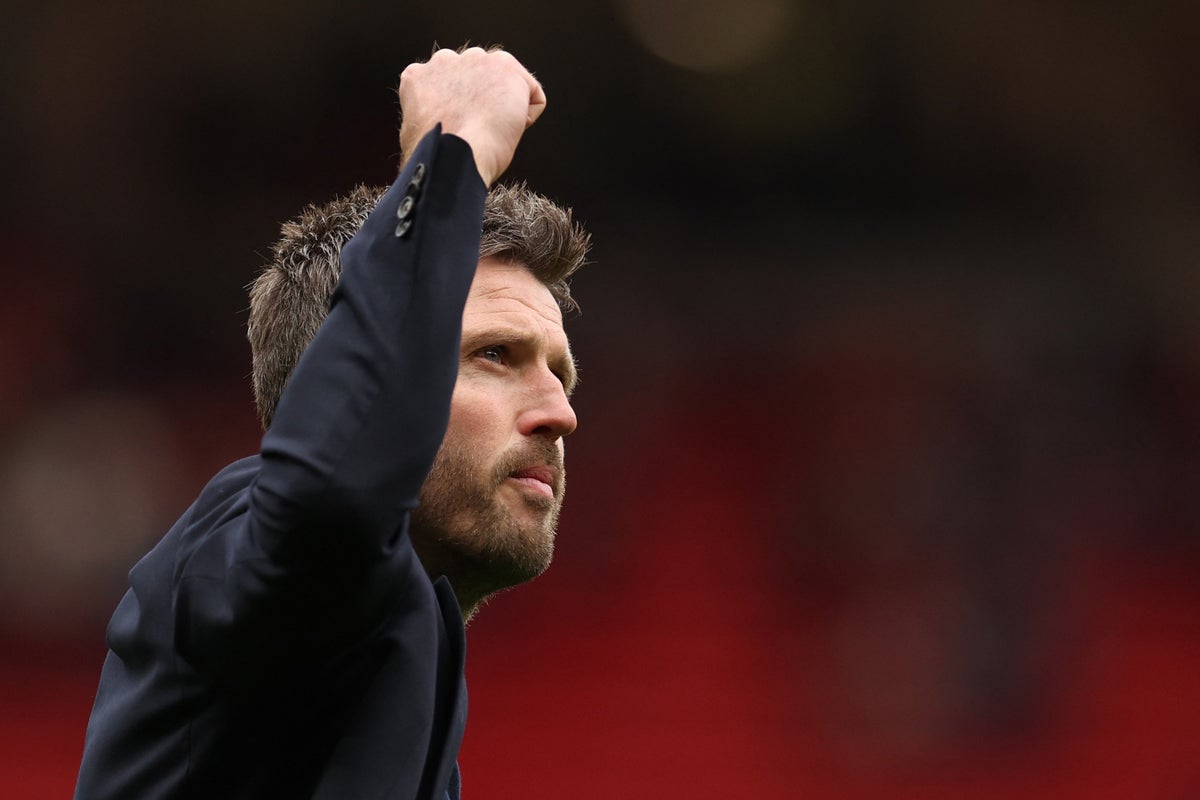
Managing Manchester United is difficult, but too many of those to have tried in the last 13 years have made it look the impossible job. A few weeks into his tenure, Ruben Amorim had declared his side were possibly the worst team in the club’s history. A few months into what had seemed an interim stint, Michael Carrick appears entirely at home.
Carrick has never fully announced his candidature to succeed Amorim on a permanent basis, but he may never need to. The audition has been suitably successful to make him look the leading man. After beating Liverpool – a fourth major scalp, to follow Manchester City, Arsenal and Chelsea – he came as close as he has to confirming the obvious; that he wants to stay.
“I love doing what I’m doing,” he said. “It’s a great position for me to be in and it feels pretty natural, if I’m totally honest. I’m not being blase because it’s a difficult role, but it feels like I’ve been here a long time in, in different times, on and off, but I can understand what it brings and to be sat in this position is a good position to be in.”
Carrick can often say very little when saying a lot. In this instance, he said a lot while saying few words. He has looked a natural fit. After four years away from Old Trafford, he returned with knowledge of the long-serving players, plus Kobbie Mainoo, who he knew from the under-age sides. Yet Benjamin Sesko’s goal against Liverpool and prolific return, like Patrick Dorgu’s form in Carrick’s first two games, seemed an indication he had a better grasp of how to use Amorim’s signings than Amorim himself. Carrick seems to understand this squad.
There is something natural in seeing United play with a back four, attack with width and play with verve. Carrick has connected United with what they used to be. The emblematic player of his tenure may be the homegrown Mainoo, restored to a central role by a former United midfielder; but if the academy forms part of United’s identity, it is notable that Carrick’s commitment to the junior sides is such that he travelled to Oxford to cheer on the Under-18s in the FA Youth Cup. His rationale is that he is trying to look after the club’s long-term interests; in the process, though, he has made himself appear part of the long term.
Carrick has under-promised and over-delivered, in part because he never talked about explicit objectives. When he came back United were seventh. Now they look very likely to finish third. They know they will compete in the European elite next year. “The Champions League was a little bit in the distance and we wanted to try and get back into Europe,” Carrick said. “To be where we are with three games to spare is a good achievement.”
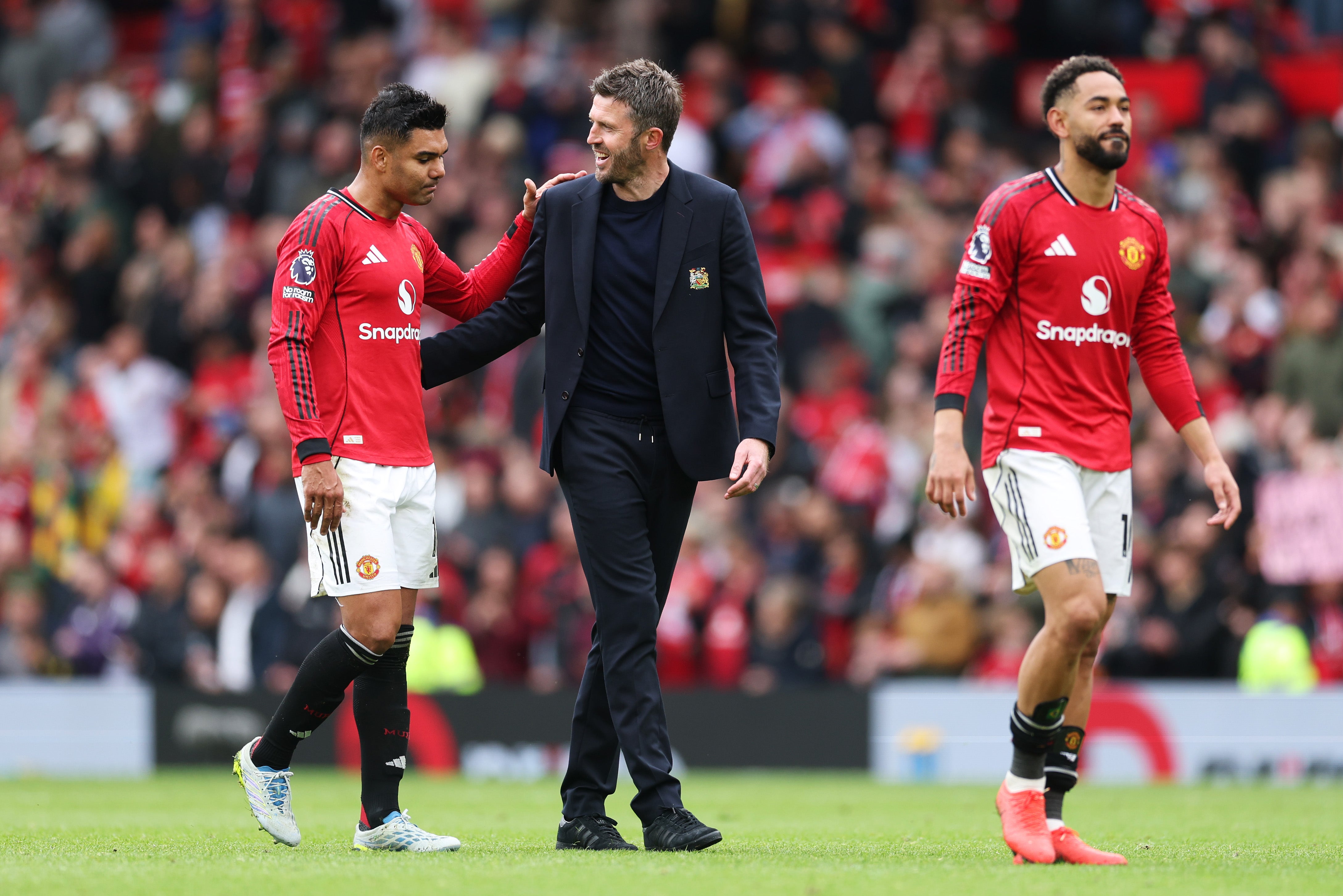
It is also one that will make tens of millions for a club who normally specialise in wasting it. United may wince at the thought of the €11m they paid in compensation for Amorim, even before they factor in paying the remainder of his contract.
They have got Carrick for nothing. They may have fallen on their feet in the process; when he took over his salvage job, there was little sense he was in the long-term thinking. A couple of years ago, Sir Jim Ratcliffe said United should be looking for “best in class” and people who were “10 out of 10”; that did not necessarily mean managers sacked by Middlesbrough.
So Carrick lacks the CV of some of the supposed contenders. Yet Luis Enrique or Thomas Tuchel may be pipe dreams now; there is a reality to Carrick. The job changes next year: with up to 20 more games, when the benefits of simply not being Amorim will diminish with time. The similarities with Ole Gunnar Solskjaer can be a warning now; yet the Norwegian is arguably the best United manager since Sir Alex Ferguson. Knowing the club helped him; it can seem a simplistic line trotted out by ex-players but Carrick has used his insight well.
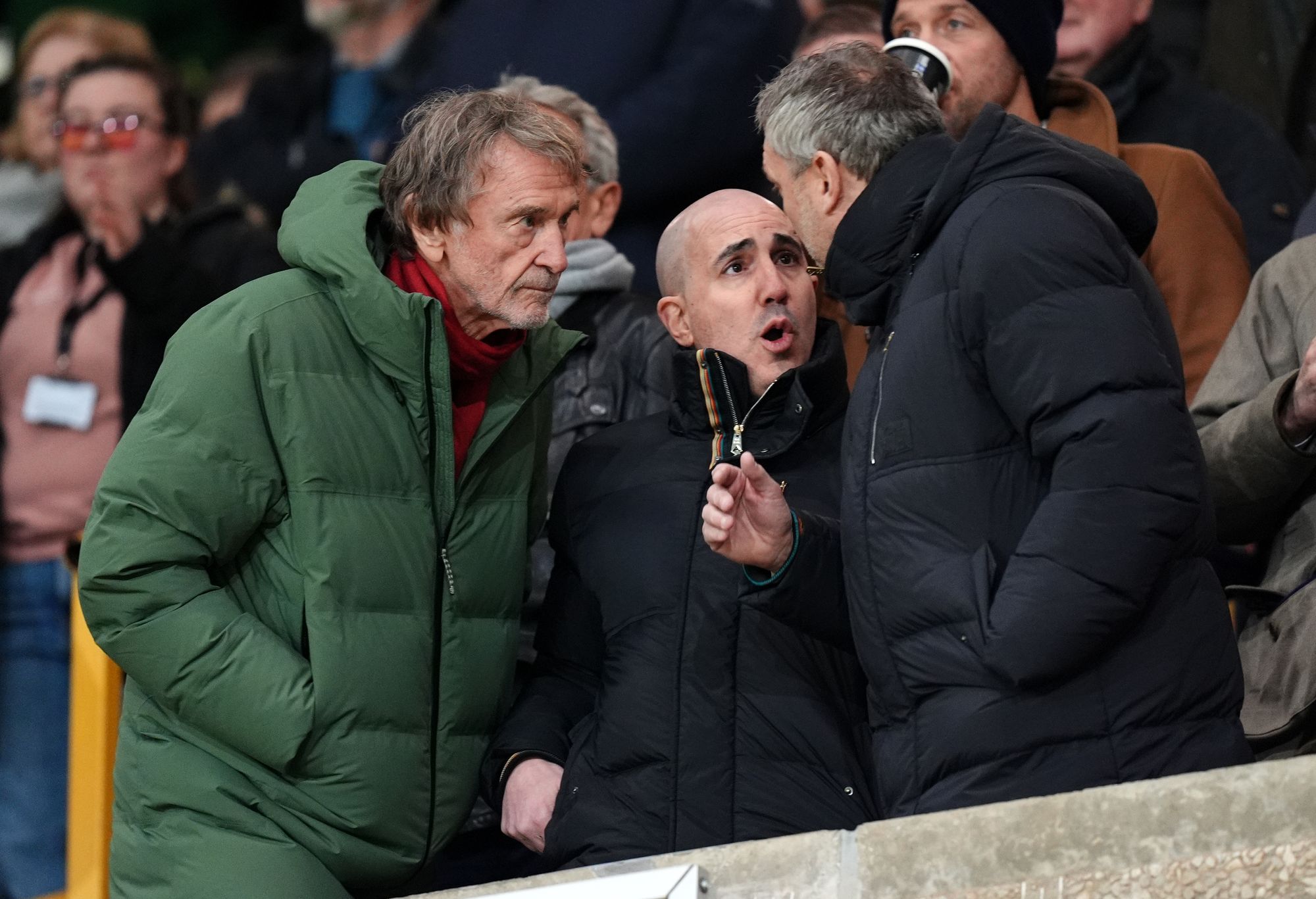
There is another way in which he is the natural candidate. Amorim didn’t know the club, but United seemed to think they had found a generational manager. Instead, he was a hubristic failure. The decision-makers who erred then may have redeemed themselves, and rescued a season, in turning to Carrick in January.
Give him the job for longer and they have cover if it goes wrong. Carrick’s players definitely want him to stay in charge, the sense is much of the support does and there is no popular campaign for anyone else. Yet go against a manager with an outstanding record in interim charge, appoint someone else and if they flounder, it would reflect terribly on Omar Berrada and Jason Wilcox. The risk has become to rip it up and start again. Carrick, the insider who feels comfortable at Old Trafford, has become the natural choice.