


Members of the Wagner mercenary group have taken part in an operation to guard Russia’s shadow fleet through the English Channel, according to reports.
Russian mercenaries and former operatives for Russian intelligence have been identified among the 83 security guards on board Russian tankers, according to an investigation by The Times in partnership with outlets across Europe.
Their findings came days after Britain and France intercepted a sanctioned Russian oil tanker suspected of flying a false flag in the Atlantic.
Of the 83 guards identified, 18 had confirmed ties to the Wagner group, at least 26 fought in Syria, and others currently or formerly worked for other private military companies, the newspaper reported. They reportedly made 189 journeys through British waters since 2023.

The Wagner group is a Russian state-funded private military company that was controlled until 2023 by Yevgeny Prigozhin, a former close ally of Vladimir Putin who staged a coup against the Russian president and died in mysterious circumstances shortly after.
The group emerged more than a decade ago to support Russian separatist groups in the war of Donbas and has gone on to fight in civil wars for regimes supporting Russia, such as Assad’s Syria and Libya.
Evidence from Russian social media, crewing websites, crew lists for shadow tankers and CV-sharing services helped the outlets identify the likes of Dmitri Savitsky, a veteran of Wagner, Moran Security Group and the Slavonic Corps, and Iurii Rzhevsky, a Wagner squadron leader who fought in Syria, as guards on the ships.
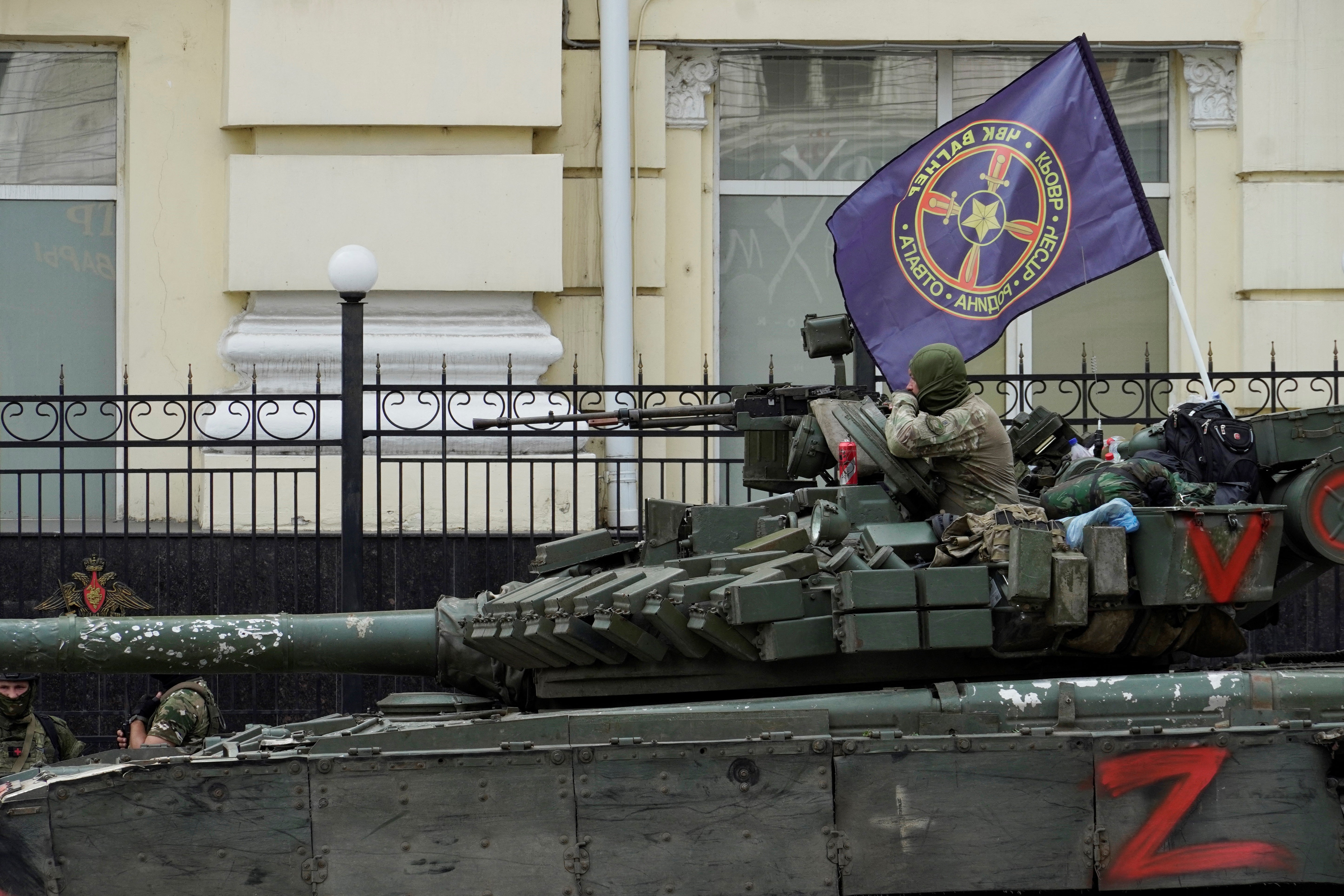
Guards on these ships are not armed and are instructed to allow any boardings, according to the report, although they must report any interactions with European authorities quickly.
It comes after the EU revealed a fresh package of sanctions allowing military vessels in the Mediterranean to stop and inspect foreign ships suspected of being part of the “shadow fleet” transporting Russian oil, and said it would take all necessary legal and other measures to protect them.
The EU said on Monday it had expanded the mandate of Operation IRINI, its naval mission in the Mediterranean that was originally set up to enforce a UN arms embargo on Libya.
Russian Foreign Ministry spokeswoman Maria Zakharova said this posed a threat to maritime security and accused the EU of intimidating civilian vessels, warning: “We reserve the right to use the full arsenal of political, legal, and other instruments at our disposal to protect maritime security and the legitimate interests of shippers and shipowners.”
The UK announced powers to board shadow fleet vessels in English waters in March, although none have been seized despite daily crossings from sanctioned Russian tankers. France, Sweden and Belgium are among the countries that have boarded and seized shadow fleet vessels this year.