

A 33-year-old died after being rescued in a closed area within Hawaiʻi Volcanoes National Park, according to officials.
Teams responded to the incident on February 26 and searched through the night for the man.
“Search and rescue personnel conducted operations overnight in steep and hazardous terrain,” the National Park Service said in a statement. “On Feb. 27, responders located the individual and airlifted him from the area. He was transported to Hilo Benioff Medical Center where he was pronounced deceased.”
Officials are withholding the name of the individual, a 33-year-old resident of Hawai’i, for privacy reasons and have notified his family.
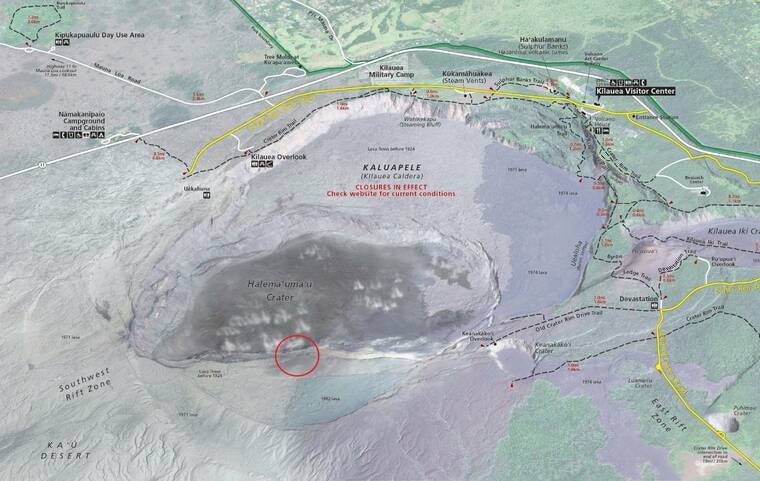
The incident took place in a closed volcanic area on the east side of the park’s Kīlauea caldera.
“Kīlauea caldera contains hazardous terrain, including unstable cliff edges and volcanic features,” park officials added in their statement. “Visitors are reminded to remain in designated open areas and comply with all closures.”
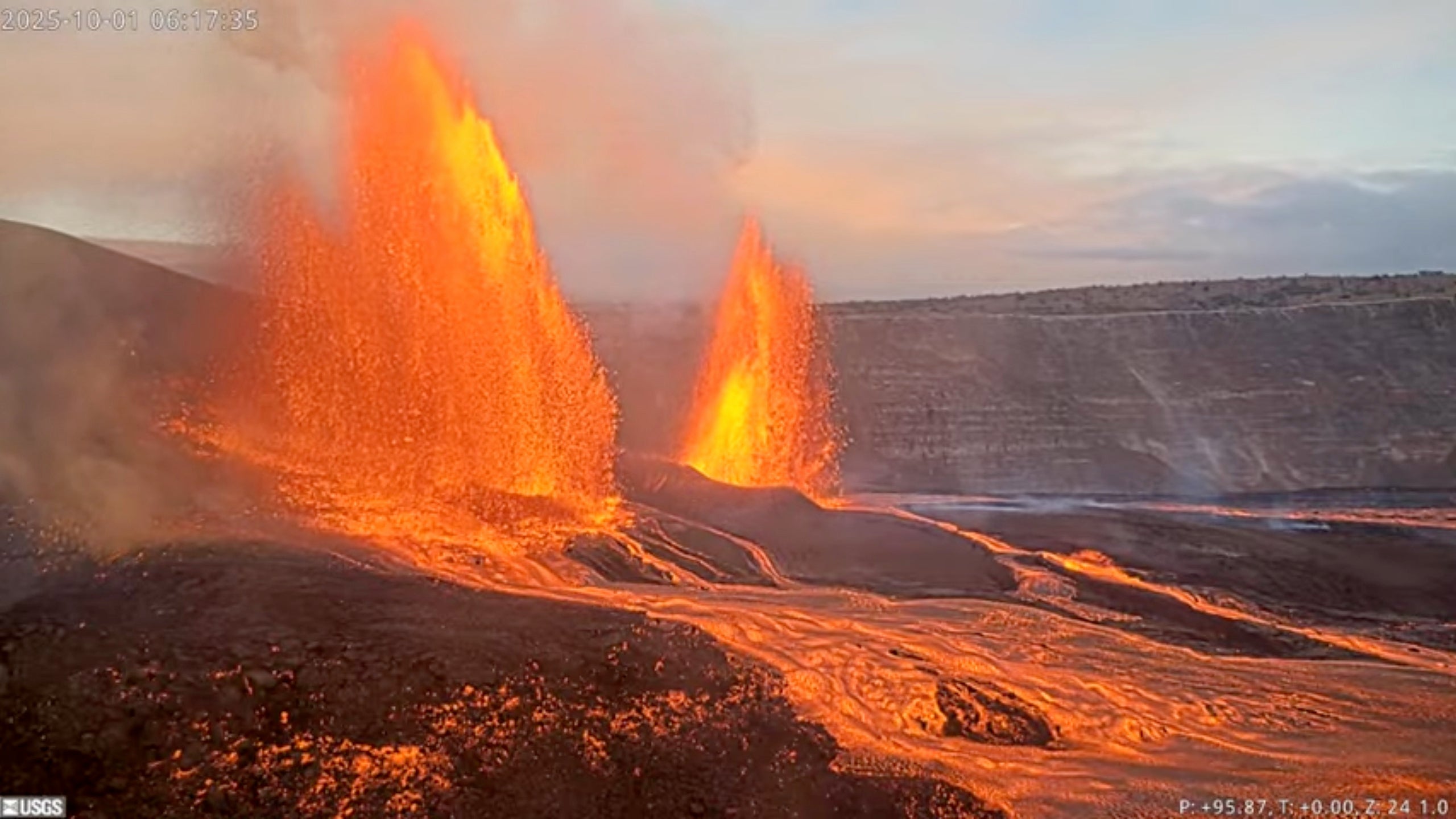
Kīlauea has been erupting on and off since December 2024 across more than 40 separate episodes.
The 42nd eruption event, which saw lava fountains reach as high as 1,300 feet, ended in mid-February.
The fountaining is expected to continue between March 10 and March 15, according to the U.S. Geological Survey.
Kīlauea is the youngest and most active volcano on the island of Hawai’i, and is one of the busiest volcanoes in the world.
The shield volcano is nearly the size of the nearby island of O‘ahu.
The volcano’s name may translate to “spewing” or “much spreading,” and Native Hawaiians viewed the volcano as home to the volcanic deity Pelehonuamea, who was said to live in the Halemaʻumaʻu crater at the summit caldera, according to the National Park Service.
The Trump administration has attempted to slash the size of the parks agency.
It lost 2,750 employees in the first 11 months of the administration, a 15 percent drop, according to an analysis of federal data by Inside Climate News.
National parks have also been under pressure from the White House to review or remove materials deemed overly critical of aspects of U.S. history, often those dealing with racism.