
A new multimillion-pound study is set to investigate the intricate mechanisms of cellular “light switches” believed to play a crucial role in the development of cancer.
Researchers at the University of Dundee aim to unravel the signals that govern cell division, a fundamental biological process vital for growth and injury repair within the human body.
While it is understood that cells activate or deactivate signals to divide, scientists are particularly intrigued by why certain signals must “flash” continuously on and off for proper cellular division.
This rhythmic signalling dictates cell behaviour, and any malfunction in this process could lead to serious health issues, including the onset of cancer.
The team hope that by decoding these previously hidden signals, they can gain a clearer understanding of accurate cell division, pinpoint how this essential process goes awry in diseases like cancer, and ultimately pave the way for more effective treatment strategies.
Study lead Professor Adrian Saurin, from the university’s Faculty of Health, said: “Many of the proteins inside our cells are controlled by chemical tags – phosphates – which are effectively light switches.
“They attach to proteins to turn them ‘on’ and when they detach this turns them ‘off’ again.
“We know a huge amount about which proteins are turned ‘on’ or ‘off’ at any given time in our cells, but what we don’t know is how quickly these proteins can ‘flash’ on and off over time.
“So we’re missing a huge part of the puzzle, because the rate that these signals flash could effectively be a form of biological morse code, which sends messages to control the behaviour.”

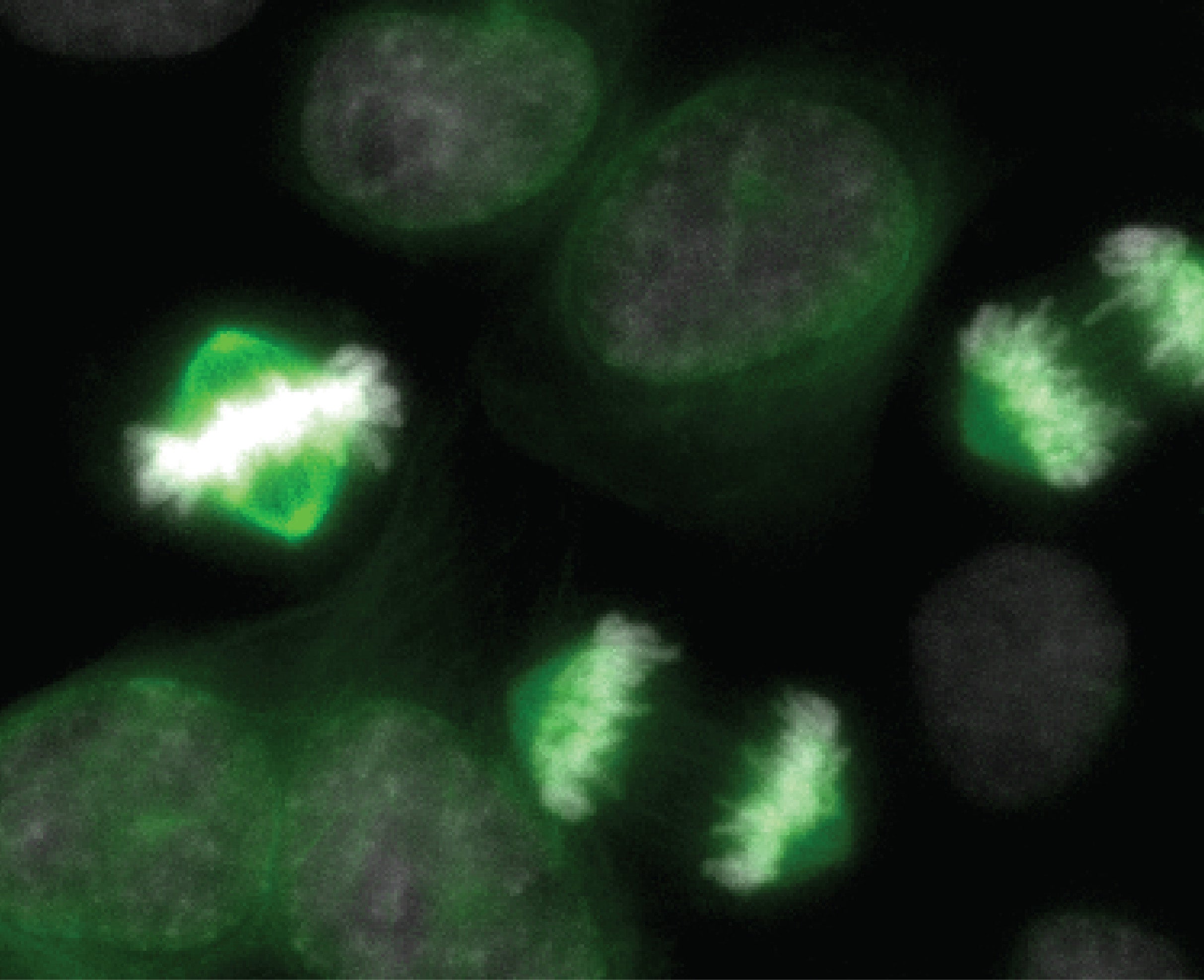
The rapid on-off cycles are known as phosphorylation–dephosphorylation (PdP) dynamics.
Prof Saurin continued: “We have now created the first tools to decipher this code, which we hope will explain how our cells divide accurately, and shine a light on how this can be used to benefit patients affected by cancer.”
Study co-investigator Dr Tony Ly, from Dundee University’s Faculty of Life Sciences, said: “We’re especially pleased to be leading this project from Dundee since protein phosphorylation is a topic that Dundee is already internationally recognised for.
“This research capitalises on our longstanding collaboration, bringing together complementary expertise, to shed new light on an aspect of phosphorylation that is virtually unexplored.
“Unlocking this knowledge will present us with an opportunity to better understand cancer in the future, perhaps revealing new treatment ideas.”
The eight-year project is funded by a £4 million award from Wellcome and will be conducted in conjunction with the Max Planck Institute of Molecular Physiology in Dortmund, Germany.
Professor Andrea Musacchio, director at the Max Planck Institute and also a co-investigator, said “Our expertise in the biochemical reconstitution of the kinetochore complements the diverse skillsets of our team and gives us the opportunity to understand these patterns during cell division in healthy cells, and what goes wrong in cancer cells that allow them to evolve and become resistant to chemotherapy.”

-Ducent.jpg?trim=1224,0,1581,0&width=1200&height=800&crop=1200:800 "‘It Wasn’t Me’ singer’s sister faces £126k bill after losing family will fight – UK Times")