

The Texan sunlight beamed through the glass windows of the Dallas Stadium to bring a divine backdrop to Lionel Messi’s latest two-goal masterpiece.
A glorious 17th World Cup goal, surpassing Germany’s Miroslav Klose’s World Cup record became his latest act to bolster immortal status back home in Argentina and across the world.
After a first hat-trick on this stage to swat Algeria aside, a typically delightful finish with his left instep sent the world champions on their way to a 2-0 victory over the terrier-like Austria. And a second, his 18th in the tournament’s history, came through brute force in stoppage time to extend this relentless start from the world champions, who top Group J and have a place in the last 32 sewn up.
A 201st cap for the albiceleste and a 28th World Cup appearance, Messi continues to endure on this grand stage, but before the ecstasy came a gasp in disbelief at the home of the Dallas Cowboys.
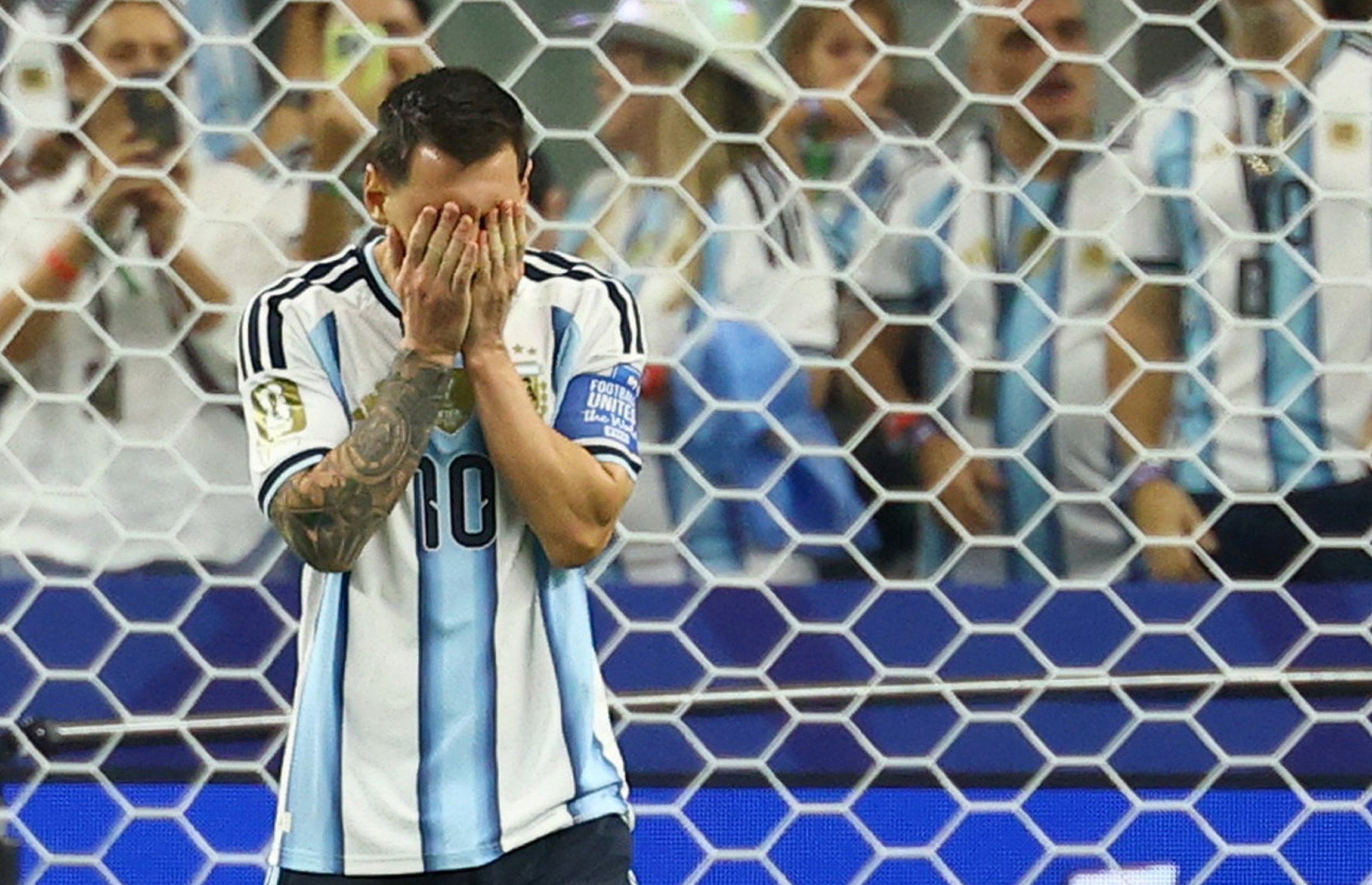
For all of Messi’s superpowers, a ruthless streak from the spot has evaded him occasionally; a rare weakness with 33 missed spot kicks from 149 taken leaves him at a respectable, if not spectacular 78.4 percent success. But in a world where Messi has reimagined what is possible, it remains a puzzling blemish in his arsenal.
A hushed expectation fell across this stadium in the ninth minute, while Austria humbly stood back and allowed Messi time and space to prepare. But Messi’s run-up lacked the intensity of the moment and a casual sweep of his left boot sent the ball curling wide of Alexander Schlager’s post.
But on a lonely walk back to midfield as play resumed back towards Argentina’s goal, an underrated quality in Messi’s legendary career shone brightly.
Across the remainder of the game Messi displayed a resilience to shrug off the disappointment of his misstep and make a vital adjustment to slice Austria apart. With each curious stroll into his own half, vacating the space around the Austrian centre-backs, Argentina started to confuse the Europeans and enable blue and white shirts to flood beyond the ball.
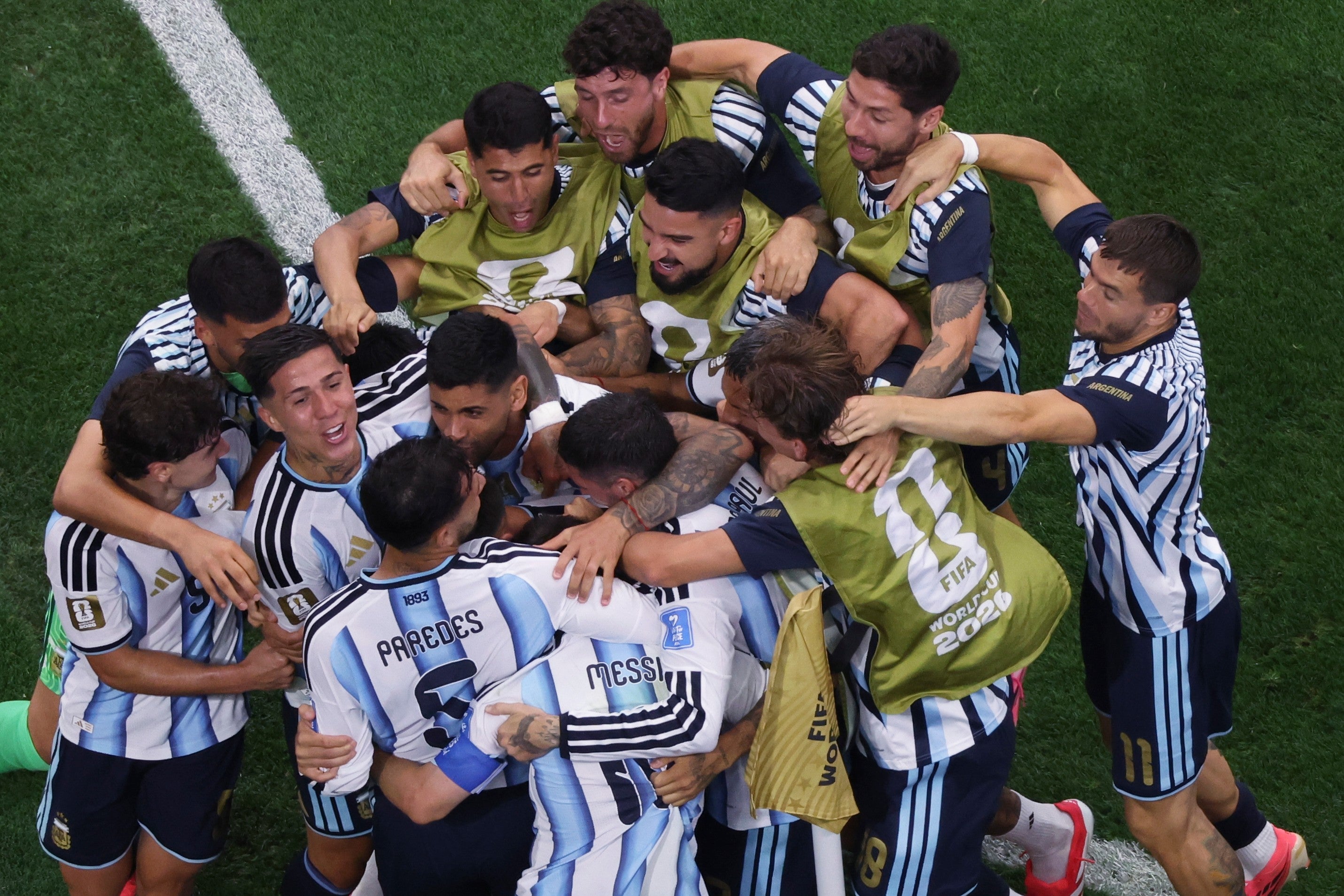
A delicate ball inside to Thiago Almada set the champions on their way and when the ball reached Facundo Medina there were four Argentine players ahead of their talisman. Almada cleverly left the ball, in a moment worthy of an assist and in stark contrast to Cristiano Ronaldo’s reluctance to do so for Bruno Fernandes earlier in the tournament. Waiting, unmarked, was Messi, primed and ready, he cushioned the ball back across goal and inside the left corner with Schlager already committed.
The serenity of the celebration, with two fingers pointing to the stands, quickly descended into a chaotic outpouring of relief to send his team on their way.
But Argentina met an organised Ralf Rangnick outfit, whose gegenpressing lit the fuse to a compelling contest. Enzo Fernandez and Messi exchanged passes like a pinball machine in the opening minutes, with Lautaro Martinez sent through on goal as red shirts descended on him in a panic. Stefan Posch from one side, Xaver Schlager on another, with the pair bundling Martinez to the ground. Martinez lay motionless, but a belated call from VAR ensured a penalty would eventually be given, as Posch grazed the Inter forward’s boot a fraction of a second before Schlager cleanly took the ball.
But after Messi’s shocking miscue, he turned playmaker to reshape the contest. Martinez outmuscled Kevin Danso to release Messi inside the box and his quick feet sent Paul Wanner flying. But David Alaba poked the ball away from Messi and towards his own goal, with Schlager’s outstretched leg preventing an own-goal.
The 38-year-old’s deeper role was causing havoc by this point, with his delicate throughball almost finding Fernandez. Schlager raced off his line to clear, but the ball fell kindly to Messi, who arrowed it towards the empty goal, only for Alaba to scramble back and make the goalline clearance.
The pattern had been set, though, with Messi knitting everything together, including that slick move to break the deadlock.
Austria refused to wilt though as Konrad Laimer outsmarted the clumsy Cristian Romero. Marcel Sabitzer curled the free-kick beautifully towards the top right corner, only for Emi Martinez’s left glove to deflect it away.
Danso’s chest then rebounded Fernandez’s thudding strike with the game still delicately poised.
But the game was gathering pace and opening up space; Sabitzer wrestled free and chipped to the back post, but despite brushing off Medina, Michael Gregoritsch failed to control his header on target.
Argentina gladly opted for a direct approach, too, with Nicolas Tagliafico’s bending ball finding Nicolas Gonzalez in behind, only for Danso’s desperate recovery to prevent a decisive second.
The Spurs defender’s flick-on almost saw a shock Austrian equaliser, but Patrick Wimmer’s header drifted wide.
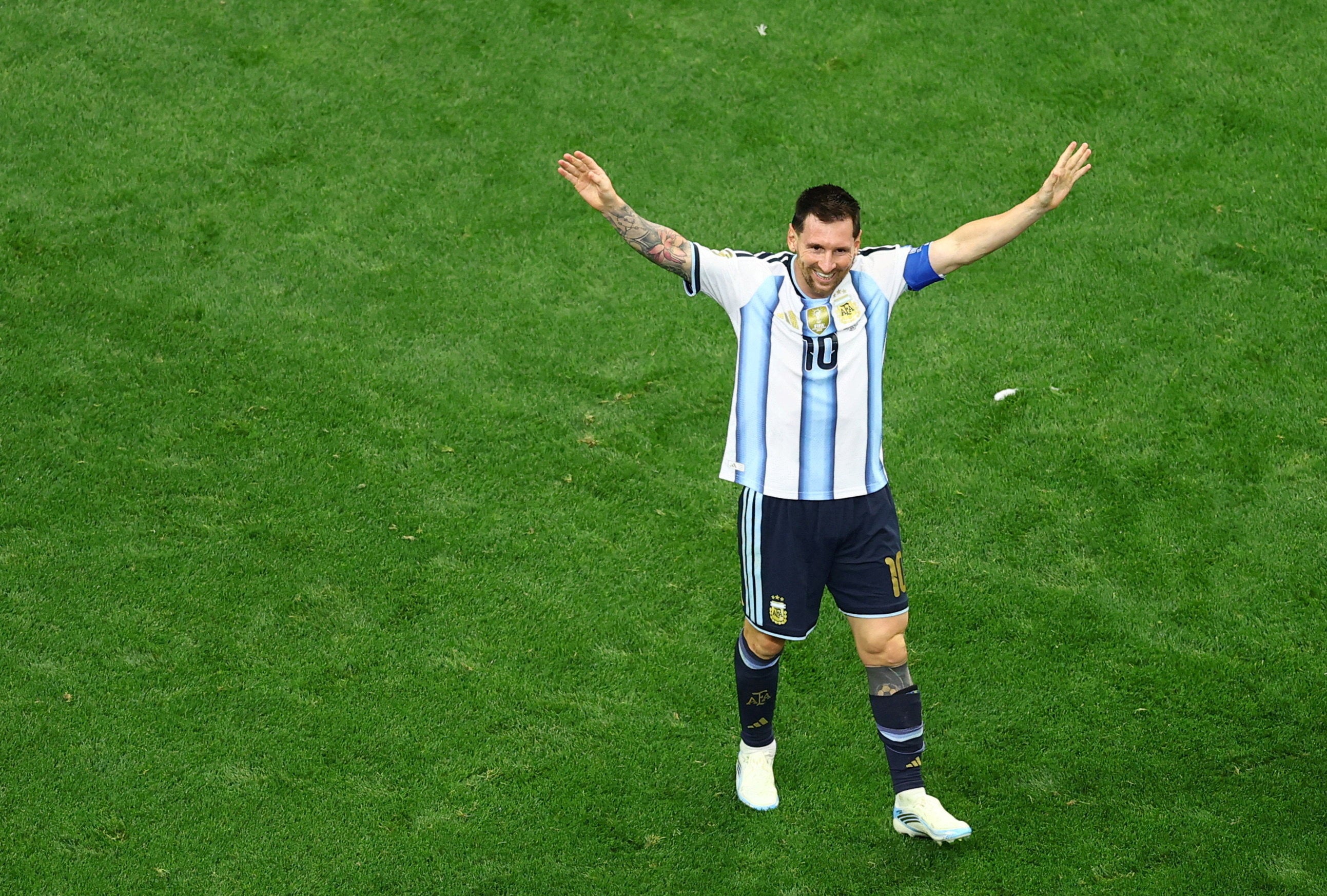
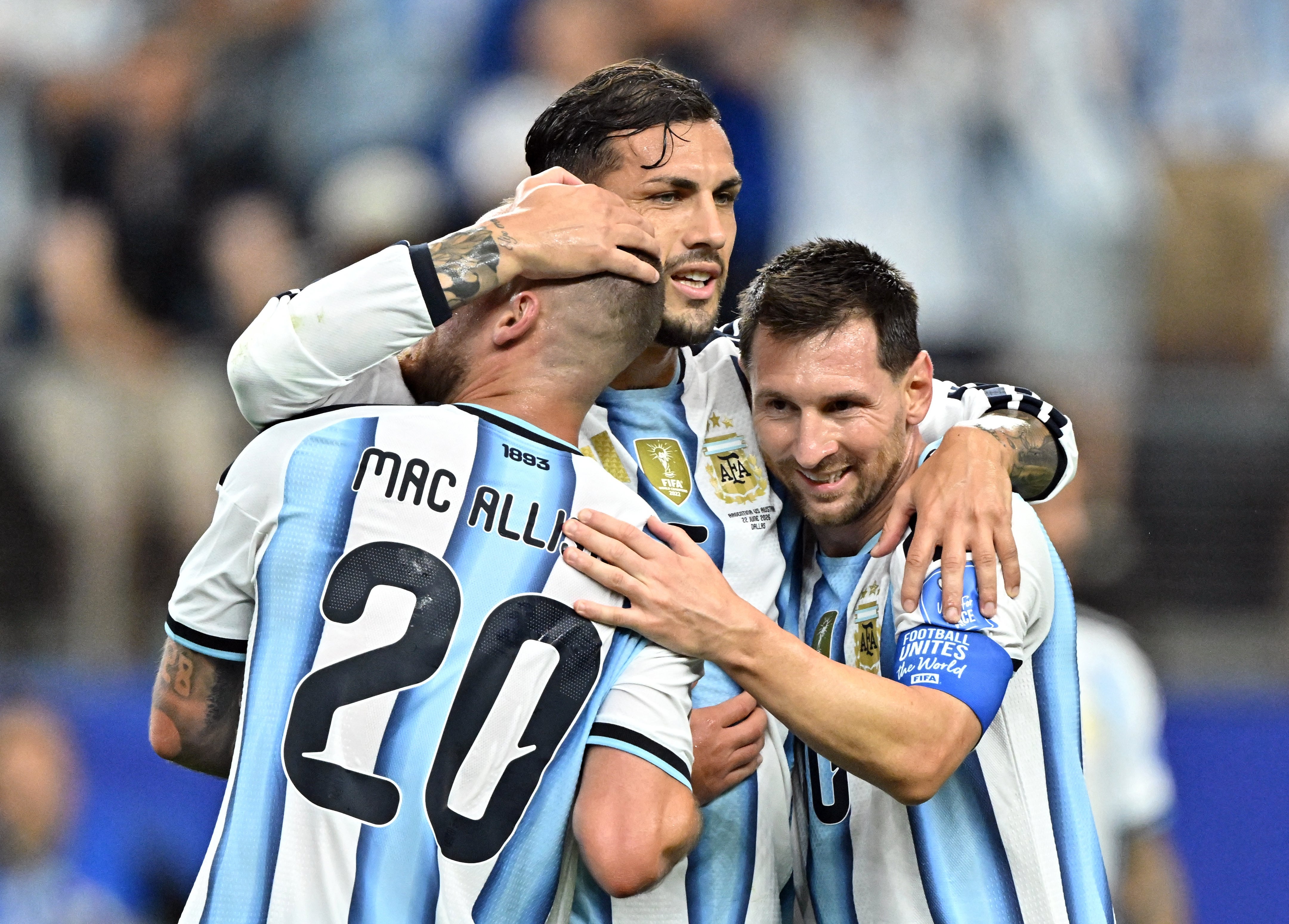
And just as Austria sniffed a famous draw, Messi ruthlessly dashed their hopes and was sent clear down the right on the break. The Inter Miami star saw Leandro Paredes and Julien Alvarez galloping free to his left. The ball was perfect for Alvarez, who failed to finish, but Paredes squared to Messi inside the box.
After a magnetic first touch, and a rather more familiar quality, Messi’s first effort was blocked, but his second, bludgeoned towards goal and through red shirts sealed it.
An 18th World Cup goal has Argentina in dreamland and into the last 32. Two wins from two games, five goals scored and zero conceded. But in Dallas, it needed the tenacity to shake off a moment of adversity. A precious quality on the road to back-to-back titles.