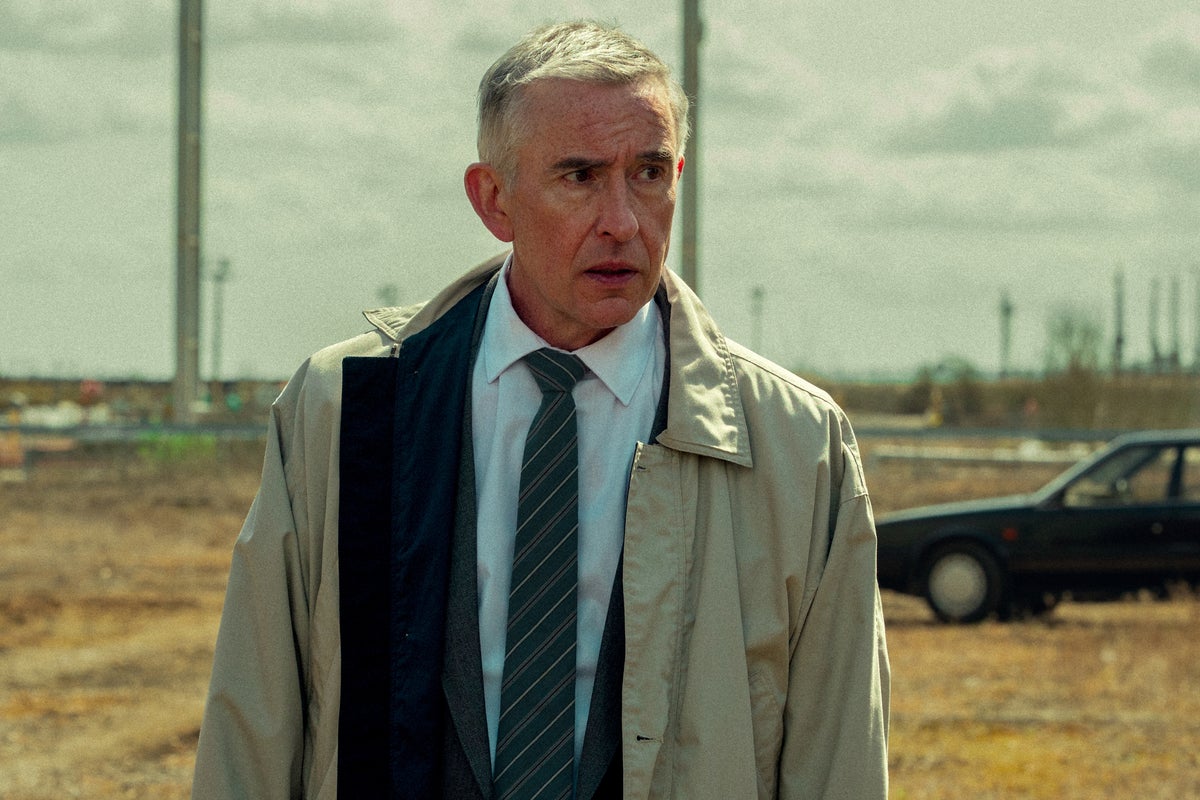
In espionage parlance, the word “legend” refers to the backstory given to a person going undercover. What their name is, where they’re from, what their dad did for a living, which football team they support, the side of the bed they sleep on, whether or not they pick their nose. “You need a plan, you need a persona,” undercover expert Don Clarke (Steve Coogan) tells his new recruits in Netflix’s police procedural Legends. “And you need to believe in them both.” But can this show prove as immersive as all that? Does it buy into its own legend, or leave its characters floundering?
It’s the 1980s and there’s a new horror on the streets of Britain: heroin. “The pursuit will be relentless,” we see Margaret Thatcher warn drug dealers from the television, “until we’ve beaten you.” To achieve that end, new powers are afforded to a team of customs officers led by Coogan’s Don, a man who has, himself, gone deep inside the smuggling and distribution operations of the narcotics industry. He assembles a crack team (of underpaid volunteers) including Kate (Hayley Squires), Bailey (Aml Ameen), Erin (Jasmine Blackborow), and, particularly, Guy (Tom Burke), who must go deep undercover, despite the concerns of his wife Sophie (Charlotte Ritchie). “Mrs Thatcher needs a crisis she can solve and here it is,” Alex Jennings’ home secretary informs Don. But breaking into these close-knit operations – whether it’s the Turks in London or the brutal Scouse kingpins – is not a simple task.
Legends is, in many ways, a tonal sibling to writer Neil Forsyth’s previous series, The Gold. That show followed a tangle of disparate characters – both cops and robbers – linked to the loot from the 1983 Brink’s-Mat heist. Here too, Forsyth deploys a wide range of characters on both sides of the aisle of legality. Some are competent professionals, some are blithering screw-ups, and some are murderously violent.
Like The Gold, Legends is also set against a lightly historical setting: Thatcher’s Britain rendered in Fila tracksuits, wire-rimmed aviators and Ford Granadas. Against this canvas, Netflix has combined Forsyth’s formula with the off-the-grid reprobates of the streamer’s hit detective show, Department Q. The setup lacks the ragtag charisma of that show, but manages enough twists and turns, alliances and betrayals, to keep viewers guessing.
As an assembly of British TV actors, Legends does a fine job. Both Squires and Douglas Hodge (who plays the liaison between the customs team and Whitehall) transfer over from The Night Manager, which had a similarly frenetic pace. Burke and Coogan, meanwhile, give reliable, restrained performances. More latitude is given to Tom Hughes as Carter, the glamorous top dog of Liverpool’s nascent drug trade, who channels Tommy Shelby in a role that eschews subtlety.
In fact, there are a few notes to Legends that tip into melodrama: a convenient personal tragedy that reshapes a drug dealer’s perspective, a last-second override of a customs inspection at Felixstowe, or a school piano recital that demonstrates an agent’s increasing estrangement from his family. “I did what I did and it cost me what it cost me,” Don reveals, of his own experiences slipping into another persona. These are the stakes – they are high and sometimes hammy.
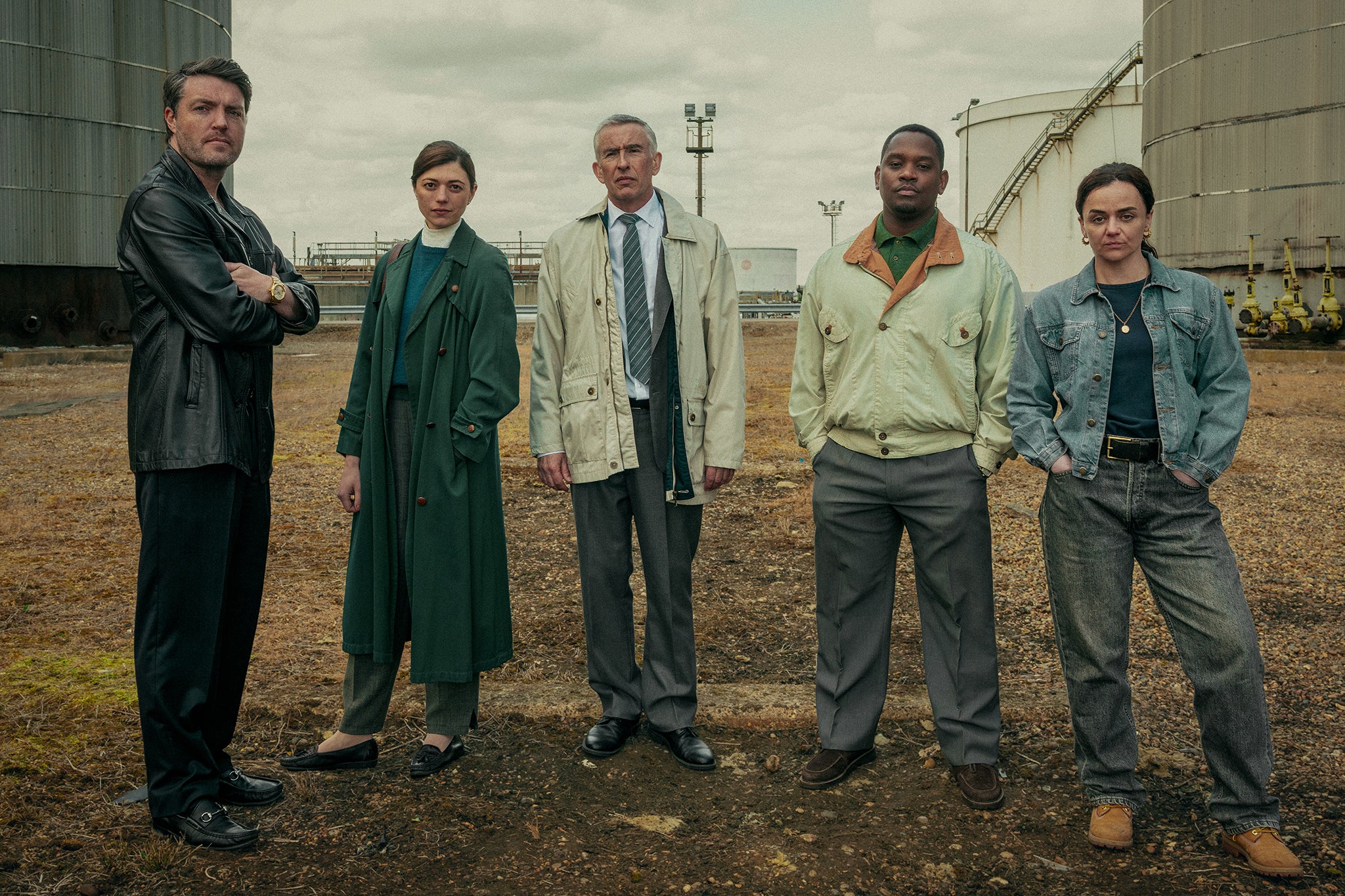
Because it feels so reminiscent of similar shows (not just The Gold but also Slow Horses, This City is Ours and even The Cage, which only came out last week) Legends feels unambitious. Yet, at the same time, all the components are solid. A good cast playing believable characters, dealing with a script that only occasionally tips into contrivance. It also looks better than most shows on Netflix, with Forsyth and series directors Brady Hood and Julian Holmes afforded an unusually murky colour palette. The 1980s are effectively evoked, but never a distraction from a story that feels pertinent in our present day. It’s all extremely competent.
In its competence, Legends feels like it was born to be on BBC One but has somehow ended up on Netflix. How the series will play to international audiences remains to be seen, but it lacks the pizzazz of Peaky Blinders or the relentless rug pulls of Line of Duty. What’s left is Forsyth’s trademark brand of period drama: engaging but not gripping, authentic but not original, well-crafted but not striking. Legends, is, in short, what a lot of British telly is: an exercise in risk-free repetition.