

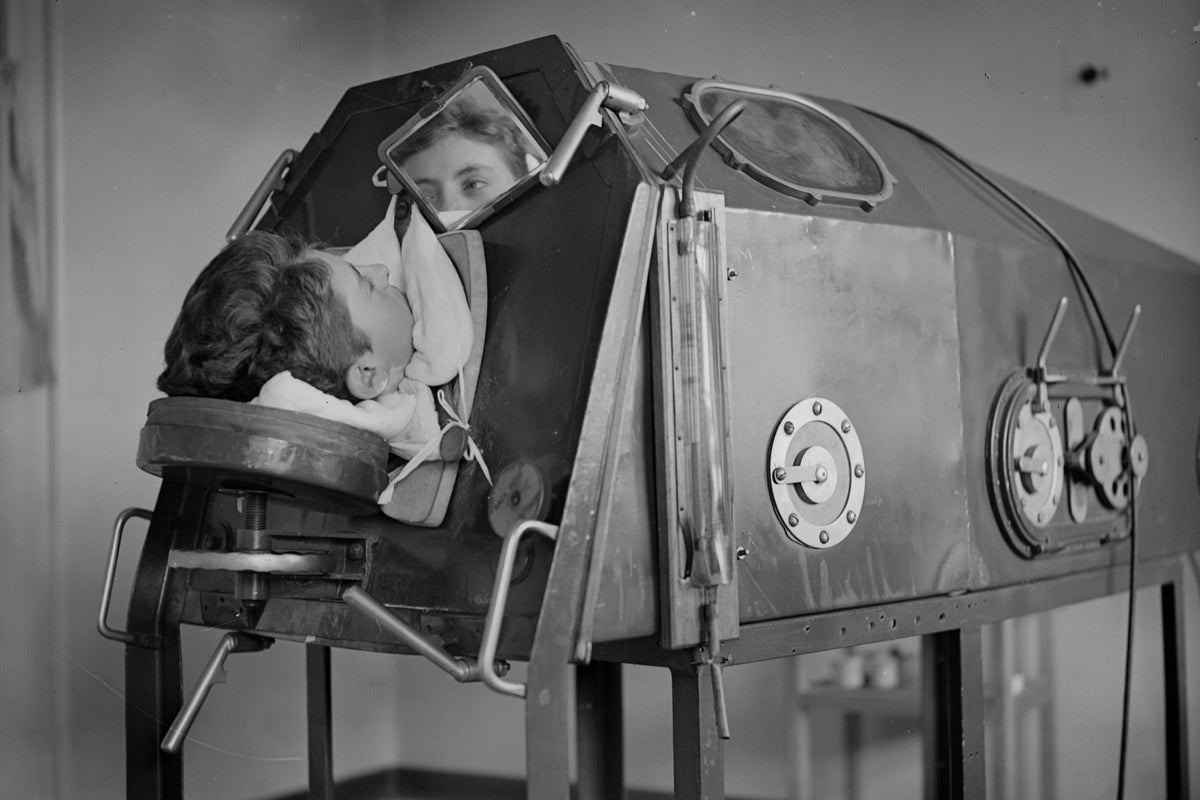
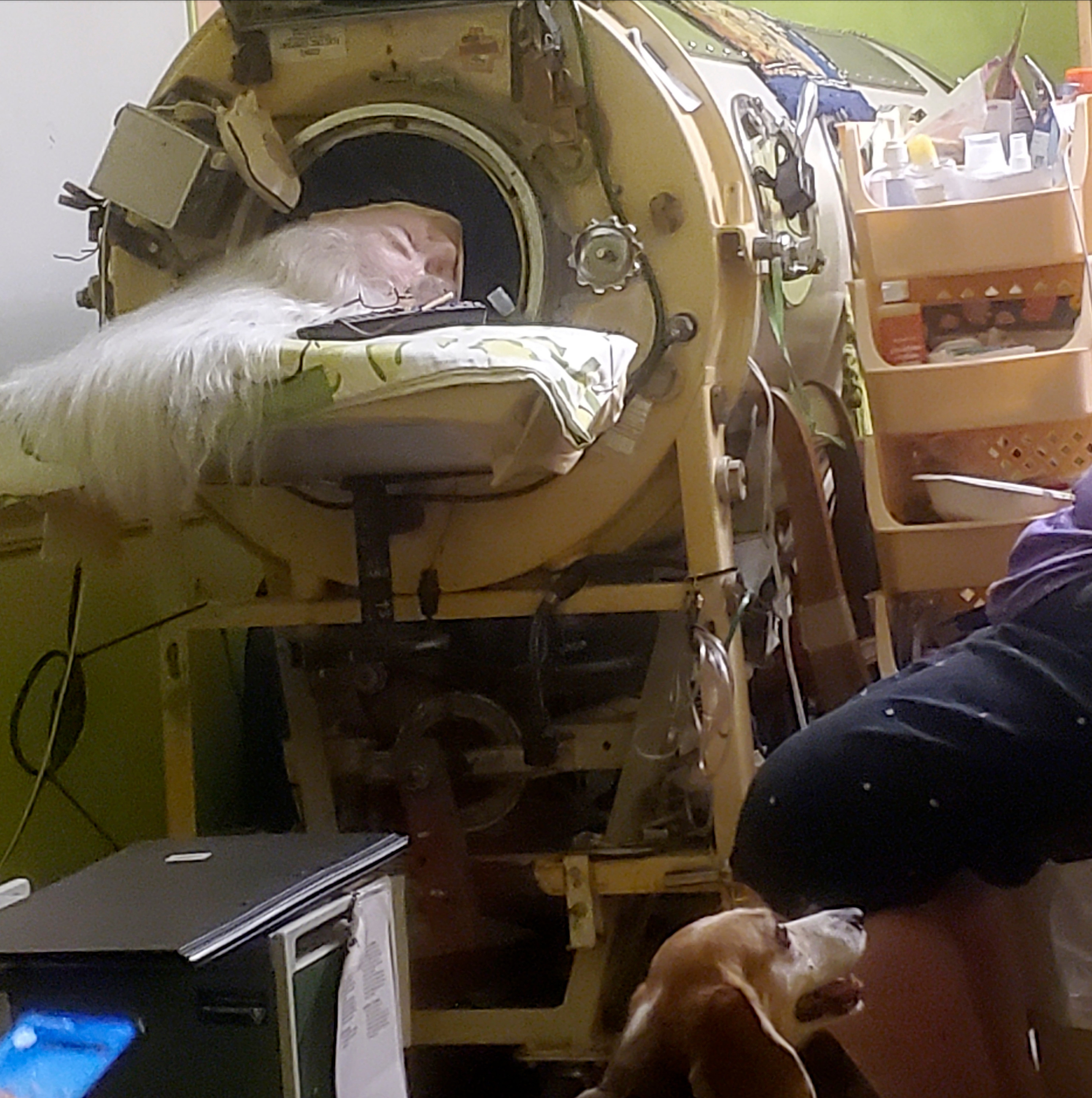
Martha Lillard, who spent much of her life dependent on an iron lung after being diagnosed with polio at age five, has died in Oklahoma at 78.
Her sister confirmed she was the last known US polio patient to rely on the machine.
“They told her she wasn’t supposed to live past 20 years old,” Lillard’s younger sister, Cindy McVey, told The Associated Press.
“She had the enthusiasm and the drive to continue living and make the best of her life.” While an official cause of death has not been determined, McVey attributes her sister’s passing on June 26 to the lingering effects of long-haul COVID-19.
Lillard’s life was defined by the iron lung, a cylindrical chamber that encased her body, using air pressure to mechanically force air in and out of her lungs.
Despite this, she pursued an education, attending grade school for two hours daily and completing the rest of her studies through tutoring. She even attended Shawnee High School remotely, using a phone system and intercom to interact with teachers and classmates.
Her family made extraordinary efforts to accommodate her, including custom trailers for road trips and her father calling hotels to ensure wide enough doors for her machine.
Remarkably, Lillard was even able to drive for a period. “To me, it was just normal,” recalled McVey, 75, reflecting on their unique upbringing.
Polio was once a terrifying disease in the US, causing thousands of paralysis cases annually, primarily affecting children.
The introduction of vaccines in 1955 dramatically changed this landscape. A national vaccination campaign led to a sharp decline in cases, with fewer than 100 annually by the 1960s and fewer than 10 by the 1970s. By 1979, polio was declared eliminated in the US, meaning it was no longer routinely transmitted.
In later years, the internet became a vital tool for Lillard, allowing her to research her condition, which had left her right arm paralyzed and limited movement in her left. Despite these challenges, she lived independently for many years, even preparing her own meals.
The internet also played a pivotal role in her personal life. Following the September 11, 2001, terrorist attacks, Lillard sought to understand the events better and met Baha Salh in an online chat room. They communicated for over two decades.
Lillard and Salh finally married in February after he secured a visa to travel to Oklahoma. “They were really soulmates,” McVey said, adding, “He’s extremely brokenhearted.”
The coronavirus pandemic took a severe toll on Lillard’s already compromised health. She contracted COVID-19 twice, and before the infections, she had less than 25 percent lung capacity. In her final five years, her deteriorating breathing made it impossible to leave home, and for the last two years, she relied on the iron lung almost continuously.
McVey described her sister as an artistic and creative individual who wrote poems and composed songs. Lillard even penned her own obituary, which is now posted online by a funeral home. In it, she described herself as a Humane Society volunteer and an “avid Beagle lover” who assisted in animal rescue. She later updated her obituary to state she “died of long-haul Covid 19,” with McVey adding the date of her death.
In recent years, McVey and Lillard had desperately searched for someone who could repair the specialized iron lung, one of several she had used throughout her lifetime. “But since she’s the last one, we don’t need that anymore,” McVey said through tears, marking the end of an era.